

Upon receiving a diagnosis of ovarian cysts can make you feel unsettled, understanding further that a cyst might rupture can raise new concerns and leave you wondering what that would actually mean for your health.
While a ruptured ovarian cyst can cause sudden pain and may feel alarming, many cases are mild and resolve with supportive care. Knowing the common symptoms, understanding what is normal, and recognising when medical attention is needed can help you respond calmly and confidently if it happens.
What is a ruptured ovarian cyst?
A ruptured ovarian cyst happens when a fluid-filled sac on or inside the ovary breaks open.
Ovarian cysts are actually very common in women of reproductive age. They often form naturally during your menstrual cycle as part of ovulation.
Most of the time, cysts are harmless and disappear on their own without causing any problems. However, when a cyst ruptures, the fluid inside spills into your pelvic cavity. This sudden release can irritate nearby tissues and cause pain.
In some cases, blood vessels in your ovary may tear during the rupture, which can lead to internal bleeding. Your symptoms will vary depending on the size of the cyst, the type of fluid inside, and whether bleeding occurs.
This may sound alarming, but understanding what's happening in your body is the first step towards feeling more in control. With prompt care, most ruptured cysts can be managed effectively, and many women recover well after treatment.
Common causes and risk factors

Most ruptured ovarian cysts result from functional cysts that form during ovulation. These cysts may rupture when they grow too large or are subjected to pressure.
Sometimes, everyday activities may trigger a rupture, such as:
Strenuous exercise
Sexual intercourse
Sudden movements or physical strain
Certain conditions can also increase your risk of developing ovarian cysts that may rupture.
These include:
Polycystic ovary syndrome (PCOS):
PCOS is a hormonal condition that makes you more likely to develop cysts.
Endometriosis:
Tissue similar to the uterine lining grows outside your uterus and can form cysts on your ovaries.
Pregnancy:
Your hormone changes during pregnancy. This change can lead to cyst formation.
Fertility medications:
Treatments that stimulate your ovaries may increase cyst development.
Previous ovarian cysts:
If you’ve had cysts before, you’re also more likely to experience recurrence and rupture.
If these factors sound familiar to you, don’t panic. Having one or more risk factors doesn’t mean you’ll get a ruptured cyst. That said, being aware of them can help you and your doctor monitor your ovarian health more closely.
Signs and symptoms of a ruptured cyst
Recognising the symptoms of a ruptured ovarian cyst is important so you know when to seek care.
The most typical symptom is a sudden onset of sharp pain in your lower abdomen or pelvis, usually on one side. The pain may start during exercise, sexual intercourse, or even when you’re resting.
After the initial sharp pain, you may experience:
Ongoing dull pain or pelvic discomfort
Nausea or vomiting
Bloating, or a feeling of abdominal fullness
These symptoms happen because the leaked fluid irritates the lining of your pelvis. While this can be uncomfortable, most cases are manageable with proper care.
However, if there is internal bleeding, you may develop more serious symptoms such as:
Dizziness
Fainting
Shoulder pain
Weakness
These are warning signs that you need urgent care.If you’re experiencing any of these symptoms, don’t hesitate to seek medical support right away.
If you’re experiencing symptoms of a ruptured ovarian cyst or have concerns about your ovarian health, schedule an appointment with Thomson Medical. Our specialist will evaluate your condition and create a personalised care plan for you.
How doctors diagnose a ruptured ovarian cyst
If your symptoms suggest a ruptured ovarian cyst, your doctor will use different approaches to figure out what’s happening inside your body.
The approaches include:
Pelvic examination:
Your doctor starts with a pelvic examination. This test can reveal tenderness on one side of your pelvis.
Pelvic ultrasound:
This may show free fluid in your pelvis or evidence of a collapsed cyst.
Pregnancy test:
Apregnancy test is usually performed to exclude ectopic pregnancy, which has very similar symptoms.
Blood tests:
Your doctor may order blood tests to check for anaemia (which suggests bleeding) or signs of infection, especially if internal bleeding is suspected.
CT scan:
In uncertain or severe cases, your doctor may use a CT scan to rule out other causes of acute abdominal pain.
Going through these tests can feel overwhelming. Still, this process makes sure you get the right care for your specific situation. Your doctor will consider all of these findings together to get a clear picture of what’s going on.
If you feel anxious before the tests, don’t be afraid to share your concerns with your doctor. They’ll gently guide you through each step and make sure you’re as comfortable as possible.
Our gynaecological oncology specialist
Loading...
Treatment options
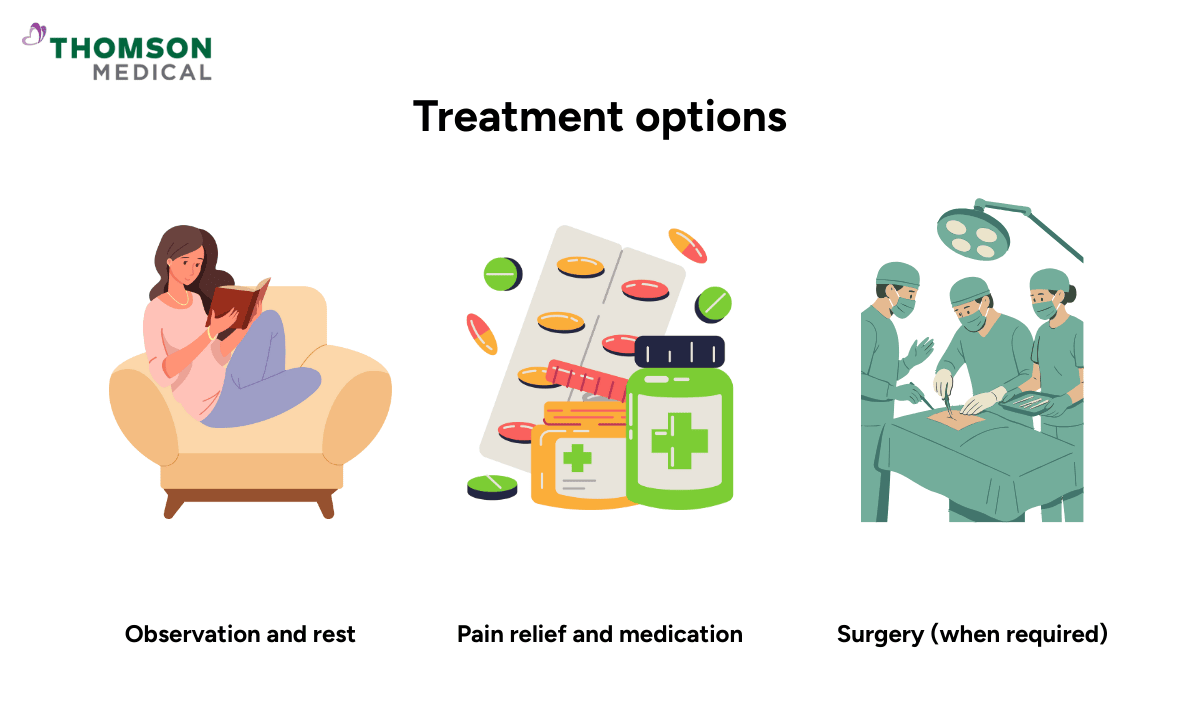
Fortunately, there are effective treatments for a ruptured ovarian cyst. They are often straightforward, and many women recover well with the right care.
Your personalised treatment plan will depend on how severe your symptoms are and whether there’s any internal bleeding.
Observation and rest
If your pain is mild and your vital signs are stable, your doctor often recommends observation and rest.
Your body can absorb the leaked fluid over time, and symptoms usually improve within a few days. During this time, you may have repeat examinations or ultrasounds. This helps ensure the condition is resolving and that there is no worsening bleeding.
Pain relief and medication
Managing your pain is an important part of your treatment.
If you have mild to moderate pain, your doctor may suggest paracetamol or non-steroidal anti-inflammatory drugs to control it. In more painful cases, they may prescribe stronger analgesics (painkillers) to keep you comfortable.
If you experience recurrent cysts, hormonal medications such as combined oral contraceptive pills may be recommended. This helps suppress ovulation and reduce the formation of new cysts.
However, it’s important to know that these medications don’t treat an existing rupture. Instead, they help lower your risk in the future.
Surgery (when required)
Surgery is only necessary in certain situations.
Your doctor may recommend surgery if you have:
Severe pain
Significant internal bleeding
Unstable blood pressure
Concern for complications such as ovarian torsion or malignancy
Most surgeries are laparoscopic (minimally invasive surgical procedure), which allows faster recovery and less scarring. During the procedure, your doctor may remove the cyst and control bleeding. In rare cases, they may remove part or all of the affected ovary if damage is extensive.
It can feel a bit uncertain when it comes to treatment. Your doctor will discuss all of these options with you beforehand so you know exactly what to expect.
How to recover safely at home
Recovery at home is an important part of getting back to your normal life. With the right approach, you can feel better within a short time.
Here’s what you can try to support your recovery:
Get adequate rest:
Your body needs time to heal, so don’t push yourself too hard.
Avoid strenuous activities:
It’s recommended to wait until your pain has resolved completely before returning to intensive exercise.
Take pain medications as prescribed:
It’s best to follow your doctor’s instructions about when and how to take your pain relief.
Stay hydrated:
Drinking plenty of water helps your body heal and can reduce bloating.
Monitor your symptoms closely:
Keep track of how you feel, and let your doctor know if you notice any unusual changes.
Attend follow-up appointments:
Regular check-ups with your doctor help monitor your recovery and address any complications early.
When you start feeling better, you can slowly return to normal activities. That said, if an activity causes discomfort or pain, it may be a good idea to give yourself more time for healing.
Every woman's recovery is different. It’s okay if yours takes a little longer than expected. Your doctor is there to guide you along the way.
Possible complications
It’s natural to wonder whether a ruptured ovarian cyst has complications. Although many ruptured cysts resolve without problems, complications are possible.
These may include:
Significant internal bleeding
Infection
Damage to the ovary (rare)
Impact on fertility
However, these complications are uncommon, especially when the condition is caught and treated promptly. If you’re concerned about your fertility, your doctor can discuss this with you and help develop a plan to protect your reproductive health.
How to prevent cyst rupture in the future
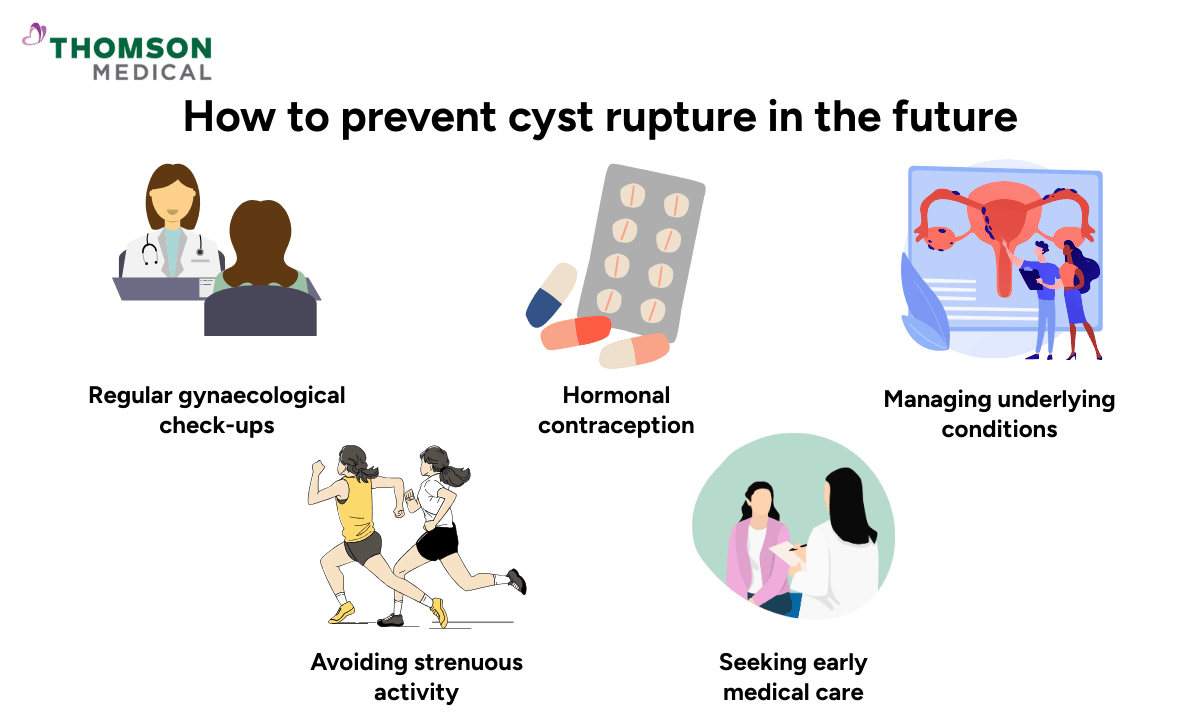
While it’s not always possible to prevent ovarian cysts from forming, there are some steps you can take to reduce your risk of rupture and protect your ovarian health.
Regular gynaecological check-ups:
These help you and your doctor monitor your ovarian health, especially if you’ve had cysts before.
Hormonal contraception:
In some cases, your doctor may discuss birth control pill options because these medications can suppress ovulation and lower your recurrence risk.
Managing underlying conditions:
If you have PCOS or endometriosis, working with your doctor to keep these conditions under control is essential.
Avoiding strenuous activity:
If you have a large cyst, your doctor may advise you to avoid intensive physical activities.
Seeking early medical care:
If you notice new or unusual pelvic pain, don’t hesitate to check with your doctor.
It's understandable to feel worried when you learn you have an ovarian cyst, especially knowing that rupture is possible. Still, there are practical steps you can take to protect yourself.
Taking simple steps such as keeping up with regular check-ups, staying in touch with your doctor about any concerns, and listening to what your body is telling you can reduce your risk and help you feel more confident about managing your ovarian health.
If you're ready to take proactive steps for your ovarian health,schedule an appointment with Thomson Medical. Our specialist will work with you to create a care plan tailored to your needs.
FAQ
What happens when an ovarian cyst ruptures?
When an ovarian cyst ruptures, its thin wall breaks open and releases fluid into your pelvic cavity. This sudden leakage can irritate the tissues around it, especially the lining of your pelvis, which is what causes your pain.
If the cyst has blood in it or breaks near blood vessels, bleeding may occur from your ovary. Your body often absorbs the leaked fluid over time, and your ovary usually heals by itself. How severe your symptoms are depends on the size and type of the cyst and whether there is significant bleeding.
Can a ruptured ovarian cyst heal on its own?
Yes, most ruptured ovarian cysts heal without surgery. In mild cases, the leaked fluid is gradually reabsorbed by your body, and pain improves over a few days.
Rest, observation, and managing pain are usually enough. However, you should still get checked with your doctor to confirm what's happening and make sure there's no serious bleeding or other issues. Your doctor may also advise follow-up appointments to monitor your recovery.
How long does it take to recover from a ruptured cyst?
It depends on how severe the rupture is.
When it's mild, the pain usually gets better within a few days. You're typically back to normal in one to two weeks.
However, if there is moderate bleeding or more severe pain, recovery may take longer. You may also need to stay in the hospital for observation. When surgery is needed, recovery can range from two to six weeks, depending on what procedure you have and how your body heals.
Is a ruptured ovarian cyst life-threatening?
Most ruptured ovarian cysts are not life-threatening and resolve with the right care. However, in rare cases, severe internal bleeding can occur, leading to low blood pressure, anaemia, or shock.
This is more likely if the cyst is large, you have a bleeding disorder, or it's a certain type like endometriomas. Getting medical help quickly greatly reduces the risk of serious problems, which is why you shouldn't ignore sudden or severe symptoms.
What should I avoid after a cyst rupture?
After a cyst rupture, it’s important to avoid strenuous physical activity, heavy lifting, and high-impact exercise until your pain has completely resolved.
Sexual intercourse may need to be postponed for a short period, as it can worsen pain or delay healing. If you're taking pain medications, it's best to limit alcohol intake.
When should I see a doctor?
You should seek medical attention immediately if you experience:
Severe, persistent, or worsening abdominal pain
Fainting
Dizziness
Fever
Vomiting
Heavy vaginal bleeding
If you're unsure what's causing your pelvic pain, contact your doctor, especially if you're pregnant.
The information provided is intended for general guidance only and should not be considered medical advice. For personalised recommendations and advice based on your unique situation, please consult a specialist at Thomson Medical. Request an appointment with Thomson Medical today.
For more information, contact us:
Thomson Specialists (Women's Health)
Thomson Women's Clinic (TWC)
- Novena:
6592 6686 (Call), 8611 8986 (WA) - Bukit Batok:
6569 0668 (Call), 8686 3525 (WA) - Choa Chu Kang:
6893 1227 (Call), 8282 1796 (WA) - Jurong:
6262 8588 (Call), 6262 8588 (WA) - Katong (female doctor):
6970 2272 (Call), 8611 9020 (WA) - Punggol:
6243 6843 (Call), 8811 0328 (WA) - Sembawang: 6753 5228
- Sengkang: 6388 8125
- Serangoon (female doctor): 6382 3313
- Tampines: 6857 6266
- Tiong Bahru: 6276 1525
Notice
The range of services may vary between TWC/TS locations. Please contact your preferred branch directly to enquire about the current availability.
Request an Appointment