

If you are preparing for in vitro fertilisation (IVF) or are already in the middle of a treatment cycle, you may have questions about how the hormonal medications will affect your body.
It’s normal to feel uncertain about what lies ahead. Knowing the common side effects of IVF and how your body is likely to respond to the medication may help you feel informed and prepared as you begin treatment.
Why do IVF side effects happen?
IVF is a carefully planned fertility treatment process that involves hormonal medications and medical procedures to support conception. As a result, it is common for women to experience temporary side effects as their bodies respond to treatment.
Most side effects are related to the hormonal IVF medications used to stimulate the ovaries and prepare the uterus (womb) for pregnancy, while others may occur following procedures such as egg retrieval. These symptoms can sometimes feel uncomfortable, but they are usually mild and improve once treatment is completed.
At what stages of IVF treatment do side effects commonly occur?
The type and timing of these effects can vary throughout the IVF cycle. While some women may only experience mild symptoms, others may notice more heavy side effects as they progress through each stage.
Side effects are most commonly experienced during the following stages of treatment:
Ovarian stimulation
During the ovarian stimulation phase, fertility medications are used to encourage the ovaries to produce multiple mature eggs. As your body responds to these hormonal medications and your ovaries enlarge, temporary physical side effects such as bloating, pelvic pressure, headaches, tiredness, or breast tenderness may occur.
Egg retrieval
Following an egg retrieval procedure, it is normal to experience some discomfort. This is because the procedure is a minor surgery performed under anaesthesia to collect mature eggs from the ovaries. You may also experience side effects from the trigger shot (usually hCG), which is used to complete egg maturation and prepare for retrieval.
Embryo transfer
After embryo transfer, whether fresh or frozen, most women experience little to no discomfort. However, hormonal support medications such as progesterone and oestrogen are commonly used during this stage of treatment and can cause physical side effects and symptoms similar to early pregnancy.
What are the common side effects during IVF treatment?
IVF side effects can generally be grouped into physical side effects and emotional or psychological side effects.
Physical side effects
Physical side effects may occur at different stages of IVF treatment, particularly during ovarian stimulation, egg retrieval, and embryo transfer. Common physical side effects may include:
Bloating and abdominal discomfort: caused by the enlargement of the ovaries while multiple follicles develop during treatment.
Breast tenderness: caused by changes in hormone levels and the hormonal support of IVF medications.
Fatigue, headaches, and nausea: as your body responds to hormonal changes and the physical demands of treatment.
Mild cramping or pelvic discomfort: this may occur during ovarian stimulation or following procedures such as egg retrieval and embryo transfer.
Discomfort at the injection site: such as mild redness, bruising, or soreness in the areas where IVF hormone injections are administered.
Light spotting: this may occur after procedures such as egg retrieval or embryo transfer and usually settles within a few days.
Constipation: this may occasionally occur following egg retrieval due to the effects of anaesthesia, pain medication, and progesterone.
Emotional side effects
Throughout the IVF journey, you may experience a range of emotional ups and downs. These can be influenced by hormonal changes, anticipation of treatment outcomes, financial considerations, and the uncertainties associated with this fertility treatment.
Common emotional and psychological effects include:
Anxiety or uncertainty
Mood changes or emotional sensitivity
Stress and emotional fatigue
Feelings of hope, disappointment, or sadness
Relationship strain or additional emotional pressure on individuals and couples
To manage the emotional side effects of IVF, you can seek support from your partner, family members, friends, support groups, or counsellors, which can be helpful during treatment.
It is normal to experience some side effects during IVF treatment, but if your symptoms feel more severe than expected or you have any concerns, schedule an appointment with Thomson Fertility Singapore. Our fertility specialists can provide guidance and support your well-being throughout your IVF journey.
Our fertility doctors in Singapore
Loading...
How are severe IVF side effects and complications diagnosed?
While most IVF side effects are mild and temporary, some symptoms may occasionally indicate a more serious complication that requires further medical assessment. In these situations, your fertility specialist may perform additional tests and investigations to confirm the diagnosis and determine the most appropriate treatment. These tests and assessments may include:
Symptom monitoring:
Throughout your IVF treatment, your fertility team will closely monitor how you are feeling and encourage you to report any new or worsening symptoms.
Transvaginal ultrasound:
Transvaginal ultrasound is used during IVF treatment to monitor ovarian response and assess how your body is responding to IVF medication.
This imaging allows your fertility specialist to assess the number and size of developing follicles, identify enlarged ovaries, and detect fluid accumulation in the pelvis or abdomen.
Blood tests:
Blood hormone tests are performed during IVF treatment to monitor your response to ovarian stimulation medications.
In particular, rapidly rising or very high hormone levels may indicate an excessive ovarian response. It allows your fertility specialist to adjust your treatment plan to reduce the risk of complications.
Physical examination and clinical assessment:
If concerning symptoms develop, your doctor may conduct a physical examination and assess your weight, blood pressure, heart rate, and oxygen levels.
These assessments help identify signs of dehydration, fluid accumulation, or other complications that may require closer monitoring or urgent treatment.
What are the potential complications of IVF treatment?
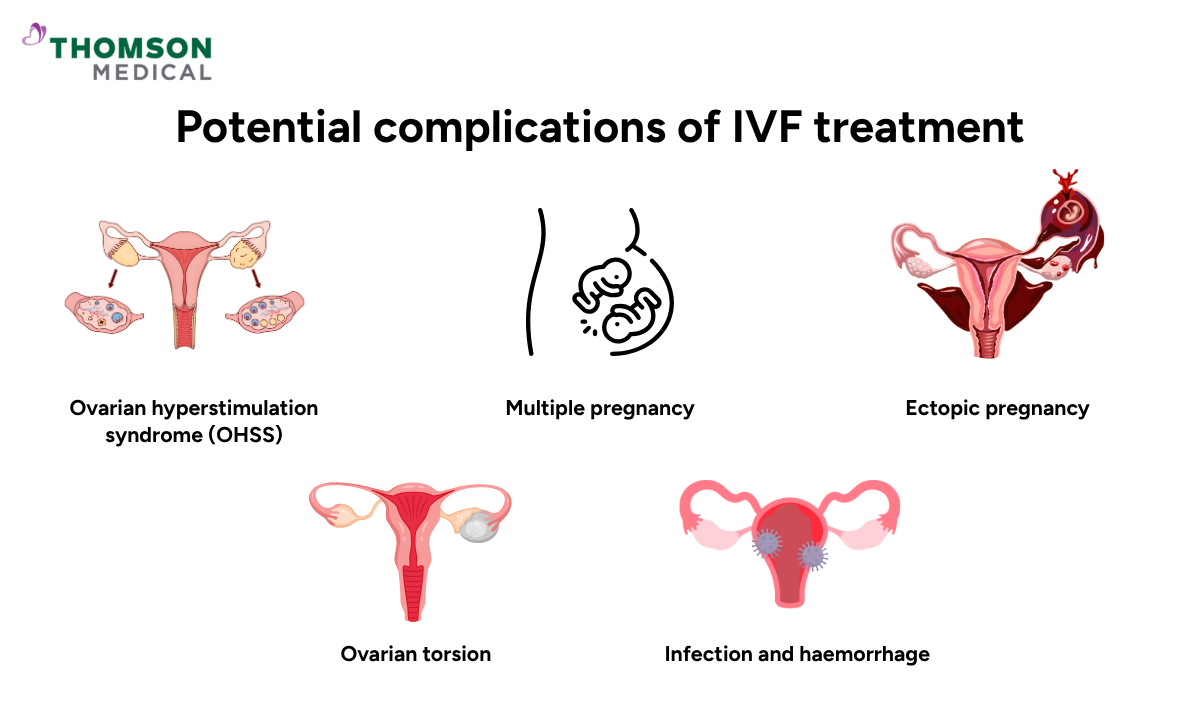
IVF is generally considered a safe and well-established assisted reproductive technology (ART) treatment. However, as with any medical procedure, there are some potential risks and complications that you should be aware of, which include:
Ovarian hyperstimulation syndrome (OHSS):
This condition occurs when the ovaries respond excessively to fertility medications used during ovarian stimulation. Symptoms may include severe bloating, rapid weight gain, abdominal pain, or shortness of breath.
Women with polycystic ovary syndrome (PCOS) may have a higher risk of developing OHSS.
Multiple pregnancy:
This may occur if more than one embryo is transferred during fertility treatment. Multiple pregnancies are associated with a higher risk of complications for both the mother and babies.
Ectopic pregnancy:
This occurs when an embryo implants outside the uterus, most commonly in the fallopian tube. Although ectopic pregnancy is uncommon, it is a serious condition that requires prompt medical attention. Symptoms may include sharp pelvic pain or unusual vaginal bleeding.
Ovarian torsion:
Ovarian torsion is a rare but serious complication that occurs when an ovary twists around the tissues that support it, reducing its blood supply. Symptoms typically include sudden and severe abdominal pain and should be assessed by a doctor.
Infection and blood clots:
These are rare complications associated with egg retrieval procedures or hormonal medications used during fertility treatment. Symptoms that require medical attention include fever, worsening pelvic infection, swelling or pain in the legs, chest pain, or shortness of breath.
Most fertility centres closely monitor patients throughout the IVF process to minimise these risks and ensure that any concerns are identified and managed promptly. However, if you develop the symptoms mentioned above, contact your fertility specialist promptly or seek urgent medical attention at the nearest Accident and Emergency (A&E) department.
How to manage IVF side effects
Every woman's experience with IVF is different, and the type and severity of side effects can vary throughout treatment. Many symptoms are temporary and can often be managed with the right support and practical measures at home.
Stay well hydrated: this is particularly important during ovarian stimulation, as it supports your body’s natural processes and may help reduce symptoms such as bloating and headaches.
Eat a balanced diet and have smaller, regular meals: this may help manage nausea, maintain energy levels, and reduce abdominal discomfort.
Stay active with light exercise: walking or stretching may support blood circulation and digestion, if your doctor recommends it.
Get adequate rest and prioritise sleep: fatigue is a common side effect during IVF treatment, so allow time for rest when you need it.
Practise relaxation techniques: deep breathing, mindfulness, or meditation may help you manage stress and support your emotional wellbeing during treatment.
Additionally, you can keep track of your symptoms to help your fertility specialist monitor your response to treatment and make adjustments where necessary.
FAQ
Is IVF painful?
Most women tolerate IVF treatment well, although some parts of the process may cause mild discomfort. For example, IVF injections can cause temporary soreness or bruising, while the egg retrieval procedure may result in mild cramping or bloating for a short period afterwards.
Can I exercise during IVF treatment?
Light to moderate exercise is usually safe during most stages of IVF treatment. However, high-impact or strenuous exercise may not be recommended during ovarian stimulation, as enlarged ovaries can lead to pelvic pain or a serious condition called ovarian torsion. Your fertility specialist can advise on the most suitable level of activity for you.
Do IVF side effects get worse with age?
Not necessarily. While age can affect fertility treatment outcomes, it does not directly determine how severe IVF side effects will be. Side effects are more commonly influenced by factors such as hormone levels, ovarian response to medication, and your overall health.
Will IVF increase the risk of birth conditions in my baby?
All pregnancies carry a small risk of conditions that affect a baby from birth, regardless of whether conception occurs naturally or through fertility treatment. In some cases, couples undergoing IVF may have a slightly higher risk because of factors such as maternal age, existing health problems, or fertility-related issues, rather than the IVF treatment itself.
The reassuring news is that the vast majority of babies conceived through IVF are born healthy. If there are known inherited conditions in your family or concerns about sperm quality, your fertility specialist may recommend genetic counselling or prenatal tests to help you understand any risks and discuss your options.
The information provided is intended for general guidance only and should not be considered medical advice. For personalised recommendations and tailored advice based on your unique conditions, schedule an appointment with Thomson Fertility Singapore today.
For more information, contact us:
Thomson Fertility Centre
- Paragon: 6252 7766
- Novena: 6399 3758, 8811 0358 (WA)