

If you're a smoker and you've noticed that your gums are bleeding when you brush your teeth or receding from your teeth, you might be wondering whether smoking is to blame or if there's another issue.
The truth is that smoking can damage your gums in ways that aren't immediately visible, and the effects can be more serious than just staining or bad breath. Understanding what's happening beneath the surface can help you take action before the damage becomes permanent.
How does smoking affect my teeth and oral cavity?
Smoking can have serious effects on your oral health, impacting your teeth and surrounding structures. Here's how smoking can affect your teeth:
Staining
The tar in cigarettes sticks to your teeth, while nicotine contributes to yellow or brown marks. Over time, these can cause noticeable stains that make your smile look less bright than it used to.
The tar and nicotine in cigarettes stain your teeth, gradually causing yellow or brown discolouration that's difficult to remove with regular brushing.
Gum disease (periodontal disease)
The chemicals in tobacco disturb your immune system, reducing your body's ability to fight off infection. When this happens, inflammation around the gums (gingivitis) can develop and worsen over time, eventually progressing to periodontitis, a more serious condition that damages the tissues and bone holding your teeth in place.
Tooth decay
When you smoke, the protective outer layer of teeth (enamel) weakens. Weakened enamel makes teeth more vulnerable to acids and bacteria, increasing the risk of cavities and tooth decay.
Reduced blood flow
Smoking narrows your blood vessels, reducing blood flow and preventing nutrients and oxygen from reaching the gums. This impairs the healing process and makes the gums more vulnerable to infections and damage.
Reduced immune response
Your immune system can be compromised when you smoke, and a weakened immune response makes it difficult for your body to fight off bacterial infections in the oral cavity.
Increased risk of oral cancer
Smoking is a major cause of mouth cancers. This is because the carcinogens in tobacco can lead to cancerous lesions developing in the oral cavity, including the tongue, lips, and throat.
Reduced success of dental procedures
Smokers may experience a higher chance of complications and reduced success rates for certain dental procedures, such as dental implant placement and periodontal surgeries.
How about vaping or e-cigarettes?

Although e-cigarettes, or vaping, are often considered to be less harmful than traditional tobacco, they can still pose a risk to oral health and have negative effects on your teeth and gums.
Nicotine content
Many e-cigarettes and vaping liquids still contain nicotine, which can lead to blood vessel constriction. This impacts the health of your gum tissue and increases the risk of gum disease by reducing blood flow to the gums.
Dry mouth
Vaping can contribute to dry mouth (xerostomia), which reduces saliva production. This can increase the risk of cavities and other oral health issues because saliva neutralises acids and helps to prevent tooth decay.
Inflammatory response
Some studies suggest that the vapour produced by e-cigarettes or vapes may trigger an inflammatory response in gum tissue, a key factor in gum disease development.
Chemical exposure
E-cigarettes can contain various chemicals, including propylene glycol and flavourings. While the impact on oral health is not yet fully understood, some of these chemicals may irritate oral tissues.
Staining
The aerosol produced by vaping can contribute to staining of teeth. While it may not be as prominent as staining from traditional smoking, discolouration can still occur over time.
Potential oral cancer risk
Although the risk appears to be lower compared to traditional smoking, there is ongoing research into the potential links between vaping and an increased risk of oral cancer.
Although e-cigarettes, or vaping, are often considered to be less harmful than traditional tobacco, they can still pose a risk to oral health and have negative effects on your teeth and gums.
Nicotine content
Many e-cigarettes still contain nicotine, causing blood vessel constriction which impacts your gum tissue health and increases the risk of gum disease by reducing blood flow to the gums.
Dry mouth
Vaping can contribute to dry mouth (xerostomia). Dry mouth reduces saliva production, which can increase the risk of cavities and other oral issues due to the lack of saliva neutralising acids and helping to prevent tooth decay.
Inflammatory response
Some studies suggest that the vapour produced by e-cigarettes may trigger an inflammatory response in the gum tissues. Inflammation is a key factor in the development of gum disease.
Chemical exposure
E-cigarettes can contain various chemicals, including propylene glycol and flavourings. Though the impact on oral health is not yet fully understood, some may irritate the oral tissues.
Staining
The aerosol produced by vaping can contribute to staining of teeth. While it may not be as prominent as staining from traditional smoking, discolouration can still occur over time.
Potential oral cancer risk
Although the risk appears to be lower compared to traditional smoking, there is ongoing research into the potential links between vaping and an increased risk of oral cancer.
If you vape or smoke and are unsure how this may affect your oral health, schedule an appointment with our dentists at Thomson Dental Centre to receive personalised advice and guidance.
Our dental specialists in Singapore
Loading...
Smoking and symptoms of gum disease
Gum disease often starts quietly, and many smokers don't realise something is wrong until the signs become harder to ignore. Paying attention to early changes can make a real difference to your oral health.
It’s best to consult a dentist if you experience any of the following symptoms:
- Red, swollen, or bleeding gums:
- These may be early signs of gum inflammation caused by bacteria buildup.
- Pus or discharge around the gums:
- This symptom is a clear indicator that an infection may be developing.
- Gums pulling away from the teeth:
- It is also known as gum recession, which can make teeth appear longer and expose sensitive areas.
- Persistent bad breath or an unusual taste:
- These symptoms are often linked to bacteria trapped beneath the gumline.
- Tooth loss or changes in your bite:
- Teeth may shift, feel unstable, or dentures may no longer fit comfortably.
- Spaces appearing between teeth:
- Another subtle sign is that the gums and bone are starting to recede.
Identifying these symptoms early on gives you the best chance of preventing further damage and promoting healthier gums.
Preventing teeth and gum problems if you smoke or vape
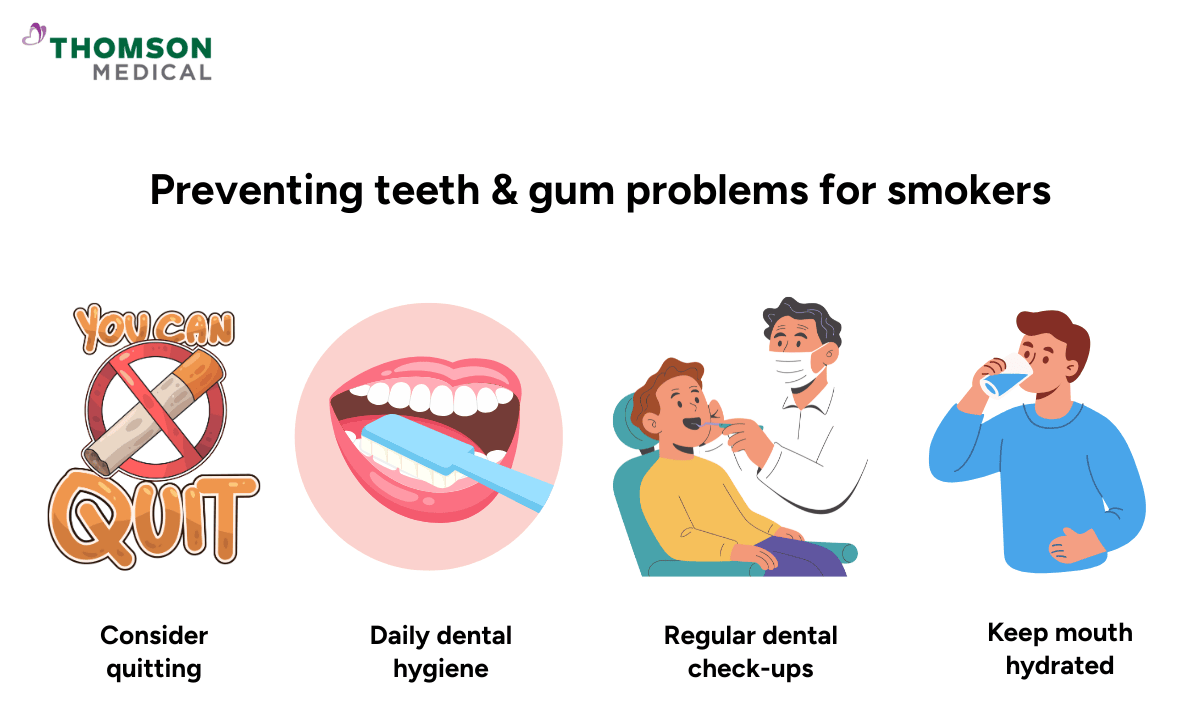
While smoking and vaping can make your gums more vulnerable, there are still things you can do to protect your oral health. Simple, consistent habits can help you stay ahead of problems and keep your smile healthier for longer.
Quitting smoking or vaping
Stopping smoking or vaping is the most effective ways to keep your gums healthy and prevent further harm. Although it may not be easy, your doctor or dentist can support you through the process at a pace that suits you.
Daily dental hygiene
Remember to brush your teeth twice a day using a soft toothbrush and fluoride toothpaste. Regular cleaning removes plaque before it can cause irritation or infection.
Your dentist may also recommend cleaning between your teeth daily. Floss or interdental brushes help reach areas your toothbrush cannot, preventing the build-up that often leads to gum disease.
Regular dental check-ups
Visit your dentist every 6 to 12 months, as regular dental check-ups allow any early signs of gum disease to be addressed before they progress. Your dentist can offer tailored advice and professional cleaning to support healthier gums.
Keep your mouth hydrated
Drink plenty of water and consider sugar-free gum to stimulate saliva. Moisture protects your teeth by neutralising acids and washing away bacteria.
Every positive change brings you closer to healthier gums and a more confident smile. If you would like to take the next step towards improving your daily oral care routine or quitting smoking, our dental specialists at Thomson Medical are here to support you. Schedule an appointment whenever you’re ready.
FAQ
Does smoking affect the gums?
Yes, smoking reduces blood flow, weakens your immune response, and increases the risk of gum disease, making the gums more vulnerable to infection and recession.
What do smoker gums look like?
Smoker gums may appear pale, swollen, or receding. They often bleed less because of reduced blood flow, which can hide early signs of gum disease.
Can you get rid of smoker gums?
Some damage can be improved with quitting smoking, good oral hygiene, and professional dental care. However, advanced gum recession may be permanent.
Can a dentist tell if you smoke?
Yes, staining, dry mouth, delayed healing, and specific gum changes can indicate smoking or vaping habits.
Will my teeth improve if I quit smoking?
Yes, quitting smoking can reduce staining, improve gum health, enhance healing, and lower your risk of gum disease and oral cancer.
How long does it take for smoking to affect your teeth?
Some effects, like staining and dry mouth, can appear within weeks. Gum disease and deeper damage develop gradually over months to years.
The information provided is intended for general guidance only and should not be considered medical advice. For personalised recommendations and advice based on your condition, shedule an appointment with Thomson Dental Centre.