

If you're breastfeeding and your nipples are sore, cracked, or painful, you're not alone. Many new mothers find themselves wincing before a feed, dreading the latch, or quietly wondering if this is just how breastfeeding feels.
Sore nipples are common in early breastfeeding, but you don't have to just grit your teeth and bear it. Most nipple pain has a fixable cause, and with some help, breastfeeding can go from something that hurts to something that works for you.
Is nipple pain normal during breastfeeding?
If you're feeling nipple pain while breastfeeding, you might be wondering if this is normal or if it's just part of what you're supposed to tough out as a new mother.
A bit of nipple soreness in the first week can be normal, as your nipples are getting used to feeding so often. But ongoing pain, sharp pain, and cracked or bleeding nipples are not something you have to accept as normal.
Pain is usually your body's way of flagging that something needs adjusting. Most commonly with how your baby is latching or how much stress your nipples are under during feeds or pumping.
As a mother, you want to offer your baby the best start through your breast milk, but breastfeeding isn’t supposed to hurt. Your comfort matters too.
Can you continue breastfeeding when your nipples hurt?
When your nipples hurt, you might feel stuck between pushing through the pain or stopping breastfeeding, even just for a bit, because it feels unbearable. You might worry that if you keep going, you'll do permanent damage, or that if you stop, your milk supply will dry up or your baby won't feed well.
You can usually keep breastfeeding once you make some changes and get the right help. Protecting your sore nipples while working on your baby's latch allows the pain to ease and breastfeeding to become more comfortable as healing happens.
When breast pump may be a better temporary option
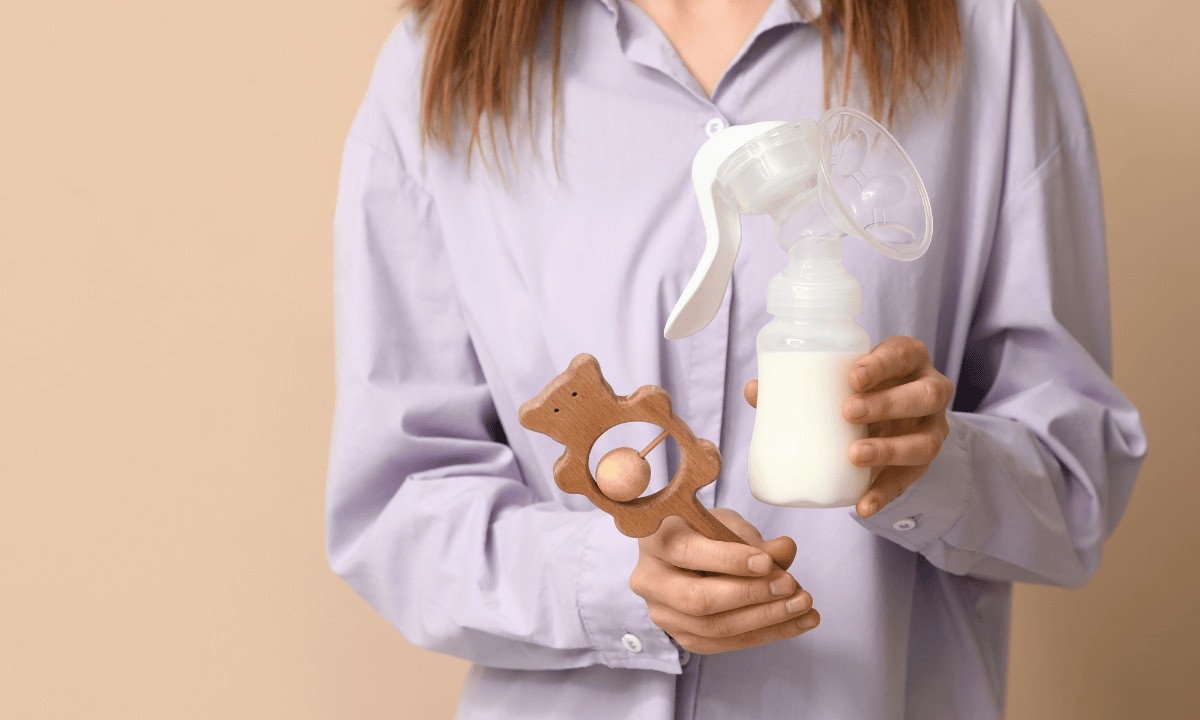
Sometimes, taking a short break from breastfeeding directly on one or both sides can help.
Pumping might be a good option for a little while when:
Latching hurts too much even after trying adjustments
Your nipples are cracked or bleeding
You need time to heal but want to keep your milk coming
Stepping back from direct breastfeeding can bring up guilt, but sometimes it's what your body needs to heal. Your baby is still getting your breast milk and still getting comfort from being held close to you.
Common causes of sore nipples
When breastfeeding hurts this much, it’s natural to want relief as soon as possible. But the best way to fix it and keep it from happening again is to figure out what's causing your nipples to get sore or cracked.
Some common reasons include:
Shallow latch:
This is the most common cause of sore nipples.
When your baby isn’t latched deeply enough, your nipple takes the pressure meant for the areola (the area of dark-coloured skin surrounding your nipple).
This constant friction on the same spot prevents healing and can make every feed more painful.
Positioning issues:
Even a good latch can become painful if positioning isn’t supportive for you or your baby.
Tongue-tie or oral tension:
These can affect how your baby uses their tongue during feeding.
Oversupply or fast let-down:
Your baby may clamp or adjust their latch in response to fast milk flow.
Nipple thrush (a yeast infection):
This often causes burning or shooting pain that doesn’t improve with latch changes.
Pump-related trauma:
Incorrect flange size or high suction from a breast pump can irritate your nipples over time.
Once you know what’s causing the pain, you can start addressing it. Sore nipples are your body’s way of asking for care, and responding to that signal is often the first step to feeling better.
If you’re unsure what’s causing your nipple pain, our lactation consultants can help identify the underlying issue and guide you toward changes that protect healing and prevent pain from returning. Request an appointment with Thomson ParentCraft Centre today.
Our Parentcraft trainers
Loading...
How to relieve sore nipples while breastfeeding
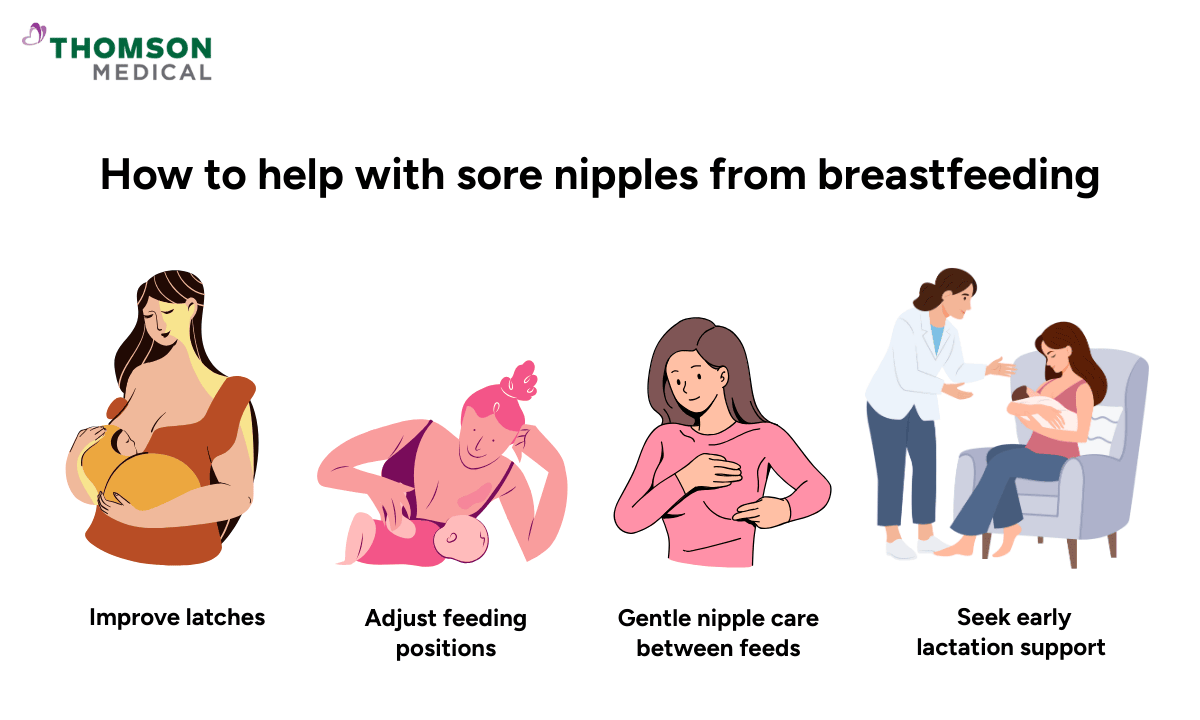
Immediate relief may be the part you’re most eager to read. Nipple pain won’t disappear in minutes, and cracked skin won’t heal in a few hours. But the steps below can help reduce ongoing damage, support healing, and prevent sore nipples from becoming a problem that lasts for months or even years of breastfeeding.
Adjusting your latch
For many mothers, improving latch brings the greatest relief.
A deeper, more comfortable latch helps by:
Reducing friction on already sore skin
Shifting pressure away from the nipple onto the areola
Allowing milk to flow more easily, so your baby doesn’t clamp down
To help your baby get a deeper latch, you can:
Bring your baby close so their chest faces your body, with their head, neck, and spine in a straight line.
Tickle your baby’s upper lip with your nipple and wait for a wide, open mouth – like a yawn.
When the mouth opens wide, bring your baby to the breast (rather than leaning your breast toward your baby), aiming your nipple toward the roof of their mouth.
Your baby’s chin should touch the breast first, with more of the lower areola in their mouth than the upper.
A deep latch often feels like strong pulling rather than sharp pain. If the pain stays bad or gets worse during the feed, it's fine to gently unlatch your baby and try again.
Taking a second to reposition isn’t disrupting your baby – it’s protecting your body so breastfeeding can continue more comfortably. Give yourself permission to adjust the latch as many times as you need. A few extra seconds now can save your nipples a lot of soreness later and help both you and your baby settle into a feed that feels calmer and easier.
Changing breastfeeding positions
When your nipples are cracked or tender, some positions can keep hitting the same sore spot repeatedly.
You might get some relief by:
Using laid-back breastfeeding, as gravity can help your baby get a deeper latch
Trying side-lying positions to take pressure off your body
Switching up positions so different parts of your nipple take the pressure each time
There's no one right position. You might find that one position works better for morning feeds and another might feel more comfortable later in the day. What matters is finding what works for you in each moment.
Between-feed nipple care
What you do between feeds matters, as this is when your nipples are able to rest from friction and start the healing process.
Tender care can include:
Using nipple balm to protect healing skin
Letting nipples air-dry when possible
Using breast shells inside a nursing bra to protect sore nipples from clothing friction
Avoiding harsh soaps, scrubbing, or over-washing
While these steps support healing, they work best alongside fixing what's causing the pain in the first place.
Lactation support as part of immediate relief
It’s common to see lactation support as a last step, something to turn to only when nipple pain becomes unbearable. But reaching out early might be one of the most effective ways to shorten how long pain lasts.
A lactation consultant can help by:
Watching a full feed and identifying subtle latch issues
Assessing positioning, nipple damage, and milk flow
Offering personalised adjustments that reduce pain quickly
Helping you create a plan that protects both healing and milk supply
You don’t have to wait until the pain becomes unbearable. Early support from a lactation consultant can help ease the pain, fix the latch, and make sure your baby is feeding well while you heal.
Our home care service offers calm, personalised care at home to support healing and comfortable breastfeeding. Request a home visit with our experienced nurses and certified lactation consultants.
How to protect your nipples
Once the pain finally goes away, you might feel relieved but still worried it'll come back. Taking care of your nipples as you go can help you stay comfortable and keep healing properly.
This includes:
Continuing to prioritise a deep, comfortable latch
Adjusting positions as your baby grows
Monitoring pump settings and flange size
Seeking help early if discomfort returns
Sore nipples are one of the most common problems in early breastfeeding, and the pain can feel sharp enough to make you wonder if you can keep going. If that's where you are right now, please be gentle with yourself. Taking some pressure off and letting your body heal is part of taking care of both you and your baby. It’s not a sign of failure.
FAQ
Can I wear breast shells all the time?
Breast shells are best used for short periods. Wearing them continuously can trap moisture and increase the risk of irritation or infection.
How can I tell if I have thrush on my nipples?
Thrush (also known as candida) is a fungal infection. You may experience:
Burning or stabbing pain that continues during or after feeds
Pain usually doesn’t improve with latch changes
Your nipples may look shiny, pink, or flaky
Will breast thrush go away by itself?
Breast thrush usually needs treatment. Without treatment, symptoms often persist and may affect both you and your baby.
Do sore nipples mean a bad latch?
A shallow or uncomfortable latch is the most common cause of sore nipples. However, soreness can also be related to positioning, pumping issues, or infection.
Do I need to wipe off lanolin before breastfeeding?
Medical-grade lanolin is safe for your baby and does not need to be wiped off before feeds.
How to help with sore nipples from breastfeeding?
Improving latches, adjusting feeding positions, gentle nipple care between feeds, and seeking early lactation support can all help reduce pain and support healing.
The information provided is intended for general guidance only and should not be considered medical advice. For personalised recommendations based on your medical conditions, request an appointment with Thomson ParentCraft Centre.
For more information, contact us:
Thomson ParentCraft Centre
Thomson Fertility Centre (Paragon)
- Call: 6252 7766
- Novena: 6399 3758, 8811 0358 (WA)