

When it comes to male fertility, most couples tend to focus on factors such as sperm count, motility, and shape – the numbers that appear on a standard semen analysis. However, in some cases, sperm can look perfectly healthy under the microscope yet carry damaged DNA inside. A sperm DNA fragmentation test can reveal what routine tests often miss.
This hidden issue, known as sperm DNA fragmentation, can affect your chances of conception and raise the risk of miscarriage, even when other fertility results appear normal.
What is a sperm DNA fragmentation test?
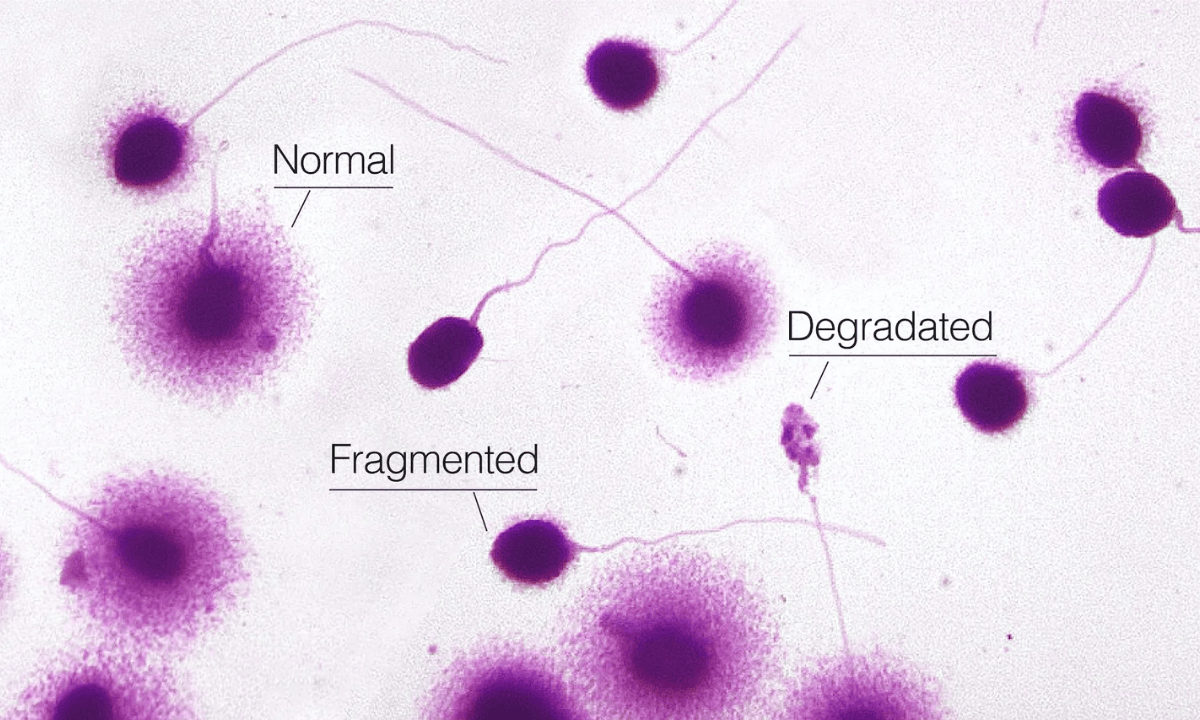
The sperm DNA fragmentation test (SDF test) measures the integrity of DNA within sperm cells. Unlike basic checks, it uncovers hidden damage that could sabotage conception, even if sperm count and motility look fine.
Imagine your sperm DNA as a tiny instruction manual containing all the information for building a baby. DNA fragmentation happens when those "pages" break or unravel due to oxidative stress, age, or toxins – like tears in the manual making it unreadable. High fragmentation means the sperm can't deliver intact genetic code, raising miscarriage or pregnancy risks.
Common causes of DNA fragmentation include:
Oxidative stress in the body
Advancing age
Infections or inflammation
Exposure to heat, toxins, or certain medications
Lifestyle factors such as smoking, heavy drinking, or being overweight
A healthy sperm will have a large "halo" surrounding it, which is a sign that its DNA is protected and intact. However, sperm with damaged or fragmented DNA will have a small halo or even no halo at all.
How it differs from a standard semen analysis
A standard semen analysis test is usually the first test most men undergo. It measures three main things:
Sperm count: how many sperm are present
Motility: how well they move
Morphology: their shape and structure
To put it simply, a semen analysis is like checking whether the "car" can start and drive, while a sperm DNA fragmentation test opens the hood and looks at the engine inside.
This deeper look can reveal hidden issues that routine analysis may miss, especially for men whose basic results appear within normal range.
Why a "normal" semen analysis isn't always enough
If you've found yourself asking, "We’ve done everything right, so why are we still having a hard time having a baby?" – please know you are not alone in that feeling. Many couples receive reassuring semen analysis results and still struggle to conceive.
Research suggests that sperm DNA damage may play a role in up to 80% of unexplained infertility cases. Sperm that look healthy on the surface can still carry fragmented DNA, which may affect fertilisation, embryo development, or implantation.
Understanding this can feel disheartening at first, but it can also be empowering. It opens the door to tests and supportive care that a basic analysis simply cannot offer.
Worried that you or your partner might be affected by sperm DNA fragmentation? Schedule an appointment with Thomson Fertility Singapore (Novena) to speak with our fertility specialists who can guide you through the tests and provide advice on your next steps.
Who should consider this test?

The SDF test is not always used for in-vitro fertilisation (IVF) or intrauterine insemination (IUI) treatment. It is usually recommended by a fertility specialist when certain patterns suggest deeper investigation may help.
Your doctor may suggest an SDF test if you or your partner are facing:
Unexplained infertility: trying to conceive for 12 months or more with normal initial results
Recurrent miscarriage: experiencing two or more pregnancy losses
Failed IVF or IUI cycles: despite embryos that appeared to develop well
Males aged over 40: as DNA damage tends to accumulate gradually with age
Varicocele: swollen veins in the scrotum that may raise scrotal temperature
Lifestyle or environmental concerns: such as smoking, heat exposure, or chronic stress
Your fertility specialist is the best person to decide whether this test is right for your journey.
Our fertility specialists
Loading...
How the sperm DNA fragmentation test is performed
The test itself is simple and non-invasive. In fact, it’s very similar to a standard semen analysis.
Here is what you can expect:
A semen sample is collected in a private room at the clinic, typically after 2 to 5 days of abstinence
No lubricants should be used during collection
The laboratory then analyses the DNA integrity of the sperm cells
Your clinic will guide you through every step, and results are usually discussed at a follow-up consultation.
How to prepare for the test
Preparation is straightforward:
Abstain from ejaculation for 2 to 5 days before the test
Avoid alcohol and tobacco for about a week prior
Stay well hydrated
Skip saunas and hot baths in the days leading up to the test
Let your doctor know about any medications or supplements you are taking
No fasting is required.
Turnaround time
The SFD test is currently only available at our Thomson Fertility Singapore (Novena). We use a fully automated semen analysis process, generally allowing you to collect your results within one working day.
What does your DNA Fragmentation Index (DFI) score mean?
Your results come as a percentage called the DNA Fragmentation Index (DFI). This reflects the proportion of sperm with damaged DNA. Generally, the lower your DFI score, the better your sperm quality.
Results are usually grouped into three broad bands:
Low DFI (below 15%): generally considered a reassuring result
Moderate DFI (15–30%): a borderline range where lifestyle review and monitoring are often suggested
High DFI (above 30%): may indicate reduced fertility potential and warrants specialist review
What do your results mean for natural conception, IUI, IVF, and ICSI?
DFI Level | Natural Conception | IUI | IVF | ICSI |
<15% | High success | Good | Very Good | Very Good |
15-30% | Moderate | Fair | Good | Very Good |
>30% | Low | Poor | Fair | Good |
While DFI is important, it’s just one piece of a much larger picture. Your fertility specialist will interpret it alongside your overall health, your partner's assessment, and your fertility goals.
What to do if your DFI is high
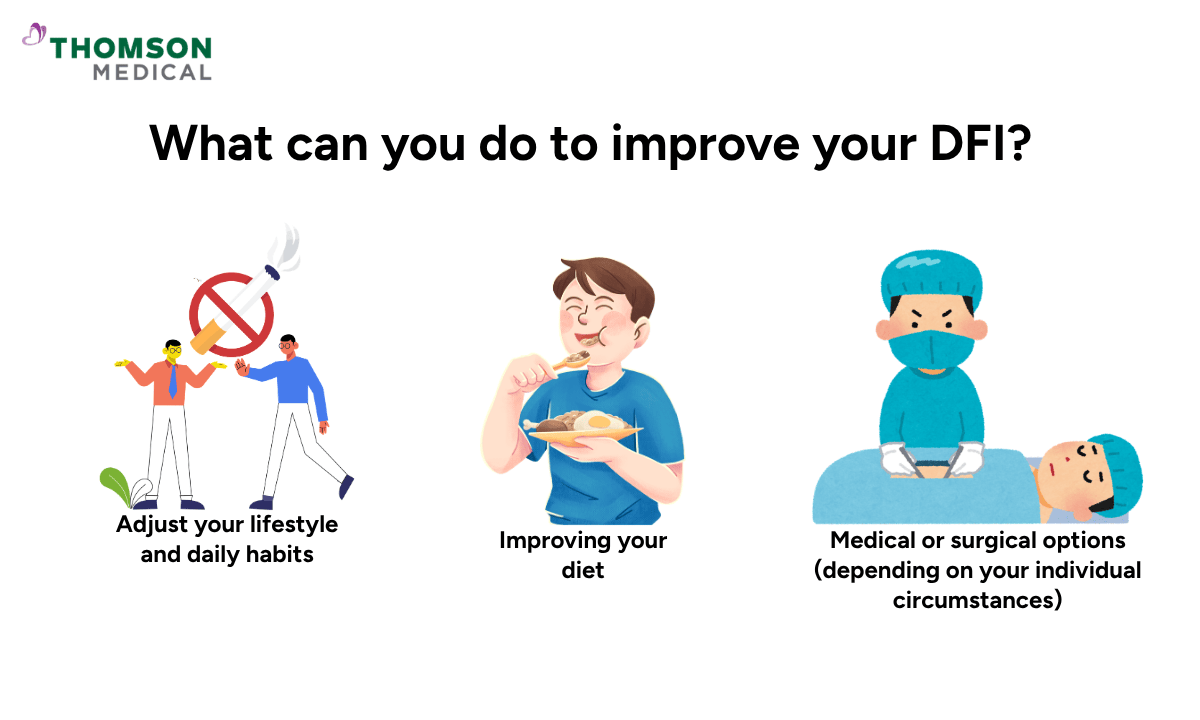
A higher DFI can feel worrying, but it is important to know that sperm quality is not fixed. Your sperm cells regenerate roughly every three months, which means there is real potential for improvement with the right support.
Lifestyle and wellbeing
Gentle, steady lifestyle changes can make a meaningful difference over time:
Stop smoking and limit alcohol intake
Maintain a healthy body weight through balanced eating and moderate exercise
Avoid prolonged heat exposure such as hot tubs, saunas, or placing laptops on the lap
Choose loose, breathable underwear
Manage stress with rest, movement, and support
Nutrition and antioxidant support
A diet rich in antioxidants may help protect sperm DNA. Foods to consider include:
Berries, citrus fruits, and leafy greens
Nuts such as walnuts and almonds
Fatty fish like salmon and sardines
Whole grains and legumes
Your doctor may also discuss whether specific supplements are appropriate for you. Please do not start any supplement regime without medical guidance.
Medical and surgical options
Depending on the underlying cause, your specialist may recommend further treatment. For example, repair of a varicocele or a tailored assisted reproduction approach. Every plan is personal, and your care team will walk you through what feels right for your situation.
Cost of the Sperm DNA Fragmentation Test in Singapore
The cost of an SDF test in Singapore varies depending on the laboratory method used and the clinic but is typically in the range of SGD 200 to SGD 500.
Please note these costs are typically not claimable under Medisave or MediShield.
For up-to-date fees, make an appointment at Thomson Fertility Singapore (Novena). Our healthcare professionals can help assess your situation and advise you on the next steps of your fertility journey.
FAQ
Is a sperm DNA fragmentation test worth it?
For couples facing unexplained infertility, recurrent miscarriage, or failed fertility cycles, it can uncover factors that standard tests may miss. Your fertility specialist can help you decide whether it is appropriate for your situation.
Can I get pregnant if my husband has sperm DNA fragmentation?
Yes, pregnancy remains possible. The path forward depends on the degree of fragmentation and your overall fertility picture. Many couples achieve pregnancy through a combination of lifestyle changes, medical care, and assisted reproduction.
How to fix sperm DNA fragmentation?
Supportive steps often include stopping smoking, managing weight, reducing heat exposure, eating an antioxidant-rich diet, and treating underlying conditions such as varicocele. A repeat test after a few months can help track progress.
Can IVF succeed with high DNA fragmentation?
Yes, pregnancy through IVF is still very much possible. For many couples facing elevated DNA fragmentation, it remains a hopeful path forward.
In these situations, your fertility specialist may suggest a technique called intracytoplasmic sperm injection (ICSI), where a single healthy sperm is carefully selected and injected directly into the egg. This gentler, more targeted approach can help bypass some of the challenges that DNA fragmentation may create during fertilisation.
At what age is a man most fertile?
Male fertility is generally highest from the mid-twenties to mid-thirties. After age 40, DNA damage tends to accumulate gradually, though many men remain fertile well beyond this.
Is 18% considered high DNA fragmentation for sperm?
No. 18% would be considered in the moderate range (15-30%). If your test results show that you are within this range, it is possible to improve by adjusting your lifestyle (stop smoking, eat healthier, etc.) and retest in 3 months.
What foods reduce DNA fragmentation in sperm?
A Mediterranean-style diet rich in berries, leafy greens, nuts, fatty fish, citrus fruits, and whole grains is often recommended.
The information provided is for general guidance only and should not be considered as medical advice. For a personalised consultation and tailored advice, schedule an appointment with Thomson Medical today.
References:
High sperm DNA damage a leading cause of 'unexplained infertility', research finds. (2012, November 12). ScienceDaily. https://www.sciencedaily.com/releases/2012/11/121114113235.htm
Agarwal, A., Majzoub, A., Baskaran, S., Panner Selvam, M. K., Cho, C. L., Henkel, R., Finelli, R., Leisegang, K., Sengupta, P., Barbarosie, C., Parekh, N., Alves, M. G., Ko, E., Arafa, M., Tadros, N., Ramasamy, R., Kavoussi, P., Ambar, R., Kuchakulla, M., … Shah, R. (2020). Sperm DNA fragmentation: A new guideline for clinicians. World Journal of Men’s Health, 38(4), 412–471. https://doi.org/10.5534/wjmh.200128
Zahid, N., Tariq, U., Tahir, M., Hussain, S. S., & Rehman, R. (2020). Determine DNA fragmentation in normospermic and oligospermic samples: A pilot study. Human Reproduction Archives, 35, e001818. https://doi.org/10.4322/hra.001818
For more information, contact us:
Thomson Fertility Centre
- Paragon: 6252 7766
- Novena: 6399 3758, 8811 0358 (WA)