

Receiving a stage 1 breast cancer diagnosis can bring up a lot of questions, and it's completely normal to feel uncertain about what lies ahead. The reassuring news is that stage 1 is an early diagnosis. This means the cancer is often caught before symptoms appear, giving you a head start on treatment and recovery.
Knowing whether the cancer has spread, what treatment will involve, or how serious your situation is can help you feel more prepared and confident as you move forward.
What is stage 1 breast cancer?
Staging is a way of describing how far the cancer has grown or spread. If you’re told you have stage 1 breast cancer, it means the cancer is still small and has not spread to distant organs.
To give a clearer picture, doctors often describe a “sub-stage”:
Stage 1A:
Your tumour is 2 cm or smaller and there are no cancer cells found in nearby lymph nodes.
Stage 1B:
Your tumour is 2 cm or smaller, and a very small number of cancer cells may be found in nearby lymph nodes.
Your doctor will confirm which sub-stage applies to you and use this information to guide the most appropriate treatment plan for you.
Our breast cancer specialists in Singapore
Loading...
What are the symptoms of stage 1 breast cancer?
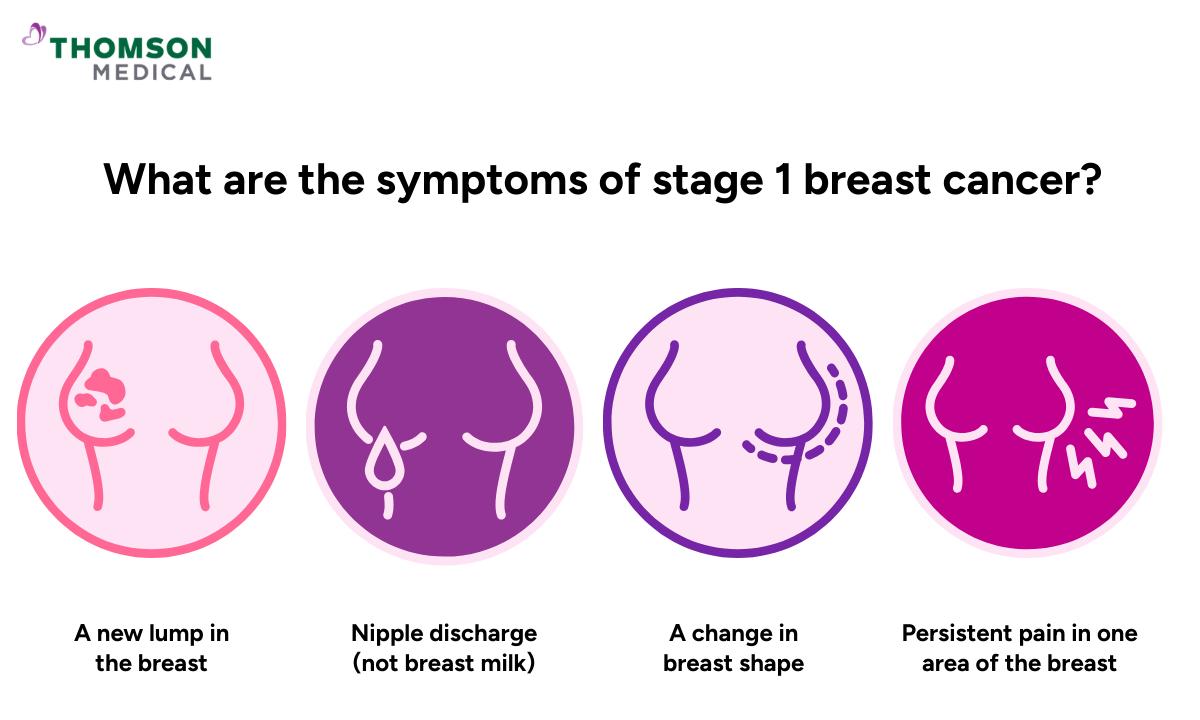
Stage 1 breast cancer does not always cause noticeable changes in the early stages. In fact, many women only find out after a routine screening.
You might notice:
A new lump or thickening in your breast or underarm area
A change in the size or shape of your breast
Skin changes such as dimpling, puckering, or redness
A nipple that has turned inward (if this is new for you)
Nipple discharge that is not breast milk
Persistent breast pain
Having one or more of these symptoms does not automatically mean you have breast cancer. Many breast changes are caused by non-cancerous conditions. But if something feels new, unusual, or persistent, it’s worth getting checked with your doctor.
Noticing a new breast change can feel worrying, even if it’s often not serious. Request an appointment with Thomson Breast Centre to have any new lumps, skin changes, or nipple symptoms checked so you can get clear guidance and reassurance about your breast health.
How stage 1 breast cancer is diagnosed
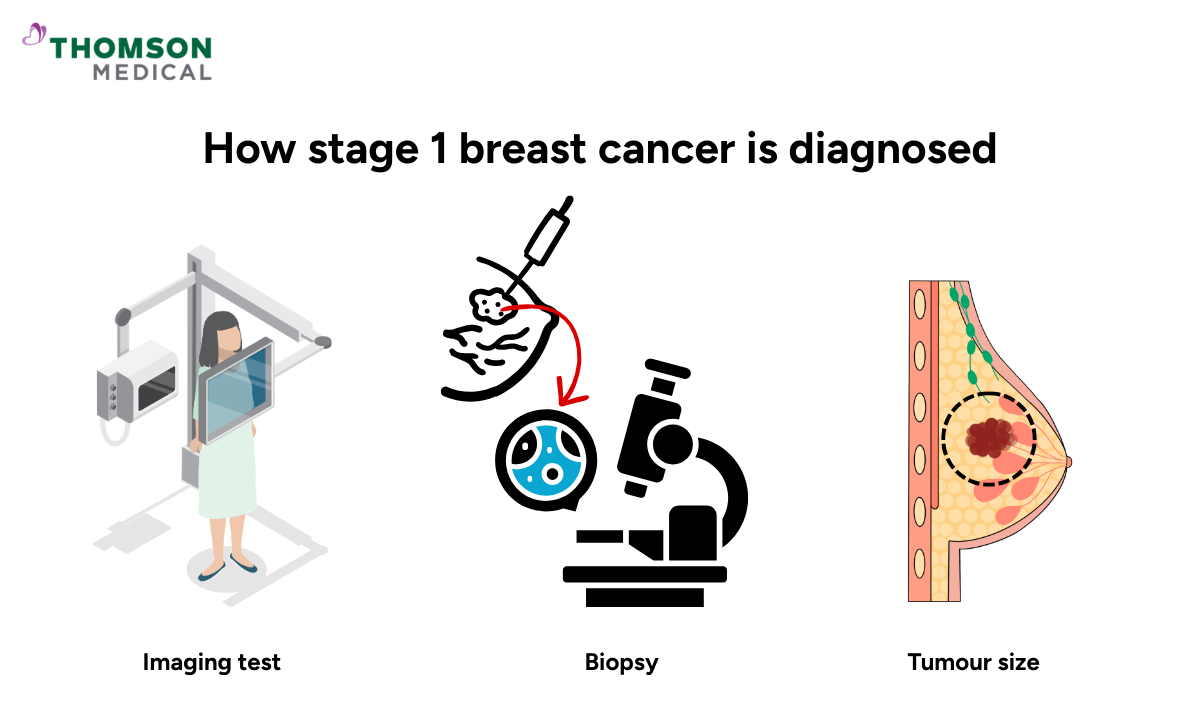
If your doctor suspects breast cancer, several tests are usually done to confirm it, assess the tumour, and check nearby lymph nodes.
Mammogram
A breast mammogram is a low-dose breast X-ray and is often how stage 1 breast cancer is first detected. During the scan, your breast is gently compressed between two plates for a few seconds to produce clear images of the tissue. Many stage 1 breast cancers are picked up this way during routine screening, before you notice any changes yourself.
If something unusual is seen, your doctor may ask you to return for a diagnostic mammogram or recommend additional imaging for a closer look. This is a routine next step and does not automatically mean something is wrong.
Breast ultrasound
A breast ultrasound uses sound waves to create detailed images of the inside of your breast. If a lump or unclear area has been spotted on your mammogram, an ultrasound helps your doctor get a better look, including whether it is a fluid-filled cyst, which is usually not cancerous, or a solid area that needs further assessment.
Your doctor may also recommend an ultrasound alongside your mammogram if you have dense breasts. Dense breasts have more tissue and less fat, which can make it harder to see certain abnormalities on a mammogram alone.
MRI scan
In some cases, your doctor may recommend a breast MRI after your mammogram or ultrasound. An MRI uses magnetic fields to produce detailed images and can give a clearer picture of the tumour and surrounding tissue. This is not always necessary, but your doctor may suggest it if they need more information before confirming your diagnosis or planning your treatment.
Biopsy
If imaging shows an abnormal area, your doctor will perform a breast biopsy to confirm whether cancer cells are present. During this procedure, a small sample of tissue is taken from the affected area using a fine needle or small instrument and examined under a microscope.
The biopsy reveals:
The type of cancer
How quickly the cells are growing
Whether the cancer is hormone-sensitive
This information helps your doctor decide the treatment plan for you. Most people find a biopsy uncomfortable rather than painful.
Tumour size and lymph node involvement
The first is tumour size. In stage 1, the tumour is no larger than 2 cm, which is roughly the size of a grape. The second is whether any cancer cells have been found in nearby lymph nodes, which are small glands in your armpit that help your body fight infection.
If no cancer cells are found in the lymph nodes, this is stage 1A. If a very small number of cancer cells are present, this is stage 1B. Even so, the amount involved is minimal, and this remains an early-stage diagnosis. Your doctor will use both of these details together to ensure your treatment plan is right for you.
Remember that these scans do not confirm cancer on their own. They only show areas that may need further investigation.
How is stage 1 breast cancer treated?
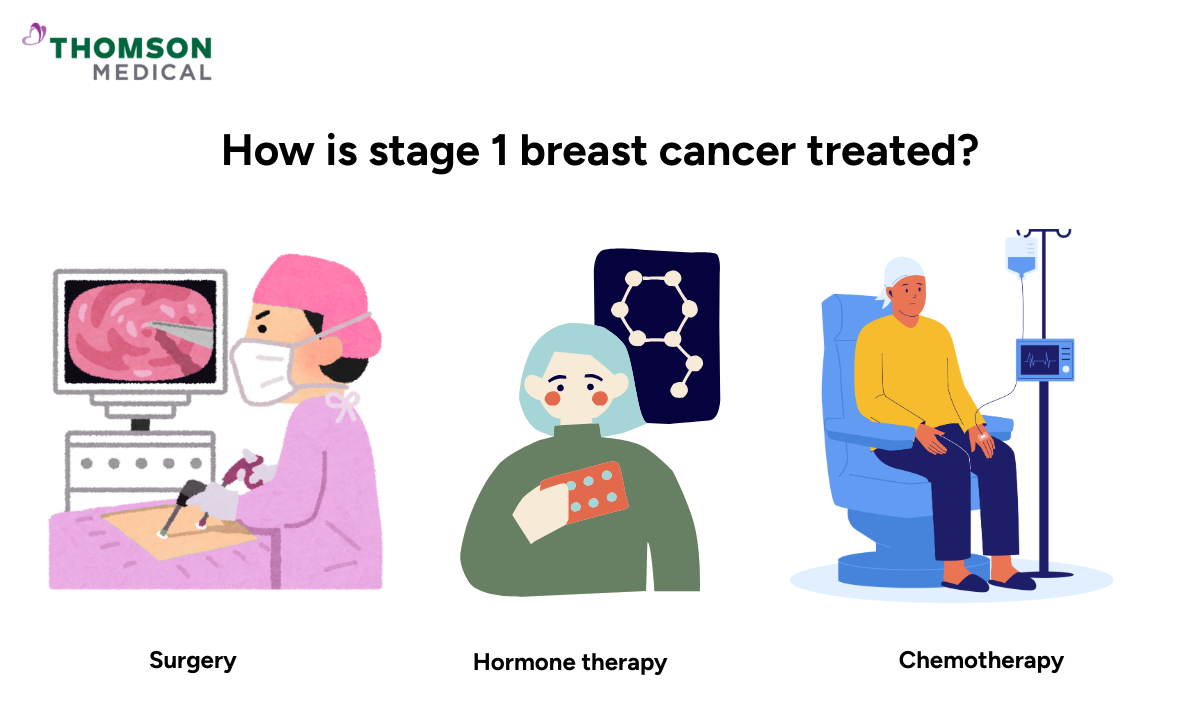
Stage 1 breast cancer is considered early, and there are several effective treatment options available to you. Your doctor will take time to understand your specific diagnosis before recommending a plan that suits your needs.
Your treatment will depend on:
The grade and size of your cancer cells
Whether your cancer is hormone receptor-positive or HER2-positive
Your age and overall health
Your personal preferences about each of the options
There is no need to rush into a decision. An early diagnosis means you have the opportunity to discuss openly with your doctor, understand what each option involves, and feel confident about the path ahead.
Surgery
Surgery is often the first step in treatment.
Depending on your situation, your surgeon will help you decide between two options:
Lumpectomy:
Removes the tumour along with a small amount of surrounding healthy tissue
Keeps most of your breast intact
For many women with stage 1 disease, outcomes are generally similar to those of a mastectomy
Mastectomy:
Removes the entire breast.
May be recommended depending on tumour size, location, type, or personal preference.
If a mastectomy is advised, your surgeon will discuss breast reconstruction with you before any decisions are made.
Radiotherapy
If you have had a lumpectomy, your doctor may recommend radiotherapy to help reduce the risk of the cancer returning. It targets any remaining cancer cells in the breast and typically begins a few weeks after surgery, once your body has had time to recover.
Not everyone will need radiation therapy. Your doctor will carefully weigh the benefits against any potential risks before making a recommendation specific to you.
Hormone therapy (endocrine therapy)
If your cancer cells are sensitive to hormones such as oestrogen or progesterone, your doctor may recommend hormone therapy after surgery.
It works by limiting the influence of these hormones on any remaining cancer cells, helping to lower the chance of the cancer returning. This treatment often involves taking a daily tablet for up to five years.
Chemotherapy
Many women with stage 1 breast cancer do not need chemotherapy. Your doctor may recommend it if certain features suggest your cancer could benefit, such as if the cells appear more aggressive. In some cases, genomic testing, which looks at the behaviour of genes within your cancer cells, can also help your doctor assess whether chemotherapy would make a difference to your outcomes. This allows your treatment plan to be as targeted and personalised as possible.
Targeted therapy
Certain breast cancers produce higher levels of a protein called HER2, which can cause cancer cells to grow more rapidly. If your cancer is HER2-positive, targeted therapy may be recommended alongside other treatments.
These medications are designed to interfere with the HER2 protein directly, helping to slow the progression of cancer cells. Your doctor will confirm whether this applies to your diagnosis and explain what it would mean for your care.
A stage 1 breast cancer diagnosis is hard to hear. The outlook at this stage is generally encouraging, and many women complete treatment and live their lives well. Your care team will support and guide you throughout the process.
Learning you have stage 1 breast cancer can feel overwhelming, but you don’t have to face it alone. Request an appointment with Thomson Breast Centre to go over your personalised treatment options and get guidance every step ahead.
FAQ
What is the difference between stage 1 and stage 2 breast cancer?
Stage 1 means your tumour is 2 cm or smaller and has not spread far beyond your breast. Stage 2 means the tumour is larger (between 2 and 5 cm) or cancer cells have reached more lymph nodes. Both are still considered early-stage diagnoses.
What are the survival rates for stage 1 breast cancer?
With prompt treatment, survival rates for stage 1 breast cancer are over 90%. Many women respond well to treatment. Your doctor can give more specific information based on your diagnosis and hormone receptor status.
What does HER2-positive mean for my stage 1 breast cancer?
HER2-positive means your cancer cells have extra HER2 protein, which can make them grow faster. Targeted treatments can block this protein, and your doctor will explain if these are part of your plan.
Can stage 1 breast cancer spread to distant parts of the body?
Stage 1 breast cancer has not spread to distant parts of the body. It is localised to the breast and possibly a very small number of nearby lymph nodes. This is why it is considered early-stage.
What does a stage 1 breast cancer mammogram show?
A mammogram can detect small tumours or changes in breast tissue that you may not feel. At this stage, tumours are typically 2 cm or smaller.
Will I need chemotherapy for stage 1 breast cancer?
Not everyone with stage 1 breast cancer needs chemotherapy. Your doctor considers:
- Tumour grade is based on how aggressive the cancer cells appear
- HER2 status, whether your cancer is HER2 positive
- Genomic profiling results, which is tests that analyse your cancer’s genes to predict growth and recurrence risk
Many women with stage 1 may be able to avoid chemotherapy based on these results.
The information provided is intended for general guidance only and should not be considered medical advice. For personalised recommendations and tailored advice based on your unique situations, request an appointment with Thomson Breast Centre today.