

If you have just been diagnosed with stage 2 breast cancer, you probably have many questions.
Will I need chemotherapy? Will I lose my breast? How serious is this really?
These concerns are completely valid. Knowing what stage 2 breast cancer means, how it’s treated, and what steps come next can help you feel more prepared and confident when discussing your options with your doctor.
What is stage 2 breast cancer?
Stage 2 of breast cancer means the cancer is growing but remains in the breast area. It has not reached distant parts of your body, such as the lungs or liver. At this stage, the cancer may involve the breast tissue, the nearby lymph glands under the arm, or both.
Compared to stage 0 or stage 1, stage 2 tumours are generally larger or have started to affect nearby lymph glands. This means treatment is usually more involved, often combining more than one approach to give you a higher chance of a good outcome.
What are the types of stage 2 breast cancer?
Stage 2 breast cancer is divided into two groups, 2A and 2B, based on tumour size and lymph gland involvement. The distinction matters because it directly influences how your doctor plans your treatment.
Stage 2A
You may be classified as stage 2A if:
The tumour is 2 cm or smaller and has spread to 1-3 nearby lymph glands
The tumour is between 2 and 5 cm but has not spread to the lymph glands
No tumour is found in the breast, but cancer cells are present in 1-3 lymph glands
Stage 2B
You may be classified as stage 2B if:
The tumour is between 2 and 5 cm and has spread to 1-3 nearby lymph glands
The tumour is larger than 5 cm but has not spread to the lymph glands
Your doctor will confirm which sub-stage applies to you. While these details can feel technical, they give your care team the information they need to build the treatment plan for you.
Our breast cancer specialists in Singapore
Loading...
What are the symptoms of stage 2 breast cancer?
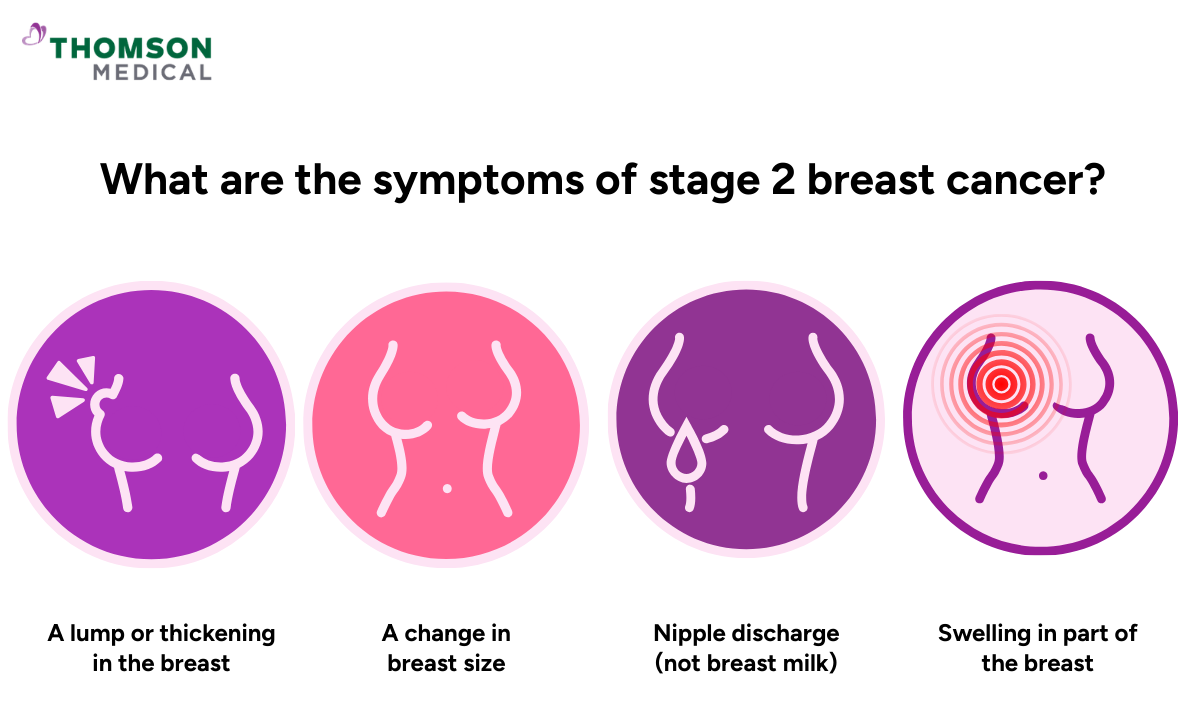
At stage 2, breast changes are more likely to be noticeable than at earlier stages, although not always. Some women are diagnosed during a routine screening with no symptoms at all, while others notice clear physical changes.
Signs to be aware of include:
A lump or thickening in your breast or underarm area
A change in breast size or shape
Skin changes such as dimpling, puckering, or redness
A nipple that has turned inward (if never before)
Nipple discharge that is not breast milk
Swelling in your breast or underarm area, which may indicate lymph gland involvement
If you have noticed any of these changes, it is important not to delay getting them assessed. The sooner a diagnosis is confirmed, the sooner your care team can put a plan in place for you.
If you’re unsure about any changes in your breasts or need guidance on screening, speaking with a healthcare professional is a helpful first step. Request an appointment with Thomson Breast Centre, our team can provide personalised advice and determine whether additional assessments are needed.
How stage 2 breast cancer is diagnosed
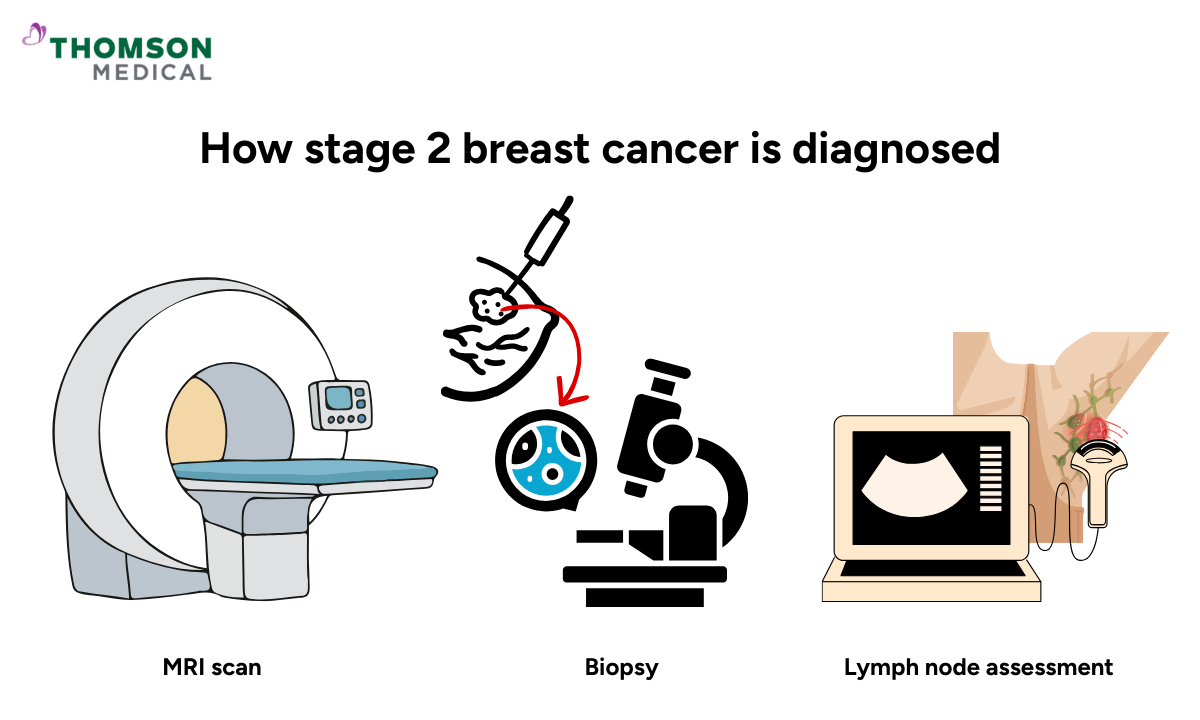
Diagnosing stage 2 breast cancer involves a combination of tests. Together, they give your doctor a detailed picture of the tumour, whether the lymph glands are involved, and how the cancer is behaving.
Imaging tests
Your doctor will usually begin with imaging tests to build a clear picture of the tumour and surrounding area. At stage 2, these scans do more than confirm a tumour is present. They help determine its size, position, and whether the lymph nodes are involved, all of which directly shape your treatment plan.
You may have one or more of the following:
A breast mammogram maps the size and position of the tumour within the breast
Breast ultrasound examines the tumour and nearby lymph nodes more closely
Magnetic resonance imaging (MRI) scans provide a more detailed view if your doctor needs more information before deciding your treatment approach
This can be especially important at stage 2, where understanding the full scope of the cancer helps your doctor plan whether surgery should come first or whether shrinking the tumour with treatment beforehand may be a better approach.
Biopsy
If imaging identifies an area of concern, your doctor will perform a breast biopsy to confirm whether cancer cells are present. During this procedure, a small sample of tissue is taken from the affected area and examined under a microscope. Most people find it uncomfortable rather than painful, and your care team will ensure you are well supported throughout.
Lymph node assessment
Checking the lymph glands is one of the most important steps in diagnosing stage 2 breast cancer, because lymph gland involvement is what often distinguishes stage 2 from earlier stages.
Lymph nodes are small glands located in your armpit that help your body fight infection. When breast cancer cells begin to travel, the lymph nodes under the arm are usually the first place they reach.
Your doctor may assess your lymph nodes in two ways:
Ultrasound-guided assessment:
An ultrasound is used to examine the lymph glands under your arm.
If any glands look abnormal, a small needle biopsy may be taken at the same time to check for cancer cells
Sentinel lymph node biopsy:
During surgery, your doctor identifies and removes the first one or two lymph nodes that are most likely to be affected.
These are examined to determine whether cancer has spread beyond the breast
The results of your lymph node assessment will have a direct impact on your treatment plan, including whether you need radiotherapy to the armpit area or a more extensive removal of lymph nodes.
How is stage 2 breast cancer treated?
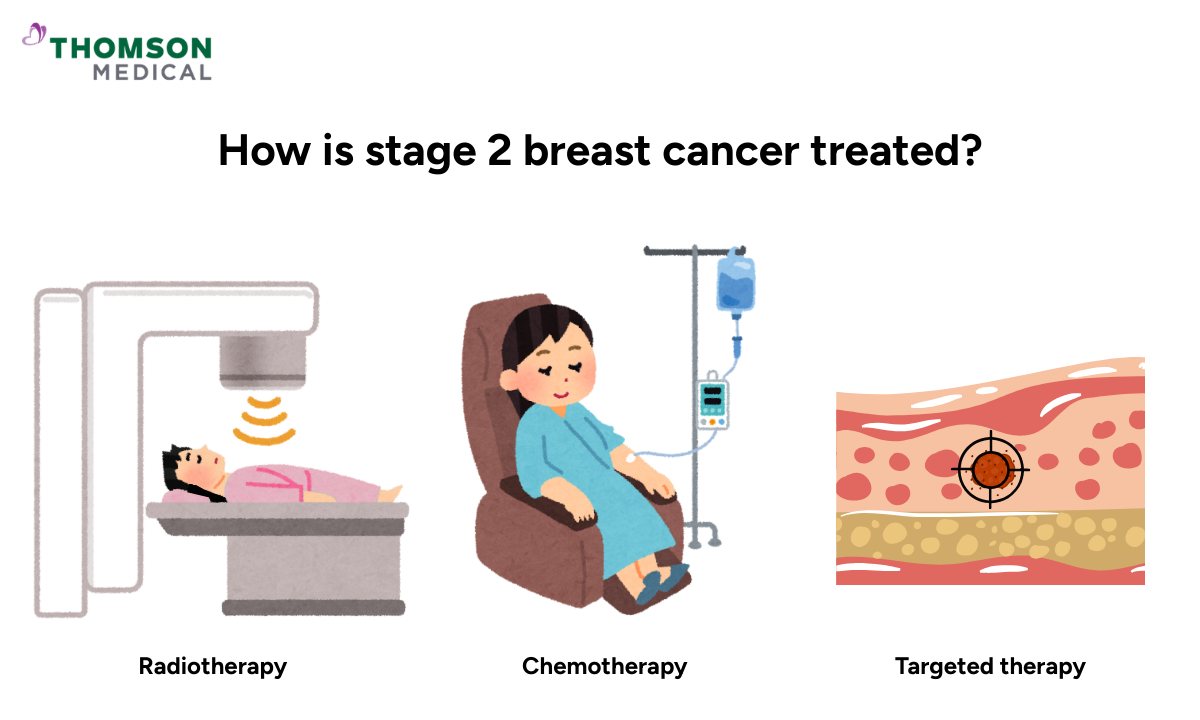
Once a stage 2 breast cancer diagnosis is confirmed, your doctor will discuss your treatment options with you. The approach will depend on factors specific to your situation, such as the size of the tumour and whether the cancer has spread to nearby lymph nodes.
At stage 2, treatment is more comprehensive than at earlier stages. Because the cancer may have grown larger or reached nearby lymph glands, your care team will usually recommend a combination of treatments working together to give you the better outcome.
Your treatment plan will be shaped by:
The size, grade, and location of your tumour
Whether and how many lymph glands are involved
Whether your cancer is hormone receptor positive or HER2 positive
Your age, overall health, and personal preferences
Surgery
Surgery is often where treatment begins, though at stage 2 this is not always the case. In some situations, treatment to shrink the tumour is recommended first. Your surgeon will discuss which approach makes the most sense for your diagnosis.
The two main surgical options are:
Lumpectomy:
This approach involves removing the tumour and a small margin of surrounding healthy tissue
At stage 2, this remains possible for you, especially if the tumour has responded well to treatment beforehand
This preserves most of your breast
Mastectomy:
This option involves removing the entire breast
This is more likely to be recommended at stage 2 if the tumour is large, located in a position that makes lumpectomy difficult, or if cancer is present in multiple areas of the breast
If a mastectomy is recommended, breast reconstruction is an option your surgeon will walk you through, either as part of the same procedure or planned for a later stage.
Your surgeon will also discuss whether your lymph nodes need to be surgically assessed or removed during the same operation, depending on what earlier tests have shown.
Radiotherapy
After surgery, radiotherapy is commonly part of the treatment plan at stage 2. It uses carefully targeted radiation to destroy any cancer cells that may remain after the operation.
Radiotherapy is routinely recommended following a lumpectomy or a mastectomy to reduce the risk of the cancer returning in your chest wall or surrounding area.
Your doctor will explain the recommended course of treatment and what each session involves.
Chemotherapy
Chemotherapy plays a more significant role at stage 2 than at earlier stages. It uses anti-cancer medicines to target cancer cells throughout your body and may be recommended either before or after surgery.
Before surgery (neoadjuvant chemotherapy):
By shrinking the tumour ahead of surgery, it may make a lumpectomy possible where a mastectomy might otherwise have been needed.
It also allows your doctor to see how well your cancer is responding to treatment, which helps guide what comes next
After surgery (adjuvant chemotherapy):
It is given to reduce the risk of the cancer returning, particularly if there are features of your cancer that suggest a higher chance of recurrence
Whether chemotherapy is recommended depends on the specific characteristics of your cancer. Genomic testing, which analyses the behaviour of genes within your cancer cells, may also be used to help your doctor assess whether chemotherapy would make a difference to your outcomes.
Hormone therapy (endocrine therapy)
If your cancer is hormone receptor positive, hormone therapy is an important part of your long-term treatment plan. It works by reducing the effect of oestrogen or progesterone on any remaining cancer cells, lowering the risk of the cancer coming back.
At stage 2, hormone therapy is usually taken for five to ten years after surgery, longer than at earlier stages, reflecting the importance of sustained protection. The specific medication will depend on your menopausal status and overall health.
Targeted therapy
If your cancer is HER2 positive, targeted therapy is a key part of your treatment at stage 2. These medications are designed to block the HER2 protein directly, interfering with the signals that drive cancer cell growth.
Targeted therapy is normally given alongside chemotherapy and continued for up to a year after surgery. Your biopsy results will confirm whether your cancer is HER2 positive, and your doctor will explain what this means for your treatment plan and what to expect during the process.
While stage 2 treatment can feel worrying, many women respond very well. Your care team will guide you every step, using therapies tailored to your cancer, helping you stay supported and hopeful throughout the process.
If you’ve been diagnosed with stage 2 breast cancer, talking with a specialist is an important next step. Request an appointment with Thomson Breast Centre where our team can explain the treatment options available, help you understand what each approach involves, and support you in deciding what feels right for your situation.
FAQ
Is stage 2 breast cancer considered early-stage?
Yes. Stage 2 is generally considered early-stage. The cancer is growing but remains within the breast area or nearby lymph nodes and has not spread to distant parts of the body.
Does early detection make a difference at stage 2?
Yes, it does. The earlier it is caught, the more treatment options are available to you, and the better the outcome tends to be.
Can stage 2 breast cancer come back after treatment?
There is a possibility, which is why follow-up care is important. Regular check-ups help monitor your recovery and catch any changes early.
Does family history or BRCA gene mutations affect my treatment?
It can. If you carry a BRCA gene mutation or have a strong family history of breast cancer, your doctor may suggest additional steps such as genetic counselling or a different surgical approach. These decisions are part of creating a treatment plan tailored to you.
What is triple-negative breast cancer, and does it affect stage 2 treatment?
Triple-negative breast cancer does not respond to hormone therapy or HER2-targeted therapy. If your cancer is triple-negative, your doctor will recommend a plan focused on treatments that are effective for this type, often including chemotherapy.
Will I need breast reconstruction after surgery?
Not everyone does. If you have a mastectomy, breast reconstruction is an option you can discuss with your surgeon, either at the time of surgery or later. The choice is entirely yours.
The information provided is intended for general guidance only and should not be considered medical advice. For personalised recommendations and tailored advice based on your unique situations, request an appointment with Thomson Breast Centre today.