

A stage 4 breast cancer diagnosis can leave you feeling frightened, overwhelmed, and unsure where to turn next. It's completely natural to have more questions than answers at this point and to find that sitting with uncertainty feels just as difficult as the diagnosis itself.
Understanding what stage 4 breast cancer means, how it behaves, and what treatments are available can help you feel more prepared for the conversations ahead.
What is stage 4 breast cancer?
Stage 4 breast cancer, also called 'metastatic' or 'advanced' breast cancer, means that cancer which began in your breast has spread to other parts of your body. This happens when cancer cells break away from the original tumour or nearby lymph nodes and travel through your bloodstream or lymphatic system.
When breast cancer spreads, it is more likely to affect certain areas. The bones, lungs, liver and brain are the most common sites, although it can spread to other parts as well.
While stage 4 breast cancer is currently not curable, it is treatable, and that distinction truly matters. Treatment options continue to improve, and many people live for years with a good quality of life.
When does stage 4 breast cancer occur?
Stage 4 breast cancer can develop in two different ways, and understanding this may help you learn your diagnosis.
De novo metastatic breast cancer
De novo metastatic breast cancer means the cancer is already stage 4 at the time you are first diagnosed, with no previous breast cancer history before this diagnosis. Around 6-10% of breast cancer diagnoses fall into this category.
Distant recurrence
Distant recurrence is more common. It describes breast cancer that returns after treatment for earlier-stage disease, usually stages 1 to 3, and has spread to other parts of the body. This can happen months or even years after completing treatment. While about 30% of people treated for early-stage breast cancer may eventually develop stage 4 disease, many do not.
A stage 4 diagnosis is not the result of anything you did or did not do. In some cases, cancer cells that remained in the body after earlier treatment can begin to grow again. It is not about your choices or your lifestyle.
Our breast cancer specialists in Singapore
Loading...
What are the symptoms of stage 4 breast cancer?
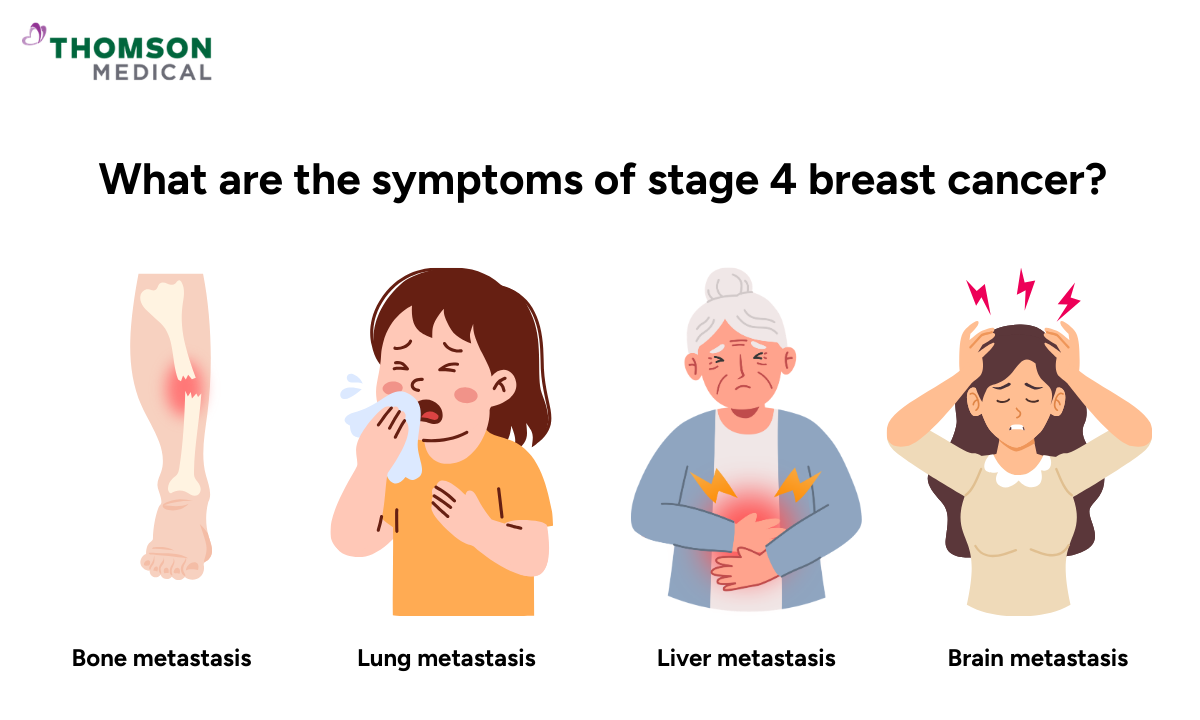
The symptoms you may notice often depend on where the breast cancer has spread. Although breast cancer can spread to many parts of the body, it most commonly affects the bones, lungs, liver, and brain.
In lobular breast cancer, it can sometimes spread to less usual areas, such as the stomach, ovaries, bladder, or the tissues behind the eye.
Some symptoms can occur no matter where the cancer has spread. These may include ongoing tiredness, unexpected weight loss, and a reduced appetite. Other symptoms are usually linked to the specific part of the body that is affected.
Bone metastasis
Breast cancer that has spread to the bones most often affects the spine, ribs, pelvis, and the long bones of the arms and legs.
You might notice:
Bone pain that starts suddenly or builds gradually over time
Bones that fracture more easily than expected
Swelling around the affected area
Bone pain caused by metastasis tends to be persistent and is often felt more at night or during rest, which can help differentiate it from general muscle or joint pain.
Lung metastasis
Lung metastases can sometimes cause no noticeable symptoms at first.
If symptoms do appear, they might include:
Persistent cough or shortness of breath
Chest pain or discomfort
Changes visible on a chest X-ray
Because these symptoms overlap with common respiratory conditions such as asthma or infection, it is easy to attribute them to something else, which is why it is worth mentioning them to your doctor even if they seem mild.
Liver metastasis
Liver involvement can be silent in its early stages.
As symptoms develop, you might experience:
Pain or discomfort on the right side of your abdomen
Nausea, fatigue, or weakness
Unexplained weight loss or reduced appetite
Yellowing of the skin or eyes, known as jaundice
Itchy skin or rash
Symptoms related to liver involvement can develop gradually over weeks, which means they may be subtle at first and easy to overlook.
Brain metastasis
Brain metastases can cause a range of symptoms.
These might include:
Persistent or worsening headaches
Nausea or vomiting
Dizziness or problems with balance
Changes in vision or speech
Memory difficulties or changes in behaviour
Seizures in some cases
Some of these symptoms, such as headaches or memory changes, can feel similar to everyday complaints, but it is the pattern of them becoming more frequent or severe over time that is usually the key sign to watch for.
If you are currently being treated for breast cancer and notice any of these changes, let your care team know promptly. If you have been treated for breast cancer and begin experiencing new or unexplained symptoms, it is important that your doctor know your medical history.
Experiencing new symptoms can be concerning for stage 4 breast cancer. You may request an appointment with Thomson Breast Centre, where our specialists can assess these symptoms, review your medical history, and guide you on appropriate tests and treatment options to manage advanced breast cancer.
How is stage 4 breast cancer diagnosed?
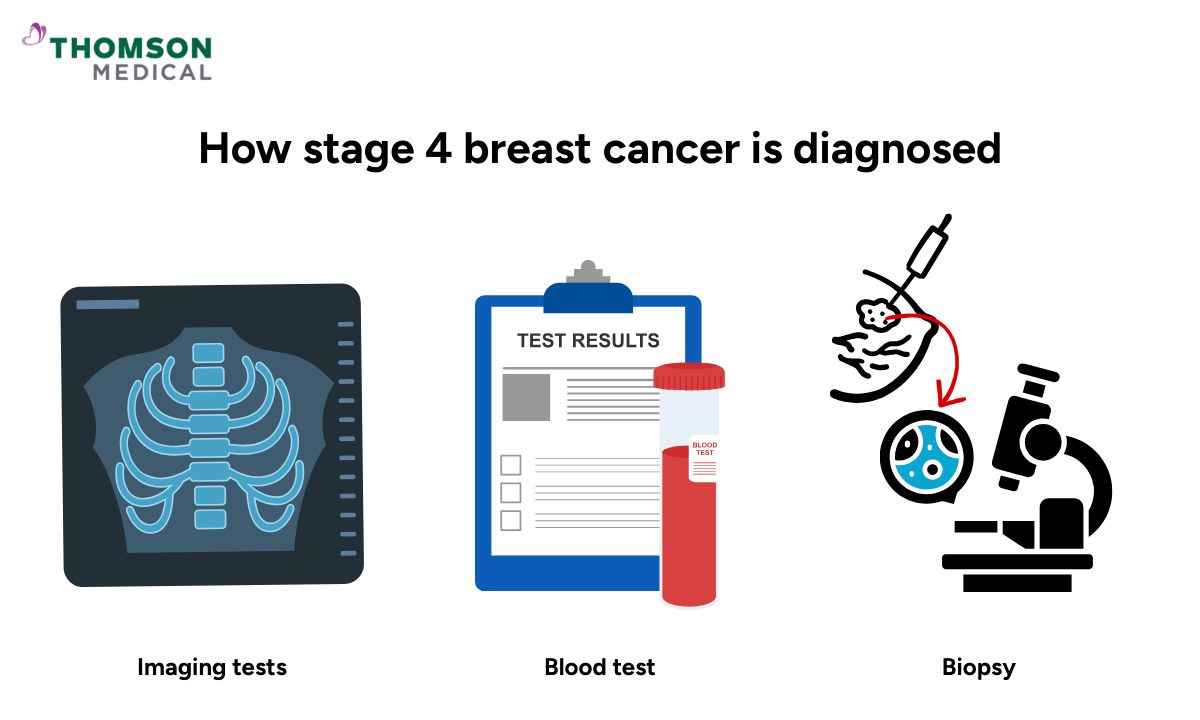
If your doctor suspects that breast cancer has spread, or if you are experiencing symptoms that might point to metastasis, they will recommend a number of tests to get a clearer picture of what is happening and where.
Imaging tests
The scans recommended will depend on your symptoms and the areas your doctor wants to examine.
These may include:
A CT scan to examine the chest, abdomen, pelvis, or brain
A PET scan to identify areas of increased cell activity across your body
An MRI scan for a detailed look at your brain or spine
Bone scans or X-rays when bone involvement is suspected
An ultrasound of your abdomen or chest where appropriate
Each test provides different information. Together, they help your care team understand whether the cancer has spread and how extensive it may be.
Blood tests and biopsy
Blood tests can provide additional clues about how your body is coping and how the cancer may be affecting organs such as your liver. In some cases, tumour markers are also checked to help monitor the disease.
A breast biopsy of a suspected metastatic area is often recommended. This confirms that the cancer has spread and allows your team to examine the tumour’s current features.
It is important to know that hormone receptor status and HER2 status can sometimes change from the original breast cancer. That is why retesting matters. The treatment that worked for you in the past may not be the right approach now.
How is stage 4 breast cancer treated?
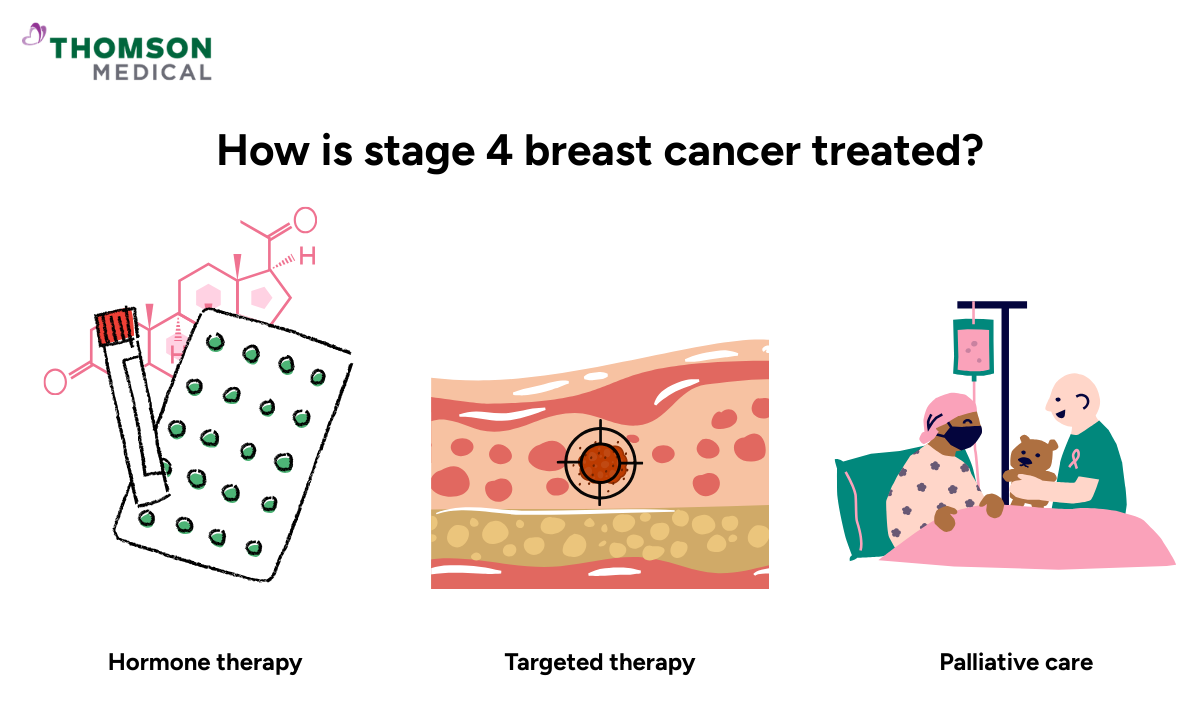
Treatment at this stage focuses on controlling the cancer, easing symptoms, and helping you live as well as possible.
Because the cancer has spread beyond the breast, your care team will build a plan around your specific situation.
They will consider:
Where the cancer has spread
Its hormone receptor and HER2 status
Any gene mutations identified
Treatments you have already had
Your overall health and personal preferences
Your care team will talk you through the options and help you understand which may apply to you.
Hormone therapy (endocrine therapy)
If your cancer is hormone receptor-positive, hormone therapy is often the first treatment recommended. It works by reducing the effect of hormones such as oestrogen or progesterone, which can slow the growth of cancer cells.
Medications such as tamoxifen or aromatase inhibitors are commonly used. These are often combined with CDK4/6 inhibitors, which help stop cancer cells from dividing. If one combination stops working over time, another can often be introduced. It is common to move between different hormonal treatments as the cancer adapts.
Chemotherapy
Chemotherapy may be recommended if the cancer is growing more quickly, is not driven by hormones, or is affecting vital organs. It can be used on its own or alongside other treatments.
At stage 4, treatment is often adjusted over time. If a particular chemotherapy drug becomes less effective, your doctor may suggest switching to a different one. This does not mean options are running out, but it reflects the way metastatic breast cancer is managed, step by step.
Targeted therapy
Targeted therapy focuses on specific features of your cancer cells. Your biopsy results and any genetic testing help your doctor choose treatments that are most likely to work for you.
Depending on your cancer’s characteristics, options may include:
HER2-targeted drugs such as trastuzumab and pertuzumab for HER2-positive cancers
Antibody-drug conjugates, which deliver treatment directly to cancer cells while largely limiting its effects on healthy tissue. These may be used in both HER2-positive and triple-negative breast cancer
PARP inhibitors for cancers with BRCA gene mutations
CDK4/6 inhibitors used alongside hormone therapy
Each of these treatments is selected carefully based on the biology of your cancer and how it has behaved so far.
Immunotherapy
For triple-negative breast cancer, immunotherapy may be an option. This approach works by helping your immune system better recognise and attack cancer cells. It is often given alongside chemotherapy.
Whether it is suitable for you will depend on specific features of your tumour. Your doctor may test your tumour for a protein called PD-L1. This is a protein that can allow cancer cells to hide from your immune system.
When this protein is detected, immunotherapy may be more likely to help your body recognise and attack the cancer cells.
Palliative care and supportive care
Palliative and supportive care is an important part of stage 4 breast cancer management and can begin at any point after diagnosis. However, it is not a replacement for active treatment.
Support may include help with:
Managing symptoms such as pain or discomfort
Reducing treatment side effects
Helping with nausea, appetite changes, or fatigue
Providing emotional and psychological support
Offering practical guidance for you and your family
Palliative support is available throughout your care. It works alongside your cancer treatment and aims to help you manage symptoms, cope with side effects, and maintain your quality of life.
Living with stage 4 breast cancer can feel uncertain and overwhelming at times, but you do not have to navigate it alone. Treatments continue to advance, and many people live for years while managing this disease over time. Your care team is there to guide you and support both your medical needs and your overall wellbeing.
Managing stage 4 breast cancer involves a combination of treatments tailored to your cancer’s type, where it has spread, and your overall health. You may request an appointment with Thomson Breast Centre, where our specialists can review your diagnosis, discuss treatment options, and guide you to help manage symptoms and maintain quality of life.
FAQ
Is stage 4 breast cancer curable?
No, but it is treatable. Many people live for years with a good quality of life, and treatment options continue to improve.
Can stage 4 breast cancer occur without a previous diagnosis?
Yes. Around 6-10% of breast cancer diagnoses are already stage 4 at the time of first diagnosis, known as de novo metastatic breast cancer.
Where does breast cancer most commonly spread?
The bones, lungs, liver, and brain are the most common sites. Lobular breast cancer may also spread to the stomach, ovaries, bladder, and tissues behind the eye.
Why is a biopsy recommended even if I've had cancer before?
Hormone receptor and HER2 status can change over time, meaning the most effective treatment now may differ from what worked previously.
Did my lifestyle choices cause the cancer to spread?
No. Metastasis is about cancer biology. Cells that remained after earlier treatment can sometimes grow again for reasons not yet fully understood.
What does palliative care involve at stage 4?
Palliative care manages symptoms, reduces treatment side effects, and provides emotional and practical support. It runs alongside active treatment and can begin at any point after diagnosis.
Can stage 4 breast cancer go unnoticed?
Yes, like other stages, stage 4 breast cancer can sometimes develop without obvious symptoms at first. But as the cancer advances and spreads, signs usually start to show.
The information provided is intended for general guidance only and should not be considered medical advice. For personalised recommendations and tailored advice based on your unique situations, request an appointment with Thomson Breast Centre today.
References:
Yeo, B., & Yap, Y. S. (2019). The clinicopathological features and survival outcomes of patients with de novo metastatic breast cancer. BMC Cancer, 19(1), Article 1071. https://pubmed.ncbi.nlm.nih.gov/31718602/