

Getting a stomach polyp diagnosis can feel unsettling, especially if it came up during a routine check-up and you weren't expecting it. It's natural to have questions about what comes next and what this means for your health.
Most stomach polyps are harmless and very manageable. Understanding what type you have, why it developed, and what treatment looks like can help you feel grounded and prepared to make informed decisions about your care.
What are stomach polyps?
Stomach polyps, also known as gastric polyps, are small growths that form on the inner lining of your stomach. They vary in size, shape, and type, and most are benign (meaning they’re not cancerous).
There are different types of polyps:
Hyperplastic polyps:
The most common type, usually linked to stomach inflammation or a bacterial infection.
Fundic gland polyps:
Often linked to long-term acid reflux medication use and considered low risk.
Adenomas:
Less common, but worth monitoring closely, as they carry a higher potential to become cancerous over time.
Each type is managed differently, and that's exactly why early detection matters. When stomach polyps are found early, your doctor can assess what's going on and make a plan before anything has the chance to progress.
Common causes of stomach polyps
In most cases, stomach polyps develop due to ongoing irritation or changes in your stomach lining over time. Understanding what’s behind them can help you and your doctor figure out the way to manage and prevent them.
H. pylori infection
Helicobacter pylori, more commonly known as H. pylori, is one of the most common contributors to the development of stomach polyps, especially hyperplastic polyps.
This bacterium triggers chronic inflammation in the stomach lining, which over time can lead to abnormal tissue growth.
Chronic gastritis
Chronic gastritis is long-term inflammation of the stomach lining. H. pylori is one common trigger, but it's not the only one.
Other causes include:
Autoimmune conditions
Excessive alcohol use
Ongoing acid reflux
When your stomach lining stays irritated for a long period of time, it becomes more prone to developing abnormal growths, and polyps are one of the more common results.
Long-term medication use
If you are taking proton pump inhibitors (PPIs) for acid reflux (GERD), you may have a higher risk of developing stomach polyps.
These medications help reduce stomach acid, but they can cause changes in the stomach lining over time. These changes can contribute to polyp growth.
That said, this doesn’t mean you should stop your medication. Instead, it's important to have regular check-ins with your doctor if you’re using PPIs.
Symptoms of stomach polyps
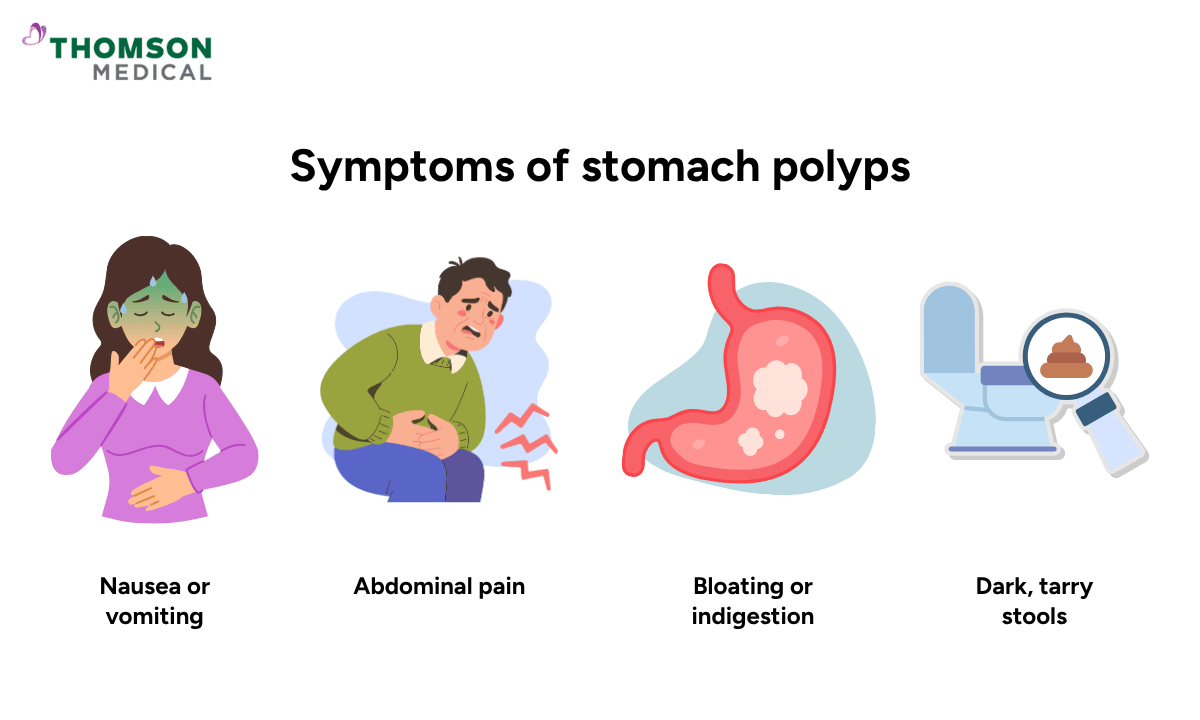
Most stomach polyps cause no symptoms at all. You may not even realise they exist until they're found during a routine check-up.
When symptoms do occur, they can include:
Nausea or vomiting
Abdominal pain or discomfort
Bloating or indigestion
Dark, tarry stools (which may signal bleeding in the stomach)
If any of these symptoms persist or keep coming back, especially if they come with unexplained weight loss or signs of anaemia (such as persistent fatigue or paleness), it’s worth seeing your doctor. They can take a closer look and recommend the right steps for you.
Noticing these symptoms can be worrying, but you don't have to figure this out on your own. Schedule an appointment with Thomson Medical, and our specialists can help assess your situation and map out a clear plan with you.
Our gastrointestinal surgery specialist at Thomson Medical
Loading...
Diagnosis of stomach polyps in Singapore
If your doctor suspects you may have stomach polyps, they will recommend some tests to get a clearer picture of what's happening. The process is quite straightforward, and they will guide you through each step.
Endoscopy
An endoscopy (also known as an upper gastrointestinal endoscopy) is one of the most reliable ways to check for stomach polyps. During the procedure, your doctor gently passes a thin, flexible tube with a tiny camera through your mouth to view your stomach in real time. It’s performed under sedation, so you stay comfortable throughout.
Biopsy and lab testing
If a polyp is found during endoscopy, your doctor may perform a biopsy at the same time. This involves taking a small tissue sample from the polyp. The sample is then sent to a laboratory for analysis under a microscope, a process known as histological testing.
The lab results help your doctor determine the type of polyp, identify any concerning tissue changes, and guide the appropriate next steps for your care.
Stomach polyps treatment in Singapore
Finding out you have stomach polyps can feel worrying, and it’s normal to have questions about what this means for you.
Most stomach polyps are manageable, and many do not require immediate treatment. Your doctor will work with you to tailor a plan based on the type of polyp, its size, and what the biopsy results show.
Monitoring small or benign polyps
Not every polyp needs to be removed straight away. Small, benign polyps, like tiny hyperplastic polyps, are often managed with observation called watchful waiting. Your doctor will schedule periodic follow-up endoscopies to ensure the polyps do not grow or develop precancerous changes.
Your doctor may also suggest some lifestyle adjustments, such as limiting alcohol and avoiding long-term use of certain medications, to reduce irritation to your stomach lining and lower the chances of new polyps forming.
Endoscopic polyp removal
If a polyp is larger, causing symptoms, or carries a risk of becoming cancerous, your doctor will likely recommend removing it.
This procedure, known as polypectomy, is performed during upper gastrointestinal endoscopy, which is the same type used for diagnosis. Your doctor uses a small snare or cutting device to carefully remove the polyp, usually in one session, without the need for open surgery.
The removed tissue is then sent to a lab to confirm its type and check for any cancerous changes.
Medication for underlying causes
If your polyps are linked to an H. pylori infection or chronic gastritis, your doctor may prescribe a course of antibiotics to clear the infection. This is often combined with acid-suppressing medications like proton pump inhibitors (PPIs) to soothe the stomach lining.
Treating the underlying cause is an important part of your care. It not only supports recovery but also helps prevent new polyps from coming back.
Surgery (for rare cases)
Surgery is rarely needed. It’s usually reserved for cases where polyps are very large, numerous, or show evidence of cancer or high-grade dysplasia (abnormal cell changes that carry a higher risk of becoming cancerous) that can't be safely removed through endoscopy alone.
If surgery is ever considered, your care team will take the time to carefully review all available options with you before any decision is made.
If you've recently been diagnosed with stomach polyps and aren't sure what your next step should be, schedule an appointment with Thomson Medical. Our specialists will review your endoscopy findings, explain your options clearly, and help you make an informed decision that's right for your situation.
Cost of stomach polyp treatment in Singapore
Understanding the costs involved can help you plan ahead and feel more in control of your care. While exact fees vary depending on different factors, here is a breakdown of what to expect.
Consultation and endoscopy fees
Your first step will usually be a consultation with a gastroenterologist who will assess your symptoms and recommend next steps.
From there, if an endoscopy is advised, here’s what the cost looks like in private practice:
Specialist consultation:
Usually around SGD 100–250 for an initial specialist consultation, depending on the clinic and specialist.
Gastroscopy (doctor's fee):
Benchmarked by the Ministry of Health at around SGD 650 to 1,100.
Anaesthetist fee:
Typically an additional SGD 500 to 800.
Facility and nursing charges:
Billed separately and vary by clinic or hospital.
If you’re seeing a specialist at a public hospital with a subsidised rate, your overall costs may be lower. However, you’ll usually need a referral from a polyclinic to access those rates.
Polyp removal costs
If polyps are found and removed during the same endoscopy session, the cost increases.
In private practice, a gastroscopy with polyp removal is usually benchmarked at around SGD 1,100 to 1,900 before sedation and facility charges.
Larger or multiple polyps may be considered a more complex procedure, and private hospital costs for these cases can be higher.
Subsidised rates may be available at public hospitals for eligible patients, but it’s worth confirming specifics with the hospital directly.
Additional tests or follow-up
Beyond the endoscopy and polyp removal, there are a few other costs to keep in mind. Biopsies and laboratory testing of the removed tissue (histopathology) can add several hundred dollars depending on the number of samples taken.
You may also be charged for H. pylori testing, post-procedure medications, and follow-up consultations to review your results.
Many of these costs are at least partially claimable through Medisave and may also be covered under Integrated Shield Plans or private insurance. Your out-of-pocket amount will depend on your specific plan and the subsidies available to you, so it is advisable to confirm coverage details with your insurer or hospital team beforehand.
Please note that these costs are based on 2026 rates and may vary over time. You may schedule an appointment with Thomson Medical to learn more up-to-date information about your consultation and endoscopy fees.
When to follow up after treatment
After your procedure, your doctor will want to monitor your recovery and confirm that healing is progressing well. How often you’ll need to come back depends on what the biopsy results show and your doctor’s assessment.
For benign, low-risk polyps, a follow-up scope is typically scheduled at 6–12 months to confirm healing and check for any new growths.
If the biopsy reveals atypical or precancerous changes, your doctor may recommend more frequent check-ins to monitor things more closely.
Your doctor will adjust your follow-up plan over time as your results evolve. If you have questions about what to expect after your procedure, don't hesitate to bring them up with your doctor.
FAQ
Are stomach polyps dangerous?
Most are not. The majority of stomach polyps, especially small hyperplastic polyps, are benign and cause no symptoms.
However, certain types, like adenomatous polyps, carry a higher risk of malignancy (becoming cancerous), and larger or multiple polyps warrant closer attention. Finding them is the first step to making sure nothing progresses unnoticed.
Can stomach polyps turn into cancer?
Yes, some stomach polyps can develop into cancer over time, but this is relatively uncommon.
Adenomatous polyps are considered precancerous and may progress to gastric cancer if left untreated. Hyperplastic polyps and inflammatory polyps rarely become malignant, though large ones may occasionally have areas of abnormal cell changes that may benefit from closer follow-up.
Is endoscopic removal painful?
Endoscopic polyp removal is generally not painful. You'll be sedated during the procedure, so discomfort is usually minimal.
Afterwards, you may experience some mild bloating, cramping, or mild throat discomfort. These are normal and usually resolve within a day or two. Most people recover without significant pain.
How long does polyp removal take?
Endoscopic removal of stomach polyps is usually a brief procedure, often taking 10 to 30 minutes depending on the number, size, and location of the polyps. Small, solitary polyps are removed quickly, whereas multiple or larger polyps may take longer.
Do stomach polyps come back?
They can, especially if the underlying cause, such as H. pylori infection or chronic gastritis, is not addressed.
Recurrence is more common with hyperplastic polyps and in people with multiple polyps. Treating these underlying conditions and maintaining a healthy lifestyle can reduce the risk of recurrence.
How do I prepare for an endoscopy?
There are a few simple steps you can take to prepare for an endoscopy:
Fast for 6–8 hours before the procedure to ensure the stomach is empty
Stop certain medications temporarily, especially blood thinners, under your doctor’s guidance
Arrange for someone to accompany you home, as sedation can impair alertness and coordination
Your doctor will give you specific instructions before the procedure, and it’s important to follow them closely.
The information provided is intended for general guidance only and should not be considered medical advice. For personalised recommendations and tailored advice based on your unique situations, request an appointment with Thomson Medical today.
For more information, contact us:
Thomson Medical Concierge
- 8.30am - 5.30pm
- WhatsApp: 9147 2051
Need help finding the right specialist or booking for a group?
Our Medical Concierge is here to help you. Simply fill in our form, and we'll check and connect you with the right specialist promptly.
Notice:
The range of services may vary between Thomson clinic locations. Please contact your preferred branch directly to enquire about the current availability.
Get In Touch