
.png%3Fbranch%3Dprod&w=3840&q=75)
Twisting your ankle during exercise or feeling a sudden pull in your muscle can be painful and confusing. You may wonder whether you are dealing with a sprain or a strain and what that means for your recovery.
Although sprains and strains can feel similar, they affect different parts of the body. Knowing whether an injury affects a ligament, muscle, or tendon can guide how you manage it and when medical assessment may be needed.
What is the difference between a strain and a sprain?
You've probably heard these terms used before – maybe you've even wondered if they're the same thing. They're actually two different injuries, though they can feel quite similar.
A sprain happens when you stretch or tear a ligament. Ligaments are the strong bands of tissue connecting your bones at the joints. You'll most often see sprains in ankles, wrists, and knees.
A strain involves injury to a muscle or the tendon that attaches it to bone. These usually occur in your back, hamstrings, or shoulders.
A simple way to tell them apart is that sprains affect the tissues around your joints, while strains affect your muscles.
Both can range from mild (where the fibres are gently stretched) to more significant, where they partially or fully tear. The encouraging news is that most respond well to rest and home care, though if you have more severe injuries, you may need medical attention to heal properly.
Sprain symptoms and signs
.png?branch=production)
Recognising signs of a sprain can help you understand how serious your injury might be and when it's time to seek care.
You might notice:
Pain around the joint that gets worse when you move or put weight on it
Swelling and bruising that appears within a few hours
Difficulty moving the joint through its normal range
Tenderness when you touch the area
A sense of instability or weakness in the joint
A popping feeling or sound at the time of injury (this often signals a more significant sprain)
The intensity of these signs varies. Some sprains cause mild discomfort that doesn't stop you from using the joint, while others involve complete ligament tears that make it extremely difficult for you to bear weight or to move properly.
Strain symptoms and signs
.png?branch=production)
Strains affect your muscles or tendons. The symptoms might come on suddenly or build up gradually, depending on how the injury happened.
You might notice:
Pain in the affected muscle that increases when you use or stretch it
Muscle spasms or cramping in the injured area
Swelling, bruising, or redness around the muscle
Weakness that makes everyday movements more difficult
Limited movement in the affected area
A popping sensation at the moment of injury (more common with severe strains)
Strains vary in severity. Some strains just leave you feeling slightly sore and stiff, while others are more serious and can make even simple movements painful or difficult. You might also develop a strain gradually from doing the same motion over and over, which can lead to pain that lingers and slowly gets worse.

Causes of sprains and strains
Knowing what leads to these injuries can help you protect yourself. While both come from stress on your soft tissues, they tend to happen in different ways.
What causes sprains
Sprains often occur when a joint gets pushed or twisted beyond what it's designed to do, such as:
Twisting or rolling a joint suddenly – like stepping awkwardly on uneven ground
Falls or awkward landings that force the joint out of position
Impact during contact sports
Overstretching a joint past its usual range
Ankle sprains are especially common when you walk on unstable ground or when you wear shoes that don't provide proper support. Wrist sprains often happen when you instinctively put your hand out to catch yourself during a fall.
What causes strains
Strains usually develop from overusing your muscles or placing sudden demands on them, including:
Quick, forceful movements during sport or exercise, which makes strains common sports injuries
Lifting heavy objects, particularly with poor form or without warming up first
Repetitive motions from your job or workout routine
Slipping or losing balance, which can overstretch a muscle
Maintaining poor posture for extended periods
Both injuries are more common if you have a physically active job or play sport regularly, though they can happen to anyone during everyday activities.
Your risk increases if you:
Are tired or fatigued
Skip warming up before exercise
Have injured the same area before

How to treat a sprain or strain at home
Most mild to moderate sprains and strains respond well to basic home care. The sooner you start, the better, as early treatment helps control swelling and supports your body's natural healing.
The RICE method
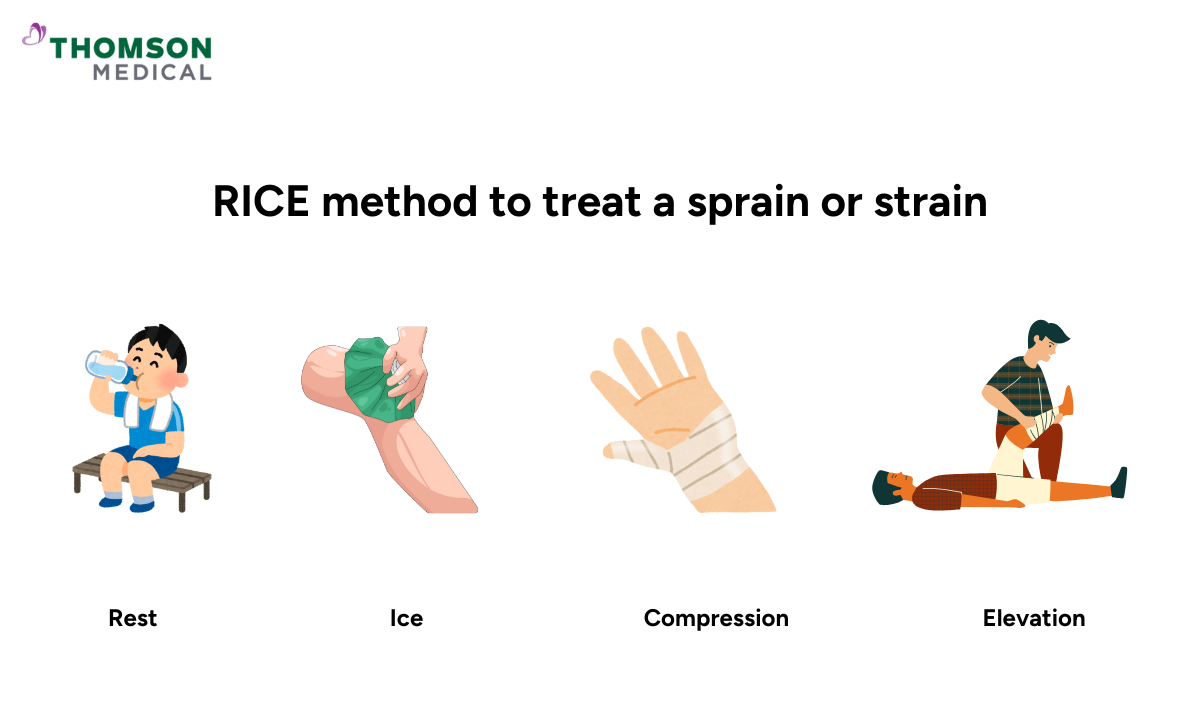
This simple four-step approach can make a real difference to your recovery during the first 48 to 72 hours:
Rest:
Give the injured area a break. Avoid activities that cause pain so your body can focus on healing without added stress.
Ice:
Apply an ice pack wrapped in a thin towel for 15 to 20 minutes every 2 to 3 hours. This brings down swelling and eases pain. Don't put ice directly on your skin.
Compression:
Wrap the area with an elastic bandage to help manage swelling. It should feel snug but not tight – you should still be able to move your fingers or toes comfortably, with no numbness or tingling.
Elevation:
When you're resting, prop the injured area above heart level. This helps fluid drain away and reduces swelling.
You can also take paracetamol or ibuprofen to manage discomfort. Try to keep weight off the injured area until the pain and swelling settle down.
When to see a doctor
Most sprains and strains get better on their own, though some need more support.
You might want to get things checked if you're experiencing:
Severe pain that doesn't ease with rest and home care
Difficulty bearing weight or using the injured area
Significant swelling or bruising that gets worse after a few days
A popping sound at the time of injury, followed by a sense of instability
Numbness, tingling, or colour changes in the skin around the injury
No improvement after a week of self-care
Sometimes what feels like a straightforward sprain might be something that needs professional care, like a complete tear or fracture.
If something doesn't feel quite right, or you're simply uncertain about how you're healing, speak to a doctor about your concerns. Getting the right care early can make a difference to your recovery.
Our urgent care specialists
Loading...
FAQ
Can you walk on a sprained ankle?
It depends on the severity. With a mild sprain, you may be able to walk with some discomfort. However, if you experience severe pain or the ankle feels unstable, avoid putting weight on it and consult a doctor. Walking on a severe sprain can worsen the injury and delay healing.
How do I know if my injury is a sprain or a strain?
Sprains affect ligaments around joints (like ankles, wrists, and knees) and usually occur from twisting or falling. Strains affect muscles or tendons and often happen from overuse or sudden movements. If you're unsure or the pain is severe, it's best to see a doctor for a proper diagnosis.
Should I use heat or ice for a sprain or strain?
Ice is your first step – use it for the first 48 to 72 hours after the injury happens. It helps bring down swelling and eases pain. Apply it for 15 to 20 minutes every 2 to 3 hours, always with a thin towel between the ice and your skin.
Once the swelling has settled, you can switch to heat with a warm compress or hot water bottle to relax tight muscles and support healing.
How long does it take for a sprain to heal?
Mild sprains normally heal within 1 to 2 weeks. Moderate sprains may take 3 to 6 weeks, while severe sprains can take several months. Following the RICE method and avoiding activities that stress the injury can help speed up recovery.
Can a sprain heal on its own without treatment?
Mild sprains can heal on their own with rest. However, proper home treatment using the RICE method helps reduce swelling and promotes faster healing. Moderate to severe sprains should be evaluated by a doctor to prevent long-term problems.
What happens if you don't treat a sprain or strain?
Untreated sprains and strains may heal improperly, leading to chronic pain, joint instability, or weakness. This increases your risk of re-injury. Proper treatment helps make sure the ligament or muscle heals correctly and regains full strength.
The information provided is intended for general guidance only and should not be considered medical advice. For personalised recommendations based on your medical conditions, request an appointment with Thomson Medical.
For more information, contact us:
Thomson Medical 24-Hour Urgent Care Centre (Novena)
- Call: 6350 8812
Notice:
The range of services, vaccinations, and tests may vary. Please contact us directly to enquire about the current availability.
Request an Appointment