

A swollen knee can be painful and frustrating, especially when it appears suddenly or makes it difficult to walk. It is natural to feel unsure about what caused it and where to seek help.
The good news is that many cases of knee swelling can be safely assessed at an urgent care centre, though there are situations where prompt attention at A&E is the safer choice. Understanding the difference can help you get the right care quickly, without added stress or unnecessary waiting.
Is urgent care right for your swollen knee?
Maybe you woke up with a swollen knee, tweaked it during a workout, or noticed it gradually getting worse over a few days.
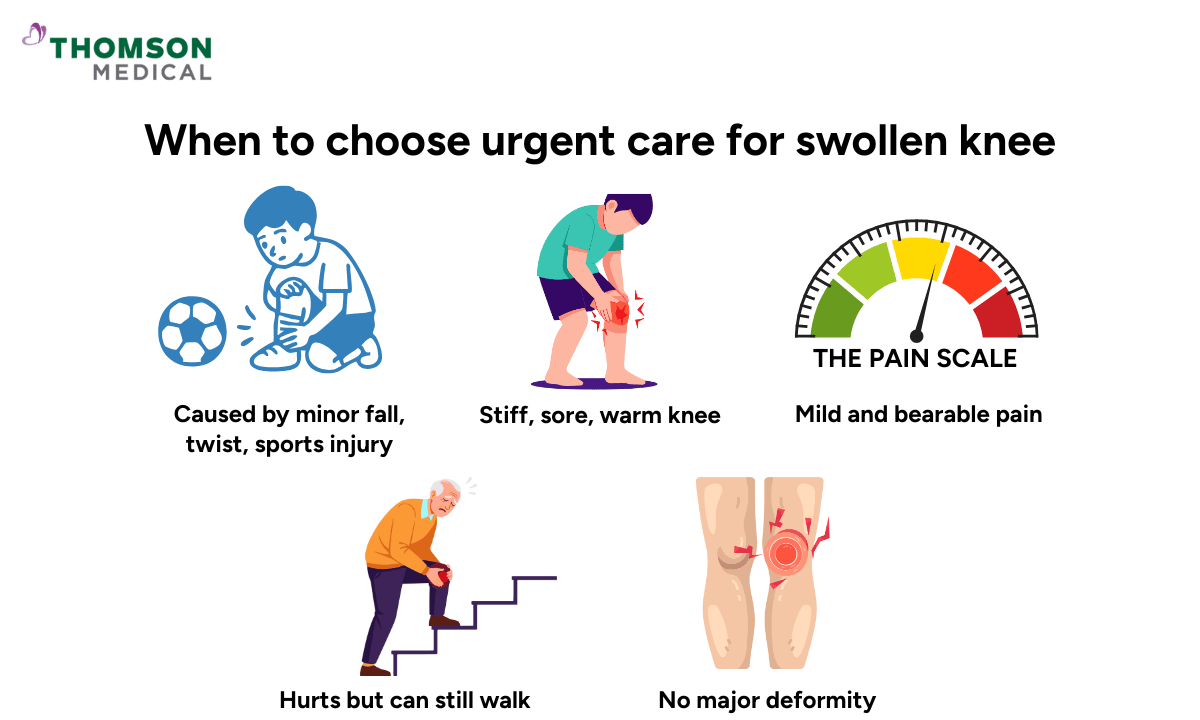
Urgent care is usually the right choice if your knee is swollen and:
The swelling started after a minor fall, twist, or sports injury:
These minor injuries usually affect the soft tissues and can be painful, but they are not typically serious enough to impair movement.
Your knee feels stiff, sore, or warm:
These sensations usually point to inflammation and can be evaluated without needing emergency scans or immediate medical intervention.
The pain is uncomfortable but not unbearable:
When discomfort is moderate and manageable, it's more likely to be irritation or inflammation rather than a severe, acute injury.
You can still walk, even if it hurts:
Being able to bear weight usually means the joint is structurally stable, even if it’s inflamed or injured.
Being able to put weight on your leg is a reassuring sign, as the joint is holding together properly.
There is no major deformity:
It makes serious problems like dislocations or broken bones much less likely.
In any of these situations, visiting an urgent care centre is often the recommended first step. The doctor can examine your knee, arrange scans if needed, and get you started on treatment the same day.
When to choose A&E instead
Some knee problems need emergency care.
Go straight to A&E if:
You cannot put any weight on your leg:
This may signal a fracture, major ligament rupture, or severe joint instability.
Your knee looks visibly deformed:
A deformity often means dislocation or a displaced fracture, which requires urgent treatment to prevent nerve, vessel, or tissue damage.
There was a high-impact accident:
Car crashes and falls from heightcan lead to complex fractures, internal bleeding, or damage to multiple ligaments at once.
The pain is severe and uncontrolled:
There may be acute internal damage, dangerous pressure building up in the tissues, or serious injury that needs immediate medical assessment and proper pain management.
You develop a high fever and your knee becomes red, warm, and very painful:
- It could signal a joint infection, which can destroy the cartilage inside your joint and spread throughout your body if it's not treated right away.
You suddenly cannot move your knee at all:
Sudden immobility may indicate joint locking, tendon rupture, dislocation, or nerve involvement requiring urgent imaging and treatment.
If something doesn't feel right, speak to a doctor about your concerns. Getting the right care early can make a difference to your recovery.

Do you need an appointment?
Most Urgent Care Centres (UCCs) in Singapore are happy to see walk-ins, so you don't necessarily need to book ahead. Some also do offer online booking if you want to skip the queue and reduce your waiting time.
If your knee is becoming more painful, or the swelling is worsening quickly, seek care sooner rather than waiting it out. In moments like this, being seen early isn’t about urgency or fear; it’s about giving your body the care, relief, and reassurance it needs as early as possible.
Can urgent care take X-rays of my knee?

Most UCCs have X-ray facilities on-site, so they can check for fractures or any issues with the bone structure. Many also have ultrasound equipment, which is useful for spotting fluid buildup inside the joint, tendon damage, or swelling in the soft tissue around your knee.
Having these imaging options available means your doctor can work out what's going on and start treatment.
What treatments are available at urgent care for swollen knees?
UCCs can do quite a bit to help get your knee sorted, such as:
Providing pain relief and anti-inflammatory medication
Applying ice and compression
Fitting knee supports or braces
Supplying crutches if needed
Draining excess fluid in selected cases
Offering injections or other joint treatments when appropriate
Urgent care centres can also arrange for referrals to orthopaedics or physiotherapy without sending you through A&E.
How long will you wait for urgent care?
Urgent care works on a priority system, so if someone comes in with something more severe, they'll be seen first. Most people are seen within 30 minutes, though it depends on how busy the centre is when you arrive and how urgent your case is compared to others who are waiting.
If your pain gets worse or your knee swells up even more while you're in the waiting room, let the doctor or nurse know so that they can reassess you.
Our urgent care specialists
Loading...
UCCs for swollen knee in Singapore
Many UCCs in Singapore treat joint injuries and sudden knee swelling. They usually offer faster access to scans and treatment than many regular clinics without the long waits of A&E.
UCCs for swollen knee | Location | Contact |
Thomson Medical Centre | 339 Thomson Road, Level 1, Thomson Medical Centre, Singapore 307677 | 6350 8812 |
Alexandra Hospital | 378 Alexandra Rd, Block 6 Level 1, Alexandra Hospital, Singapore 159964 | 6908 2222 |
Parkway East Hospital | 321 Joo Chiat Place, Singapore 427990 | 6340 8666 |
Mount Alvernia Hospital | 820 Thomson Rd, Singapore 574623 | 6347 6210 |
Mount Elizabeth | 3 Mount Elizabeth, Singapore 228510 | 6731 2218 |
Urgent Care Clinic International | Kitchener Rd, #01-01 Novotel Singapore on, 181, Singapore 208533 | 6910 5388 |
A swollen knee can feel frightening, but most cases are not serious and can be safely managed with timely care. With the support of urgent care and the right medical guidance, you can get clarity, relief, and reassurance without additional fear or stress.

FAQ
When should I go to urgent care for a swollen knee?
Go to urgent care if your knee is swollen, painful, or stiff but you can still walk and there was no major accident.
Is urgent care open on weekends for knee injuries?
Most urgent care centres in Singapore are open on weekends, and many operate late or 24 hours.
Can urgent care handle knee swelling from sports injuries?
Yes, urgent care centres usually treat knee swelling from sports injuries, sprains, and minor trauma.
Will my insurance cover urgent care for knee swelling?
Many insurance plans cover urgent care visits, including consultations, X-rays, and medications. Remember to bring your insurance details so the staff can check your coverage before any treatment is given.
Can urgent care refer me to an orthopaedic specialist if needed?
If you require follow-up care with a specialist, urgent care centres can arrange referrals to an orthopaedic doctor or physiotherapist.
What should I bring to my urgent care visit?
It’s best to bring your ID, insurance details, any previous medical scans or reports, and a list of medications that you are taking.
The information provided is intended for general guidance only and should not be considered medical advice. For personalised recommendations based on your medical conditions, request an appointment with Thomson Medical.
For more information, contact us:
Thomson Medical 24-Hour Urgent Care Centre (Novena)
- Call: 6350 8812
Notice:
The range of services, vaccinations, and tests may vary. Please contact us directly to enquire about the current availability.
Request an Appointment