

Most of us would love the benefits of regular professional massages – less tension, better sleep, reduced stress. Acupressure puts many of those same benefits within reach, requiring nothing but your own hands and a few minutes.
By learning which pressure points address specific concerns and how to stimulate them properly, you can create your own relief routine at home, at work, or anywhere you need it. Here's your practical guide to acupressure techniques that actually work.
What is acupressure massage?
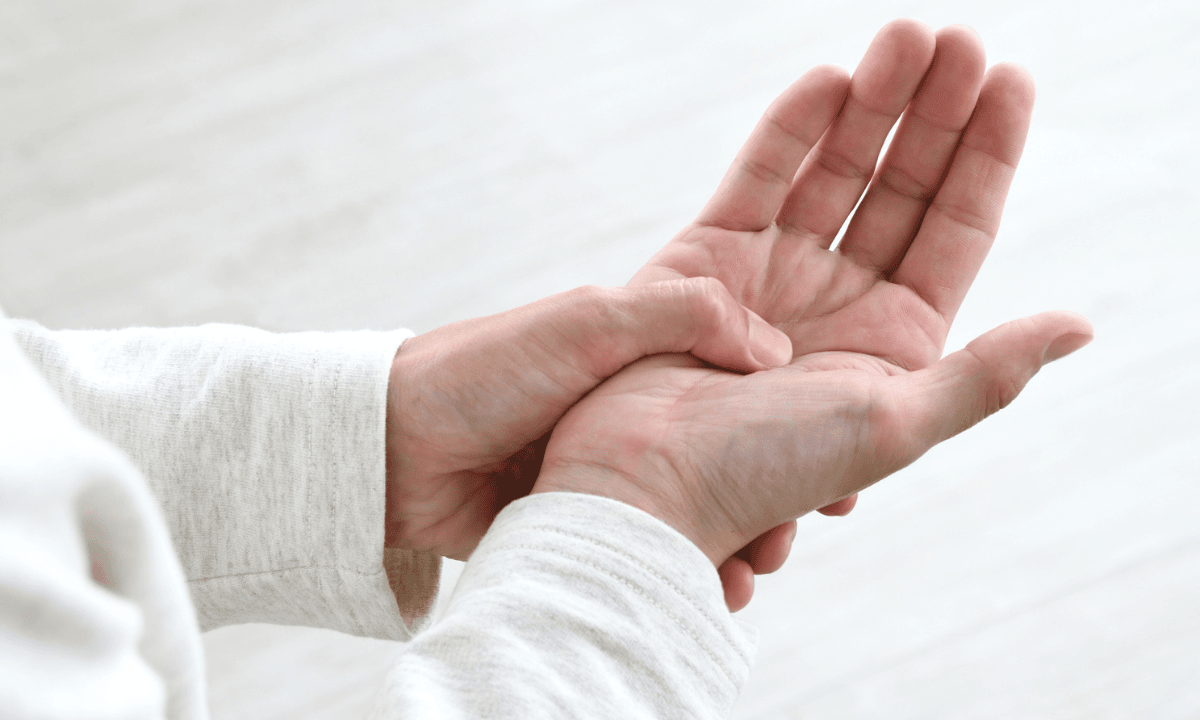
Acupressure massage is a traditional practice rooted in Traditional Chinese Medicine (TCM). It involves applying steady pressure to specific points along your body’s energy pathways, known as meridians, to encourage balance and healing.
Each acupressure point corresponds to different organs, systems, or complaints in the body. By massaging these points with the right technique and pressure, you may be able to relieve headaches, ease digestive discomfort, reduce stress, improve sleep, and address various other health concerns without medication or equipment.
How does acupressure work?
Acupressure is based on the concept of Qi – the vital energy that flows through your body to maintain health. When Qi is strong and flowing smoothly, the body is better able to defend itself against illness, recover more quickly, and keep symptoms mild. When Qi becomes blocked or weakened, discomfort and imbalance may arise.
Acupressure works by gently applying pressure to specific points along the body's meridians, helping Qi move more freely and supporting your body’s natural ability to restore balance.
Benefits of acupressure massage
Regular acupressure massage may support both physical and emotional wellbeing. Many people find it helpful for:
Reducing muscle tension and headaches
Improving sleep quality
Easing stress and mental fatigue
Supporting digestion and immunity
Promoting relaxation and emotional balance
Acupressure massage offers a simple yet powerful way to reconnect with your body and support your health naturally. If you are looking for personalised guidance or want to explore how acupressure fits into your overall health needs, our TCM physicians are here to support you. Request a consultation to get started.
Our physicians in Singapore
Loading...
How to do acupressure massage at home for better health?
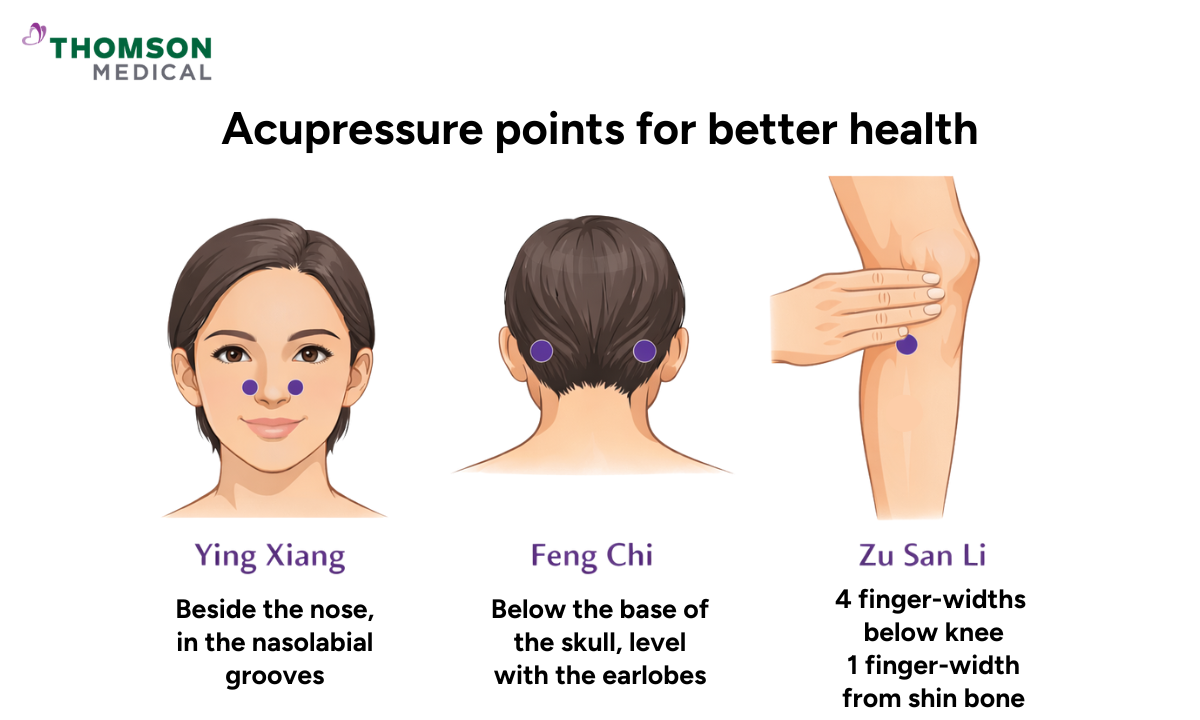
Acupressure can be practised safely at home as part of your regular self-care routine.
Here are some acupressure points you can gently massage at home to support better health. The pressure should feel firm yet comfortable, never painful.
Ying Xiang (Large Intestine 20)
Location:
On both sides of the nose, in the nasolabial grooves, at the same level as the midpoint of the lateral border of the ala of the nose.
How to massage:
Before getting up in the morning or going to sleep at night, use your fingers to massage both points gently for about 5 minutes, or until the area feels warm.
Benefits:
Protect the Lung against external pathogens
Promote blood circulation around the nose
Disperse wind and cold
Helps relieve runny nose, nasal congestion, and reduced sense of smell
Feng Chi (Gall Bladder 20)
Location:
At the back of the head, just below the occipital bone, in the hollow between the sternocleidomastoid and trapezius muscles, level with the earlobes.
How to massage:
Sit upright and lift your elbows to shoulder height
Place your hands behind your ears, palms facing inward, fingertips pointing upward
Rest your thumbs on the Feng Chi points and apply gentle pressure
Benefits:
Helps free the meridians and invigorate Qi and Yang
Prevent pathogenic wind-cold and dampness invasion
Relieves headaches, neck stiffness, and upper-back tension
Zu San Li (Stomach 36)
Location:
On the outer side of the lower leg, about four finger-widths below the kneecap and one finger-width away from the shin bone.
How to massage:
Use your index and middle fingers to massage both sides at the same time, applying steady, comfortable pressure.
Benefits:
Strengthens the Spleen and supports digestion
Helps resolve dampness and ease digestive discomfort
Tonifies Qi and supports immune health
Reinforces the body’s resistance to external pathogens
Remember to move slowly, breathe deeply, and listen to your body. If you notice discomfort, dizziness, or worsening symptoms, stop and allow your body to rest.
Are there any precautions with acupressure?
Acupressure is generally gentle and safe. However, some acupoints are not recommended during pregnancy, as they may stimulate uterine activity. If you are pregnant, have a chronic medical condition, or are recovering from surgery, it is best to seek guidance from a qualified TCM physician.
Acupressure is meant to support wellbeing, not replace medical care. When used mindfully and consistently, it can be a valuable part of your self-care routine – working gently with your body rather than forcing change.
If you’re looking for a gentle, non-invasive approach to support your overall well-being, Traditional Chinese Medicine offers personalised care that can be used on its own or alongside Western treatments. Request a consultation with our TCM physicians at Thomson Chinese Medicine to explore a care approach suited to your needs.
FAQ
What is the difference between acupressure and deep tissue massage?
Acupressure focuses on specific points along energy pathways to support balance and wellbeing, while deep tissue massage targets muscles and connective tissue using stronger pressure to release physical tension.
Does acupressure really work?
Many people find acupressure helpful for easing tension, reducing stress, and supporting overall wellbeing, with benefits that often build gradually through regular practice.
Is acupressure massage safe?
Acupressure is generally safe when practised correctly and gently. It is important to avoid painful pressure and to seek professional advice if you have underlying health conditions.
What are the side effects of acupressure massage?
Side effects are uncommon, but you can experience mild soreness, tenderness, or fatigue, especially when first starting or if pressure is applied too firmly.
How often should you do an acupressure massage?
Acupressure can be done daily or several times a week, depending on comfort and your individual needs. Remember that consistency is more important than intensity.
Is acupressure massage good for back pain?
Acupressure may help relieve back pain by easing muscle tension and promoting relaxation, especially when used alongside other supportive care.
The information provided is intended for general guidance only and should not be considered medical advice. For personalised recommendations and advice based on your unique conditions, request a consultation with Thomson Chinese Medicine today.
Physician Jun Negoro
Traditional Chinese Medicine
Thomson Chinese Medicine (TCM Paragon Medical Centre) and 1 other
English, Mandarin
Alliance MediNet
