

A sore throat can turn ordinary moments into small challenges. Maybe it's a dull ache that makes every sip of water feel like a task or a sharp sting that gets worse every time you swallow. And when the discomfort lingers or when other symptoms start showing up alongside it, it's natural to wonder what might be causing it.
Throat pain, while uncomfortable, is very common and not a reason to worry. Most cases have a clear cause and respond well to the right care.
What is throat pain?
Throat pain is any soreness, irritation, or discomfort in the throat – the area stretching from the back of your mouth down to your voice box. It can feel raw and tender or have that dry, scratchy feeling that refuses to go away.
However, throat pain is just a symptom, not a diagnosis. It’s your body’s way of telling you that something may be irritating or inflaming the area, and it often comes with other symptoms.
The pain can come from different parts of your throat, including:
The pharynx: the passageway behind your mouth and nose
The larynx: your voice box
The tonsils: the soft tissue at the back of your mouth
Most cases of throat pain have a clear and treatable cause. Once you figure out what you’re dealing with, finding the right relief becomes much easier, and getting back to feeling normal again is usually straightforward.
What causes your throat pain?

Throat pain can come from many different sources. Knowing what’s behind it can make all the difference, as the treatment depends entirely on the cause.
Here are the most common causes of throat pain:
Viral infections:
These are the most common reasons. Infections such as a cold, flu, and even COVID-19 all trigger throat pain.
Sometimes, these are one of the first signs your body is fighting something off.
Bacterial infections:
They are less common but more important to recognise.
Strep throat, caused by Group A Streptococcus, usually develops quickly and can be quite painful.
Symptoms may include sudden severe pain, difficulty swallowing, fever, and sometimes white patches on the tonsils.
Acid reflux (GERD):
In some cases, stomach acid travels all the way up to your throat, a condition known as laryngopharyngeal reflux.
This might cause irritation without any obvious heartburn.
If your throat pain gets worse in the mornings or after eating, this could be why.
Environmental and lifestyle triggers:
Dry air, using air conditioning all day, smoking, allergies, and post-nasal drip can leave your throat feeling raw and irritated.
If you're in any career which requires using your voice heavily throughout the day (such as a teacher or singer), you may also be more likely to experience throat pain.
Tonsillitis:
Tonsillitis involves inflammation of your tonsils, which can be caused by either viral or bacterial infection.
This is especially common in children and often causes noticeable throat pain.
Most of the time, throat pain has a simple and manageable explanation. But if you’re unsure what’s causing yours or if your symptoms are persisting, your doctor can help you get to the bottom of it and find the right path forward.
Symptoms that often come with throat pain
Throat pain rarely shows up alone. Instead, it often goes together with other symptoms that can give you and your doctor useful clues about what’s actually happening.
You may notice one or more of the following alongside your throat pain:
Pain or difficulty when swallowing
Swollen lymph nodes along the sides of your neck
Fever and chills
A hoarse or lost voice
Runny nose and cough
White patches and pus on the tonsils
General fatigue and body aches
Not every symptom will appear at once, and that’s completely normal. The specific combination of symptoms you experience can often point to a specific cause.
It’s also worth knowing that not all throat pain feels the same. A dry, scratchy feeling from the air conditioning is very different from the sharp pain of a strep infection. Your body usually signals the difference, so it’s important to pay attention to it.
Being aware of these signs also helps you clearly describe what you’re experiencing to your doctor. Based on that, they can suggest the care plan that works for your situation.
If your symptoms have been lingering and you'd like some clarity, schedule an appointment with Thomson Medical. Our specialists can help identify the cause and discuss the next steps with you.
Our ENT specialist
Loading...
Home remedies to soothe throat pain
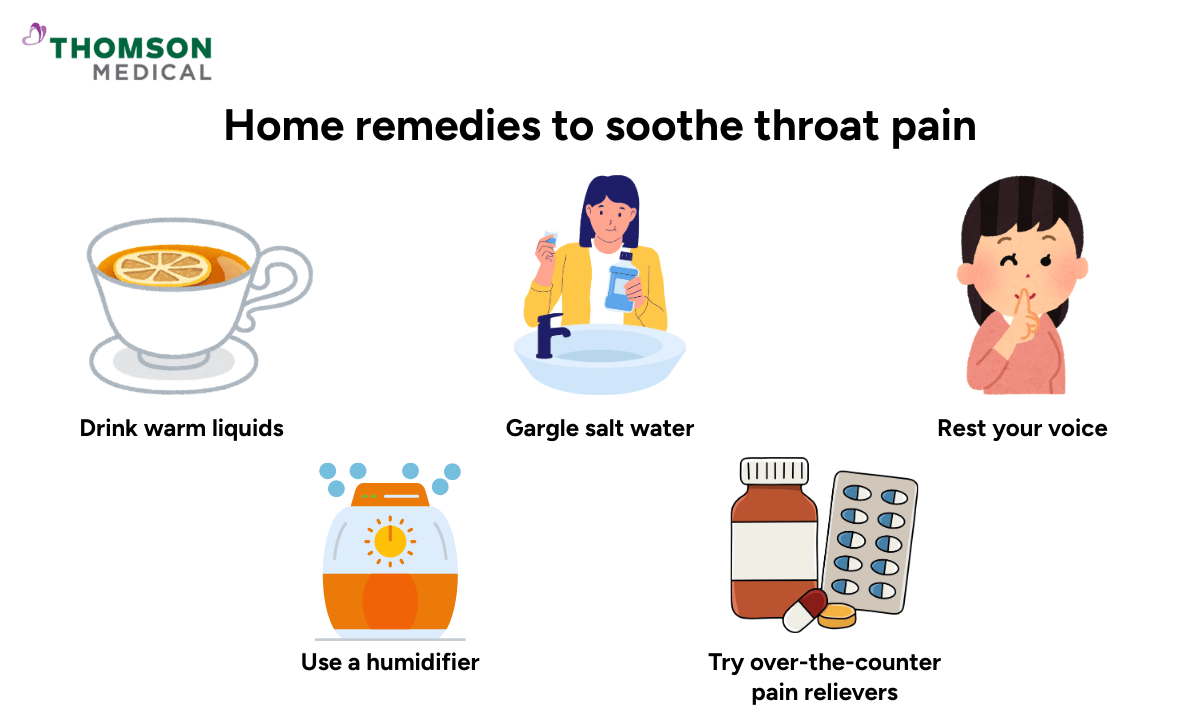
If you’re experiencing a sore throat, you already know how uncomfortable it is. Even everyday actions like swallowing or sipping water may feel harder than usual.
However, you often don’t need medication right away. There are some remedies you can try at home to ease the pain.
Drink warm liquids:
Warm water with honey and lemon can be very helpful. Honey has mild antibacterial properties, and warmth soothes inflamed tissue.
Gargle salt water:
This is simple but effective. You can use half a teaspoon of salt in a glass of warm water, then gargle for about 30 seconds.
It can help reduce inflammation and flush out bacteria and mucus.
Rest your voice:
If you’ve been talking or presenting all day, your throat needs a break.
Use a humidifier:
If you’re in air-conditioned rooms all day, a humidifier can make a difference.
Adding moisture to the air helps your throat heal.
Try over-the-counter pain relievers:
Medications such as paracetamol or ibuprofen can ease your pain and reduce fever.
Throat lozenges or throat sprays can both provide temporary relief.
These remedies can ease the discomfort while your body heals. Many people start to feel better within a few days, so give yourself a little time and be consistent with what works for you.
How doctors diagnose and treat throat pain
Home remedies can be helpful in easing discomfort, but sometimes, they might not be enough. If your symptoms are severe or keep coming back, seeing your doctor is the right next step to take.
Diagnosis
Your doctor will look at the back of your throat, check your lymph nodes, and ask about your symptoms and how long they've been going on.
If strep throat is suspected, they may take a throat swab to confirm it. Results are usually available within minutes, giving you clarity without a long wait.
Treatment
Your care plan will be tailored to the cause of your throat pain.
Your doctor may suggest:
Viral sore throats:
Medication isn't usually necessary.
Rest, staying hydrated, and managing your symptoms are all you need to get through it.
Bacterial infections:
If it confirms a bacterial infection such as strep throat, they may prescribe a course of antibiotics.
It’s important to finish the full course, even if you start feeling better before it’s done. This ensures the infection is cleared fully.
Acid reflux-related throat pain:
Lifestyle changes such as smaller meals, not lying down after eating, and elevating your head at night can help improve the pain.
Your doctor may also recommend medication if lifestyle changes alone aren't enough.
Recurrent tonsillitis:
If tonsillitis keeps coming back, your doctor may discuss tonsillectomy, a surgical procedure to remove the tonsils, as a longer-term solution.
This procedure is generally safe and your doctor will walk you through every step.
Whatever's causing your throat pain, you don't have to figure it out on your own. Your doctor can help find out the cause and put together the right care plan to get you feeling better.
When should you see a doctor?
Most sore throats get better on their own, but some need a little more attention. Knowing when to seek help means you can act promptly without unnecessary worry.
For adults
You should see your doctor if you notice:
Your throat pain hasn't improved after 7 days
You have a high fever (above 38°C)
Swallowing has become difficult or painful
You can see white patches or pus on your tonsils
You have a skin rash alongside the sore throat – this can be a sign of scarlet fever
Your voice has been hoarse for more than two weeks
These symptoms don't always mean something serious, but they're worth a consultation with your doctor.
For children
Your child’s immune system is still developing, so they may be more vulnerable to throat infections than adults.
It’s best to check with your doctor if your child is:
Refusing to eat or drink because swallowing hurts
Running a high or persistent fever
Unusually tired
Drooling more than normal – this can be a sign of severe pain or difficulty swallowing
Showing a rash alongside the sore throat
As a parent, it's natural to worry when your child isn't feeling well. A visit to your doctor can give you peace of mind, and if something does need treatment, catching it early can make things easier.
If something doesn't feel right, for yourself or your child, schedule an appointment with Thomson Medical for an evaluation and to discuss your options.
FAQ
How to relieve a sore throat fast?
If you’re experiencing a sore throat, you can:
Gargle with warm salt water
Drink warm water with honey and lemon
Take paracetamol or ibuprofen
These won't cure the underlying cause, but they'll make the next few hours more comfortable.
How long does a sore throat usually last?
Most viral sore throats clear up within 5 to 7 days. Bacterial infections like strep usually improve within a few days of starting antibiotics, though you should always finish the full course.
What's the difference between a viral and bacterial sore throat?
Viral sore throats usually come with a runny nose, cough, and mild fever.
Bacterial sore throats, especially strep, tend to be more severe, with high fever, pain when swallowing, and sometimes white patches on the tonsils.
Can throat pain be a sign of something serious, like cancer?
Rarely. Most throat pain is caused by infection or irritation and resolves on its own.
That said, throat or laryngeal cancer can cause persistent sore throat, hoarseness, or difficulty swallowing. If your symptoms last more than two to three weeks without a clear cause, you should see your doctor.
Should I take antibiotics for throat pain?
Only if it's caused by bacteria.
Taking antibiotics for a viral sore throat won't help. Using unnecessary antibiotics can contribute to antibiotic resistance over time.
Why does my throat hurt but I have no fever?
Not every sore throat comes with a fever. Allergies, acid reflux, dry air, vocal strain, and mild viral infections can all cause throat pain without raising your temperature. If the pain is persistent or worsening without fever, it's still worth getting checked.
The information provided is intended for general guidance only and should not be considered medical advice. For personalised recommendations and advice based on your unique situation, please consult a specialist at Thomson Medical. Request an appointment with Thomson Medical today.
For more information, contact us:
Thomson Medical Concierge
- 8.30am - 5.30pm
- WhatsApp: 9147 2051
Need help finding the right specialist or booking for a group?
Our Medical Concierge is here to help you. Simply fill in our form, and we'll check and connect you with the right specialist promptly.
Notice:
The range of services may vary between Thomson clinic locations. Please contact your preferred branch directly to enquire about the current availability.
Get In Touch