
_(1).png%3Fbranch%3Dprod&w=3840&q=75)
Travelling with your children opens up a world of wonder and discovery, but as a parent, their safety and wellbeing naturally come first. Whilst Singapore maintains excellent healthcare standards, venturing abroad with your little ones does require some thoughtful preparation, especially when it comes to travel vaccinations.
Here's what you need to know to help your kids stay healthy and protected, wherever your adventures take you.
Why travel vaccinations matter for your children
Your children's immune systems are still developing, which means they can be more vulnerable to infections, especially when exposed to new environments, unfamiliar climates, or different food and water sources.
Even if a disease is rare or no longer seen in Singapore, it may still be common in other parts of the world. As such, child travel vaccines play an important safeguard for their health.
Vaccination helps:
Reduce the risk of catching serious infections
Prevent complications from vaccine-preventable illnesses
Protect your children when immediate medical care may be harder to access
Give you peace of mind to enjoy your trip fully
Travel vaccines ensure that the only things your little ones bring home are happy memories.
Recommended travel vaccinations for kids

Every child and every destination is different. Your children’s paediatrician will tailor recommendations based on your itinerary, travel duration, season, and your children’s age and health.
Below are common travel vaccines your children’s doctor may discuss with you.
Hepatitis A
This infection spreads through contaminated food, water, or close contact with infected individuals. Children with hepatitis A usually experience fever, loss of appetite, vomiting, and stomach pain. Some may not show severe symptoms, but protection is still important.
The hepatitis A vaccine is often recommended for travel to most destinations across Asia, Africa, and South America.
Typhoid
Typhoid is a bacterial infection, which is commonly found in countries with poor sanitation. It can cause high fever, stomach upset and either diarrhoea or constipation in children.
This vaccine is especially important for travel to India and rural areas of Southeast Asia, or if your family enjoys trying street food or local cuisines.
Japanese encephalitis
Japanese encephalitis is a mosquito-borne illness found in rural parts of Asia. Although most infections are mild, severe cases can affect the brain.
As such, vaccination is recommended for children spending extended time outdoors or visiting rural areas during monsoon season.
Yellow fever
Yellow fever is one of the severe mosquito-borne diseases in parts of Africa and South America, and some countries require proof of vaccination for entry.
It can cause fever, jaundice, and, in severe cases, organ complications, so the yellow fever vaccine is vital for safe travel.
Meningococcal vaccine
Meningococcal disease spreads easily in crowded environments and can lead to severe infections like meningitis. Because symptoms can escalate quickly, vaccination is required for Hajj and recommended for travel to certain African regions.
Hajj and Umrah vaccination
Travelling for Hajj or Umrah involves large gatherings of people from around the world, which increases infection risks. Besides the mandatory meningococcal vaccine, seasonal vaccines like influenza may also be recommended to keep children healthy during the pilgrimage.
Rabies
Rabies is a life-threatening infection transmitted through bites or scratches from infected animals, which children may approach out of curiosity.
The rabies vaccine is especially important in regions where rabies is common, as symptoms appear late and the disease is almost always fatal once they do.
Influenza
Flu viruses circulate seasonally around the world, especially during winter in temperate countries. Because children are more prone to complications like pneumonia, an annual flu shot provides valuable protection before travelling.
If you’re feeling unsure about which vaccines your child may need for your upcoming trip, our paediatricians at Thomson Medical can walk you through the options and tailor recommendations to your family’s travel plans.Request an appointment today.
Our paediatricians
Loading...
Don't forget routine vaccinations
Before considering travel-specific vaccines, make sure your child is up to date with their routine immunisations, including:
MMR (Measles, Mumps, Rubella)
DTaP (Diphtheria, Tetanus, Pertussis)
Polio
Varicella (Chickenpox)
COVID-19 vaccine (if recommended for age)
These foundational vaccines protect your child from preventable diseases, whether at home or abroad.
When should you schedule travel vaccinations?
It’s ideal to book a travel health consultation 4 to 6 weeks before departure. This gives your child enough time to:
Complete vaccines that require more than one dose
Build strong immunity before the trip
Manage any side effects well before travelling
Even if you’re travelling sooner, it’s still worth arranging a consultation so your children’s doctor can advise which vaccines can be fast-tracked safely.
What to bring to the appointment
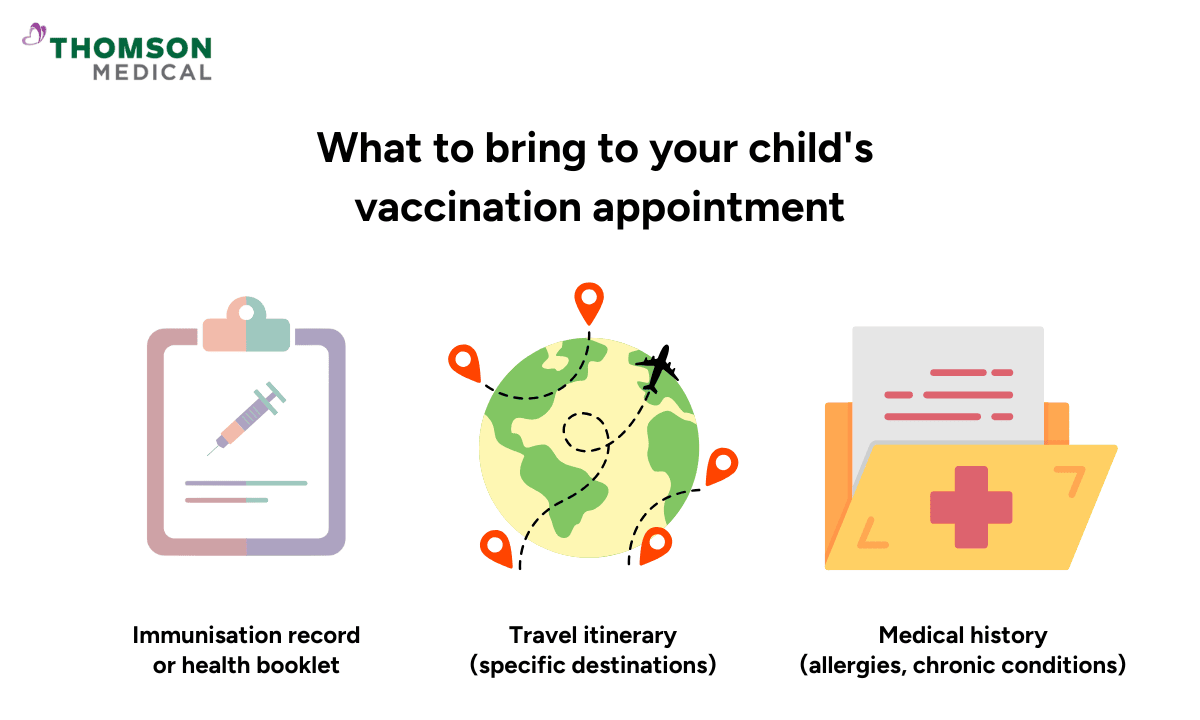
To make your visit smooth and productive, bring along:
Your child’s immunisation record or health booklet
Your travel itinerary, including specific cities or rural areas
Your child’s medical history, especially allergies or long-term conditions
These details help your children’s paediatrician recommend the safest and most suitable vaccinations for your little ones.
Taking these simple steps means you can focus on what matters most – creating wonderful memories together as a family, with the peace of mind that your children are protected wherever your journey takes you.
At Thomson Paediatric Centre, we understand that every family's travel needs are unique. Our paediatricians are here to provide personalised guidance and ensure your children receive the appropriate vaccinations for healthy and enjoyable travels. Schedule an appointment today so we can help protect what matters most.
FAQ
Do children need to be vaccinated to travel?
Not always, but the right vaccines can offer an extra layer of protection and help your children stay healthy while exploring new environments.
What vaccines are necessary for travel?
It depends on your destination. Your children’s doctors may recommend vaccines such as hepatitis A, typhoid, Japanese encephalitis, yellow fever, rabies, or the flu to keep your children safe abroad.
Can your children travel if you’re unvaccinated?
Yes, but it’s important for them to be fully protected, as they may be exposed to infections that are uncommon in Singapore. Some countries, such as those in Africa or South America, even require certain vaccines like yellow fever before allowing entry.
How long before travel should your kids get vaccinated?
About 4–6 weeks before your trip is ideal. This gives your child time to build strong immunity and ensures they’re well protected.
What happens if kids are not vaccinated before travel?
They may be more vulnerable to infections that are still common in some countries, and certain destinations may require proof of vaccination for entry.
Is there any risk when vaccinating?
Most children only experience mild side effects like a sore arm or slight fever. Serious reactions are very rare, and the protection vaccines offer is far greater than the risks.
The information provided is intended for general guidance only and should not be considered medical advice. For personalised recommendations and advice based on your unique situation, please consult a specialist at Thomson Medical.Request an appointment with Thomson Medical today.