

Deciding which clinic to visit when you're feeling unwell can be a confusing process. You may wonder whether your condition is serious enough to visit the Accident & Emergency (A&E) department. After all, rushing there for non-life-threatening issues can mean waiting up to six hours or more.
Knowing the differences between Urgent Care Centres (UCCs), A&E departments, GPs, and 24-hour clinics can help you get the right care without any unnecessary waiting.
What is UCC?
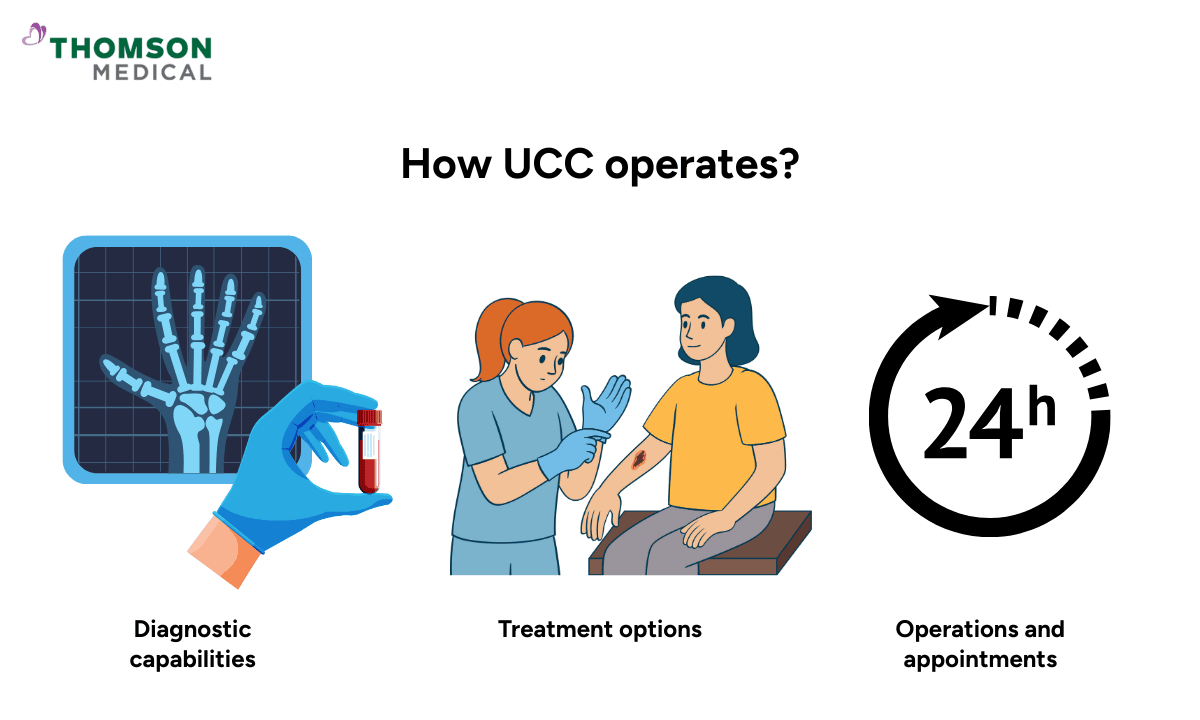
Urgent care centres (UCCs) are a bridge between your regular General Practitioner (GP) and the A&E department. They're medical facilities designed for conditions that need prompt attention but aren't life-threatening emergencies. UCCs typically provide:
- Diagnostic capabilities:
- X-rays and basic laboratory facilities for blood tests and other diagnostic work.
- Treatment options:
- Wound care, minor fractures, and treatment for infections.
- Operations and appointments:
Our urgent care specialists in Singapore
Loading...
What are the differences between A&E vs UCC vs GP vs 24-hour clinic?
Knowing what each facility offers can save you time and help ensure you're in the right place for your healthcare needs. Choosing the right facility depends on the severity of your situation:
| Facility | Best for | Equipment and competencies |
|---|---|---|
A&E | Life-threatening emergencies | Fully prepared for emergencies with life-saving equipment, ready-to-use operating rooms, and immediate access to specialists. |
UCC | Urgent but non-critical conditions | X-ray machines, laboratory facilities, ECG equipment, and resources for minor procedures |
GP or 24-hour clinic | Minor illnesses and injuries | Basic examination tools and minor procedure equipment, but no X-ray or on-site laboratory services |
If you're uncertain, contact the facility you're considering to ensure they can address your specific needs.
If you’re experiencing an urgent but non-life-threatening issue, request an appointment with Thomson Medical’s Urgent Care Centre. Our facilities can provide prompt assessments and treatment, including X-rays, laboratory tests, and minor procedures.
When to choose A&E, UCC, GP or 24-hour clinic
If you're unwell or in pain, it's understandable if you're unsure which clinic to visit. Below is a simple guide to help you decide where to go based on your symptoms.
Priority 1: Go to A&E immediately
Please head straight to the A&E if you're experiencing any of these symptoms:
Heavy bleeding from a serious injury
Difficulty breathing or severe chest pain
Large or severe burns
A head injury that caused you to lose consciousness
Signs of stroke (your face drooping on one side, not being able to lift your arm, or difficulties speaking)
These conditions need immediate medical intervention to prevent serious harm.
Priority 2: Visit an UCC
Choose a UCC when you need early attention for:
A broken bone in your arm or leg
Chest pain or breathing problems that are concerning but not severe
A head injury that's bleeding but didn't knock you out
Injuries from a fall
Cuts that might need stitches
Smaller burns
UCCs can assess these conditions quickly and either treat you on-site or arrange transfer to hospital if needed.
Priority 3: See your GP or 24-hour clinic
Your GP or a 24-hour clinic is the best choice for health concerns that don't require immediate attention. They're great for:
- Fever
- Coughs and colds
- Flu-like symptoms
- Sprains that aren't too swollen
- Small cuts and minor injuries
- Upset stomach or diarrhoea (as long as you're staying hydrated)
Your GP knows your medical history and can provide the care you need for these everyday health issues.
What should you know before visiting a UCC?
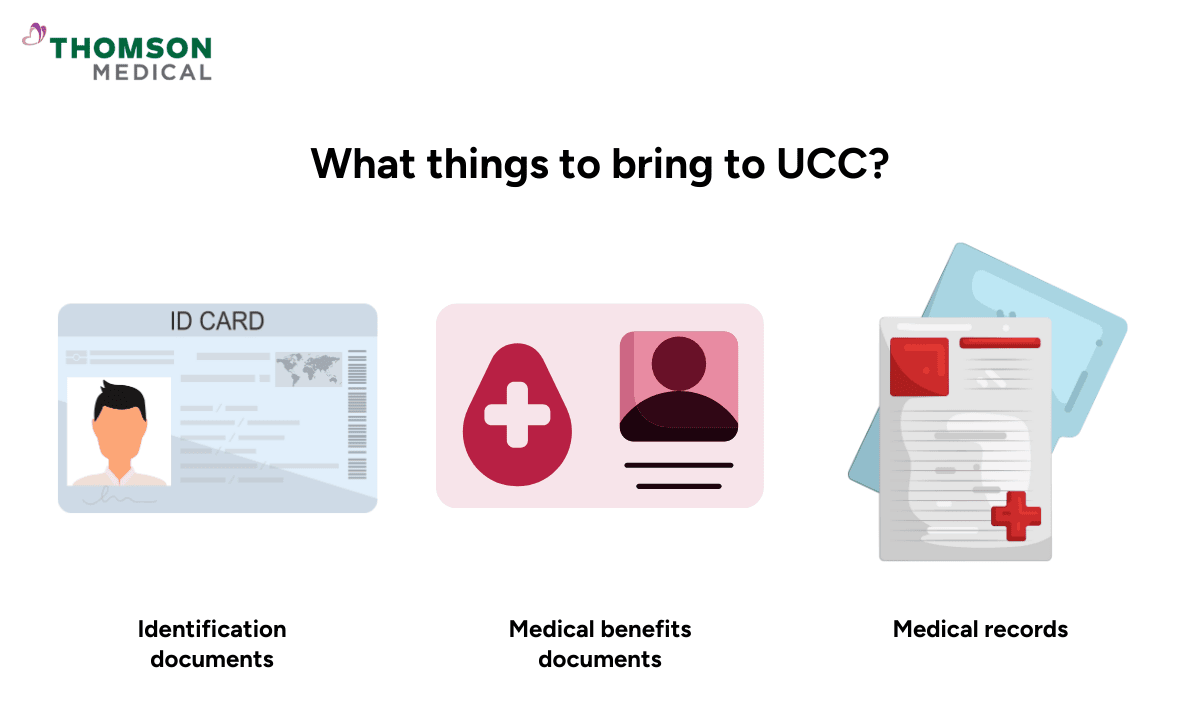
Being prepared can speed up your registration and help you get care more quickly. Make sure you bring the original copies of these documents:
Things to bring to UCC
Having the right documents ready helps medical staff provide faster care:
Identification documents (one of the following):
Identity card (Singaporeans and permanent residents)
Birth certificate (children under 12)
Passport (foreigners)
Work permit, employment pass, or S pass
Medical benefits documents (if applicable):
Civil service card
Letter of guarantee from employer or insurance company
Blood donor card
Medical records:
Referral letters from your GP
Records of ongoing treatments
Any relevant medical documents
Having these documents ready means you can move through registration more smoothly, getting you to treatment faster.
Registration and triage process
After you register, a nurse will quickly assess your condition. They'll take your temperature, measure your blood pressure, record your pulse and breathing rate, and ask about your symptoms.
Based on this assessment, you'll be assigned a priority level:
Critical condition:
If your situation is life-threatening, you'll receive immediate medical attention.
Non-critical condition:
You'll typically wait around 30 minutes, though this depends on the severity of your condition and how many patients are ahead of you.
The priority is always to provide care to the most critical cases first. While waiting can be frustrating when you're in discomfort, this system ensures that people whose lives are at risk receive immediate help.
If you’re planning to visit Thomson Medical’s Urgent Care Centre, request an appointment to ensure smoother registration. Bring your identification, medical records, and insurance documents so our team can assess your condition promptly and provide timely care.
FAQ
What services are available at UCC?
At a UCC, you'll receive prompt attention for conditions that need early care but aren't life-threatening. Services typically include diagnostic tests like X-rays and laboratory blood tests, treatment for wounds and minor injuries, minor fractures, and referrals to specialists if your condition requires ongoing care.
When should I visit A&E instead of UCC?
You should go straight to A&E for life-threatening emergencies. This includes severe chest pain, signs of stroke (such as sudden numbness or trouble speaking), major trauma or serious injuries, severe difficulty breathing, severe allergic reactions, and uncontrolled bleeding.
Can I go to A&E for non-emergency conditions?
While you can visit A&E for non-emergency situations, it's not recommended. Waiting times for non-urgent cases can be very long – sometimes several hours – because priority is given to life-threatening conditions. You'll likely receive faster care at a UCC, GP, or 24-hour clinic for non-emergency issues.
Is UCC the same as A&E?
No, they serve different purposes. UCCs handle medical issues that need prompt attention but aren't life-threatening. They can diagnose and treat many common problems with shorter waiting times. A&E departments are specifically designed for life-threatening emergencies that need immediate intervention.
Should I go to my GP, a 24-hour clinic or UCC for minor issues?
For minor issues during regular business hours, your GP is usually the best first choice. A 24-hour clinic is convenient for simple problems outside regular hours. However, if you need attention fairly quickly or if your condition requires diagnostic tests like X-rays that your GP or 24-hour clinic can't provide, then UCC is a good option.
What conditions should I not go to UCC for?
Don't go to UCC for life-threatening emergencies – these need A&E. Furthermore, UCC isn't suitable for routine matters like regular check-ups, chronic condition management that's stable, prescription refills when you're not unwell, or conditions that have been present for a long time without change. For these situations, book a regular appointment with your GP or visit a 24-hour clinic for simple issues outside regular hours.
The information provided is intended for general guidance only and should not be considered medical advice. For personalised recommendations based on your medical conditions, request an appointment with Thomson Medical.
For more information, contact us:
Thomson Medical 24-Hour Urgent Care Centre (Novena)
- Call: 6350 8812
Notice:
The range of services, vaccinations, and tests may vary. Please contact us directly to enquire about the current availability.
Request an Appointment