

If you have recently been diagnosed with HPV, it is natural to wonder whether you need to change your diet. Many HPV infections clear on their own over time as your immune system controls the virus. While food alone can’t cure HPV, eating well can support this process.
Knowing what to eat and what to limit when managing HPV can help strengthen your immune system and improve your overall health.
Can your diet help fight HPV?
Your immune system is your body’s main defence against infections, including human papillomavirus (HPV). When it is working well, it can better control viral infections and reduce the likelihood of persistent infection.
A healthy diet gives your body the vitamins, antioxidants, and nutrients it needs to support immune function – helping your cells repair, reducing inflammation, and strengthening your natural defences.
While a healthy diet can support your immune system, it works best alongside medical care, regular screening, HPV vaccination, and other healthy lifestyle habits.
What to eat to fight HPV
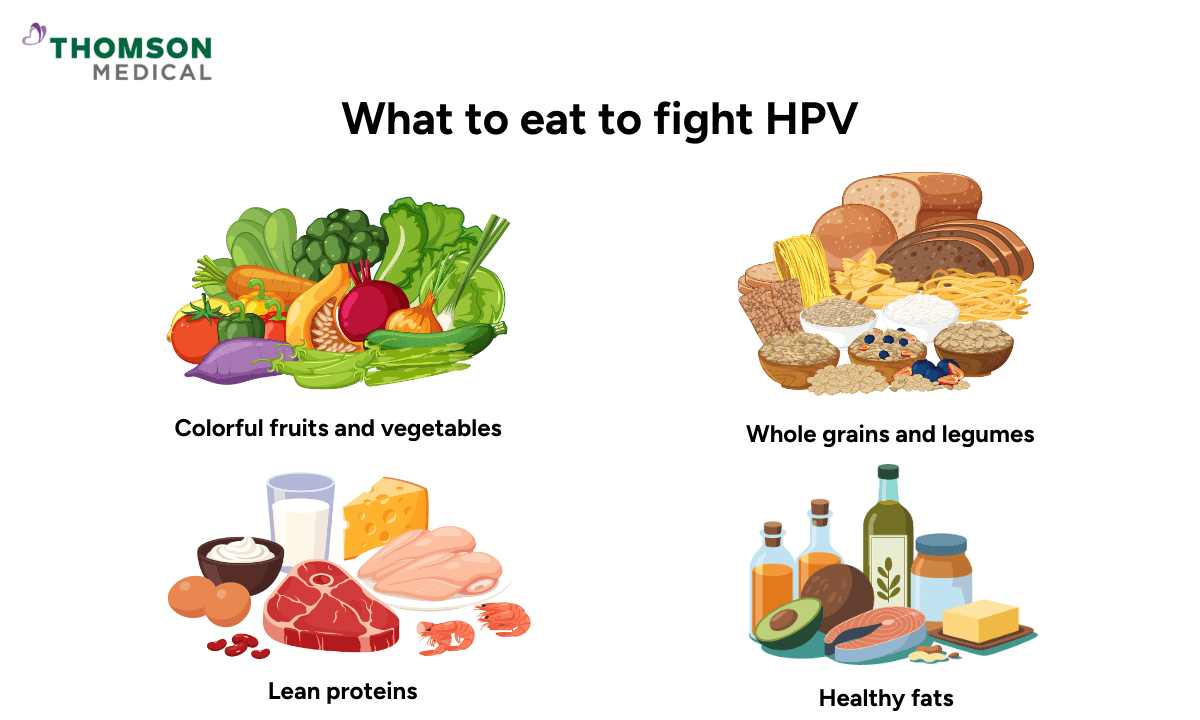
The following foods provide key nutrients that help your body stay resilient. Knowing this can help you choose foods that better support your immune system and overall health.
Colourful fruits and vegetables
Brightly coloured produce is packed with antioxidants, vitamin C, vitamin A, and plant compounds called phytonutrients, all of which help protect your cells and support your immune system.
Good options include:
Berries
Citrus fruits
Papaya and mango
Spinach and kale
Broccoli and carrots
Bell peppers
Try to get some colour on your plate at most meals, aiming for around two servings of fruit and three servings of vegetables each day.
Whole grains and legumes
Your gut health and immune system are more connected than most people realise. A well-nourished gut microbiome supports overall immune regulation, which may in turn help your body manage viral infections.
Whole grains and legumes give you the fibre, vitamins, and minerals to keep that balance in check.
Try working these into your meals:
Brown rice
Oats
Quinoa
Lentils
Chickpeas
Black beans
You can easily include these foods in your meals by adding oats to breakfast, choosing brown rice instead of white rice, or incorporating lentils and beans into soups, salads, or stir-fries.
Lean proteins
Your body uses protein to repair tissue and build the immune cells that respond to infection. Getting enough protein helps maintain the immune cells your body needs to respond to infection.
Good sources include:
Fish
Chicken
Eggs
Tofu and tempeh
Greek yogurt
Beans and lentils
Whether you eat meat or prefer plant-based options, there are many ways to make sure you get enough protein to support your immune system.
Healthy fats
Not all fats are created equal. The right kinds help your cells function properly and regulate inflammation – both of which matter for your immune response.
Focus on foods rich in omega-3 fatty acids:
Avocados
Nuts and seeds
Olive oil
Fatty fish like salmon, sardines, and mackerel
Aim for fatty fish two to three times a week if you can, and keep nuts or seeds handy to toss into salads, yoghurt, or smoothies.
If you have questions about HPV or how to support your immune health, consider scheduling a consultation with Thomson Medical. Our doctors can guide you on lifestyle and preventive steps that may strengthen your immune system.
Foods to limit if you’re managing HPV
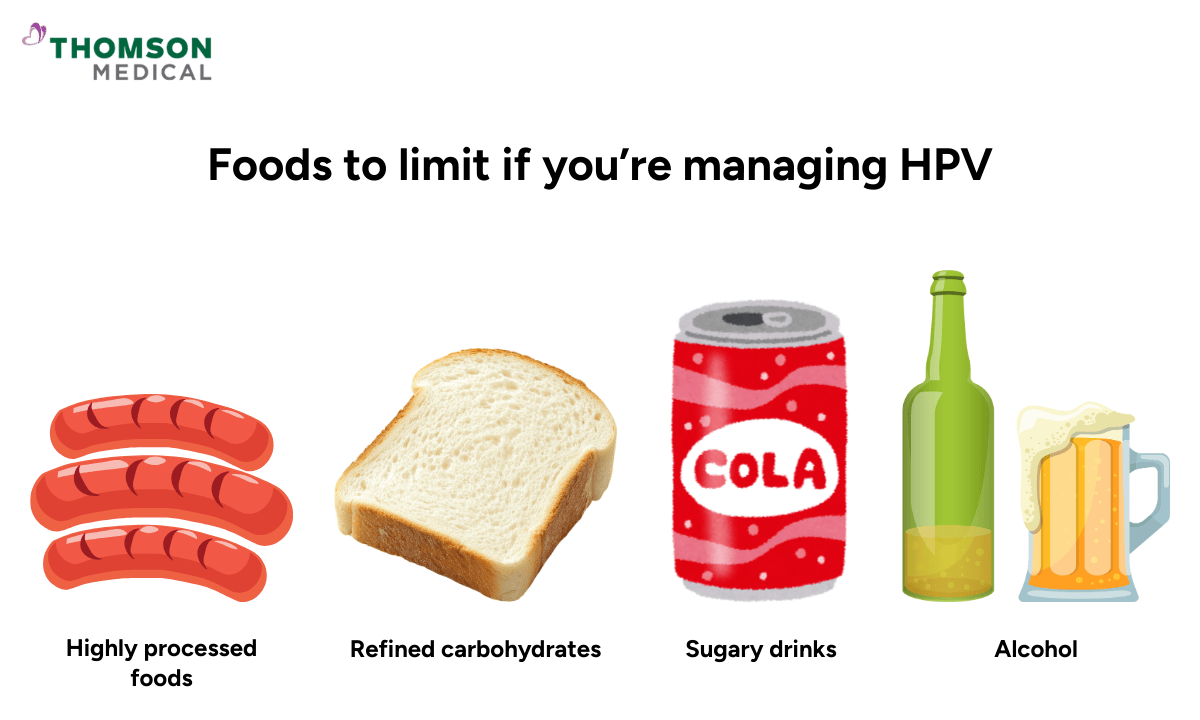
Some foods, when consumed regularly and in large amounts, can contribute to inflammation and put extra pressure on your immune system.
If you're managing HPV, it helps to cut back on:
Highly processed foods, which are often high in additives and low in nutrients that support immune function
Refined carbohydrates, such as white bread and pastries, which can cause blood sugar spikes and promote inflammation
Sugary drinks, including soft drinks and fruit juices with added sugar, which offer little nutritional value
Alcohol, which can suppress immune function and, with heavy or prolonged use, may increase the risk of HPV-related complications
That said, you don't need to avoid these foods completely. A balanced, flexible approach to eating is more sustainable and far easier to maintain long-term than strict elimination.
Supplements that may support your immune response
It's natural to wonder whether supplements could provide additional support to your immune system.
Some nutrients have been studied for their role in immune health, including:
Vitamin C
Vitamin D
Folate (vitamin B9)
Vitamin B12
Zinc
While certain vitamins and nutrients may support immune health, supplements should support – not replace – a balanced diet. It is important to discuss with your doctor before starting any new supplement to make sure it is appropriate for you.
Our sexual health specialist
Loading...
How long does it take to see results from dietary changes?
When you make changes to your diet, it can take several weeks to months before you notice any difference in how your immune system functions. How quickly this happens depends on your overall health and how consistent you are with those changes.
HPV clearance follows a similar timeline. Most HPV infections clear naturally within one to two years, though the timeline varies from person to person. This is why a consistently healthy diet and lifestyle matter more than short-term changes.
Looking for personalised advice on HPV prevention and care? Schedule a consultation with Thomson Medical. Our doctors can assess your health history, discuss screening or vaccination options, and guide you on the next steps for your wellbeing.
FAQ
What drinks may support immune health when managing HPV?
Staying well hydrated is important for your overall health and immune function.
Helpful drink options include:
Water, which supports normal cellular and immune processes
Green tea, which contains antioxidants that may support general immune health
Herbal teas, such as ginger, turmeric, or chamomile
Vegetable-based smoothies, which provide vitamins and plant nutrients
It may also help to limit sugary drinks and excessive alcohol, as these can negatively affect your immune system.
Is coffee bad if you have HPV?
Moderate coffee consumption – about one to two cups per day – is generally considered safe and may even provide antioxidants. However, drinking too much caffeine may affect sleep quality or increase stress, which can indirectly influence your immune system.
Besides diet, what lifestyle habits can help fight HPV?
Diet works best when combined with other healthy habits that support your immune system, such as:
Getting adequate sleep (7–9 hours per night)
Managing stress through relaxation or mindfulness practices
Staying physically active
Avoiding smoking, which is strongly linked to HPV persistence
Limiting alcohol consumption
Attending regular cervical screening if recommended
How can nutrition support your body’s defence against HPV?
A balanced diet supports your immune system in several ways, including:
Strengthening immune cells that target infected cells
Supporting tissue repair and recovery
Reducing oxidative stress and inflammation
Maintaining a healthy gut microbiome that helps regulate immunity
What vitamins help the body manage HPV?
There is no specific vitamin that can clear HPV on its own. However, certain vitamins may support your immune system, which helps your body respond to the virus.
Nutrients commonly linked to immune health include:
Vitamin C
Vitamin D
Folate (vitamin B9)
Vitamin B12
Zinc
When should HPV be treated?
HPV itself usually does not require treatment, as many infections clear naturally over time.
However, treatment may be recommended if HPV causes:
Visible genital warts
Persistent high-risk HPV infection detected on follow-up screening
Abnormal cell changes detected during screening
In these situations, your doctor may suggest treatments to remove warts or manage abnormal cells.
The information is intended for general guidance only and should not be considered medical advice. For personalised recommendations and advice based on your unique situation, please consult a specialist at Thomson Medical. Request an appointment with Thomson Medical today.
For more information, contact us:
Thomson Specialists (Women's Health)
Thomson Women's Clinic (TWC)
- Novena:
6592 6686 (Call), 8611 8986 (WA) - Bukit Batok:
6569 0668 (Call), 8686 3525 (WA) - Choa Chu Kang:
6893 1227 (Call), 8282 1796 (WA) Jurong:
6262 8588 (Call), 6262 8588 (WA)- Katong (female doctor):
6970 2272 (Call), 8611 9020 (WA) - Punggol:
6243 6843 (Call), 8811 0328 (WA) - Sembawang: 6753 5228
- Sengkang: 6388 8125
- Serangoon (female doctor): 6382 3313
- Tampines: 6857 6266
- Tiong Bahru: 6276 1525