

Hip or groin pain that lingers for months, or even years, can gradually change how you move, sit, exercise and rest. For some people, the cause is due to a tear in the labrum, the ring of cartilage around the hip socket. This type of tear is often linked to a condition called femoroacetabular impingement (FAI).
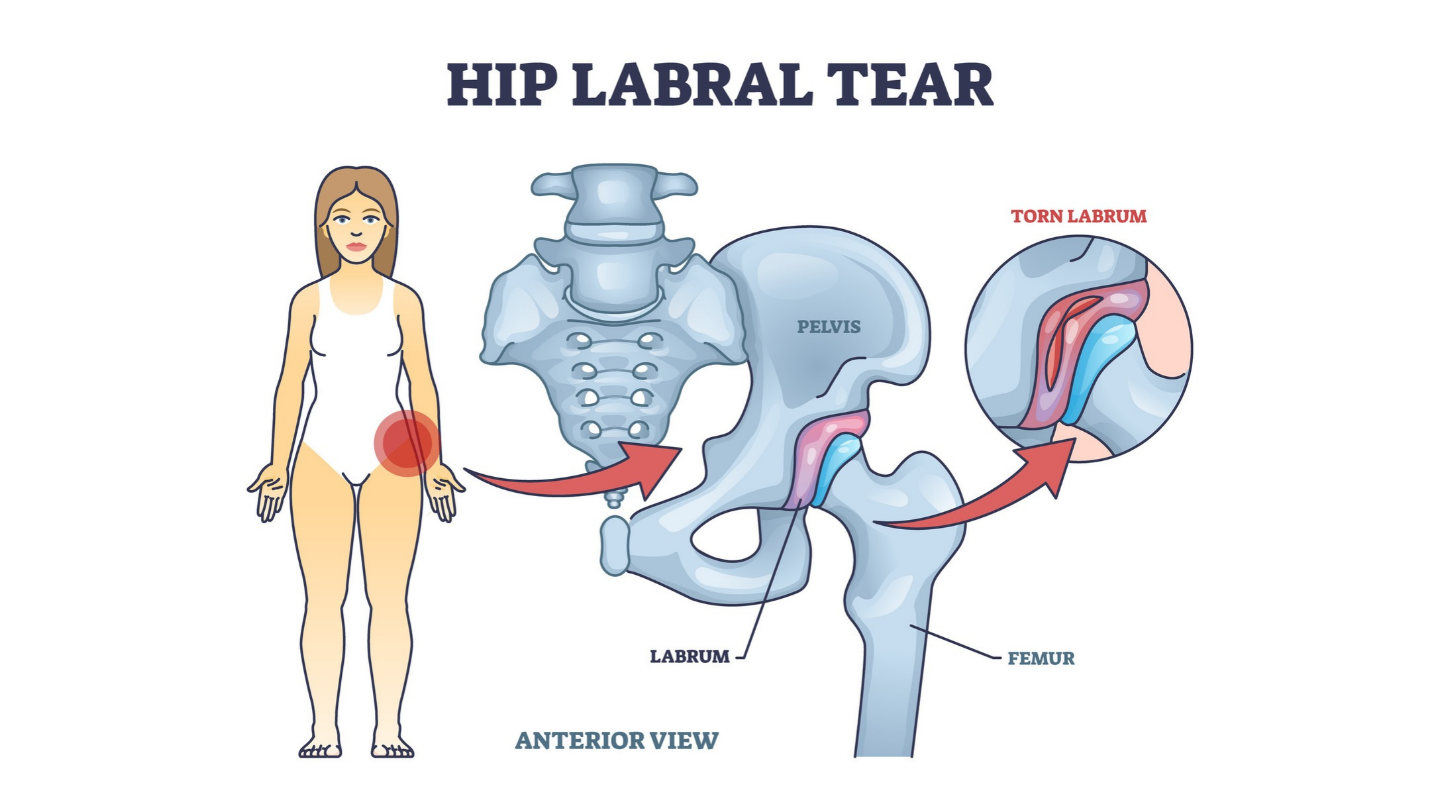
A diagram on where a hip labral tear tends to occur
Dr Benjamin Ang Fu Hong, Senior Consultant Orthopaedic Surgeon, performed a hip arthroscopy at Thomson Medical Centre. During the procedure, he repaired a patient's torn labrum and reshaped the extra bone that was causing impingement. Hip arthroscopy is a minimally invasive (keyhole) procedure, and it is now performed at Thomson Medical Centre for patients assessed to be suitable.
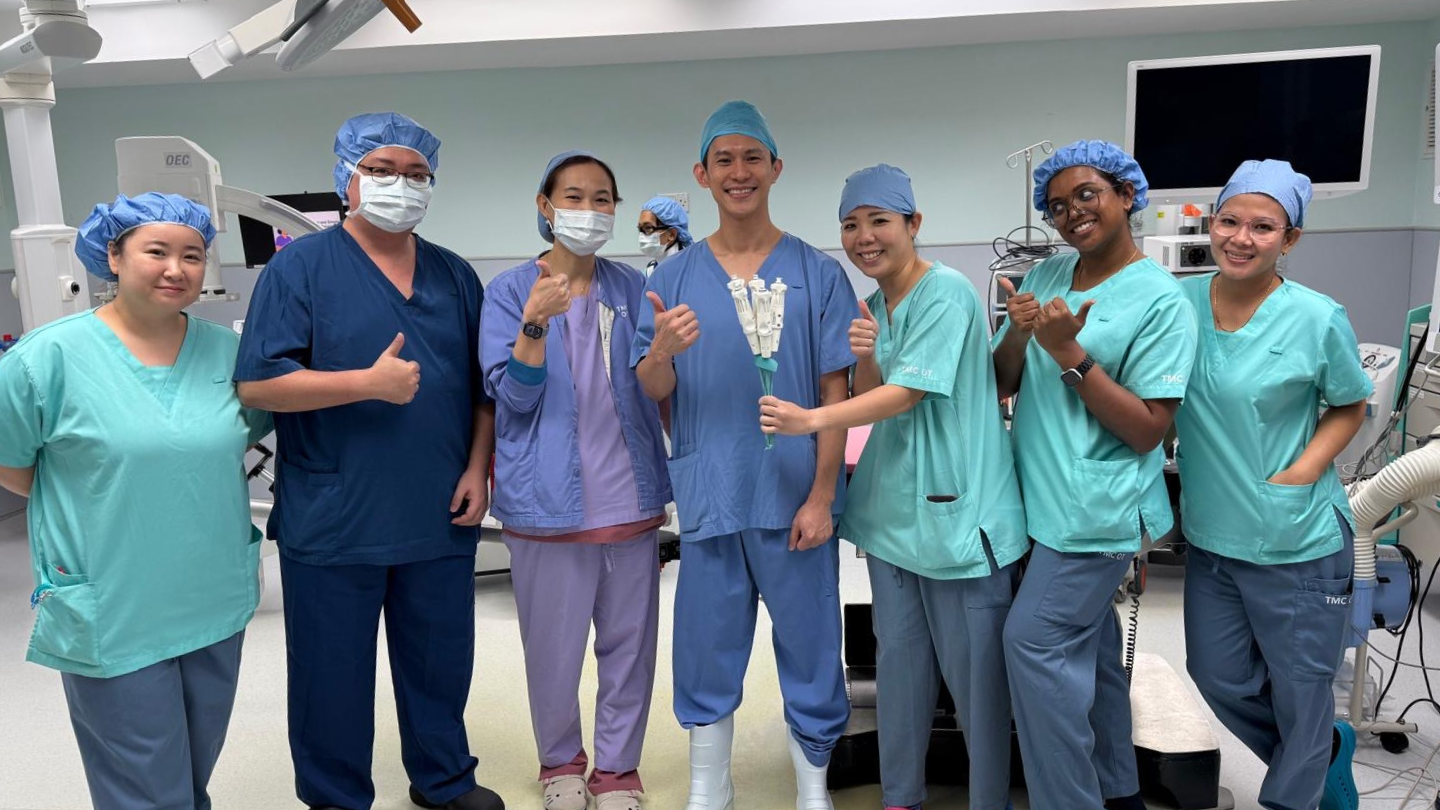
Dr Benjamin Ang and our care team after the procedure.
Here is a closer look at this patient's journey, what hip arthroscopy involves, and what recovery may look like.
The patient's journey: years of living with hip pain

When back pain does not get treated early, conditions may worsen and become chronic.
Dr Ang's patient first sought medical advice for hip pain. An MRI scan confirmed the diagnosis: a tear of the hip labrum associated with femoroacetabular impingement.
As with many hip labral tears, his treatment began with non-surgical care. Over several years, he managed his symptoms with physiotherapy and pain relief medication. When his symptoms persisted despite these measures, he chose to proceed with surgery.
The operation was an elective procedure, planned in advance. In a single keyhole operation, Dr Ang carried out two procedures:
- Labral repair, to reattach and restore the torn labrum
- Osteoplasty, to reshape the extra bone that was causing the hip bones to pinch against each other
Understanding hip labral tears and FAI
What is the hip labrum?
Your hip is a ball-and-socket joint. The ball is located at the top of your thigh bone (femur), and the socket is part of your pelvis (acetabulum). The labrum is a ring of tough, flexible cartilage that lines the rim of the socket. It deepens the socket, helps keep the ball in place, and supports the joint's stability as you move.
What is femoroacetabular impingement (FAI)?
Femoroacetabular impingement happens when extra bone develops on the ball, the socket, or both, so the two don't fit together as they should. During certain movements, such as bending the hip deeply or twisting, the bones can pinch against the labrum. Over time, this repeated contact can contribute to labral tears and damage to the joint cartilage.
There are three main types of FAI:
- Cam impingement: extra bone on the ball of the thigh bone, which makes it less round
- Pincer impingement: the rim of the socket extends too far over the ball
- Mixed impingement: a combination of both
Common symptoms of a hip labral tear
Symptoms can build up slowly and may include:
- Pain or a deep ache in the groin or front of the hip
- Discomfort when sitting for long periods, bending forward, or getting in and out of a car
- Pain during sports or activities that involve twisting, pivoting or deep squatting
- A clicking, catching or locking sensation in the hip
- Stiffness or a reduced range of movement
Because these symptoms can overlap with other hip conditions and lower back problems, a specialist assessment helps confirm the cause. This usually includes a physical examination and imaging, such as an X-ray or MRI.
Our Hip Specialist
Loading...
When is hip arthroscopy considered?
Non-surgical treatment is usually the first step for a hip labral tear or FAI. This may include adjusting activities that trigger pain, physiotherapy to strengthen the muscles around the hip, and pain relief medication.
Your orthopaedic surgeon may discuss hip arthroscopy with you if:
- Your symptoms continue despite a period of non-surgical treatment
- The pain affects your daily activities, work or exercise
- Imaging shows a labral tear, FAI or another problem that can be treated arthroscopically
- Your hip joint does not have advanced arthritis
Whether hip arthroscopy is suitable depends on your symptoms, imaging results, age, activity level and overall health. Your surgeon will run you through the options that fit your situation.
How is hip arthroscopy performed?
The hip is a deep joint, and the ball sits snugly inside the socket. This means the surgeon first needs to create space before instruments can safely enter the joint. The procedure is carried out under anaesthesia, and Dr Ang describes the main steps as follows:
- Creating space in the joint: The hip joint is gently distracted (pulled apart) and the ball is eased slightly out of the socket to make room inside the joint.
- Inserting the camera: A small camera (arthroscope) is inserted into the hip joint through a keyhole incision, allowing the surgeon to see inside the joint on a screen.
- Adding surgical instruments: A few more keyhole incisions are made so other instruments can enter the joint.
- Repairing the labrum: The torn labrum is reattached to the rim of the socket.
- Reshaping the bone (osteoplasty): The extra bone causing impingement is carefully reshaped so the ball and socket can move without pinching.
- Closing: The hip joint is returned to its normal position, the joint capsule (the tissue that surrounds the joint) is repaired, and the small wounds are closed.
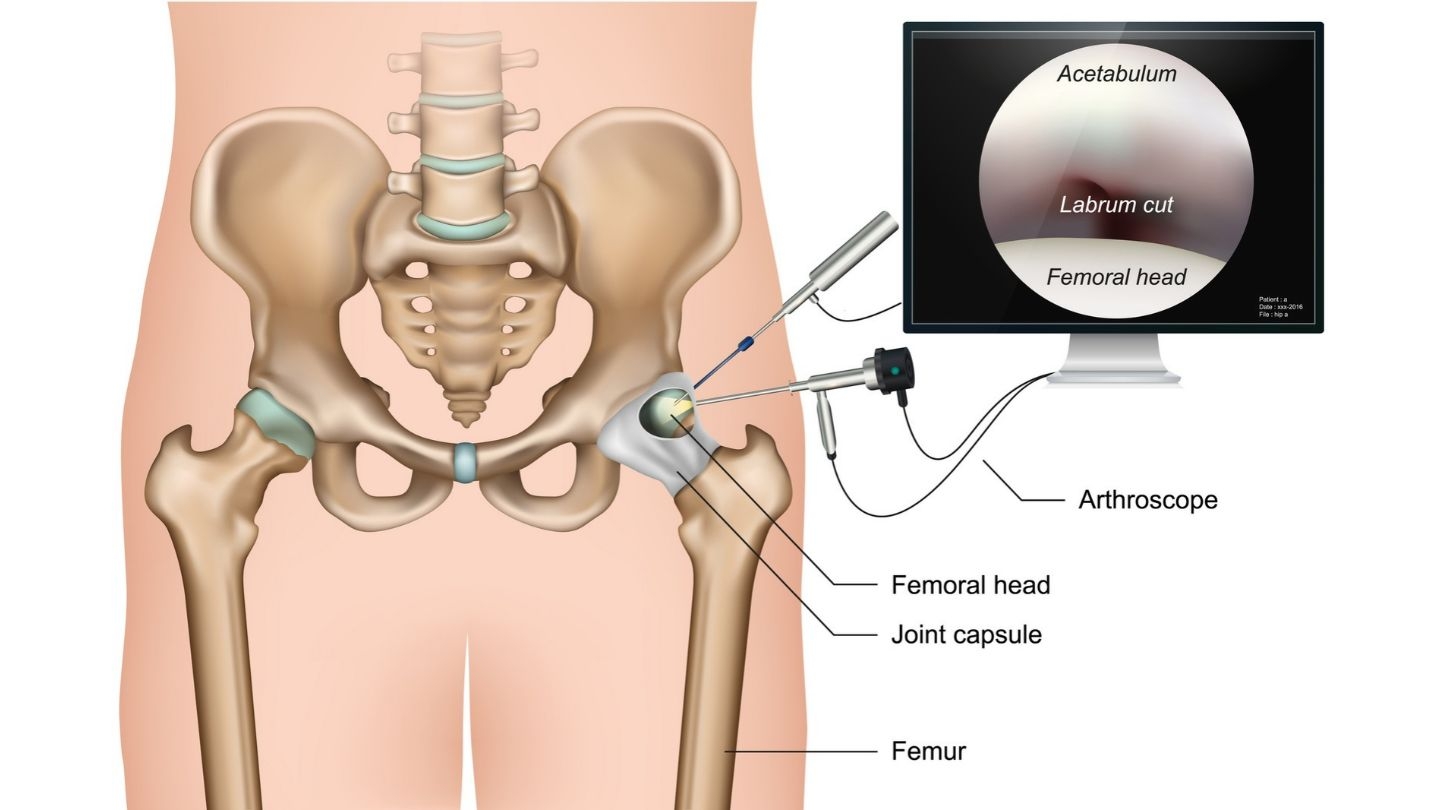
An illustration of how a hip arthroscopy is commonly performed
A Faster Recover with Keyhole Surgery
Hip arthroscopy allows the surgeon to see and treat problems inside the joint through small incisions, instead of one larger open incision. Compared with open hip surgery, this generally means smaller wounds and less disruption to the surrounding soft tissue.
Because of this, some patients may be able to go home on the same day or the day after their operation. Your surgeon will advise on the length of your hospital stay based on your condition, how the procedure performed and your recovery.
What to expect during recovery

A group of friends engaging in physical activities
Recovery after hip arthroscopy is gradual and guided by your surgeon and physiotherapist. Everyone recovers at a different pace, but it often involves these stages.
- The first few weeks: Pain is managed with medication. You may be advised to use crutches for a period to protect the hip while it heals, and your surgeon will let you know how much weight you can put on the leg and which movements to avoid.
- Rehabilitation: A structured physiotherapy programme is an important part of recovery. It focuses on restoring your hip's movement first, then gradually rebuilding strength and stability.
- Returning to work and activities: When you can return depends on your job, the procedure performed and your progress. Desk-based work is usually possible sooner than physically demanding work. A return to sports is generally considered only after several months of rehabilitation, once your surgeon and physiotherapist are satisfied with your progress.
- Follow-up appointments: Regular reviews allow your care team to check on your healing and adjust your rehabilitation plan.
Possible risks of hip arthroscopy
As with any surgery, hip arthroscopy carries some risks. Your surgeon will explain these before you decide on treatment. They may include:
- Infection at the incision sites
- Bleeding
- Blood clots
- Temporary numbness or nerve irritation, which can be related to the traction used during surgery
- Ongoing pain or stiffness
- The need for further treatment in future
Hip arthroscopy vs hip replacement: what's the difference?
| Hip arthroscopy | Total hip replacement |
| Aim | To treat problems inside the hip while preserving your natural joint | To replace a damaged hip joint with an artificial implant |
| Commonly used for | Labral tears, FAI and other conditions in hips without advanced arthritis | Advanced hip arthritis and severe joint damage |
| Approach | Keyhole surgery through small incisions | Surgery to remove and replace the damaged joint surfaces |
If your hip joint has significant arthritis, your surgeon may discuss other options, such as hip replacement surgery.
Getting your hip pain assessed
If hip or groin pain has been affecting your everyday activities, an orthopaedic specialist can help identify the cause and talk you through your treatment options, from physiotherapy to surgery where appropriate.
You can request an appointment with our orthopaedic specialist at Thomson Medical for an assessment and personalised advice.
This article is for general information only and does not replace a consultation with a medical professional. Suitability for treatment and recovery times vary for each individual.
Frequently asked questions
Is hip arthroscopy a major surgery?
Hip arthroscopy is minimally invasive and performed through small keyhole incisions. It is still a surgical procedure carried out under anaesthesia in an operating theatre, and it is followed by a period of rehabilitation.
How long does it take to recover from hip arthroscopy?
Recovery varies from person to person. You may need crutches for the first few weeks, followed by a physiotherapy programme. A return to sports is generally considered after several months of rehabilitation, and your surgeon will guide you on the right timeline for you.
How long will I stay in hospital after hip arthroscopy?
Some patients may be able to go home on the same day or the day after surgery. Your surgeon will advise based on your condition, the procedure and your recovery.
Can a hip labral tear heal on its own?
The labrum has a limited blood supply, so a torn labrum may not heal fully by itself. Even so, symptoms often ease with physiotherapy and activity changes, which is why non-surgical treatment is usually tried first.
Is femoroacetabular impingement the same as hip arthritis?
No. FAI is a mismatch in the shape of the ball and socket that causes them to pinch during movement. Hip arthritis is the wearing down of the cartilage in the joint. Over time, untreated FAI can contribute to cartilage damage.
What is the difference between labral repair and osteoplasty?
Labral repair reattaches a torn labrum to the rim of the hip socket. Osteoplasty reshapes extra bone on the ball or socket that causes impingement. The two are often performed together, as they were in this case.
References
Buzin S, Shankar D, Vasavada K, Youm T. Hip arthroscopy for femoroacetabular impingement-associated labral tears: current status and future prospects. Orthopedic Research and Reviews. 2022. https://www.dovepress.com/hip-arthroscopy-for-femoroacetabular-impingement-associated-labral-tea-peer-reviewed-fulltext-article-ORR
Schilders E, Dimitrakopoulou A, Bismil Q, Marchant P, Cooke C. Arthroscopic treatment of labral tears in femoroacetabular impingement. J Bone Joint Surg Br. 2011;93-B(8):1027–1032. https://doi.org/10.1302/0301-620X.93B8.26065
For more information, contact us:
Thomson Specialists (Thomson Medical Centre) — Orthopaedic
Request an AppointmentDr Benjamin Ang Fu Hong
Orthopaedic Surgery
English
Prudential x TMC, Income, Alliance MediNet, iXchange and 2 others
