

When sudden symptoms appear, it can be hard to know what to do next. You may be worried about your health or a loved one’s, while also wondering whether the situation truly requires a trip to A&E or if another option would be more appropriate.
These moments of uncertainty are very common. This guide offers clear, practical guidance on when A&E care is essential in Singapore, so you can make informed decisions quickly and confidently, without unnecessary delays or added stress.
When to go to A&E immediately or call 995
A&E is for serious medical emergencies when your life or long-term health is at risk and you need help right away.
It’s best to go to the A&E department immediately or call 995 for an ambulance if you or someone you're with has any of these symptoms:
Severe bleeding
- Shortness of breath
Severe chest pain
Loss of consciousness
Repeated seizures, or a seizure that lasts more than a few minutes
Signs of stroke: sudden weakness on one side of your body, facial drooping, or difficulty speaking
Serious injuries from accidents, falls, or traffic incidents
Large or severe burns
If any of these happen, get medical attention at the A&E immediately.
Special considerations for different groups
Some groups may need medical attention sooner, even when symptoms don’t seem alarming at first:
Children
Pregnant women
Older adults
This is because serious illness can develop faster in these groups or show up in less obvious ways.
Babies and children
If you're worried about your baby or child, bring them to A&E if they have any of these symptoms:
Breathing difficulty: gasping for air, or lips turning blue
Repeated vomiting along with dehydration signs, such as:
Dry mouth or chapped lips
Fewer wet nappies than usual (for babies), or dark, strong-smelling urine
Being unusually irritable, cranky, or very sleepy
Crying with few or no tears
A seizure
Not waking up or not responding to you
High fever with a stiff neck
A rash that's spreading quickly
For babies: seeming unusually floppy, very difficult to wake, or refusing feeds
If you are concerned about your child’s condition, seeking medical attention can provide clarity and reassurance. Having your child assessed early can help identify any issues promptly and ensure they receive the appropriate care.
Pregnant women
If you're pregnant, go to the emergency department straight away if you experience:
Heavy vaginal bleeding
Severe pain in tummy
Sudden swelling in face or hands, especially along with headache or blurred vision
Your baby moves much less than usual
These symptoms could mean something needs urgent attention.
Elderly
In older people, sometimes a sudden change is the first warning sign that something's wrong.
Bring an older person to A&E if they have:
Sudden confusion or not acting like themselves
Falling repeatedly, or a bad fall
Severe weakness
Can't stand up or walk safely on their own
A rapid change in their usual behaviour or personality
Uncontrolled bleeding
These changes can be signs of infection, stroke, or other serious conditions that need treatment quickly.
Should you call 995 or drive to A&E yourself?
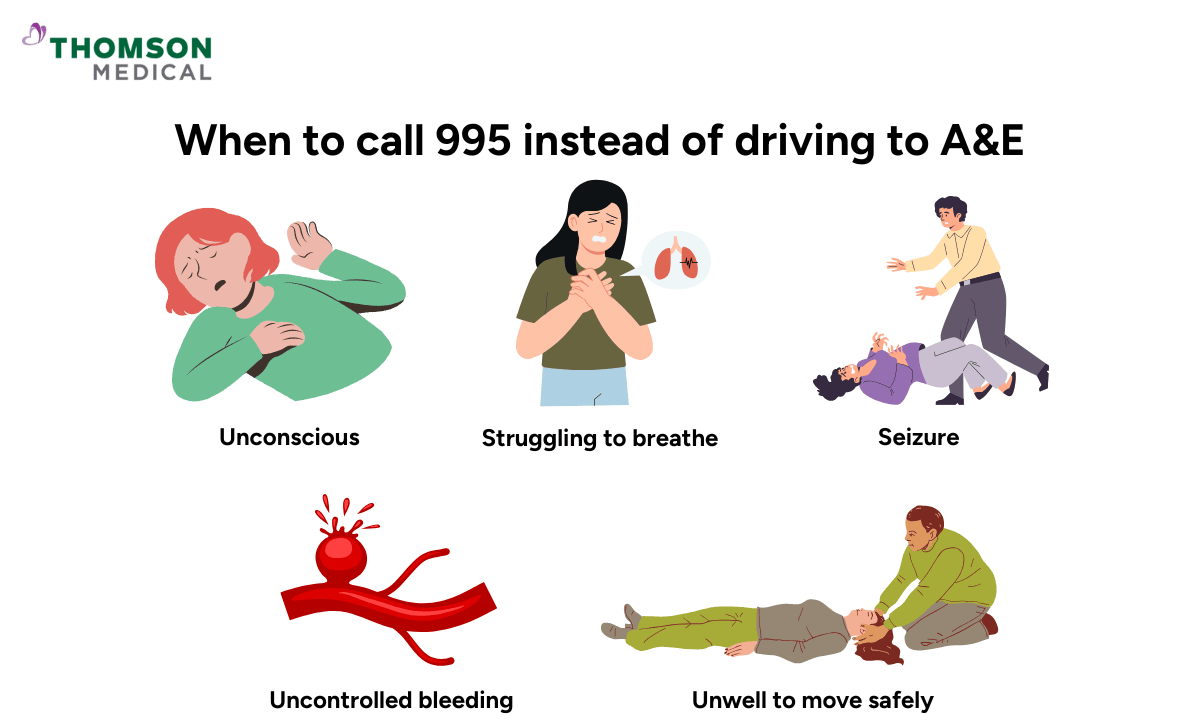
It’s better to call 995 for an ambulance if the person:
Is unconscious or unresponsive
Is struggling to breathe
Is having a seizure
Is bleeding heavily
Is too unwell to move safely or sit in a car
When you call 995, paramedics can start treatment on the way to hospital and make sure you get to the right place quickly.
If the person is conscious, breathing normally, not bleeding heavily and is able to travel, you can drive them to A&E yourself, but only if it's safe to do so and you can get there quickly.
Can you choose which A&E to go to?
In a medical emergency, it’s best to go to the nearest A&E or call 995 straight away. Getting help quickly matters more than anything else, and every minute counts when someone's seriously unwell.
In case the situation is urgent but stable, which means that the person needs medical attention soon but isn't in immediate danger, you might have more flexibility to choose.
You could consider things like:
Current waiting times at different A&Es
Your insurance coverage and which hospitals are covered
Whether you've been treated at a particular hospital before (especially if they have your medical records)
But if you're in any doubt about how serious it is, going to the nearest A&E or calling for help remains the safest choice.
How long will you wait at A&E?
When you arrive at the emergency centre, you won't necessarily be seen in the order you arrived. Instead, a nurse will quickly assess how urgent your condition is to make sure that anyone who's critically ill gets help immediately.
You'll be assigned to one of four priority groups based on how serious your symptoms are:
P1 (Priority 1): Life-threatening conditions that you'll be seen straight away
P2 (Priority 2): Serious conditions that you'll usually be seen within 30 minutes
P3 (Priority 3): Conditions that need attention soon with 1-2 hours waiting
P4 (Priority 4): Safe to wait for 3-4 hours for minor issues
If you're asked to wait, it means the medical team has assessed that your condition is stable enough to wait safely, and emergency cases need help more urgently right now.
Will you be turned away if it's not serious enough?
The A&E team will always assess you to make sure you're safe and there's nothing that needs urgent attention.
In case they find that your condition is stable and not immediately urgent, a few things might happen:
You may be asked to wait in the waiting area until there's capacity to see you
You might be advised that your issue would be better looked at a GP clinic or Urgent Care Centre (UCC), where you could be seen more quickly
If you are worried, a medical assessment can provide reassurance, determine whether treatment is needed, and help prevent potential complications. For non-life-threatening conditions that require prompt attention, an urgent care centre may be a suitable option, often offering shorter waiting times and lower costs compared to an emergency department.
Our urgent care specialist
Loading...
FAQ
What time is A&E least busy?
A&E tends to be quieter in the early morning hours on weekdays, but this can change quickly if there's a sudden influx of emergencies.
Can I go to A&E if I feel unwell?
Yes, if you're worried about your health, A&E will assess you to make sure you're safe. However, if your symptoms aren't urgent or life-threatening, you'll likely have a longer wait while more critical cases are seen first.
Who gets prioritised in A&E?
People with life-threatening or very serious conditions are always prioritised, no matter when they arrived. This means someone who comes in after you might be seen before you if their condition is more critical.
Should I go to A&E if I’m not sure whether my symptoms are serious?
If you're genuinely worried, it's okay to go and get checked rather than to delay treatment for something serious.
How much does A&E cost in Singapore?
It depends on whether you're a Singaporean, a permanent resident, or a foreigner. If you have insurance, check your policy to see what's covered. Some plans cover A&E visits, especially if you're admitted afterwards.
What’s the difference between public and private A&E departments in Singapore?
Both public and private A&E departments provide quality emergency care. The main differences are cost and waiting time.
Public A&E:
Subsidised fees for Singaporeans and permanent residents
Often busier with longer waiting times
Usually located in major public hospitals
Private A&E:
Higher costs, usually not subsidised
May have shorter waiting times
Often more comfortable facilities
The information provided is intended for general guidance only and should not be considered medical advice. For personalised recommendations based on your medical conditions, request an appointment with Thomson Medical.
For more information, contact us:
Thomson Medical 24-Hour Urgent Care Centre (Novena)
- Call: 6350 8812
Notice:
The range of services, vaccinations, and tests may vary. Please contact us directly to enquire about the current availability.
Request an Appointment