

If you're preparing for intrauterine insemination (IUI), you're probably wondering whether you can still enjoy an occasional glass of wine. You're not alone – many people worry about doing the “right” things during treatment.
While alcohol can influence fertility and treatment outcomes, understanding when to reduce or avoid drinking can help you feel more confident and supported throughout your IUI journey.
Does alcohol affect IUI success?
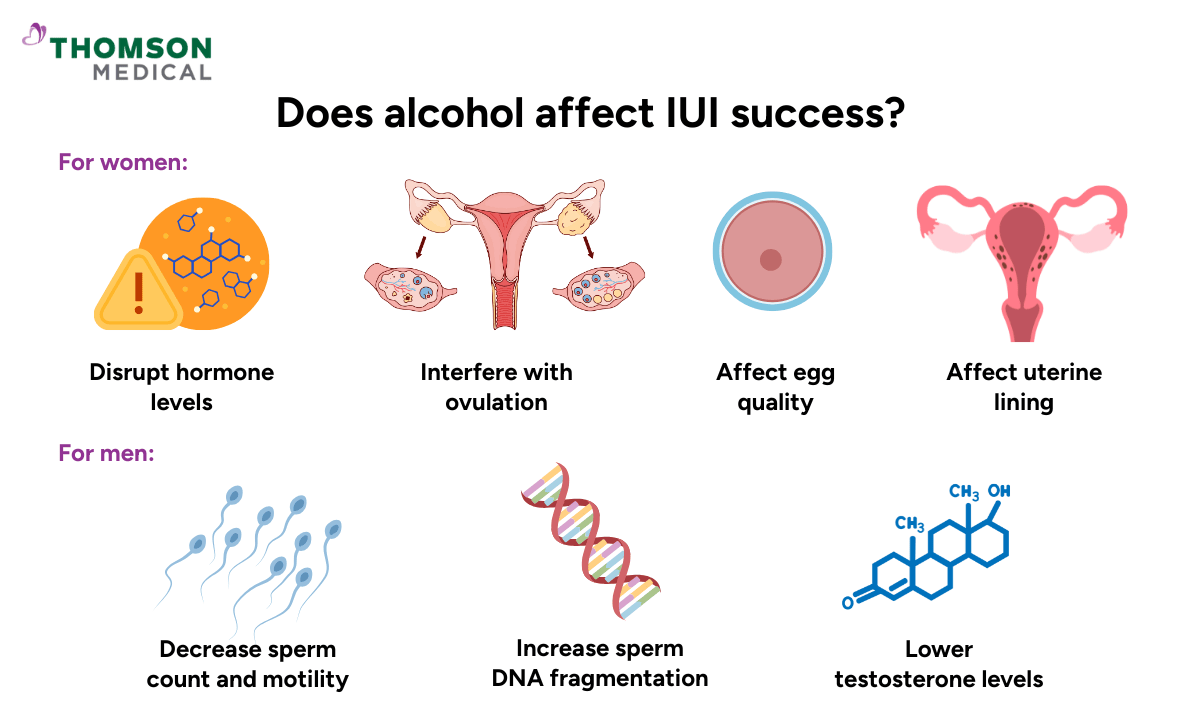
Yes, alcohol can impact your chances of IUI success. While an occasional drink doesn’t automatically prevent conception, regular or heavy drinking may place extra stress on the reproductive systems for both women and men.
For women, alcohol can:
Affect hormone levels
Interfere with ovulation during your menstrual cycle
Affect egg quality and the development of your uterine lining
Reduce how receptive your uterine lining is to a fertilised egg
For men, alcohol can:
Decrease sperm count and motility
Increase sperm DNA fragmentation
Lower testosterone levels
IUI relies on healthy eggs, quality sperm, and a uterine lining environment all working together. While this information might feel discouraging if you enjoy an occasional drink, remember that knowing these effects supports your best chances of IUI success.
When should you stop drinking before IUI?
Doctors typically recommend avoiding alcohol for at least 1–3 months before starting your treatment. This timeframe is recommended because it allows your body to improve egg and sperm quality and makes your uterus more ready to support implantation.
That said, if you're drinking occasionally, there's no need to panic if you haven't stopped months in advance. Many people start making changes closer to their cycle, and that's perfectly okay. These guidelines are meant to support your fertility journey, not add unnecessary stress.
The timing is slightly different for each partner:
For women:
It's ideal to stop drinking by the time your treatment cycle begins, or about one month before if possible. This gives your body time to rebalance hormonally and prepare for the best possible outcome.
For men:
Since sperm take roughly 74 days (about 2-3 months) to fully develop, stopping alcohol during this window means the sperm used during your IUI will be at their healthiest. But even reducing intake closer to the procedure can still be beneficial.
Why alcohol avoidance matters during IUI
You might be wondering why your doctor emphasises avoiding alcohol during this procedure. The truth is, alcohol can affect how your IUI cycle unfolds in some important ways:
It can interfere with your fertility medications like clomiphene citrate (Clomid) or gonadotropins, reducing how effectively they work in your body
It affects your uterine lining, which is crucial for implantation and can be impacted by alcohol consumption
There's a tricky timing issue since alcohol in those very early days (often before you even know you're pregnant) can increase miscarriage risk, especially with heavier or regular drinking
It disrupts hormonal balance when your body is working hard to regulate the hormones needed for conception
Avoiding alcohol can help your medications work more effectively, support a healthier uterine lining, and reduce risks during the earliest stages of pregnancy – often before you even know you're pregnant.
Every person's situation is unique, so it's important to discuss any specific concerns with your fertility specialist. You can request an appointment with a Thomson Medical fertility clinic, where a specialist will guide you through your options and offer personalised support throughout your IUI cycle.
Should you drink after IUI?
The safest choice is to avoid alcohol after your IUI procedure, even before you take a pregnancy test.
The two-week wait between IUI and your pregnancy test is a critical time. If fertilisation occurs during this period, the embryo is working to implant itself. These earliest stages are very sensitive to what's in your system, including alcohol.
It may help to treat this period as if you're already pregnant, simply to give the embryo the best chance of implanting successfully.
Our IUI specialists in Singapore
Loading...
Tips to reduce or quit alcohol before IUI
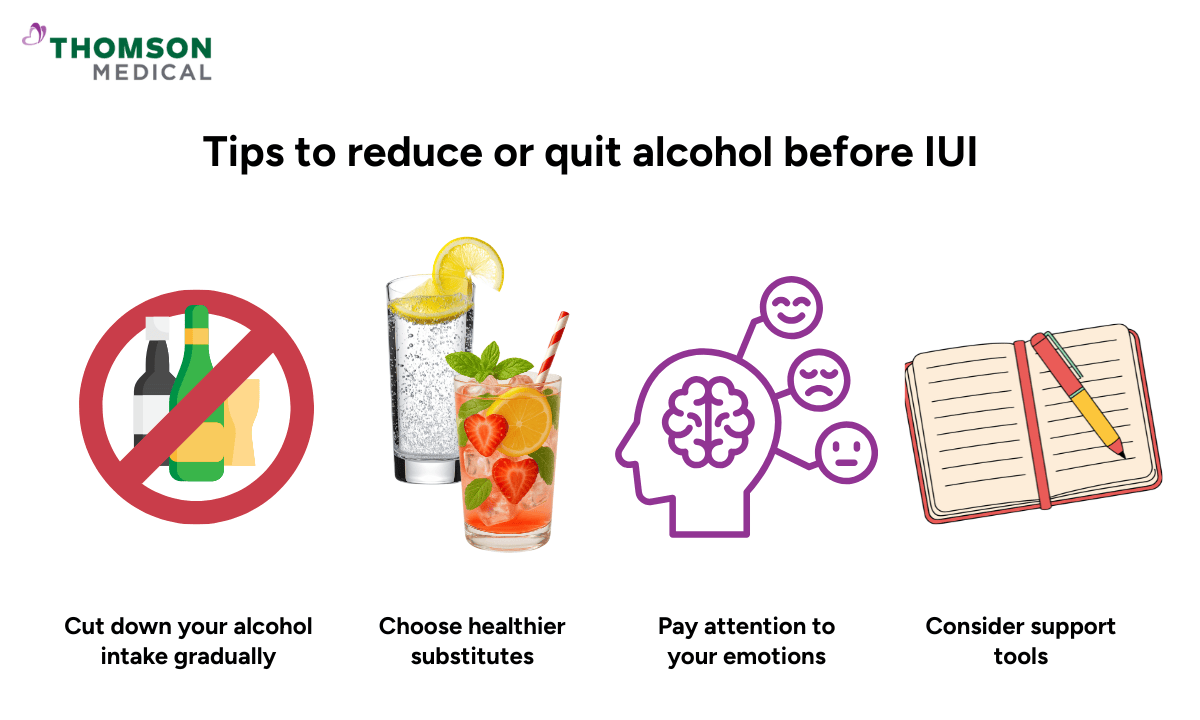
Making changes to your drinking habits is a meaningful step in supporting your fertility journey. If it feels challenging, that's completely understandable. You're not alone in this, and there's no single "right" way to approach it.
Here are practical strategies to help you reduce or stop alcohol consumption before your fertility treatment:
Start gradually and reduce your intake a little each week to make the change easier
Find substitutes you enjoy like sparkling water, mocktails, or caffeine-free herbal teas, to make social events feel fun
Tell friends or your partner about your goals so you have support along the way
Pay attention to situations or emotions that make you reach for a drink
Use tools that work for you, such as journaling, talking to a counsellor, or habit-tracking apps to help along the way
Focus on dietary considerations such as eating whole grains, taking folic acids, and maintaining balanced nutrition
If lifestyle changes feel overwhelming, remember that support is available. Request an appointment with a Thomson Medical fertility specialist. Our specialist will review your personal situation, provide tailored guidance, and connect you with resources or counselling to help you through your IUI journey.
FAQ
Should you stop drinking before IUI?
Yes. Alcohol can affect hormonal balance, egg and sperm quality, and early embryo development. It's best to stop drinking at least 1–3 months before your IUI cycle. This timeline gives your body enough time to clear alcohol's effects and optimise conditions for conception.
Can I drink alcohol before ovulation but after my period?
Technically you could, but we don't recommend it. Even though implantation hasn't occurred yet, alcohol can still interfere with ovulation and reduce the effectiveness of fertility medications.
Alcohol affects your entire menstrual cycle, not just certain phases. For the best success rates, it's safer to avoid alcohol from the start of your cycle when you're undergoing fertility treatment.
Is it OK to have a drink the night before IUI?
It's best to avoid alcohol. Even one drink can potentially alter hormone levels or uterine blood flow, which may affect the optimal conditions needed for implantation. Your IUI treatment works best when conditions in your uterus are optimal.
How much alcohol is considered too much before IUI?
Anything more than moderate drinking (more than one drink per day for women or two for men) is linked with fertility impairment. However, when you're preparing for IUI, avoiding alcohol completely is the safest approach for both partners. Binge drinking is particularly harmful and should be avoided entirely.
Should my partner stop drinking too?
Absolutely, and this is really important. Sperm health is equally critical in IUI success. Alcohol can damage the genetic material in sperm and reduce both how well they move and their overall quality. Since sperm development takes approximately 2–3 months, stopping alcohol within this timeframe before IUI can significantly improve outcomes.
Can occasional drinking affect IUI outcomes?
Even occasional drinking may have risks. While an occasional glass of wine won't necessarily harm your chances, it's difficult to predict the exact impact on your body. Since your goal is to maximise your fertility and achieve the best possible chance of pregnancy, avoiding alcohol gives you the highest chance of success.
What's the difference between IUI and IVF regarding alcohol?
IUI involves placing sperm directly in the womb, while in vitro fertilisation (IVF) includes egg retrieval and embryo transfer. Regardless of which fertility treatment you're undergoing, avoiding alcohol is equally important for both procedures to maximise pregnancy success rates.
The information provided is intended for general guidance only and should not be considered medical advice. For personalised recommendations and advice based on your unique situation, please consult a specialist at Thomson Medical. Request an appointment with Thomson Medical today.
References:
Ricci, E., Al Beitawi, S., Cipriani, S., Candiani, M., Chiaffarino, F., Viganò, P., & Parazzini, F. (2017). Semen quality and alcohol intake: a systematic review and meta-analysis. Reproductive biomedicine online, 34(1), 38-47. 10.1016/j.rbmo.2016.09.01
For more information, contact us:
Thomson Fertility
- Paragon: 6252 7766
- Novena: 6399 3758, 8811 0358 (WA)
Thomson Specialists (Women's Health)
Request an Appointment