

When uterine cancer spreads, it tends to follow a predictable path. It usually extends first into the muscle wall of the uterus, then to the cervix or the lymph nodes in the pelvis, before reaching more distant sites. That pattern is why staging involves looking specifically at those areas.
Most uterine cancers are found before any of that happens, while still confined to the uterus, largely because abnormal bleeding prompts people to seek help early. Here’s where uterine cancer spreads and in what order, how spread is identified during staging, and what it means for the treatment plan.
How does uterine cancer spread?
Uterine cancer commonly begins in the endometrium (the lining of the womb) due to mutations in the cells of the womb (uterus). As the cancer grows, it can extend deeper into the muscular layer of the uterus (the myometrium) and may eventually spread beyond the uterus to nearby tissues or distant organs.
There are several ways uterine cancer can spread:
Nearby tissue:
Cancer cells can grow directly outward from the uterus, invading neighbouring tissues and organs that are physically close by.
The lymphatic system:
Cancer cells can enter the vessels and travel through the lymphatic system. The lymphatic system is a network of vessels and small, bean-shaped structures called lymph nodes that help drain fluid from the body and fight infections.
The bloodstream:
Cancer cells can enter blood vessels and be carried through the circulation to reach parts of the body far from the uterus. This route of spread tends to occur more often with more aggressive forms of uterine cancer.
Where does uterine cancer spread to first?
Uterine cancer usually spreads within the uterus first and then to nearby areas such as the cervix, ovaries, fallopian tubes, and pelvic lymph nodes before reaching more distant parts of the body. As the cancer grows, it can extend deeper into the muscular layer of the uterus (the myometrium) and then spread to nearby tissues, lymph nodes, or distant organs.
The extent of this spread is reflected in uterine cancer’s staging system. A higher stage indicates that the cancer has spread further from where it first developed.
Where does uterine cancer spread at each stage?
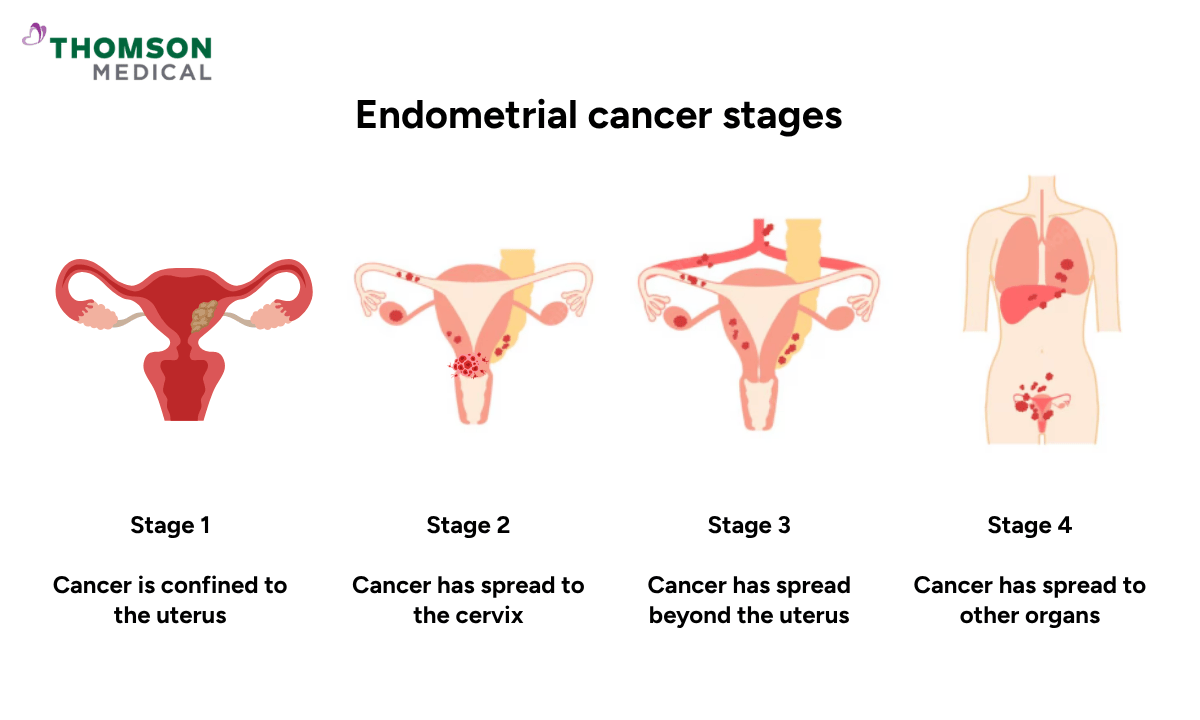
- Stage 1:
- The cancer is confined to the uterus and has not spread to nearby lymph nodes or distant organs. It may be limited to the endometrium, the inner uterine lining of the uterus, or may have grown deeper into the myometrium, the muscular layer of the uterus.
- Stage 2:
- The cancer has spread from the uterus into the connective tissue of the cervix, known as the cervical stroma, but remains within the uterus and cervix.
- Stage 3:
- The cancer has spread beyond the uterus but remains in nearby areas of the pelvis or abdomen. It may affect the ovaries, fallopian tubes, vagina, surrounding tissues, or nearby lymph nodes.
- Stage 4:
- The cancer has spread beyond the pelvic region. It may affect nearby organs such as the bladder, bowel, or more distant parts of the body, including the lungs, liver, or bones, as well as distant lymph nodes.
How quickly can uterine cancer spread?
How quickly uterine cancer spreads can vary widely from person to person, and there is no fixed timeline for its progression. Factors such as the tumour grade and the cancer type influence the risk and speed of spread. Higher‑grade tumours are generally more aggressive, more likely to spread, and carry a higher risk of metastasis.
Uterine cancers are also grouped into type 1 and type 2 based on how they develop and behave. Type 1 cancers, which are usually low‑grade endometrioid tumours, tend to grow more slowly and often develop over several months or years.
While type 2 cancers, such as papillary serous carcinoma and clear cell carcinoma, are less common but more aggressive. They spread faster beyond the uterus and into lymph nodes or distant organs.
If you are unsure about your tumour grade or cancer type based on your diagnostic results or are considering a second opinion, schedule an appointment with Thomson Women's Clinic & Cancer Surgery. Our gynaecological oncologist can provide you with more detailed information to help you make a more informed decision about your care.
Our women's cancer specialists
Loading...
What are the signs that uterine cancer has spread?
The symptoms of metastasised uterine cancer can vary depending on how far the cancer has grown and which parts of the pelvis or body are affected.
When cancer is still near the uterus
When the cancer is still in or near the uterus, you may notice:
Abnormal vaginal bleeding (including bleeding between periods, heavier-than-usual periods, or any bleeding after menopause)
Unusual or unpleasant‑smelling vaginal discharge
Persistent pelvic pain or pressure
Pain during urination or sexual intercourse
Unexplained weight loss, persistent tiredness, or loss of appetite
When cancer has spread to distant organs
If uterine cancer spreads to more distant organs, you may develop symptoms related to the area involved:
Bladder or bowel:
Blood in the urine, pain or difficulty when urinating, changes in bowel habits, or blood in the stool.
Liver:
Pain in the upper right side of the abdomen, loss of appetite, abdominal swelling, or jaundice (yellowing of the skin and eyes).
Lungs:
Persistent cough, shortness of breath, chest pain, or coughing up blood.
Bones:
Persistent pain in your back, hips or ribs that often lingers at night or when you are resting.
Brain:
Headaches, dizziness, balance problems, seizures, or changes in speech or memory.
How is uterine cancer spread diagnosed?

If your doctor suspects that uterine cancer has spread, they may use a combination of imaging tests, laboratory tests, and biopsies to assess the extent of the disease. These tests can help your specialist determine whether the cancer has spread beyond the uterus and identify which areas of the body may be affected. Common diagnostic tests may include:
Ultrasound:
Often one of the first imaging tests used to assess the uterus and look for abnormalities in the endometrium.
CT scan:
A CT scan uses a series of X-ray images to create detailed pictures of the chest, abdomen, and pelvis, helping doctors look for signs of cancer in nearby or distant organs.
MRI scan:
An MRI scan uses strong magnetic fields and radio waves to produce detailed images of the uterus and surrounding tissues. It can help assess how deeply the cancer has grown into the uterine muscle and whether nearby tissues are affected.
PET scan:
A PET scan uses a small amount of radioactive glucose to identify areas of increased activity that may indicate cancer cells. It may be used to look for cancer that has spread to other parts of the body.
Blood tests:
These may be used to assess your general health and check how well your liver and kidneys are functioning. Your doctor may also recommend a CA-125 blood test in certain situations, although this marker alone cannot confirm whether uterine cancer has spread.
Biopsy:
If imaging identifies a suspicious area, your doctor may take a small tissue sample for examination under a microscope. A pathologist can then determine whether cancer cells are present.
How is metastatic uterine cancer treated?
Metastatic uterine cancer is usually treated with a combination of therapies tailored to the stage of the disease where the cancer has spread and your general health. For many people, surgery may still be considered if the cancer is operable, often followed by additional treatments such as chemotherapy or radiotherapy to help control the disease and reduce the risk of further spread.
When surgery is not possible, treatment usually focuses on non-surgical options to control the cancer, slow its growth, and relieve symptoms. Chemotherapy is commonly used to treat metastatic uterine cancer and may be combined with other non-surgical treatments, such as radiotherapy, hormone therapy, targeted therapy, or immunotherapy.
If you are unsure which treatment may be suitable for your condition, consult with a specialist to help you make a more informed decision about your care. Schedule an appointment with Thomson Women's Clinic & Cancer Surgery for a consultation with our gynaecological oncologist.
FAQ
What is the most common age for uterine cancer?
Endometrial cancer is most commonly diagnosed in women between the ages of 55 and 64 years, with the average age at diagnosis being around 60 years. Although it predominantly affects women after menopause, it can occasionally occur in younger women, particularly those with inherited genetic conditions or certain hormonal and metabolic risk factors.
Is uterine cancer curable if it has spread?
Uterine cancer is still treatable when it has spread beyond the uterus, particularly if the spread is limited and can be managed with surgery, radiotherapy, or systemic treatments such as chemotherapy or hormone therapy.
However, metastatic cancer that has spread to distant organs can be more difficult, and treatment may focus on controlling the cancer, relieving symptoms, and maintaining your quality of life.
What is the difference between recurrent and metastatic uterine cancer?
Recurrent uterine cancer means the cancer has returned after treatment, either in the pelvis or elsewhere in the body, after a period when no cancer could be detected. Metastatic uterine cancer refers to cancer that has spread from the uterus to distant organs or tissues, such as the lungs, liver, bones, or brain.
Recurrent cancer can also be metastatic if it returns in a distant part of the body, and treatment will depend on where the cancer has spread and which treatments you have previously received.
What is the outlook of treatment when uterine cancer has spread?
If uterine cancer is detected early, while it is still confined to the uterus, treatment is highly effective. Around 86-95% of affected women are still healthy five years after diagnosis.
However, once the cancer has spread to distant organs such as the lungs, liver or bones, the outcome is less favourable. Only around 18-26% of affected women are still healthy after five years.
The information provided is intended for general guidance only and should not be considered medical advice. For personalised recommendations and advice based on your individual circumstances, schedule an appointment with Thomson Medical.
Reference
Mager KL, McLean K. Endometrial Cancer: A Review. JAMA. 2026;335 (18):1616-1627. doi:10.1001/jama.2026.2248
For more information, contact us:
Thomson Specialists (Women's Health)
Thomson Women's Clinic (TWC)
- Novena:
6592 6686 (Call), 8611 8986 (WA) - Bukit Batok:
6569 0668 (Call), 8686 3525 (WA) - Choa Chu Kang:
6893 1227 (Call), 8282 1796 (WA) Jurong:
6262 8588 (Call), 6262 8588 (WA)- Katong (female doctor):
6970 2272 (Call), 8611 9020 (WA) - Punggol:
6243 6843 (Call), 8811 0328 (WA) - Sembawang: 6753 5228
- Sengkang: 6388 8125
- Serangoon (female doctor): 6382 3313
- Tampines: 6857 6266
- Tiong Bahru: 6276 1525