

It's natural to be sceptical at the idea of combining acupuncture and in vitro fertilisation (IVF). After all, how could tiny needles possibly support something as complex as assisted reproduction? Yet many women who've tried it often report feeling calmer, more balanced, and better prepared for each stage of treatment.
But here's what most people want to know: does it actually work? And if you decide to try it, when's the right time to start?
What is acupuncture for IVF?
Acupuncture is a form of Traditional Chinese Medicine (TCM) that’s meant to support your body’s natural processes and work alongside your medical fertility treatment.
During your treatment, your acupuncturist places very thin, sterile needles at specific points on your body. According to TCM, these points help promote the smooth flow of energy, also known as Qi, throughout your body to support your fertility. When used as a supportive companion to your IVF journey, acupuncture may help to boost your chances of success and achieve better treatment outcomes.
Benefits of acupuncture for IVF treatment
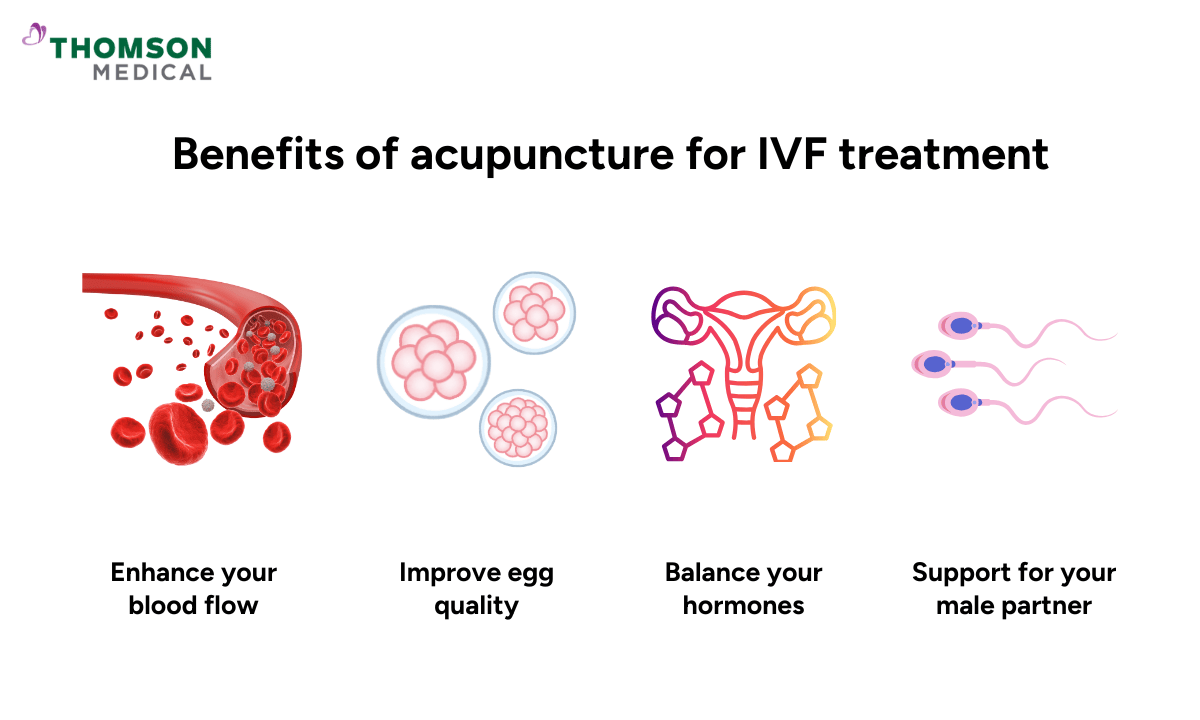
Acupuncture offers several benefits that support your IVF treatment. These include:
Enhance your blood flow to your reproductive organs:
Acupuncture improves blood circulation to your uterus and ovaries. This helps your uterus lining thicken, creating a more welcoming environment for embryo implantation.
Improve egg quality:
As your blood flow is improved, it nourishes your ovaries, which can positively affect follicle development and improve egg quality.
Balance your hormones and reduce side effects:
Acupuncture helps your body regulate hormones better, reducing side effects you might experience from fertility medications, such as bloating, nausea, or headaches.
Support for your male partner:
Your partner can also benefit from acupuncture. The treatment helps improve sperm quality and count by enhancing blood flow and supporting overall reproductive health.
If you want to learn more about how acupuncture can support your IVF treatment, schedule an appointment with Thomson Medical for personalised advice.
Our physician in Singapore
Loading...
How does acupuncture improve the IVF success rate?
While acupuncture doesn’t replace your IVF treatment, research suggests it may enhance your body’s response to it.
Studies also found that women who combine acupuncture with IVF may experience higher pregnancy rates compared to IVF alone, especially when sessions are done around embryo transfer.
For the best results, your acupuncture approach should be created for your specific situation. If you’re dealing with low ovarian reserve or fertility concerns related to age, starting acupuncture as early as possible gives your body time to prepare and reach the optimal condition.
Your acupuncturist and fertility doctor can work together to determine the right timing and treatment plan that works best for you.
What to expect during your acupuncture sessions
If you’ve never tried acupuncture before, it’s normal to feel a bit nervous.
Here’s what usually happens during the process:
Getting ready:
You’ll lie comfortably on a treatment table. For more convenience, make sure you wear loose and comfortable clothing beforehand.
Needle placement:
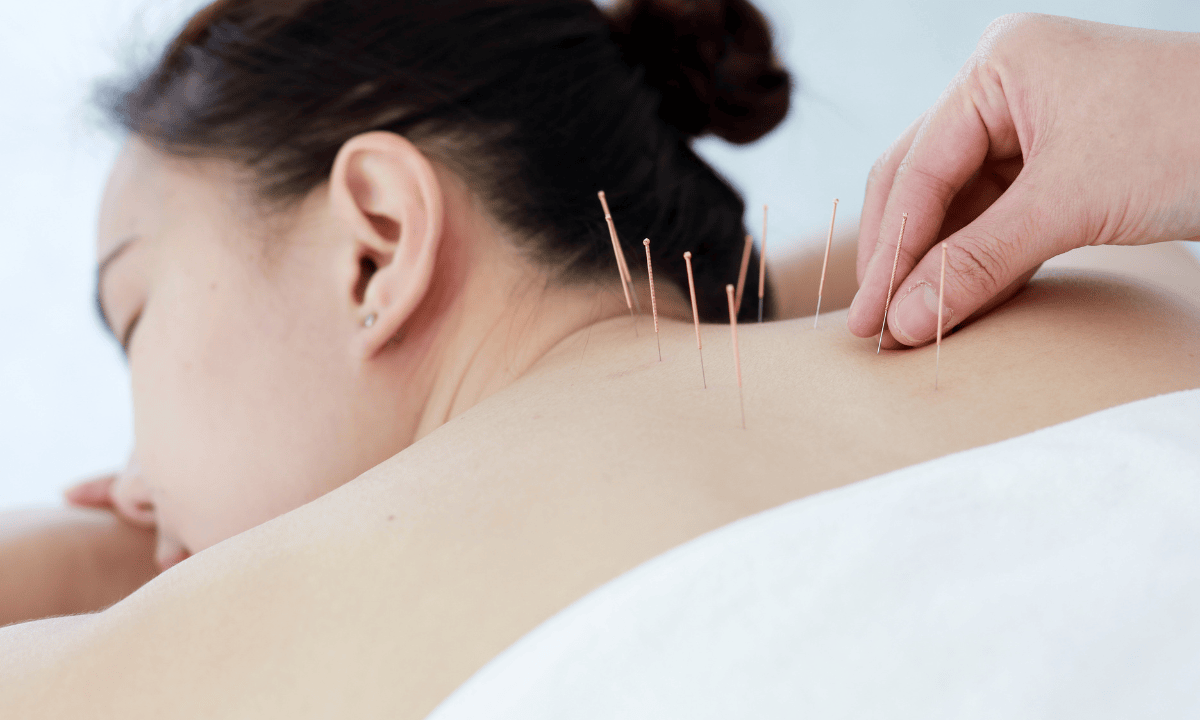
Your acupuncturist will gently insert very thin needles at specific points on your body. You may experience a tiny pinch or pressure, but it’s not painful.
Once the needles are in place, you’ll rest for 20-45 minutes.
Additional techniques:
Your acupuncturist may also use these techniques:
Electro-acupuncture: A small electric current is passed between pairs of needles to ensure that stimulation will be consistent and stronger. It’s especially helpful when you have a stagnant “Qi”.
Heat therapy or moxibustion: These methods are especially effective if you have a “Cold” or “Yang Deficiency” body constitution. This helps improve the local or general blood circulation, which will induce a smoother flow of “Qi” and blood and warm the meridians.
After the session:
When the needles are removed, you’ll feel deeply relaxed. You may notice a small bruise where a needle was placed or feel slightly tired, but these minor effects usually go away quickly.
Most of the time, you’ll find acupuncture sessions to be a peaceful and relaxing experience. To ensure this, your acupuncturist will check in with you throughout the process.
How often you’ll need treatment
Your frequency will depend on your specific situation and where you are in your IVF journey. Your acupuncturist may recommend:
If you’re preparing for IVF:
You may be advised to start weekly sessions for 3-6 months before your cycle begins.
During your IVF cycle:
You may need to increase your sessions to twice weekly.
Around embryo transfer:
Your acupuncturist may recommend sessions right before and after the procedure.
During the two-week wait and early pregnancy:
Sessions usually continue weekly to provide ongoing support.
Your acupuncturist will work with you and your fertility doctor to create the most supportive schedule for your specific needs.
If you have questions about timing or frequency for your situation, schedule an appointment with Thomson Medical to discuss your personalised plan.
FAQ
When is the best time to do acupuncture for IVF?
For the best results, your acupuncturist may recommend starting 3-6 months before your IVF cycle begins. This gives your body time to respond to treatment.
However, it's never too late. You can start at any point and still benefit. If you have low ovarian reserve or are over 35, starting earlier is recommended.
Is it better to have acupuncture before or after embryo transfer?
Both are beneficial. Studies show the best results come from sessions both before (24-48 hours prior) and after your transfer.
If you can only do one, the post-transfer session is usually recommended.
Can acupuncture speed up implantation?
No, acupuncture doesn't speed up the timeline. Implantation usually occurs 6-10 days after fertilisation. Instead, acupuncture helps create favourable conditions in your body to support this process when it happens.
How quickly do you see results from acupuncture?
It varies by what you're measuring. You might feel more relaxed and sleep better after 1-2 sessions. You may experience fewer side effects from IVF medication within a few weeks, while changes in egg quality or cycle patterns usually take 2-3 months.
What are the signs that acupuncture is working?
You might notice positive changes, such as better sleep, feeling more relaxed and less anxious, improved energy levels, warmer hands and feet, more regular menstrual cycles, and fewer side effects from IVF medications.
Is 20 minutes of acupuncture enough?
In TCM practice, acupuncture needles are typically retained for 20–30 minutes. This allows ample time for the treatment to take effect. Longer retention is not always better – your TCM physician will adjust the duration based on your condition, sensitivity, and response to ensure optimal results.
The information provided is intended for general guidance only and should not be considered medical advice. For personalised recommendations and advice based on your unique situation, please consult a specialist at Thomson Medical. Request an appointment with Thomson Medical today.
Physician Jun Negoro
Traditional Chinese Medicine
Thomson Chinese Medicine (TCM Paragon Medical Centre) and 1 other
English, Mandarin
Alliance MediNet
