

Pregnancy is an exciting time, but if it's your first time, it's natural to have questions about what lies ahead. Many parents wonder what labour will feel like, how to care for their newborn, or how their relationship and daily routines might change after the baby arrives.
Antenatal classes are designed to guide you through these important milestones. They provide practical, medically sound information about labour, birth, newborn care, and the early weeks of parenthood, while also giving you space to ask questions and learn at your own pace.
Whether you are preparing to welcome your first baby or growing your family, antenatal classes in Singapore can help you feel more confident, supported, and ready for the journey into parenthood.
What are antenatal classes?
Antenatal classes prepare you for childbirth and early parenting through structured weekly sessions. You’ll watch demonstrations and videos and practise labour positions and newborn care techniques. There’s also time to discuss concerns with other expectant parents and ask questions in a supportive environment.
By the end of the classes, many parents feel more supported and confident about labour, birth, and caring for their newborn.
Our ParentCraft trainers
Loading...
Why consider antenatal classes in Singapore?
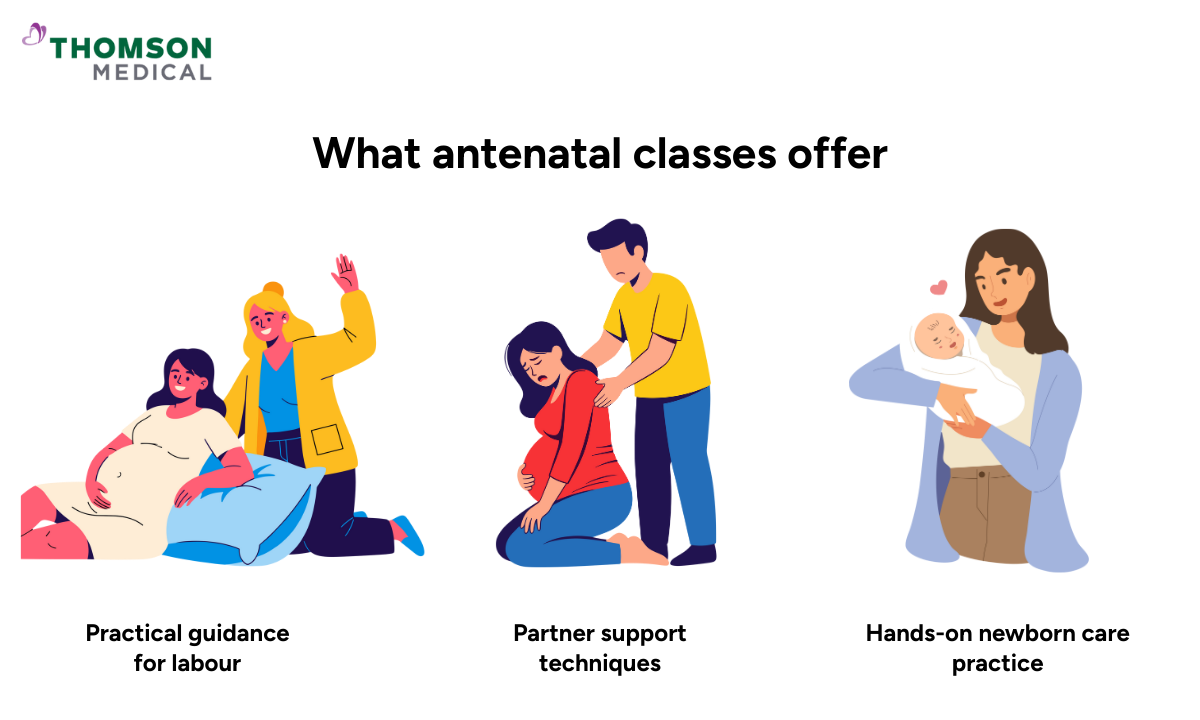
Antenatal classes go beyond what you can learn from books or online articles. They offer structured, hands-on learning that prepares you for the practical realities of labour and newborn care.
The classes will provide:
Practical information about what to expect during labour
Specific techniques your partner can use to support you
Hands-on practice with newborn care skills through demonstration and guidance
Opportunities to connect with other expectant parents for shared experiences and support
Insight into local hospital procedures to help you navigate your delivery day more smoothly
When you understand what to expect, you can make informed decisions during labour and the early days with your newborn. This allows you to focus on bonding with your baby rather than feeling uncertain about what comes next.
Types of antenatal classes available in Singapore
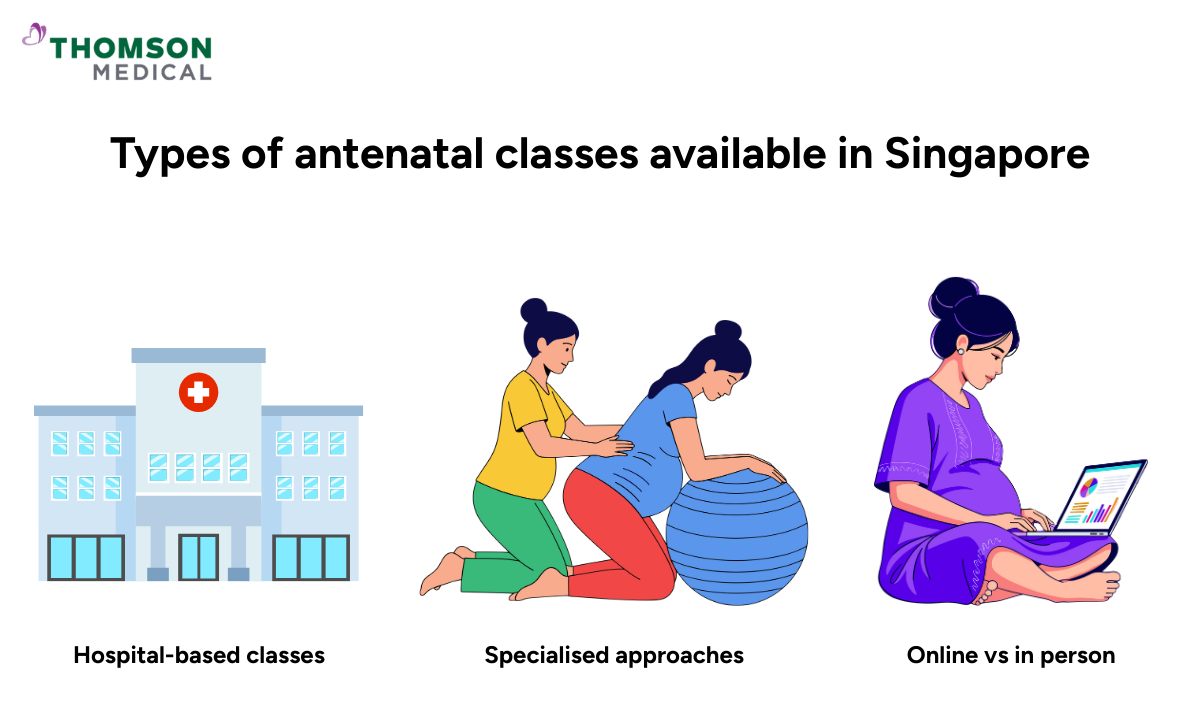
Singapore offers several types of antenatal classes to support different preferences and situations.
Hospital-based classes
Most major hospitals run classes for their patients. Many include a tour of the maternity and labour ward where you’re likely to give birth.
These hospital classes usually offer:
Instructions from midwives and nurses who work in the maternity unit
Information on hospital procedures and what to expect during labour, birth, and early postpartum care
The convenience of learning in the same environment where you’ll receive care
Because these classes are popular, they can fill up quickly, so it's worth considering registering early once you've chosen your hospital.
Private childbirth education programmes
Private centres offer more flexibility and smaller class sizes. This allows for more personalised teaching and time for questions.
You'll find programmes that include:
Focused workshops on specific topics like breastfeeding or newborn care
Comprehensive packages covering pregnancy through to parenthood
Intensive weekend courses if you're short on time
Additional resources and follow-up support after your baby arrives
This flexibility allows you to choose a programme that aligns with your needs and schedule.
Specialised approaches
These approaches provide in-depth practice with particular methods, which can be helpful if you have clear preferences about your birth experience:
Approach | Focus |
Hypnobirthing | Pain management through deep relaxation and visualisation |
Bradley method | Partner as active birth coach |
Active birth | Movement and upright positions in order to help manage your contractions |
Lamaze | Breathing, movement, and massage to reduce pain and minimise unnecessary medical interventions |
These classes provide focused training in the method you choose. They usually concentrate on that approach rather than covering everything. Each option offers different benefits, so choose what feels right for you.
Online vs in person
Online classes offer convenience and flexibility. You can learn from home and rewatch sessions at your pace. While there’s less hands-on practice, they still provide useful information and a strong foundation.
In-person classes provide hands-on practice with immediate feedback. You can try positions with guidance and meet other parents face to face. Although they do require fixed schedules, many parents find the interaction and support reassuring.
There’s no single right way to prepare. Many couples find a mix of both works well, using online sessions for core topics and in-person workshops to practise practical skills. The most suitable option depends on your individual needs, schedule, and what feels most comfortable for you.
When choosing where to give birth in Singapore, learning about available antenatal classes can help you better prepare yourself, and meet the care team ahead of labour.
Contact us to find out more about our Thomson ParentCraft Centre courses.
What topics are covered during antenatal classes?
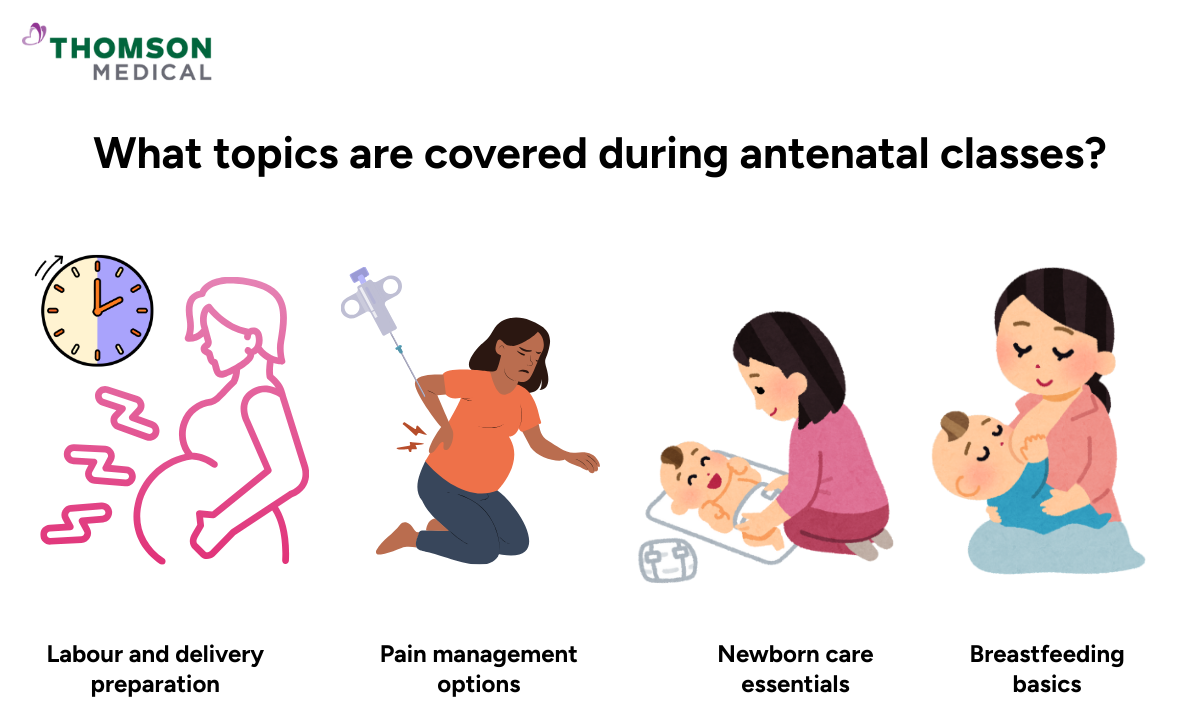
Antenatal classes cover practical topics that help you prepare for birth and those first weeks at home.
Labour and delivery preparation
Learning about labour prepares you to make decisions as labour progresses.
Classes typically cover what happens in your body at each stage of labour:
Early labour and when contractions start
Active labour and recognising the signs that it's time to head to hospital
Delivery and the pushing stage
Possible interventions to help you understand your options if complications arise
Learning about these stages allows you to recognise what’s normal and when to seek help during labour. When you know what to expect, you'll understand that changing contractions are part of progressing through labour.
Pain management options
Labour pain is different for everyone, and there’s no single “right” way to manage it. Classes cover both natural and medical options, explaining how they work and when they may be used.
For natural pain management, you'll learn techniques such as:
Breathing exercises and relaxation techniques to help you stay focused
Massage and counterpressure your partner can apply
Using warm water and movement to ease discomfort
Changing positions during labour to work with your body
Medical pain relief options covered include:
How epidurals work and when they're available
Entonox (gas and air) that you control yourself
When pain relief injections might be considered
Your instructor will guide you through what to expect with each option, so you know what’s available if you need it. Understanding your options early can support your decision-making during labour.
Newborn care essentials
If you're a first-time parent, handling a newborn is a new experience. Antenatal classes cover the practical skills you'll need from day one.
You’ll learn how to:
Hold and bathe your newborn safely using recommended techniques
Change nappies and understand what’s normal to see
Use soothing techniques to calm a crying baby
Follow safe sleep practices based on current guidelines
Recognise health signs and know when to call your doctor
The classes give context for why each skill matters, so parents can approach care with understanding rather than just memorising steps. Those first few days at home may feel more manageable when you've already learned the basics.
Breastfeeding basics
Breastfeeding doesn't always come naturally. Many new parents are surprised that it takes time and practice.
Classes provide information to support you through this learning process, covering how to position your baby and help them latch properly.
You'll learn:
How to achieve a proper latch
How often newborns typically need to feed
Managing common challenges like engorgement
When and how to express milk
How your partner can support you
If breastfeeding doesn't work out as planned, that's okay. Some classes will discuss alternative options like formula feeding to help ensure that your baby is fed and you feel supported. Having realistic expectations and knowing where to get help can be reassuring.
Partner's role and support
Labour and early parenthood benefit from both partners knowing how to support each other. Antenatal classes provide your partner with practical skills they can use during labour and through those first weeks at home.
During labour, your partner can learn to:
Time contractions and monitor progress
Provide counter pressure where you need it most
Assist you in changing positions when you want to move
Communicate with medical staff when you're focused on contractions
After your baby arrives, partners learn about:
Participating in newborn care tasks like nappy changes and bathing
Providing emotional support during your recovery
Being aware of signs of postnatal depression to watch for
Preparing together can strengthen your teamwork. Antenatal classes give partners practical tips and support so you both feel ready for labour and life with your newborn.
How to choose the right antenatal class
Selecting a suitable class means finding one that aligns with your needs and circumstances.
Consider the factors that matter most to you:
Focus and content:
Look for classes that cover the topics most important to you, whether that's detailed medical information, natural techniques, newborn care, or a comprehensive overview.
Schedule:
Choose a class that fits your availability, whether that's fixed times or the flexibility of online learning.
Class size:
Smaller groups may offer more personal attention, while larger classes may provide more opportunities to connect with other parents.
Budget:
Consider a class that works within your budget while still offering quality instruction and useful information.
A suitable class is one that aligns with your needs, fits your life, and helps you feel prepared as you approach birth and early parenthood. There is no single best choice, so select the option that feels right for your situation.
When to start antenatal classes
Many expectant parents find it helpful to attend classes during their second or third trimester, between weeks 20 and 32.
Attending during this window often means you'll have enough energy to participate comfortably while keeping the information fresh for labour and the early weeks with your newborn.
If you're expecting multiples, consider completing your classes by week 32, as twins often arrive early. For those with pregnancy complications, it's worth discussing timing with your doctor to plan accordingly. They can advise based on your specific situation.
Attending too early in pregnancy may mean some information isn't as fresh when you need it. Waiting until later in pregnancy may mean classes are fully booked. Registering early secures your spot and gives you one less thing to worry about as your due date approaches.
Whatever timing works best for you, what matters most is that you feel supported and prepared as you look forward to meeting your baby.
If you’re considering antenatal classes, exploring your options early can help you find a programme that fits your schedule and learning needs. Contact us to learn more about the antenatal classes offered at the Thomson ParentCraft Centre as your due date approaches.
FAQ
Are antenatal classes necessary for first-time parents?
They're not required, but they can provide helpful preparation. First-time parents often feel uncertain about the unknown aspects of labour and newborn care. Classes offer practical knowledge that complements what you might read in books or online.
Can my partner attend the classes?
Yes, most classes welcome partners to attend. Attending together allows you both to understand how partners can provide support during labour and afterwards. Learning together can strengthen your teamwork and shared understanding.
What if I need to miss a session?
Contact your course provider as soon as possible. Many programmes offer options such as recorded sessions or makeup classes. It's helpful to check their policy when you register so you know what options are available.
How do I prepare for the first class?
Wear comfortable clothes you can move in, especially if the class includes physical practice. You may also wish to bring a notebook to jot down questions and key points.
Do antenatal classes help with labour pain management?
Classes typically cover specific techniques for managing labour pain, including breathing exercises, massage, and positioning. These methods may help reduce discomfort and support your ability to cope. While they won't eliminate pain completely, many expectant parents find them helpful during contractions.
Are antenatal classes covered by insurance or Medisave?
Coverage varies by provider. Some private insurance policies include antenatal education. Medisave doesn't typically cover classes, but some hospitals offer subsidised programmes. We recommend checking directly with your insurer about specific coverage details.
The information provided is intended for general guidance only and should not be considered medical advice. For personalised recommendations and tailored advice based on your unique situations, please consult a specialist at Thomson Medical. Request an appointment with Thomson Medical today.