

Watching your child struggle with itchy, uncomfortable skin from eczema can be heartbreaking. The good news is that while eczema can be challenging, it is still treatable. Once you know what triggers flare-ups and how a strong skin barrier protects your child, caring for their skin becomes much easier.
Let's take a closer look at what causes eczema in children, its symptoms, and gentle care steps you can take to help your child feel better again.
What is eczema?
Eczema, also called atopic eczema or atopic dermatitis, is a skin condition that causes red, itchy rashes. When your child scratches these itchy areas, the skin can break open and sometimes ooze fluid.
The most common places you’ll notice an eczema rash are on your child’s neck, face, the insides of their elbows, and behind their knees. In some severe cases, the rash can spread across larger areas of the body.
Eczema is not an infection, so your child can’t get it from others or spread it to friends or siblings. Even though there’s no cure that can make eczema disappear forever, there are many effective ways to treat it and keep your child comfortable.
What causes eczema?
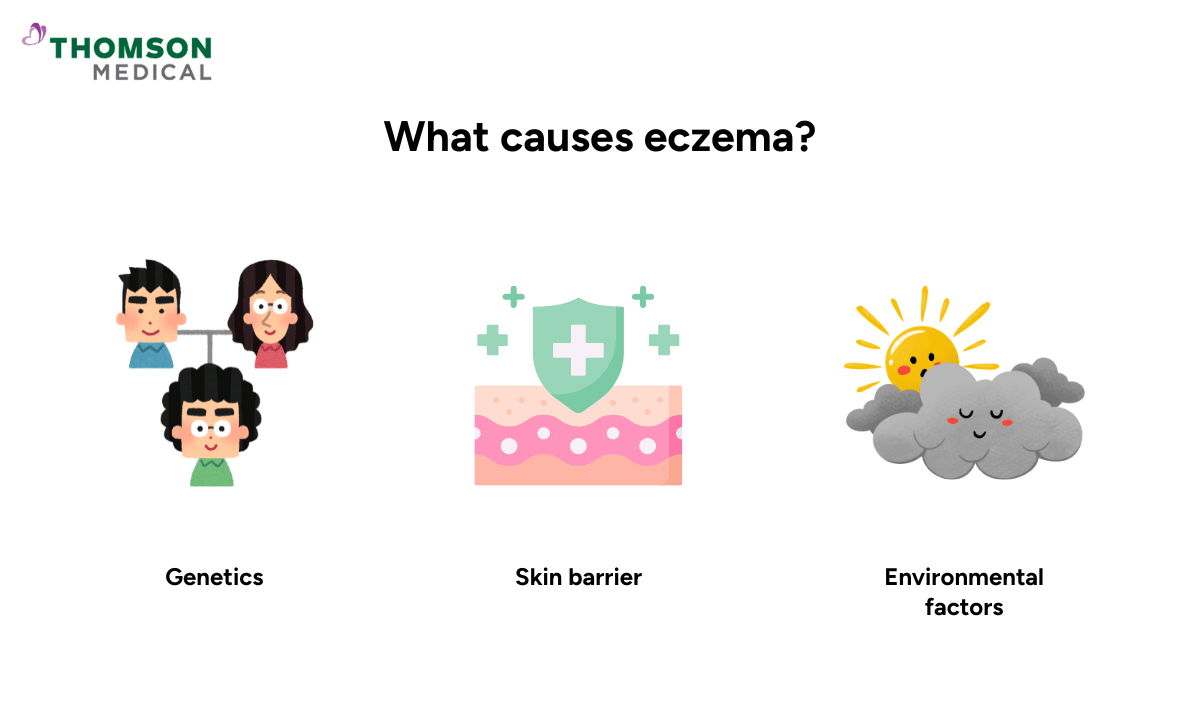
You might be wondering why your child developed eczema in the first place. The truth is, it’s usually a combination of different factors.
Eczema can happen to your child for a number of reasons:
Genetics:
If you and your partner have eczema, asthma, or allergic rhinitis (hay fever), your child may be more likely to develop eczema too. However, even children without a family history can also develop this condition.
Skin barrier issues:
When your child’s skin becomes very dry, it loses its natural protection, making it easier for irritants to cause problems.
Environmental factors:
Some factors, such as weather changes (especially cold, dry air), dust mites in bedding and carpets, fabrics, harsh soaps and detergents, sweating, or stress, can also trigger flare-ups.
You may also wonder whether diet can cause your child’s eczema, but food allergies are usually not the main cause.
However, there are foods that can sometimes make symptoms worse in some children. If you’re worried about this, consult your doctor before changing your child's diet to ensure it's safe for them.
Symptoms of eczema
Recognising eczema early can help you and your doctor manage it effectively, making your child more comfortable again. Here’s what you should look for:
Red or brownish-gray patches on the skin
Intense itching, especially at night
Small, raised bumps that may leak fluid when scratched
Dry, sensitive skin that may crack
Thickened or scaly skin from repeated scratching
Raw, tender skin from scratching
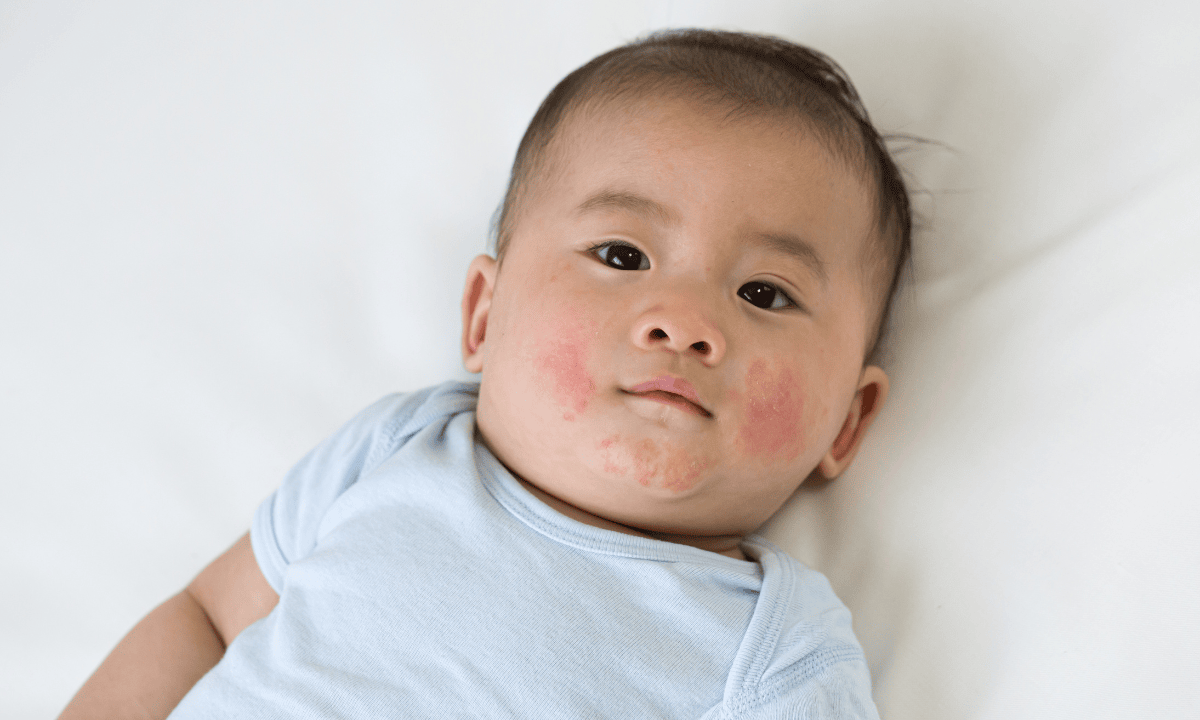
The symptoms can be different depending on your child’s age. Babies usually get eczema on their cheeks and scalp, while older children develop it in their elbows and knees.
If you notice these symptoms in your child, schedule an appointment with Thomson Medical. Our dermatologist will examine your child's condition and recommend a treatment plan tailored to their needs.
Our dermatologist
Loading...
How to treat eczema in children
To manage your child’s eczema, you may need a combination of daily skincare, medication if needed, and avoiding triggers. If you’re unsure what to do, your doctor will work with you to create a treatment option that fits your child’s needs.
The treatment plan may include:
Daily skincare routine:
- An effective skincare routine can make a difference in managing eczema. Here are some simple steps you could take to ease the symptoms:
- Use moisturiser at least twice a day, right after bathing when their skin is still damp.
- Use mild, fragrance-free soaps or soap substitutes
- Take short baths (about 10 minutes) and use lukewarm water, as hot water can make dry skin worse.
- Pat skin dry gently instead of rubbing
Medical treatment:
- Your doctor may prescribe topical steroid creams to calm skin irritation during flare-ups. You may worry about these creams – it’s understandable, but with your doctor’s guidance, they are safe and effective.
- If your child is over 2 years old, your doctor may suggest non-steroid creams called topical calcineurin inhibitors (TCIs) as another option. These creams can be helpful for sensitive areas like the face.
- If your child experiences severe itching, your doctor may advise antihistamines to help them sleep better at night.
The 3-minute rule:
- After bathing your child, you can apply moisturiser about 3 minutes before their skin starts to dry out. This approach helps lock in moisture and strengthen the skin barrier
Your doctor will monitor your child closely, and if the symptoms don’t improve, they can adjust the treatment plans and suggest new strategies to help your child recover as soon as possible.
When should you see a doctor?
You can take care of your child's eczema at home with proper skincare, but there are times when you’ll need to see your doctor.
You should contact your doctor if:
This is the first time you notice the symptoms, and you’re not sure if it’s eczema
The rash isn’t improving after a week of home care
Eczema affects your child’s sleep or daily activities
Your child has a fever, and their skin symptoms are getting worse
The itching is so severe that your child can’t stop scratching
You notice signs of infection, such as yellow crusting, pus, or fluid leaking
You want to try alternative treatments or change the diet
The condition causes stress for your child or family
It’s completely normal to feel worried about your child’s health. Your doctor will be by your side, helping you manage your child’s eczema, so don’t hesitate to share your questions with them.
If you're concerned about your child's eczema or feel unsure about the next steps, schedule an appointment with Thomson Medical for a proper diagnosis and a personalised treatment plan.
FAQ
Can eczema in children be prevented?
It’s difficult to completely prevent this skin disease, especially if your child has a family history of the condition. However, there are some steps you can take to reduce the frequency and severity of flare-ups:
Keeping your child's skin well moisturised from a young age
Using gentle skincare products
Identifying triggers early
These steps are simple but can be effective in managing eczema in your child.
How does diet influence eczema flare-ups in children?
In most cases, food isn’t the main cause of eczema. However, certain foods can trigger flare-ups in some children. These foods include:
Dairy
Eggs
Nuts
Wheat
To be sure, you should discuss with your doctor before changing your child's diet. They may suggest allergy testing to identify specific triggers and ensure your child still gets enough nutrition.
How can parents manage eczema flare-ups during seasonal changes?
Seasonal transitions can be challenging for kids with eczema. When the weather gets cold, try using a humidifier in your child's room and apply thicker moisturisers more frequently. In hot weather, dress your child in light, breathable fabrics and keep them cool to prevent sweating too much, which can trigger itching.
Can my child go swimming?
Yes. Your child can go swimming. Swimming is generally safe for children with eczema, though chlorine can sometimes irritate sensitive skin.
To protect your child's skin, you can:
Apply a layer of moisturiser before swimming
Rinse it off right after getting out of the pool
Reapply moisturiser afterward
Seawater can actually be soothing for some children with eczema.
How do doctors diagnose baby eczema?
Your doctor usually diagnoses this skin problem by examining your baby's skin and asking about symptoms and your family history.
Currently, there's no single test for eczema. Instead, your doctor will look at the pattern of the rash, how it responds to treatment, and whether other family members have eczema, asthma, or allergies.
What ointment is good for eczema?
Your doctor will suggest products based on your child's needs, but thicker ointments and creams usually work better than lotions for eczema.
Fragrance-free, hypoallergenic moisturisers are what you should look for. Some common choices include products with petroleum jelly or creams that contain ceramides.
If your child experiences a flare-up, your doctor may also prescribe a medicated ointment to help control the symptoms.
The information provided is intended for general guidance only and should not be considered medical advice. For personalised recommendations and tailored advice based on your unique situation, please consult a specialist at Thomson Medical. Schedule an appointment with Thomson Medical today.
Dr Tan Hiok Hee
Dermatology (Skin)
Thomson Specialist Skin Centre (Novena Specialist Center)
English, Mandarin
.png%3Fbranch%3Dprod&w=640&q=75)