

As a parent, it can be heartbreaking to watch your child struggle with dry, irritated skin or restless, itchy nights. But the hope of seeing them play freely without the constant discomfort of eczema isn’t just a dream. With gentle daily care and expert support tailored for families in Singapore, it’s entirely within reach.
What is eczema?
Eczema, also known as atopic dermatitis, is a chronic skin condition that causes the skin to become dry, itchy, and easily irritated. In children, it often appears as flare-ups – periods when symptoms become worse – followed by times when the skin improves.
Eczema isn’t contagious, and there is no single cause. It usually develops due to a combination of genetics, sensitive skin, and environmental triggers such as heat, sweat, soap, dust, or certain fabrics.
Is eczema common in Singapore?
Eczema is a common skin condition among children in Singapore. The hot, humid climate can make symptoms more noticeable, as heat and sweat often trigger flare-ups. You may notice that your child’s skin becomes more irritated after outdoor play, warm baths, or exposure to air-conditioning.
Although eczema can be a lifelong issue, many children see improvements as they grow older. With good skincare habits, most families find their child’s condition becomes much easier to manage.
Eczema can look different from child to child, and symptoms often change with age. If you’re unsure whether your child’s skin concerns are truly eczema or if you’d like personalised advice on how to care for his skin, request an appointment with Thomson Medical today.
Our paediatricians
Loading...
Manage your child’s eczema at home
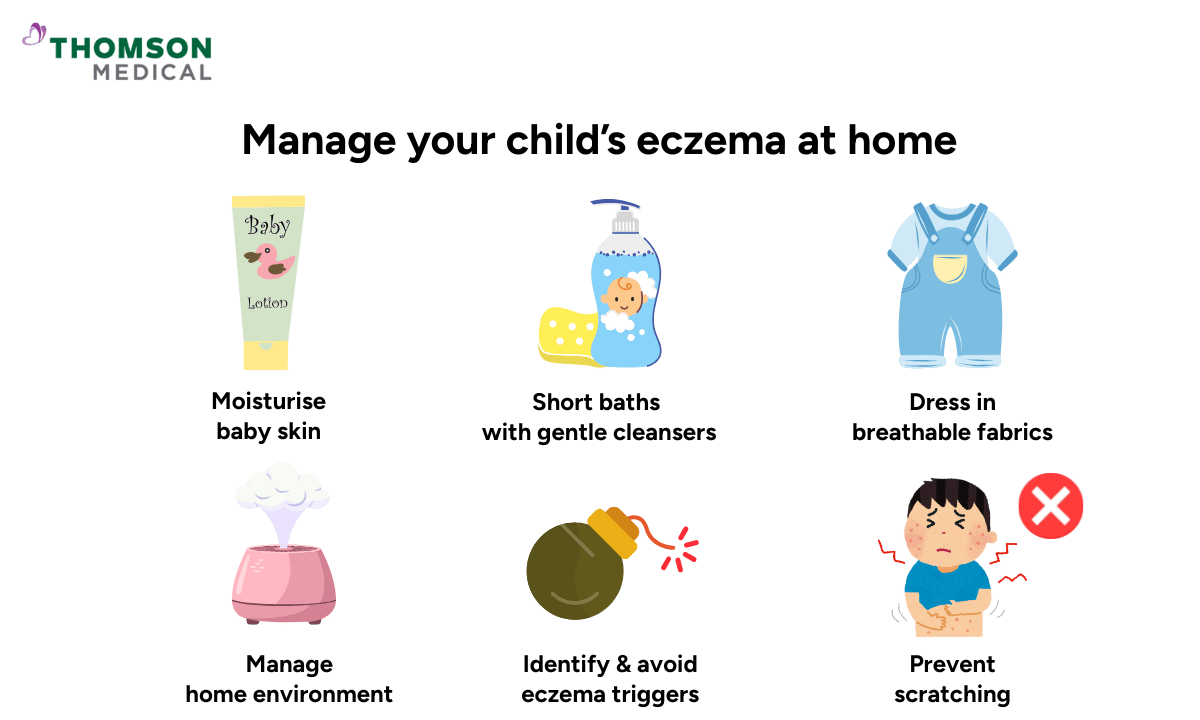
Caring for eczema at home may feel overwhelming at first, but a few gentle routines can make a world of difference to your child’s comfort. Here are some simple, everyday habits that can help soothe his skin and reduce flare-ups.
Keep your child's skin moisturised
When your child has eczema, moisturising becomes one of the most powerful things you can do. With regular, gentle moisturising, you may notice that your child’s skin stays calmer and flare-ups happen less often.
Try applying a fragrance-free cream or ointment at least twice a day, even on the good days. And right after a bath, while the skin is still slightly damp, is the perfect moment to lock that moisture in.
If you're choosing a product, look for something labelled for sensitive or eczema-prone skin. Avoid fragrances, alcohol, and harsh additives that could irritate your child’s already delicate skin.
Take short baths and use gentle cleansers
You may feel tempted to bathe your child more often in Singapore’s heat, but long or hot baths can dry his skin further. Keeping baths short (around 5–10 minutes) and using lukewarm water can help protect natural oils on his skin.
Choose a mild, soap-free cleanser, and gently pat your child’s skin dry with a soft towel. Keep in mind that you do not rub, as this can irritate sensitive skin.
These small bathing habits can make a surprising difference in how comfortable your child feels afterward.
Dress your child in breathable fabrics
Your child's skin may be especially sensitive to heat and sweat, which are major eczema triggers. Dressing him in soft, loose cotton can help his skin breathe and stay cool. Try to avoid wool or synthetic fabrics that trap heat and cause irritation.
On warmer days or after he has been running about, you might find that changing into fresh clothes helps keep him comfortable.
Manage the indoor environment
Since many Singaporean homes rely on air-conditioning, your child may find that his skin becomes drier indoors. You can try keeping the room at a gentle, comfortable temperature or using a humidifier if the air feels too dry.
Washing bedsheets and soft toys regularly also helps reduce dust mites, which can be a hidden trigger.
Keeping your child’s environment clean and cool can make a big difference in preventing flare-ups.
Identify and avoid eczema triggers
Every child reacts differently, and you may start to notice patterns in what triggers your child’s flare-ups. Some common eczema triggers in Singapore include:
Heat and sweat
Dust mites
Certain detergents or soaps
Stress
Lack of sleep
An illness, such as upper respiratory tract infection
Some foods (uncommon)
Keeping a little diary which notes what your child did or ate before a flare-up can be helpful. It gives you clearer insight and makes conversations with your child’s doctor much easier.
Remember that food triggers are much less common, so do avoid restricting your child’s diet unless his doctor advises it.
Prevent scratching
The itch can be overwhelming for your child, and it’s only natural for him to want to scratch. Keeping his nails short is an easy way to protect his skin.
At night, cotton mittens or soft sleeve bandages can help prevent accidental scratching in his sleep. Cool compresses or gentle distractions during the day can also ease the itch.
During more difficult flare-ups, your child’s doctor may recommend wet wrap therapy for extra relief.
When to see doctor

Professional support can give you clarity, reassurance, and the confidence to manage your child’s condition.
It’s best to consult an eczema specialist if:
Your child’s eczema does not improve after a week of home care
The itching is severe or disrupts his sleep
The skin becomes cracked, oozing, or crusted (signs of infection)
You are unsure which products or treatments are safe
Eczema is affecting your child’s daily life or confidence
In these cases, doctors may recommend suitable creams and moisturisers, guide you on correct steroid usage, and create a personalised long-term skincare plan to help your child stay comfortable and confident.
Eczema can be well managed with proper care, but every child’s condition is unique. If you are unsure about what products or treatments are best, let our paediatricians guide you. Request an appointment with a doctor at any of our Thomson Paediatric Centres conveniently located islandwide to help your child’s skin heal and stay healthy.
FAQ
What triggers eczema in children?
Common triggers include heat, sweat, dry skin, dust mites, certain soaps or detergents, stress, and infections. Every child is different, so identifying your child’s specific triggers can help reduce flare-ups.
Can children outgrow eczema?
Yes, many children see great improvement as they grow older, especially with good daily skincare. Some may continue to have mild symptoms, but they often become easier to manage over time.
Why is eczema so common in Singapore?
Singapore’s hot, humid climate makes children sweat more easily, and sweat is a major eczema trigger. Air-conditioning, while cooling, can also dry the skin and worsen symptoms.
How to cure eczema in Singapore?
There is no permanent cure, but eczema can be well controlled by moisturising, avoiding triggers, and getting medical treatment during flare-ups. With the right care, most children experience long periods of comfortable, calm skin.
How to stop a child itching eczema?
Keep the skin moisturised, cool, and protected. Short nails, cool compresses, gentle distraction, and doctor-recommended creams can greatly ease the itch.
Why is eczema worse at night?
Body temperature naturally rises at night, which can make the skin feel itchier. Without daytime distractions, children also become more aware of the itch, leading to disturbed sleep.
The information provided is intended for general guidance only and should not be considered medical advice. For personalised recommendations and advice based on your unique situation, please consult a specialist at Thomson Medical.Request an appointment with Thomson Medical today.