

As a new parent, noticing small red bumps on your baby’s face can feel worrying. You may wonder whether it is an infection, an allergic reaction, or something that needs treatment.
Baby acne is a common skin condition that often appears within the first few weeks of life. These tiny pimples usually develop on the cheeks, forehead, or chin and tend to resolve on their own without causing discomfort or long-term effects.
Understanding what baby acne looks like, why it happens, and how to care for your baby’s sensitive skin can help reassure you and guide you on when medical advice may be helpful.
What is baby acne?
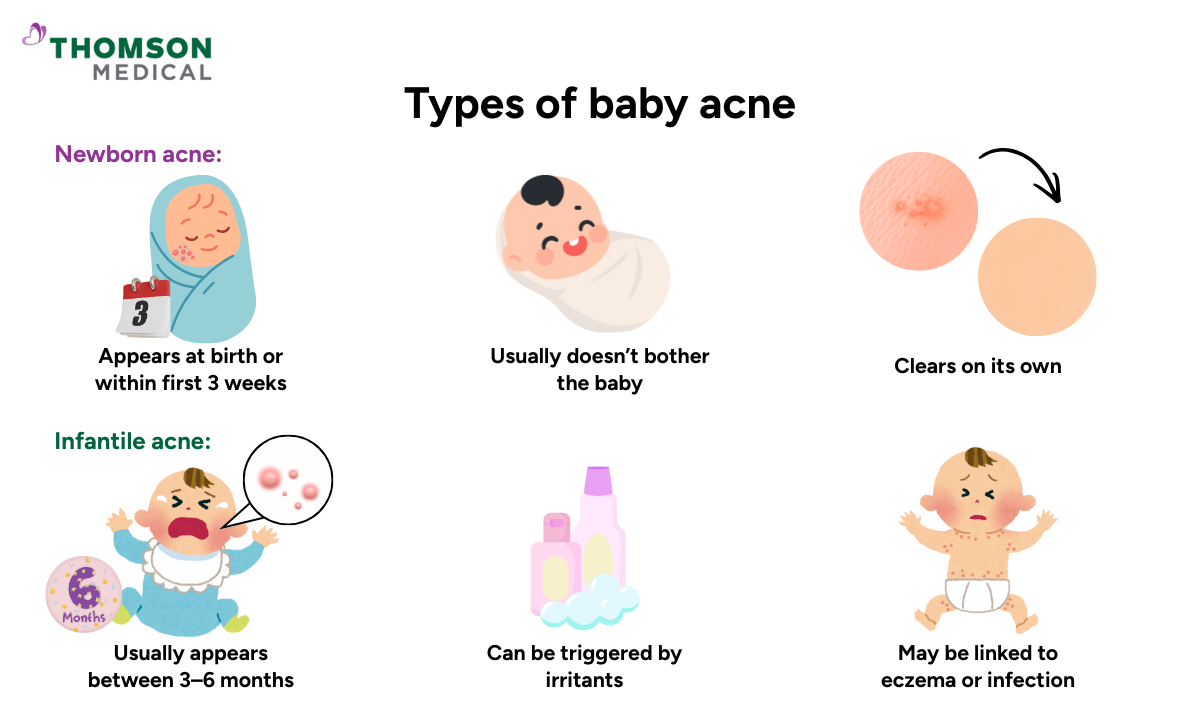
Most babies experience one of two types:
Newborn acne (also called neonatal acne) is the most common:
Appears at birth or develops within the first three weeks of life
Though it might look concerning, your baby typically won't be bothered by it at all
It resolves up on its own within a few weeks to a few months without leaving any marks or scars
Infantile acne (develops later and has different characteristics):
Usually appears between three and six months of age
Can sometimes be triggered by irritants such as new skin products
May be linked to underlying conditions like atopic eczema or infection
If your baby develops acne after six weeks old, or if you notice a rash appearing after starting a new product or following an illness, it's worth speaking with your doctor. Acne that appears later can indicate a different skin condition that may benefit from specific treatment.
Our paediatric specialists
Loading...
What does baby acne look like?
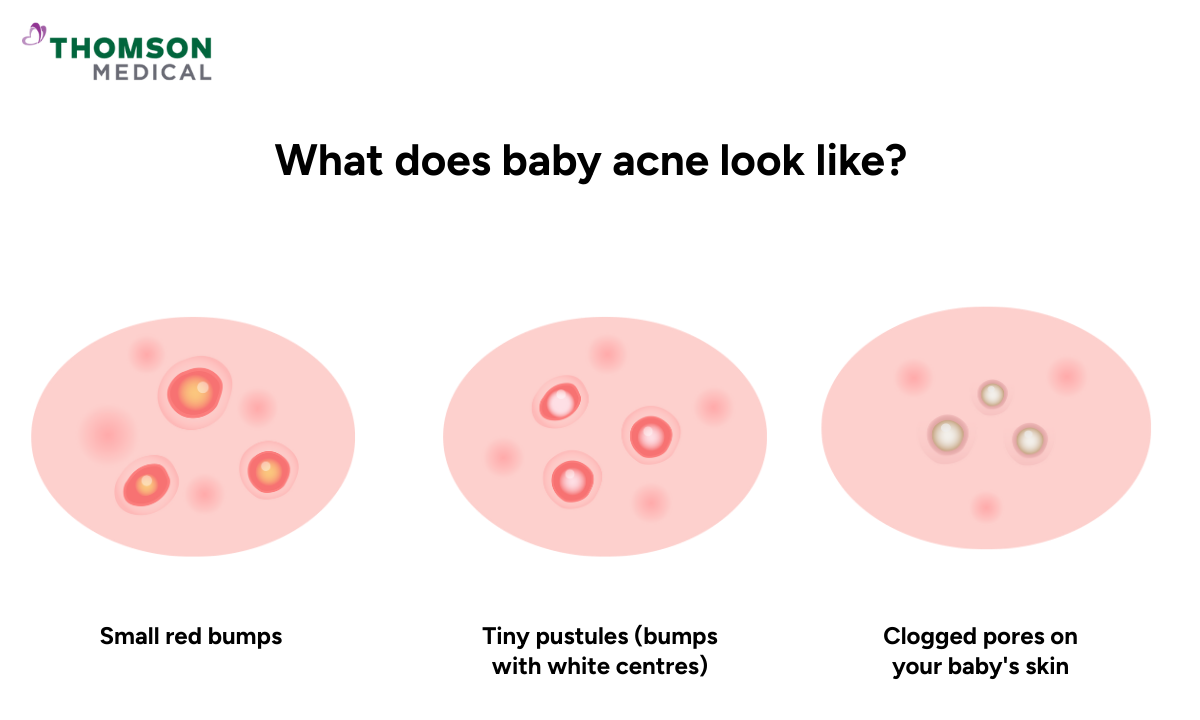
On your baby's skin, you'll see small bumps that might be red or have white centres.
You may notice:
Small red bumps
Tiny pustules (bumps with white centres)
Clogged pores on your baby's skin
These bumps most commonly appear on your baby's face (cheeks, nose, and forehead), where facial glands are more active. They can also show up on the back, scalp, chest, or neck. The face is usually where parents notice it first, which makes sense since that's where we spend most of our time gazing at our newborns.
How could I tell if my baby has baby acne or rashes?
It can be difficult to tell the difference at first, especially when you're already worried about every little change in your newborn.
Your baby's entire body is adjusting to the world outside your womb, including their delicate skin. Changes in blood flow, temperature regulation, and exposure to new fabrics and laundry detergents can all lead to skin irritations.
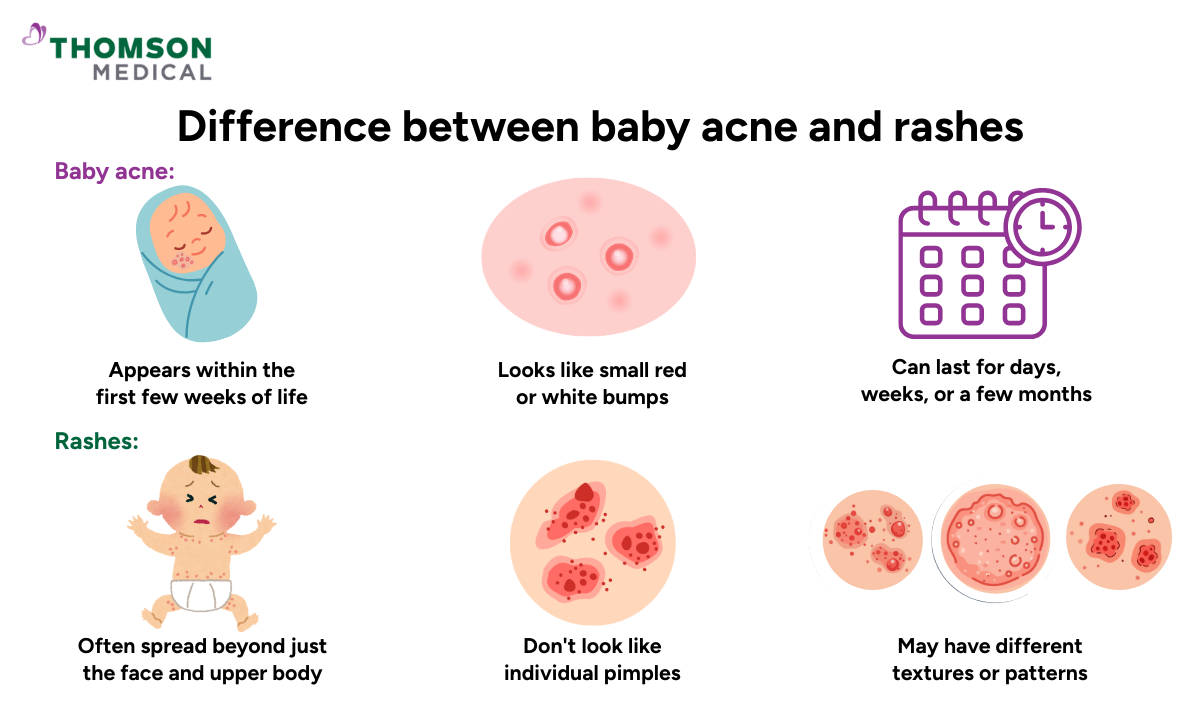
Baby acne has specific characteristics:
Appears on the face or upper body during the first few weeks of life
Looks like multiple tiny red or white bumps
May persist around for days, weeks, or even several months
Rashes typically differ in these ways:
Don't look like individual pimples
Often spread beyond just the face and upper body
May have different textures or patterns
Most of the time, if it's just on the face, looks like tiny pimples, and your baby seems unbothered, it's likely acne, and you can feel reassured. If you're unsure, your doctor can confirm the diagnosis. Getting to know what you're dealing with helps you reduce worrying about every possible rash and focus on the specific care your baby needs.
Why does my baby get acne?
Baby acne isn't anyone's fault. It happens for reasons outside your control.
Leftover pregnancy hormones
Acne isn't always a sign of illness or poor hygiene. It could simply be your baby's body processing hormones from pregnancy, which will naturally diminish as those hormone levels drop. Hormones passed to your baby during pregnancy may still affect their skin after birth. These hormonal changes can stimulate oil glands in your baby's skin, contributing to those bumps.
Natural skin yeast
Yeast that naturally lives on everyone's skin. Sometimes this yeast can contribute to the development of acne in newborns.
What's important to remember is that baby acne may not becaused by anything you did or didn't do. It's simply part of how some babies' skin adjusts to life outside the womb.
If your baby’s skin changes are worrying you, you can request an appointment with Thomson Medical’s paediatric team to have your baby’s skin checked and learn whether your baby’s acne needs treatment and when to seek further care.
What is the treatment for baby acne?
Newborn acne usually doesn't need any treatment at all. In some cases, though, your doctor might recommend specific care.
When professional treatment is needed
If your baby has newborn acne that persists or appears severe, a dermatologist might prescribe a topical anti-yeast cream. For certain cases of true acne, they may recommend a topical acne medicine or, in rare situations, an antibiotic.
Caring for baby acne at home
.png?branch=production)
You don't need to buy special products or treatments. Simple, gentle care is usually all your baby needs to protect their delicate skin barrier.
Wash with lukewarm water:
Gently cleanse the affected areas with lukewarm (not hot) water and a soft washcloth
If you'd like to use a cleanser, choose gentle, unscented cleanser or mild soap made specifically for newborn skin
Avoid regular body soaps or adult face products
Avoid scrubbing:
Rubbing baby acne roughly or using a coarse cloth damages the skin's protective barrier, which can lead to increased redness, irritation, and potentially worsening breakouts.
Skip oily products:
Don't apply oily or greasy skincare products such as coconut oil to areas where your baby has acne
These products can block pores and trap bacteria against the skin, which may prolong the acne or make it look more inflamed
These gentle steps support your baby's skin while it heals naturally. Baby acne doesn’t usually bother babies, but irritation from over-washing or heavy products can. Observe how your baby’s skin responds over time, and avoid changing products frequently.
Can you pop baby acne?
It's understandable to want to do something when you see spots on your newborn's face. Many parents feel the urge to help their baby's skin clear faster.
However, you should never pop or squeeze any bump on your baby's skin. While it might be tempting to try to clear the spots quickly, this can lead to infection and scarring.
Your baby's skin is incredibly delicate and heals differently than adult skin. A small squeeze can damage the skin barrier and introduce bacteria, creating an open wound that becomes infected and may leave a permanent scar. Simply leave the bumps alone, and they'll heal on their own. If the rash is worsening or the bumps seem to be spreading, speak with your doctor.
How long does baby acne last?
Baby acne typically resolves on its own within a few weeks to a few months. Some babies see improvement within two to three weeks, while others have spots for a bit longer.
Watching the spots persist week after week can feel frustrating. Most cases resolve by three months. The acne clears on its own, not because of what you're doing or not doing.
However, contact your doctor if:
The acne hasn't improved after three months
It appears to be spreading rather than clearing
Your baby seems uncomfortable or irritated
Seeing spots on your baby's face can feel worrying, especially in those early weeks when everything feels new and you're still learning to read your baby's cues. Remember that baby acne is temporary and doesn't affect their health or comfort. With gentle care, this phase will pass.
If your baby’s acne hasn’t improved after a few months or seems to be spreading, it’s important to get professional guidance. Request an appointment with Thomson Medical’s paediatric specialists to have your baby’s skin evaluated, receive personalised advice on gentle care, and ensure your baby stays comfortable and healthy.
FAQ
Are all red bumps on a newborn baby acne?
No, not all red bumps are baby acne. Newborns can develop various types of rashes, each with different causes and appearances. However, if your baby has a rash, it's always best to speak with your doctor to get a proper diagnosis.
Is baby acne a sign that my child will have teenage or adult acne?
No, baby acne doesn't predict future skin problems. Baby acne is caused by different factors and does not predict teenage or adult acne. Having spots as a newborn doesn't mean your child is more likely to have acne later in life.
Is baby acne a sign of bathing too much or too little?
No, baby acne has nothing to do with how often you bathe your baby. Washing your baby's skin with warm water and a mild, unscented baby soap is perfectly fine. You can do this daily once the umbilical cord stump has fallen off.
Does formula or breast milk help baby acne?
No evidence supports the idea that applying breast milk to baby acne helps it clear faster. While breast milk has many wonderful properties and is generally safe to apply to your baby's skin, it hasn't been proven to treat acne effectively.
Can you kiss a baby who has acne?
Yes, you can kiss and cuddle your baby as much as you like. However, newborns have developing immune systems and can struggle to fight off colds and other illnesses.
You can encourage family members and friends to kiss your baby's feet or hands rather than their face, as this reduces the risk of passing on viruses through coughing or sneezing, especially during the first few weeks.
How do I know it’s acne and not something else?
Baby acne usually appears before six weeks and looks like small red or white bumps without dryness or cracking. If bumps appear after six weeks, spread to the body, itch, ooze, crust, or come with dry skin, fussiness, vomiting, or fever, it may be something else. In those cases, see your doctor for assessment.
The information provided is intended for general guidance only and should not be considered medical advice. For personalised recommendations and tailored advice based on your unique situations, please consult a specialist at Thomson Medical. Request an appointment with Thomson Medical today.
Reference:
Lucky, A. W. (1998). A review of Infantile and Pediatric Acne. Dermatology, 196(1), 95–97. https://doi.org/10.1159/000017838