
While we all hope that emergencies never happen, being prepared means you'll know how to respond if your baby needs immediate care.
As a parent, the thought of your baby choking or having trouble breathing is frightening. A baby first aid course teaches you exactly what to do in those critical moments, from clearing a blocked airway to performing infant CPR.
These courses are designed for parents, grandparents, nannies and anyone who cares for babies and young children. You'll practise on realistic mannequins until the techniques become second nature, so your hands know what to do even when your mind is racing.
What is a baby first aid course?
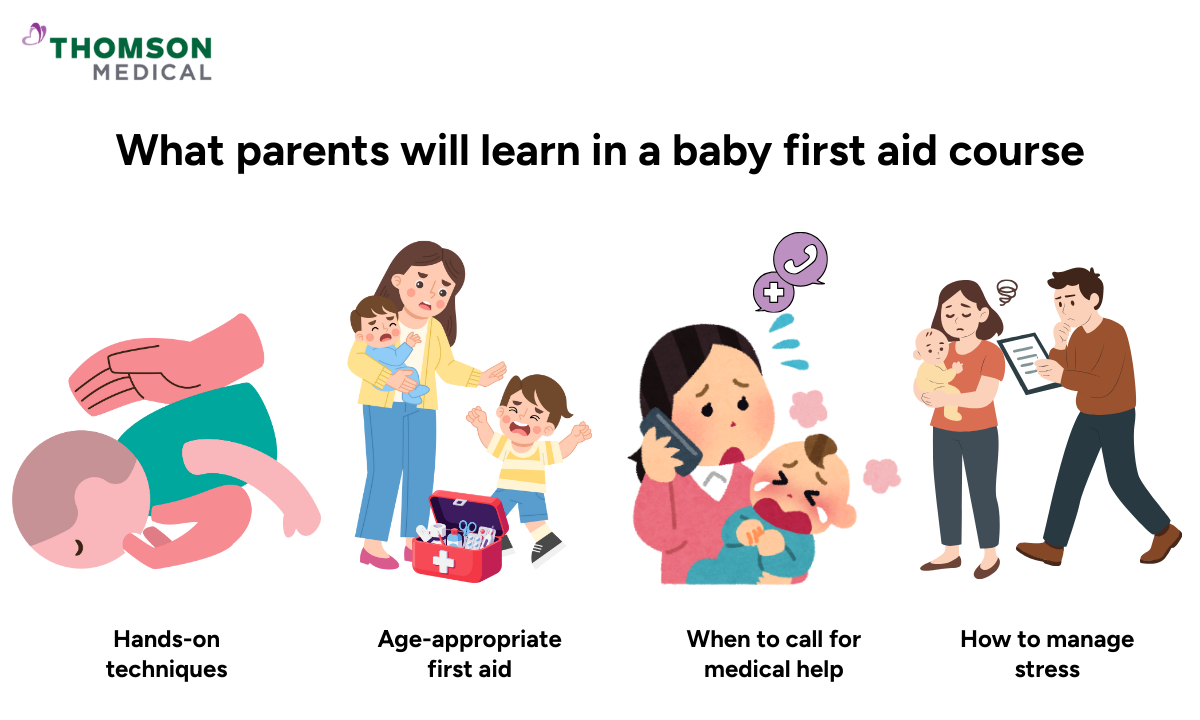
A baby first aid course teaches you practical skills to handle emergencies involving babies and young children.
During the course, you'll learn:
Hands-on techniques using infant mannequins
Age-appropriate methods that differ from adult first aid
When to call for medical help
How to manage stress and respond calmly
Real scenario practice that reflects common situations you might face
You'll practise each technique repeatedly on realistic models in a safe environment. This builds the muscle memory that takes over in an emergency, even when you're feeling panicked.
Most courses cover skills relevant to your baby's first year, and some even extend into the toddler years (up to age three). Your instructor will demonstrate each technique, then guide you as you practise it yourself.
Our ParentCraft trainers
Loading...
Why is baby first aid training important?
Babies can't tell you what's wrong, which makes every symptom feel uncertain. A cough could be harmless or the start of choking. A fever might be minor or signal something serious.
Here's why first aid training makes such a difference:
You become your baby's first responder during the 10 to 15 minutes it takes for an ambulance to arrive
The first few minutes matter most in emergencies like choking, seizures or breathing difficulties
With the proper training, you’ll be better able to recognise symptoms and respond appropriately, whether that's starting CPR or seeking medical advice or simply monitoring your baby safely at home.
What topics are covered in a baby first aid course?
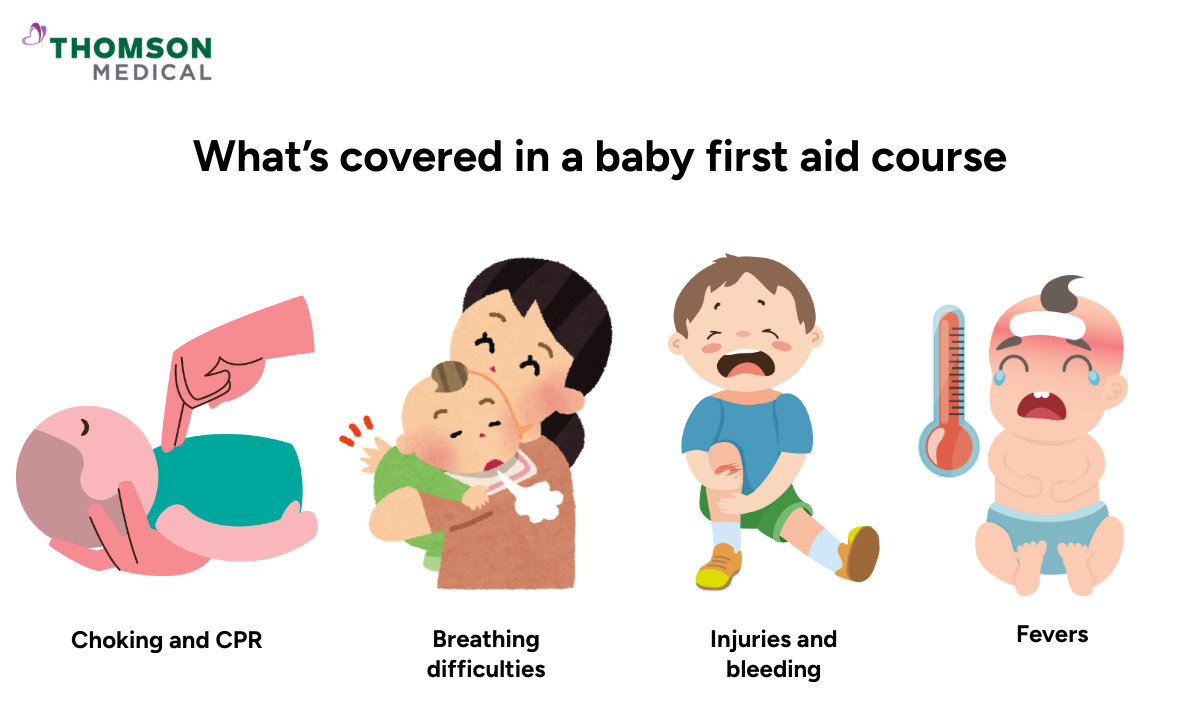
Baby first aid courses in Singapore cover the emergencies that commonly concern parents. Each topic includes both theory and hands-on practice.
Choking and CPR
Once babies start eating solids, choking becomes a real concern for most parents. Learning to distinguish between actual choking and normal coughing is the first step in responding effectively.
In the course, you'll learn:
Back blow and chest thrust techniques specifically designed for infants
Baby CPR using two fingers with correct depth and rhythm
When to start CPR and when to call 995
How to position your baby safely in the recovery position
You'll practise on mannequins until the movements feel natural. When performed correctly, these techniques may clear a blockage within 30 to 60 seconds.
Breathing difficulties
When your baby experiences breathing difficulties, certain signs tell you how serious it is.
You'll learn to recognise:
Chest pulling inward with each breath
Nostrils flaring wide
Grunting sounds with breathing
Lips or skin turning blue
The training covers what to do if your baby has croup – which causes a barking cough – and an asthma attack.
You'll learn positioning techniques that may help ease breathing and which symptoms require immediate hospital care versus monitoring at home.
Injuries and bleeding
Babies are naturally curious, which means bumps, falls and cuts are part of growing up. Seeing blood on your baby for the first time can trigger panic, even when the injury is minor. The course teaches you how to assess severity and respond appropriately.
The course covers:
Cleaning wounds properly to help prevent infection
Applying pressure to control bleeding
Assessing whether a cut needs stitches or just a plaster
One area that needs special attention is head injuries. It’s because some symptoms like confusion, vomiting, or unusual sleepiness, may appear hours after a fall. Understanding these warning signs helps you tell the difference between a minor bump and something that needs urgent care, so you can respond calmly and protect your child.
Burns and scalds
Burns happen in seconds, often when you've just turned your back for a moment. Cooling the burn quickly is your most important first step.
You'll learn to cool burns under running water for at least 20 minutes. This helps stop the heat from spreading deeper into the skin and can make a real difference inhealing.
The course also covers what to avoid putting on burns, including ice, butter or toothpaste, as these may worsen the injury.
You'll learn to recognise burn severity:
First-degree burns affecting only the top skin layer
Second-degree burns causing blistering
Third-degree burns appearing white or charred that always need hospital care
The course also covers how to cover burns properly with cling film to protect them and minimise discomfort. This helps you manage minor burns at home while knowing when to seek immediate medical help.
Fevers
Fevers are common in young babies. The course teaches you how to respond appropriately to keep your baby comfortable and help prevent febrile seizures.
You'll learn:
When a fever needs cooling versus monitoring
Whether cool water, lukewarm water or room-temperature water is safest
At what temperature paracetamol or ibuprofen becomes necessary
Dosing guidelines based on your baby's age and weight
Watching your baby have a seizure can be deeply frightening, especially if it's the first time you've witnessed one. The training teaches you how to protect them from injury during the episode.
The training also will cover:
Safe positioning during a seizure
What objects to move away
Why timing the seizure duration matters
What not to do with your baby's mouth
You'll also learn which seizure symptoms require immediate hospital care and which can be monitored safely at home. Most febrile seizures stop on their own within a minute or two and don't cause lasting harm when you know how to keep your baby safe during the episode.
Poisoning and allergic reactions
Babies put everything in their mouths as they explore, and it only takes seconds for them to swallow something dangerous like medication or cleaning products. Even small amounts of certain substances require immediate medical attention.
You'll learn:
When to call the poison control centre versus going straight to hospital
Why keeping the container or substance helps medical staff provide appropriate treatment
Why you should never try to make your baby vomit unless specifically told to do so
Severe allergic reactions can develop within minutes and may affect your baby's airway, making breathing difficult or impossible. The course teaches you to recognise these signs early and act fast. You'll also learn a step-by-step assessment method that helps you quickly identify the level of concern in any emergency.
Whether it's a small bump or something more serious, this systematic approach means you'll know exactly what to check and in what order. The training is practical and straightforward. Once you've practised, you'll feel confident to help your child when it matters most.
When choosing a baby first aid course, hands-on practice is key to building confidence. Contact us to learn more about the Thomson ParentCraft Centre’s courses, including course structures designed to prepare you for common emergencies.
Who should attend a baby first aid course?
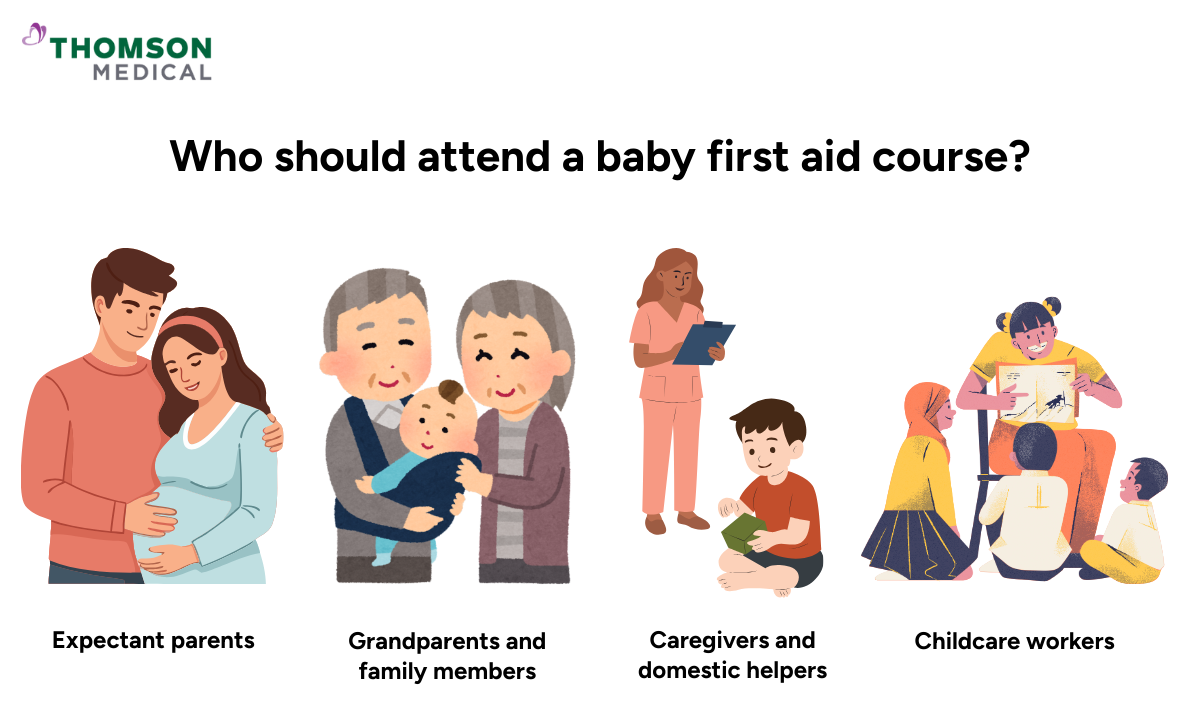
Anyone who cares for babies and young children can benefit from learning these life-saving techniques in these courses.
This training is valuable for:
Parents and expectant parents who want to feel prepared for their parenting journey
Grandparents and family members who regularly look after their grandchildren
Caregivers and domestic helpers who care for babies professionally
Childcare workers who need certification or want to enhance their skills
Anyone who spends time alone with a baby becomes their first responder in an emergency. When you have these skills, you can take immediate action in the 10 to 15 minutes before paramedics arrive.
Where can you take a baby first aid course in Singapore?
Several organisations offer baby and child first aid training across Singapore. You have options for different locations, schedules and learning styles.
National organisations
National organisations offer paediatric first aid courses regularly throughout the year. Classes are held at their training centres and various community venues across the island.
Their instructors have qualifications in paediatric first aid and training experience. These courses follow standardised curricula and provide recognised certification.
Private training providers
Private training providers offer flexible courses designed for parents. Many offer home visits and private group bookings, making it convenient for groups of friends or new parents to learn together.
These providers often allow you to customise the session focus based on your specific concerns or questions.
Local community centres
Your local community centre may offer courses at subsidised rates. These are usually more affordable and conveniently located near your home. These sessions are often run in partnership with established first aid organisations. Check with your nearest community club for their schedule, as these courses are often popular and may have limited availability.
The right course for you depends on your schedule and budget. Whichever option you choose, look for courses with experienced instructors and plenty of hands-on practice time. This is what builds your confidence and muscle memory when you need it most.
Choosing the right baby first aid course means finding qualified instructors. Contact us to find out about course fees and what's included at Thomson ParentCraft Centre, including course structure, certification, and practical training designed for parents and carers.
FAQ
Can baby first aid skills save a life?
Yes, knowing baby first aid can save your child's life. Quick action during choking can clear the airway in under a minute before serious harm occurs. CPR performed correctly helps maintain blood circulation until help arrives. Prompt response is important in emergency situations.
Is certification provided after completing the course?
Most accredited courses provide a certificate of completion valid for two to three years. The certificate shows you've completed the training and demonstrated the necessary skills. Some employers or childcare centres may require this documentation.
Do partners or grandparents need to attend?
Anyone who regularly cares for your baby may benefit from attending a course. Many providers offer couple or family rates to encourage multiple carers to learn together.
Can baby first aid courses be done online?
Fully online courses may not provide the physical skills practice you'll need. Hands-on practice of techniques like CPR on a mannequin with instructor feedback is an important component of training.
How often should I refresh my baby first aid training?
Many organisations recommend refreshing your training every two to three years to keep your skills current. Guidelines can change as new evidence emerges. Regular practice helps maintain your confidence and familiarity with techniques.
Are baby first aid courses suitable for parents of newborns?
Yes, these courses are well-suited for parents of newborns and expectant parents. Many people take the course in the third trimester or shortly after birth. The training covers techniques relevant to babies of all ages, including newborns.
The information provided is intended for general guidance only and should not be considered medical advice. For personalised recommendations and tailored advice based on your unique situations, please consult a specialist at Thomson Medical. Request an appointment with Thomson Medical today.