

When you see a rash on your baby’s skin, it’s natural to feel anxious and question yourself. You might wonder if you overdressed them or missed something important.
However, heat rash is common in babies, especially in warm, humid places like Singapore.
The good news is that most heat rashes are mild, temporary, and usually clear up quickly with simple care.
What is baby heat rash?
Baby heat rash, sometimes called prickly heat or sweat rash, happens when sweat becomes trapped under the skin.
This usually occurs when sweat ducts become blocked, preventing sweat from reaching the surface of the skin. When this happens, small red bumps or tiny blisters may appear on your baby’s skin.
Knowing why heat rash happens can make it easier to manage and prevent it in the future.
What causes heat rash in babies?
If you've ever looked at your baby's rash and quietly wondered, "Did I dress them too warmly?" go easy on yourself.
Heat rash is something almost every parent encounters at some point, especially in warm, humid conditions like Singapore. It’s rarely a sign that you made a mistake or weren't careful enough.
Your baby's skin is still developing, which makes them naturally more prone to heat rash than adults.
A few key reasons include:
Smaller, immature sweat ducts that can become easily blocked
More delicate, sensitive skin that reacts quickly to heat and moisture
A limited ability to regulate body temperature on their own
Certain everyday situations can make heat rash more likely, such as:
Hot, humid weather
Extra layers of clothing
Tight or non-breathable fabrics
Fever
Thick creams or ointments that block pores
But even if you're watching carefully, you may not prevent every episode. Sometimes the weather changes, sometimes your baby runs warm, and sometimes heat rash simply appears despite your most attentive efforts.
What does baby heat rash look like?
Baby heat rash usually appears as:
Tiny red or pink bumps
Small clusters of spots
Occasionally tiny clear or fluid-filled blisters
The skin may look slightly irritated, but it often doesn’t appear severely inflamed. Some babies may seem a little fussy if the rash feels prickly, but many remain settled.
You’ll most often notice heat rash in areas where sweat gets trapped, such as:
The neck folds
Upper chest and back
Armpits
Behind the ears
Skin creases
The diaper area
These are places where skin touches skin or clothing, making it easier for heat and moisture to build up.
How to tell heat rash apart from other rashes
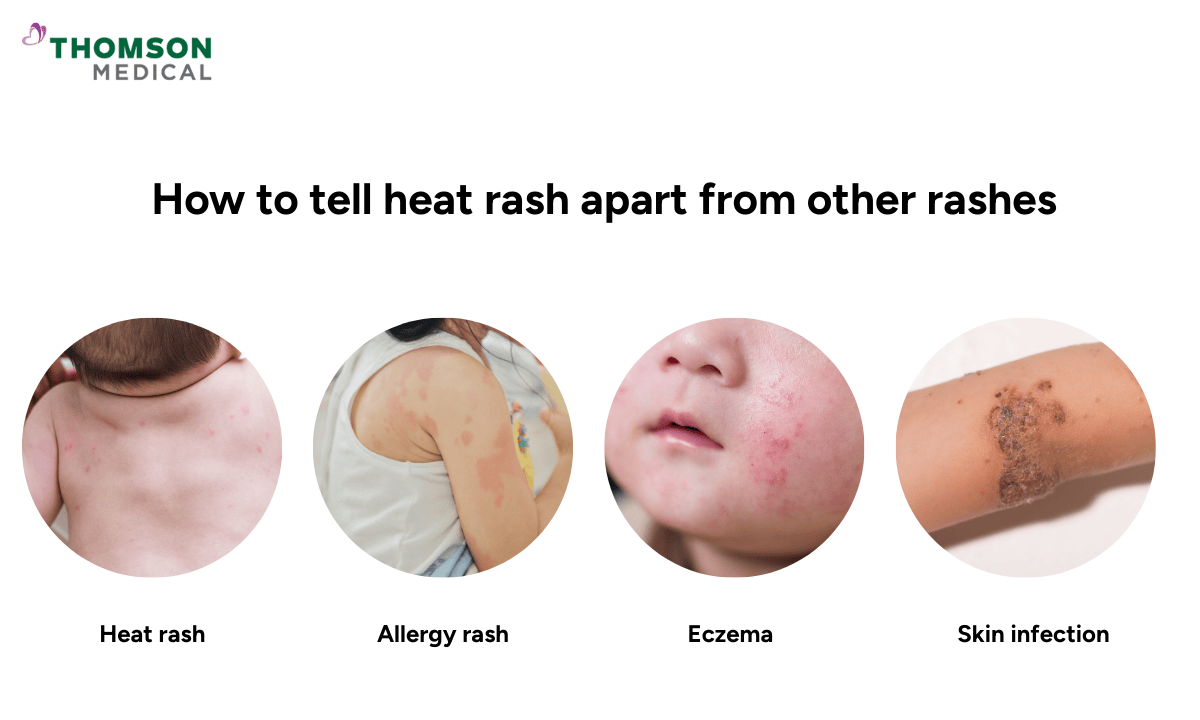
When you notice tiny red bumps on your baby’s neck or chest, you may wonder whether it is heat rash or something more serious like an allergy, eczema or skin infection.
Most common baby rashes have their own typical patterns. Once you know what to look for, it becomes much easier to tell them apart.
You can use this quick side-by-side guide to compare:
Feature | Heat rash | Allergy rash | Eczema | Skin infection |
Appearance | Tiny red or pink bumps, small prickly spots | Raised, blotchy, swollen welts that come and go | Dry, rough, scaly patches | Red, swollen areas, may ooze or crust |
Common locations | Neck, armpits, chest, and back | Anywhere on body, often spreads quickly | Cheeks, elbows, knees, behind ears | One area that gets worse over time |
When it appears | Hot weather, sweating, overdressing | After new food, medication, or product | Chronic, comes and goes | After scratching or broken skin |
Baby’s comfort | Usually mild or slightly prickly | Often itchy and uncomfortable | Very itchy. Baby may rub or scratch | Painful or sore |
This guide is here to help you feel more confident, but you don't have to figure this out alone. When in doubt, checking in with your doctor is always a good step for your baby's wellbeing.
Unsure if it’s just heat rash or something else? Our paediatricians can assess your baby’s skin and guide you with clear, practical advice. Request a consultation with Thomson Paediatric Centre for peace of mind today.
Our paediatricians
Loading...
How long does baby heat rash last?
Once you've recognised that it is likely heat rash, the next question many parents wonder is how long it will last.
In many cases, once your baby's skin is kept cool and dry, you'll start to notice improvement within one to three days. Sometimes it even looks better within hours after you remove extra layers or move your baby into a cooler space.
As the rash fades, you might notice the redness softening or a little mild peeling. This is just part of the healing and usually nothing to worry about.
How to treat baby heat rash at home
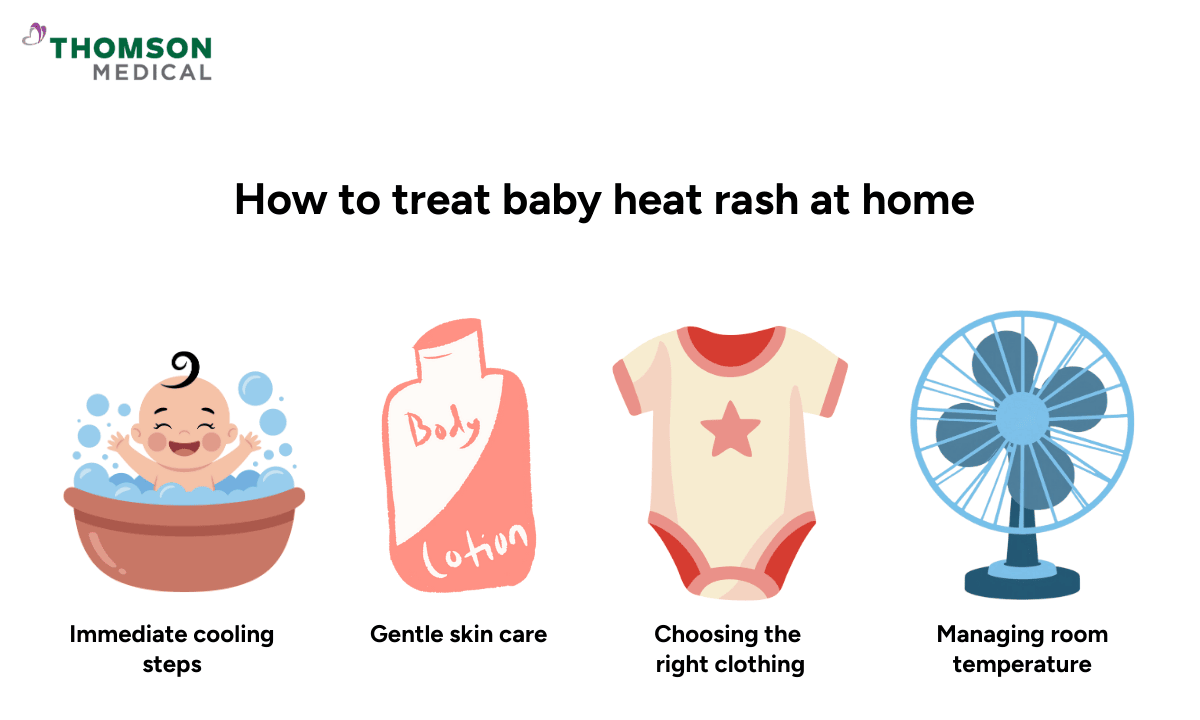
Most heat rashes are mild and can be safely cared for at home. In many cases, you don't need anything complicated or medicated. A few simple, gentle steps are often enough to help your baby feel comfortable again.
Immediate cooling steps
When your baby's skin cools down, the prickly heat rash usually settles on its own. So let's start by helping your baby feel cooler and less sweaty.
You can try:
Moving your baby to a cooler, shaded, or air-conditioned room
Removing extra layers or loosening clothing
Giving a lukewarm or cool bath (not cold, which can be uncomfortable)
Cooling the skin is often enough to calm the redness within hours.
Gentle skin care
After bathing, gently pat your baby's skin dry with a soft cotton towel instead of rubbing, which can irritate delicate skin. Thick or oily creams can sometimes trap heat and moisture, so lighter care is usually better.
If your baby's skin looks a little irritated, keeping it clean and dry is usually more helpful than applying heavy products.
Choosing the right clothing
Loose, breathable cotton clothing helps a lot. Soft cotton fabrics allow air to flow and sweat to evaporate more easily, keeping your baby comfortable. Tight or heavy outfits tend to trap heat, so lighter clothing layers are usually a better choice.
Many parents worry that their babies are cold and aren't sure whether they need more clothes. A simple check: if your baby feels sweaty at the back of the neck or chest, they may be too warm.
Managing room temperature
Babies can't regulate their body temperature as easily as adults. That said, keeping the room cool and well-ventilated, especially during naps and bedtime, helps their skin stay calm and prevents sweat from getting trapped.
Small, gentle changes like these often keep your baby comfortable throughout the day and help prevent heat rash from coming back.
Is baby heat rash dangerous?
It is natural to feel concerned when your baby develops a rash, especially if it seems uncomfortable or is not clearing up.
Most baby heat rashes are mild and improve on their own once the skin cools down. They don't cause lasting harm and don't leave scars. Your baby's sweat glands are still developing, so they can clog more easily than an adult's. This is a normal part of growing.
Warning signs to watch for
Heat rash itself is usually harmless, but it is worth looking out for warning signs such as:
Fever
Your baby seems unusually fussy or in pain
The rash is spreading quickly
Swelling or warmth around the bumps
Pus or yellow crusting
The rash hasn't improved after a few days, even with cooling
These signs don't always mean something serious is happening, but they do mean it's time to check in with your doctor to make sure it's not an infection or something else.
Every baby’s skin is different, and it’s okay to need reassurance sometimes. If you ever feel unsure or simply want a second opinion, our paediatricians are here to support you and your little one every step of the way. Schedule an appointment whenever you need.
FAQ
Is heat rash more common in babies?
Yes, babies are more prone to heat rash because their sweat glands are still immature and can clog more easily, especially in hot or humid weather.
How do you treat heat rash in babies?
Most baby heat rash improves with simple cooling. You can:
Move your baby to a cooler space
Move extra clothing layers
Keep your baby's skin clean and dry
These steps help open clogged sweat ducts, allowing the rash to settle naturally.
How long before a heat rash goes away in a baby?
Heat rash usually improves within 1–3 days once your baby stays cool and dry. Many mild cases start fading within hours after removing heat and sweat triggers.
What is the best cream for sweat rash?
In most cases, keeping the skin cool and dry works best. If extra soothing is needed, a light layer of calamine lotion may help calm irritation, but avoid thick or oily products that trap heat.
Does breast milk help baby heat rash?
Breast milk isn’t harmful and some parents use it for mild skin irritation, but there’s limited evidence it treats heat rash. Cooling the skin and keeping it dry are usually more effective.
Should I see a doctor for baby prickly heat?
Most cases can be managed at home, but it’s best to seek medical advice if:
The rash looks infected
Your baby seems unwell
The rash is worsening
In these situations, paediatric clinic visits can provide reassurance and ensure nothing more serious is going on.
The information provided is intended for general guidance only and should not be considered medical advice. For personalised recommendations and tailored advice based on your unique situations, please consult a specialist at Thomson Medical. Request an appointment with Thomson Medical today.