

Many parents first hear about baby massage from friends or online searches when they're desperate for ways to soothe a fussy baby. You might be wondering if it could help with colic, wind, or those nights when nothing seems to settle your little one.
The truth is, baby massage may offer benefits that go beyond soothing an unsettled infant. From potentially supporting physical development to creating moments of closeness, gentle touch can play an important role in how babies grow and bond with their parents.
Baby massage doesn't have to feel complicated or intimidating. Understanding when to start, how to read your baby's cues, and which techniques work best can make the whole experience feel easier and more natural.
What is baby massage?
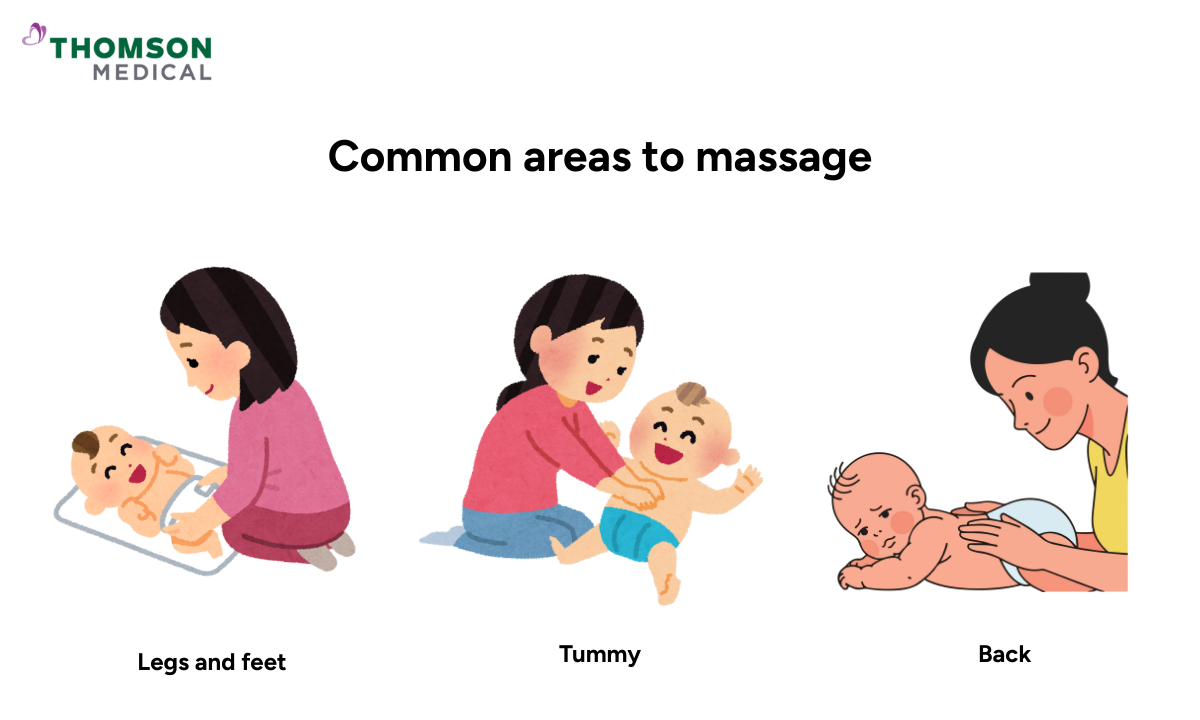
Baby massage involves using gentle, rhythmic strokes on your infant's body. You can use a small amount of baby oil or lotion to help your hands glide smoothly across their skin.
You might massage:
Legs and feet
Arms and hands
Tummy
Back
Head and face
The strokes are soft and slow, focused on gentle touch that helps your baby feel safe and cared for. Even brief daily sessions can help you feel more confident handling your baby.
Our ParentCraft trainers
Loading...
What are the benefits of baby massage?
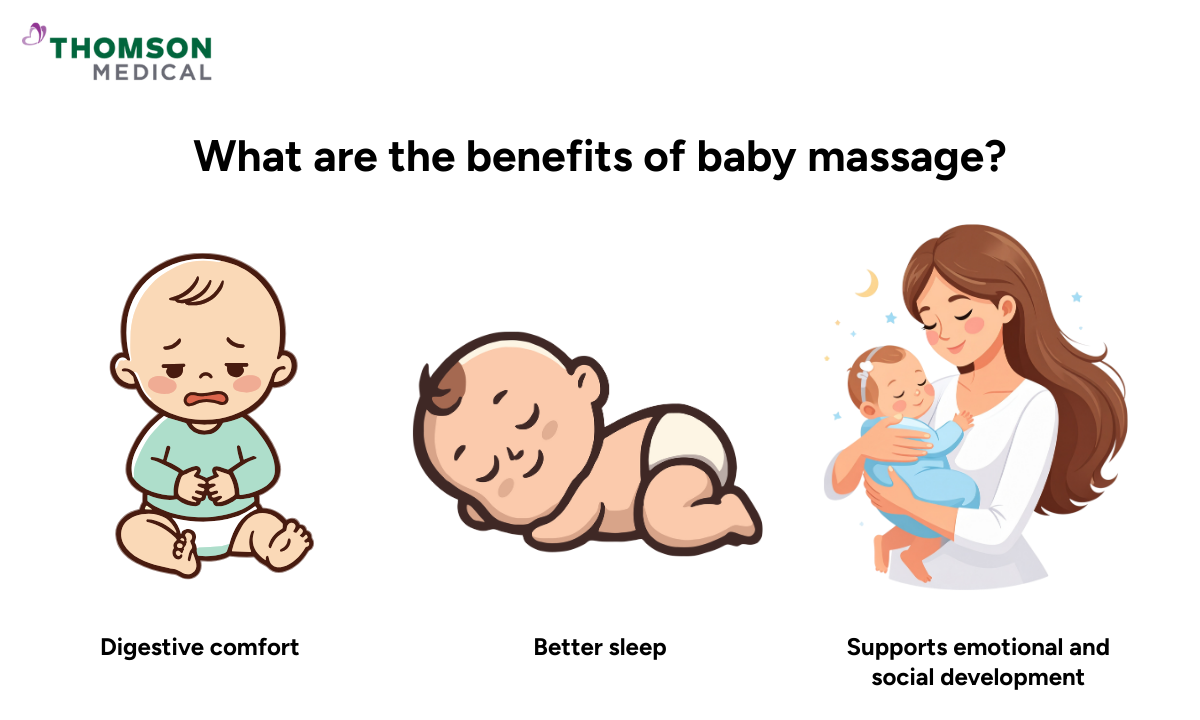
Baby massage may offer both immediate relief for common infant discomforts and longer-term support for your baby's development. Some parents notice physical benefits within the first few weeks of regular practice.
Digestive comfort
If your baby struggles with wind (trapped gas) and colic (excessive crying due to digestion issues), you've probably tried everything and felt helpless when nothing seems to work. Gentle pressure and clockwise circular motions may help with digestion, particularly if your baby experiences wind or constipation.
The clockwise motions follow the direction of the intestines, potentially stimulating the wave-like muscle contractions that move wind through the digestive system. This is why some babies pass wind within minutes of a tummy massage, bringing visible relief after hours of discomfort.
Better sleep
Regular massage might improve your baby's sleep patterns. The calming nature of touch can help them relax and settle more easily.
A brief massage as part of your bedtime routine signals that sleep time is approaching, creating a predictable wind-down period your baby learns to recognise. Most parents find back and leg massage works well for bedtime settling, while tummy massage is more effective 30 minutes after a feed when your baby is alert but calm.
Supports emotional and social development
Beyond the immediate physical comfort, skin-to-skin contact during massage can help regulate your baby's stress response by lowering their heart rate and stress levels. This may build trust as your baby learns that touch brings comfort and security.
Baby massage can also support:
Body awareness as your baby recognises different body parts
Brain development through sensory stimulation
Early communication as your baby learns to read your cues and respond to your voice
The massage movements may create effects similar to what your baby experienced in the womb. Combined with eye contact and your voice, these elements can strengthen your emotional connection and support early language development.
If your baby is experiencing wind, colic, or difficulty settling to sleep, learning proper baby massage techniques may help. Contact us to find out more about baby massage classes at the Thomson ParentCraft Centre, where parents receive guidance on techniques that may support digestion, sleep, and bonding.
Who should attend baby massage classes?
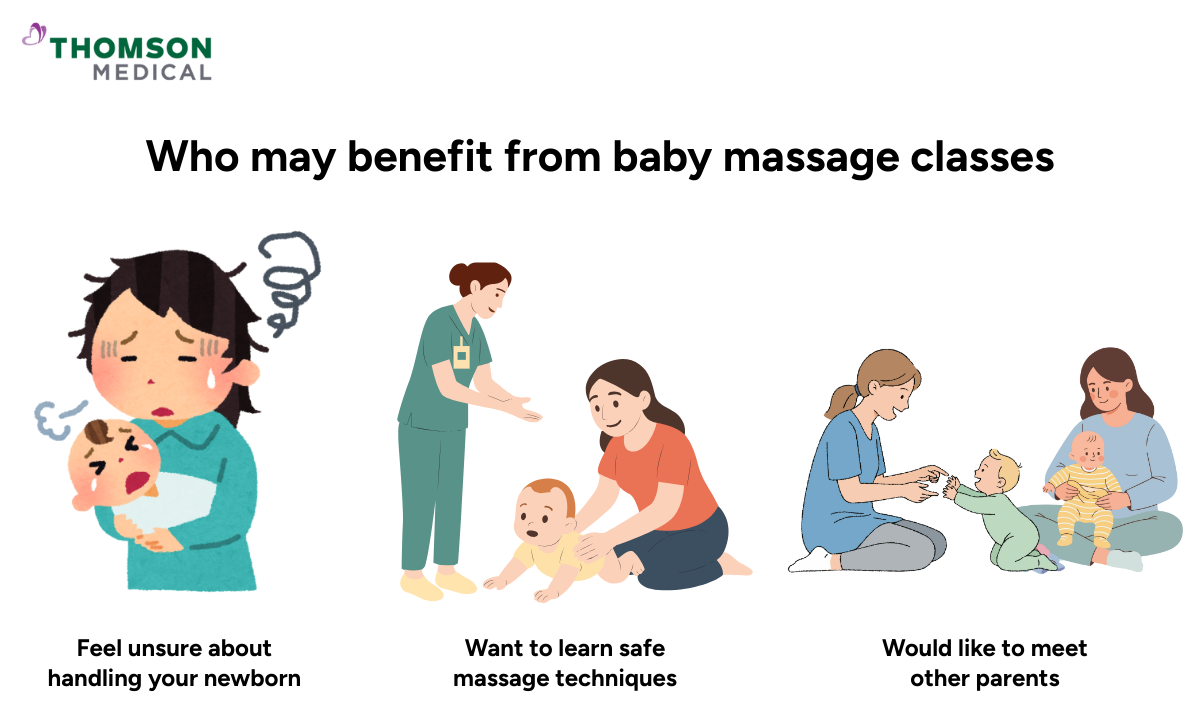
Learning baby massage techniques from an instructor can help you build confidence and connect with other parents.
Baby massage classes welcome:
Mothers and fathers
Grandparents
Anyone who regularly cares for the baby
Partners who want to strengthen their bond
You might find classes helpful if you:
Feel unsure about handling your newborn
Want to learn proper techniques
Would like to meet other parents
Have specific questions about your baby's needs
Instructors can answer your questions and help you feel confident in your approach. Meeting other parents facing similar challenges can be just as valuable as learning the techniques themselves. You'll find other parents who understand the exhaustion, the uncertainty, and the desire to do right by your baby.
When should you start?
In those first overwhelming weeks with a newborn, adding anything new to your routine can feel like too much.
The good news is there's flexibility here. You can start when your baby is:
Around two to three weeks old, once the umbilical cord has healed
A few months old when you feel more confident
Even during the toddler years
There's no wrong time to start, as long as your baby is healthy and you both feel ready.
Starting with just two or three minutes once a day means you can fit it into an existing routine, like after a bath or during a nappy change, without feeling overwhelmed.
If your baby was born prematurely or has health concerns, please speak with your doctor before beginning massage. Your doctor can provide personalised guidance based on your baby's specific needs and help you feel confident about when and how to start.
Is baby massage safe for all babies?
When you're holding your tiny newborn, it's natural to worry about doing something wrong or applying too much pressure.
Baby massage is generally safe for healthy babies. However, you should take some precautions.
Avoid massage if your baby has:
A fever or infection
Recent vaccination sites that are still tender. Wait at least 48 hours after immunisations, as rubbing the injection site can increase soreness and potentially spread the vaccine away from the intended area.
Any medical conditions (check with your doctor first)
Always watch your baby's responses during massage and stop if they seem uncomfortable or distressed. Most parents find that their baby gives clear signals about what feels good through coos, relaxed muscles, or eye contact, making it easier than expected to adjust your touch appropriately.
If your baby has a medical condition, this doesn't mean massage is off limits. Your doctor can guide you on modified techniques that work safely for your baby's needs. They may suggest focusing on certain areas or adjusting pressure. Many babies with health considerations still enjoy and may benefit from gentle touch.
Where to find baby massage classes in Singapore
Singapore offers several ways to learn baby massage, from community programmes to private instruction.
Programme options:
Community centres offer affordable four-to-six-week programmes, often in partnership with experienced instructors
Private instructors can provide home visits, which works well if you have multiple children or prefer one-on-one attention
Postnatal care centres typically include massage instruction in their programmes
Paediatric clinics may offer workshops or recommend qualified instructors
Parent support groups sometimes organise sessions for members
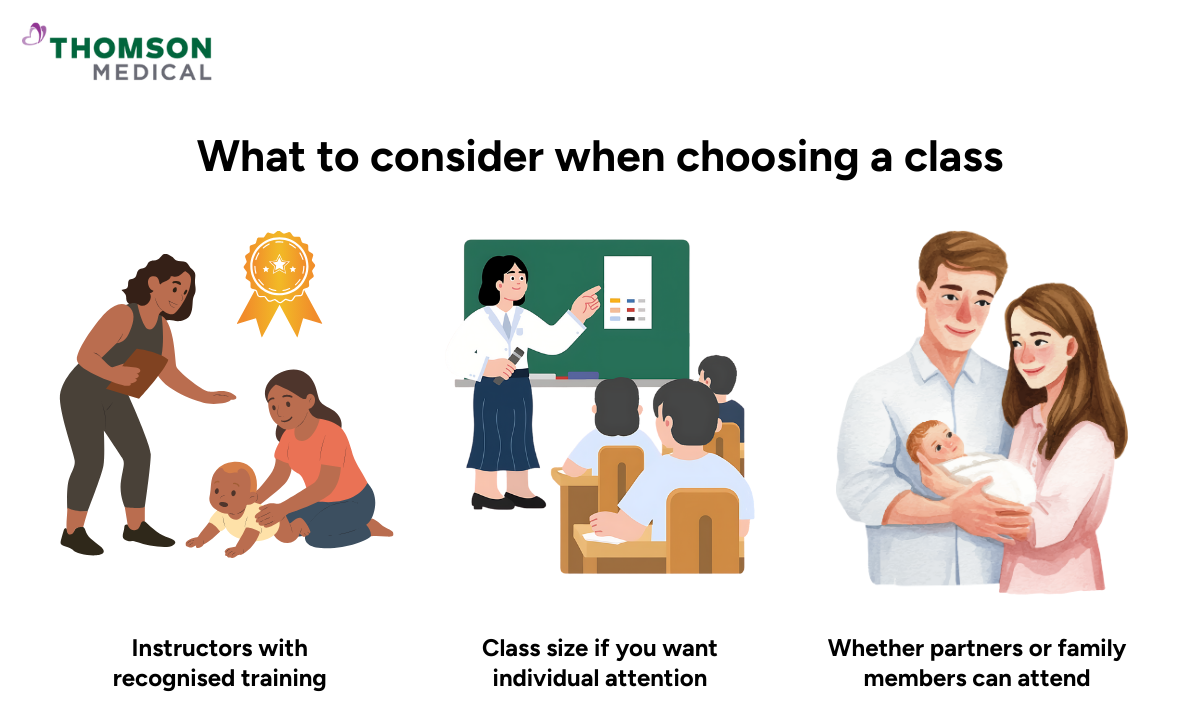
When choosing a class, consider:
Instructors with recognised training
Class size if you want individual attention
Whether partners or family members can attend
Location and schedule that work for your family
Your doctor's recommendations based on other parents' experiences
Asking about trial sessions or observing a class before committing helps ensure the teaching style and environment feel right for your family.
Whether you start in the first weeks or wait a few months, these gentle techniques may ease daily discomforts while strengthening your connection with your baby. With patience and practice, these few minutes can become a regular part of your daily routine.
Choosing the right baby massage class means learning safe techniques from trained instructors in a supportive setting. Contact us to find out about class fees and what's included at Thomson ParentCraft Centre, including class structure and instructor guidance.
FAQ
Is baby massage suitable for newborns?
Yes, you can begin gentle massage once your baby's umbilical cord has healed, typically around two to three weeks old. Newborn massage may help regulate stress hormones and support bonding through skin-to-skin contact.
How often should I massage my baby?
Daily baby massage sessions of five to ten minutes work well for most families. Consistency matters more than duration for potential benefits like improved muscle tone and sleep. Many parents incorporate baby massages into bedtime routines or after diaper changes.
Can baby massage help with colic or sleep problems?
Baby massage may ease colic symptoms and improve sleep. Gentle clockwise motions on the tummy can help move wind through the digestive tract. Massage may lower stress hormones and can relax the nervous system, potentially helping babies settle. If symptoms are severe or persist, consult your doctor.
What oil is safe to use for baby massage?
Natural vegetable oils like coconut, sunflower, or avocado oil work well for infant massage. These oils are gentle on your baby's skin barrier and help your hands glide smoothly. Avoid oils with added fragrances or essential oils. Test a small amount on your baby's skin first. Your doctor may recommend appropriate massage oil and lotion options.
Do parents need prior experience to attend a class?
No prior experience is needed for baby massage classes. Instructors teach proper baby massage techniques from the beginning, including pressure and strokes for different areas. You'll learn non-verbal communication cues and practise with your baby. Prenatal classes sometimes include basic instruction, but postnatal sessions provide more detailed guidance.
Can premature babies receive baby massage?
Premature babies can benefit from gentle massage with guidance from your paediatric physiotherapist or doctor. Appropriate deep touch pressure can support weight gain, improve blood circulation, and may help with elevated bilirubin levels (jaundice levels).
Are there babies who shouldn't have massage?
Most healthy babies can safely enjoy infant massage with proper safety considerations. Babies with conditions like cerebral palsy or autoimmune problems may need modified approaches under paediatric physiotherapist guidance. Avoid massage when your baby has a fever, infection, or tender vaccination sites.
The information provided is intended for general guidance only and should not be considered medical advice. For personalised recommendations and tailored advice based on your unique situations, please consult a specialist at Thomson Medical. Request an appointment with Thomson Medical today.