

If you notice a soft yellow tint in your newborn’s skin or the whites of his eyes during the first few days after birth, your heart may tighten with worry. That reaction is completely natural. But take a breath. Baby jaundice is incredibly common, and in most cases, it’s simply a normal part of your newborn adjusting to life outside your womb.
What is baby jaundice?
Jaundice is one of the most common conditions affecting newborn babies. Around 5 in 10 babies develop it, and the numbers are even higher for babies born prematurely before the 37th week of pregnancy.
You may notice your baby’s skin and the whites of his eyes turning yellow, often becoming more obvious on the second or third day after birth.
Why does my baby have jaundice?
Jaundice happens when there is a temporary build-up of bilirubin, a yellow pigment produced as red blood cells break down.
During pregnancy, the placenta helps remove bilirubin from your baby’s bloodstream. After birth, this responsibility shifts to your baby’s liver.
A newborn’s body works incredibly hard in the first days of life. They naturally produce more bilirubin than adults, and their tiny livers are still learning how to process it. When the liver needs a little more time to mature, bilirubin can build up for a short while, giving the skin its yellowish glow.
Types of newborn jaundice
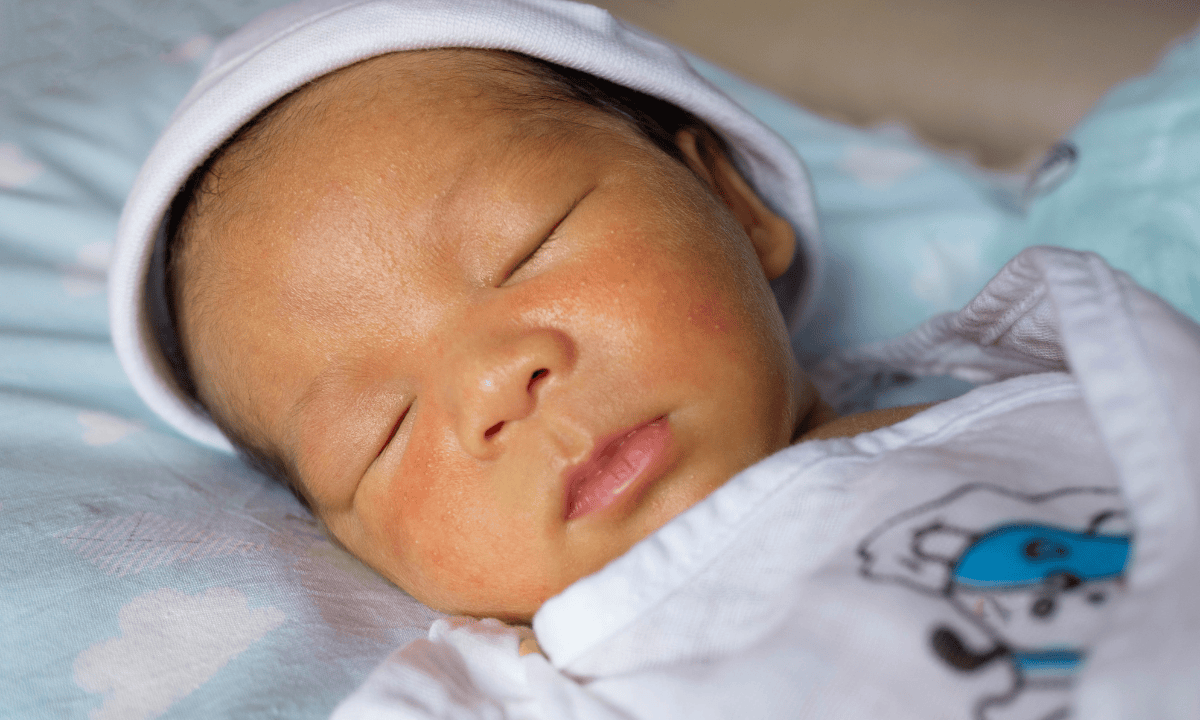
There are many types of newborn jaundice, and each type has its own pattern and reason for appearing. Understanding the difference between them may help you feel more reassured about what your baby is experiencing.
Physiological jaundice
This is the most common type of newborn jaundice. It usually occurs between days two and four and gently fades as your baby’s liver becomes more efficient. For many babies, it’s gone within two weeks, while sometimes even sooner.
Breast milk jaundice
This type occurs in healthy breastfed babies. It usually appears in the second week of life, peaks around weeks two to three, and may take a month or longer to settle.
Natural substances in breast milk can slow the way bilirubin is processed, but this doesn’t mean anything is wrong with your milk. You don’t need to stop breastfeeding; your milk is still the best nourishment and comfort your baby could have.
Breastfeeding jaundice
Breastfeeding jaundice often happens when your baby isn’t getting enough milk, sometimes because of latch difficulties or because your milk supply is still building up.
With a little support to improve your breastfeeding technique or offer a few extra feeds, your baby’s bilirubin levels usually settle gently.
Other causes
In a small number of cases, jaundice may signal an underlying health condition, especially if it appears in the first 24 hours after birth.
Possible conditions that can cause jaundice include:
Internal bleeding
An infection in your baby's blood
Blood group incompatibility between you and your baby
Liver or bile duct issues
An enzyme deficiency
Conditions that cause your baby's red blood cells to break down too quickly
These underlying causes are fortunately not common, and most babies with jaundice simply have the harmless, temporary forms described above.
It may comfort you to know that paediatricians routinely check babies for jaundice within the first 24 to 48 hours after birth. This early assessment helps your baby’s doctor spot any unusual patterns quickly, long before they become a concern.
At Thomson Paediatric Centre, our dedicated paediatricians are experienced in treating a wide range of infant and child medical conditions, including jaundice. Book your appointment today.
Our pediatric professionals
Loading...
Is it serious for a newborn to have jaundice?
For most babies, jaundice is mild and resolves naturally as their liver matures. By one to two weeks of age, many babies’ bilirubin levels drop on their own.
However, very high levels of bilirubin can cause severe complications if not treated promptly. Severe jaundice can lead to conditions such as:
Acute bilirubin encephalopathy:
Bilirubin is toxic to cells of the brain.
When too much bilirubin enters your baby’s brain, it can irritate and damage delicate cells.
Kernicterus:
Kernicterus is a long-term complication caused by untreated severe jaundice.
It may lead to uncontrolled movements, permanent upward gaze, hearing loss, or tooth enamel issues.
The good news is that these complications are rare and can be prevented through early monitoring and timely treatment.
How to monitor baby jaundice at home
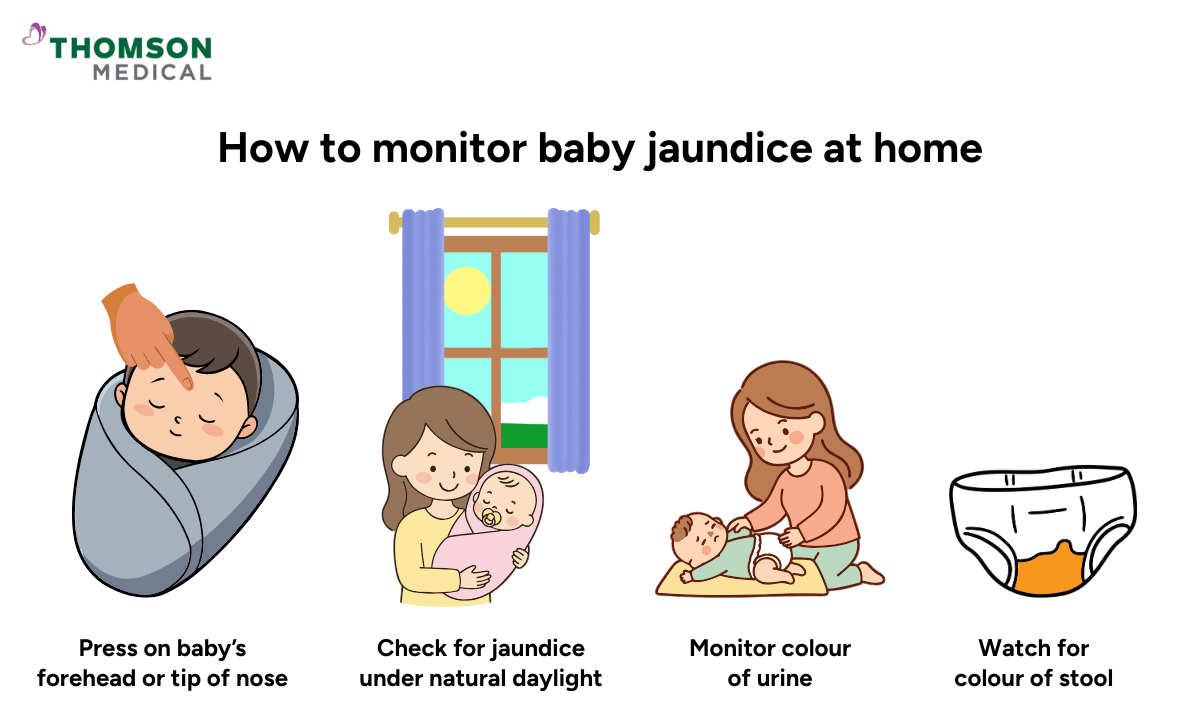
While jaundice is not usually a cause for concern, it's important to monitor your baby carefully at home to determine whether your baby needs treatment.
You can check for jaundice by pressing lightly on your baby’s forehead or the tip of his nose. If the skin looks yellow where you pressed, your baby may have mild jaundice. If not, the skin will briefly appear lighter before returning to normal.
Try to look at your baby in natural daylight, as it shows the colour most accurately.
Other signs to watch for include:
Dark yellow urine (healthy newborn urine should be almost colourless)
Pale stools (normal stools are yellow or orange)
If jaundice appears after the first week or becomes more noticeable, it’s a good idea to speak to your baby’s paediatrician as soon as possible for advice.
When to see a paediatrician
You should seek medical advice promptly if your baby:
Becomes more yellow
Is very sleepy or unusually irritable
Refuses to feed
Has a high-pitched cry
Arches their back in an unusual way
These symptoms may suggest higher bilirubin levels and should be checked without delay.
Diagnosis of baby jaundice
In the hospital, jaundice is often screened using a non-invasive device placed on your baby’s skin (a transcutaneous bilirubinometer). If levels are high or unclear, a small blood sample from your baby’s heel can confirm the bilirubin level.
Your baby’s paediatrician will consider your baby’s age and bilirubin levels to decide the best course of action.
Treating newborn jaundice
Most babies do not require treatment, as the jaundice usually passes within 10 to 14 days. Your baby’s doctor may recommend feeding your baby frequently, whether breastfeeding or formula feeding, to help him pass bilirubin in his stools. If breastfeeding is challenging, a lactation consultant can help you with latch, positioning, and milk supply.
Treatment is only recommended when bilirubin levels are high enough to pose a risk of brain damage. In those cases, two safe and effective treatments are used:
Phototherapy:
Your baby is placed under gentle ultraviolet lights, which help break down bilirubin through the skin.
His eyes are protected with a soft mask, and the treatment is closely monitored by his doctor.
Blood transfusion:
This treatment replaces your baby’s blood with donor blood to quickly remove excess bilirubin.
Though it sounds daunting, it is rarely needed and used only for very severe jaundice.
Jaundice is something many parents face in those early days, and in most cases, it’s simply a part of your baby’s natural adjustment to the world. With a little monitoring and the right support, it usually settles gently on its own.
If you ever feel uncertain, worried, or simply need reassurance, don’t hesitate to schedule an appointment at Thomson Medical. Caring for a newborn comes with many questions, and our paediatricians are here to support you every step of the way.
FAQ
When to worry about baby jaundice?
You should seek medical advice if your baby becomes more yellow, is very sleepy or difficult to wake, feeds poorly, has a high-pitched cry, or shows unusual movements such as arching their back. These signs may suggest higher bilirubin levels and should be checked promptly.
Is my breast milk making my baby jaundiced?
No, in some babies, natural substances in breast milk can slow bilirubin processing, causing breast milk jaundice. This is harmless and temporary, and you do not need to stop breastfeeding. Your milk remains the best nutrition for your baby.
How long does breastfed baby jaundice last?
Breastmilk jaundice can last a few weeks and sometimes up to a month or more. As long as your baby is feeding well, gaining weight, and being monitored, this extended course is usually normal and not a cause for concern.
What does jaundice baby poop look like?
Healthy newborn poo is yellow or orange. If your baby has jaundice but their poo remains this normal colour, it’s reassuring. Pale or chalk-coloured poo may signal a liver or bile duct issue and should be checked by a doctor.
Can morning sunlight cure jaundice in newborns?
Gentle sunlight may slightly help bilirubin break down, but it is not a reliable treatment. Medical phototherapy is far more effective and safe. If you’re concerned about your baby’s jaundice, it’s best to seek professional advice rather than relying on sunlight.
Can a baby survive jaundice?
Absolutely. Most babies with jaundice recover completely, especially when monitored and treated early if needed. Severe complications are rare, and with timely care, babies do very well.
The information provided is intended for general guidance only and should not be considered medical advice. For personalised recommendations and advice based on your unique situation, please consult a specialist at Thomson Medical.Request an appointment with Thomson Medical today.