

You've just finished feeding your baby. They're finally settled. And then suddenly they bring up what looks like everything they just ate, all over themselves, all over you. Your heart drops and you might wonder whether something is seriously wrong.
In most cases, milk regurgitation or spit-up is common in babies, as their digestive system is still developing. However, frequent or forceful vomiting may need closer attention depending on accompanying symptoms.
Understanding the difference between normal spit-up and vomiting, possible causes, and when to seek medical advice can help you respond calmly and support your baby’s comfort and feeding routine.
Is milk vomiting always a problem?
When your baby effortlessly brings milk up (also known as spitting up), it can be frightening, especially at 3am when you're exhausted and everything feels more intense. But spitting up is usually a normal part of infant development.
Your baby's body is still figuring out how feeding works. Their stomach muscles haven't matured yet, they're learning to coordinate sucking and swallowing, and they're adjusting to taking in milk regularly. This is why you'll often see spitting up during those first six months.
Most of the time, this is just messy rather than dangerous, especially if your baby:
Feeds well
Is gaining weight
Seems alert when awake
Is generally settled
Milk vomiting after feeding doesn’t mean your baby is missing out on nourishment. It’s simply your baby’s body learning how to feed, digest, and adapt to life outside your womb.
Common causes of vomiting in babies
When spitting up keeps happening, it's natural to start worrying. But in most cases, this isn’t about mistakes or illness.
There are plenty of normal, everyday reasons why babies bring milk back up.
Normal gastric reflux
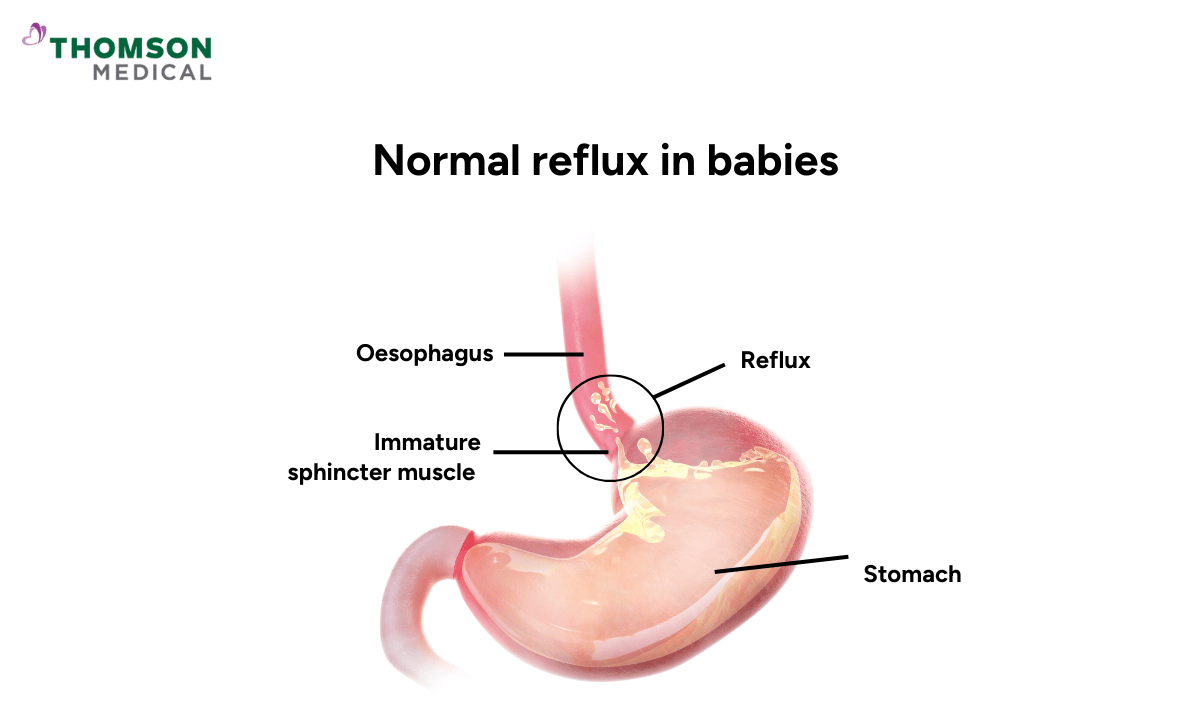
The little muscle at the bottom of your baby's food pipe (also called the sphincter muscle), which is supposed to keep milk down, is still developing. It is not fully doing its job yet, and their digestive system is still growing.
Feeding too quickly
This is another common culprit. Your baby is still mastering the art of sucking, swallowing, and breathing all at once. When milk flows faster than they can handle, it's going to come back up.
Overfeeding
Overfeeding happens more easily than you might think. Your baby's stomach is tiny, about the size of an egg at one month old. Even when you're feeding gently and slowly, it's easy to fill it past capacity, and the excess has nowhere to go but up.
Swallowing air during feeds
This reason is inevitable, whether you're breastfeeding or bottle-feeding. That trapped air can push milk back up afterwards, resulting in what looks like vomiting or spitting up.
Lying flat after a feed
Lying flat too soon after feeding doesn't give gravity a chance to help. When your baby goes horizontal right after eating, milk is more likely to travel back up, even when everything else about the feed went smoothly.
Burping difficulties
Burping difficulties mean trapped air stays in the stomach, pushing milk upward. Some babies just need more time and patience to burp, and this gets easier as they grow.
Other causes
Sometimes, though less commonly, milk vomiting can signal that your baby needs extra support:
Cow’s milk protein allergy:
Some babies are sensitive to cow’s milk protein, which can irritate the digestive system and cause vomiting.
Gastro-oesophageal reflux disease (GERD):
While silent reflux is common in babies, some infants experience more persistent symptoms that cause discomfort and frequent vomiting.
Viral infections:
Mild stomach bugs can temporarily upset your baby's digestion.
Formula changes:
A baby’s digestive system takes time to adjust to new formulas, as temporary vomiting can occur during transition.
Even if one of these is what's happening, it doesn't mean something serious is going on. It usually means your baby's body is reacting to something it's still learning to handle. These conditions are common in newborn babies, and most are very manageable with the right support.
When should you be concerned?
Repeated milk vomiting may leave you feeling unsure and torn – wondering whether your baby simply needs time to grow or if you need to rush to the doctor.
Here's what to watch for. Get medical advice if your baby:
Vomits frequently or persistently
Has green, yellow, or bloody vomit
Shows signs of dehydration (few wet nappies, dry mouth, no tears)
Is very sleepy or difficult to wake
Refuses feeds
Seems in pain or very unsettled
Is not gaining weight
These signs don't always mean something serious is happening. But they do mean your baby needs to be checked.

Our urgent care centre specialist
Loading...
Where to go for care: A&E, urgent care, or regular appointments?
When your baby is unwell, the symptoms aren't the only thing stressing you out. It's also the decision about where you should go.
Emergency departments
Go straight to A&E if your baby is vomiting and has any of these symptoms:
Vomiting blood or green/yellow fluid
Vomiting after a serious fall, injury, or head impact
Seizures alongside the vomiting
Extreme sleepiness
These situations need urgent hospital care. Even if it turns out to be nothing serious, these symptoms warrant immediate assessment.
Urgent care centres (UCCs) and 24-hour paediatric clinics
Consider paediatric urgent care or a 24-hour paediatric clinic if you notice:
Persistent vomiting
Vomiting with signs of dehydration (few wet nappies, dry mouth, sunken eyes)
Vomiting is worrying but your baby is stable
Symptoms make you too concerned to wait until morning
These places exist to give you answers and reassurance when something feels wrong but it's not an emergency.
Regular GP or paediatric appointments
Sometimes the best care isn't the fastest – it's the steadiest. Getting a checkup at your regular GP or paediatrician may be the right choice if your baby has:
Mild and occasional vomiting
Normal growth and feeding
There's no single right answer every time. What matters is choosing the option that keeps your baby safe and helps you feel more steady as a parent.

What you can do to help your baby

When your baby's struggling, you want to do anything to make it better. But you don’t need complex solutions or medical interventions. Some small, gentle changes can make a difference.
You can try:
Feeding smaller amounts more frequently
Burping your baby during and after feeds
Keeping your baby upright after feeding
Ensuring proper latch or bottle positioning
Feeding in a calm, unhurried environment
Watching hunger cues rather than forcing feeds
Sometimes it's not about fixing everything at once. It's about helping your baby feel more comfortable, giving their body a chance to settle, and knowing that you're doing everything you can. That matters more than you realise.
FAQ
Should you refeed a baby after vomiting?
In most cases, you can offer a gentle feed again once your baby has settled, especially if they seem hungry and comfortable. It’s best to start with smaller amounts and go slowly.
Does overfeeding cause vomiting in babies?
Yes, it can. A baby’s stomach is very small, and when it fills beyond what it can comfortably hold, excess milk may come back up even with careful feeding.
How much milk is “too much” vomit for newborns?
It often looks like more than it really is. If your baby is feeding well, gaining weight, and otherwise settled, large-looking vomits are usually not dangerous. However, frequent forceful vomiting should be checked.
Should I worry if my baby is vomiting but seems happy and is gaining weight?
A content baby who is feeding well and growing normally is often experiencing normal reflux or spitting up rather than illness.
Can formula or breast milk cause more vomiting than the other?
Some babies may be more sensitive to certain formulas or feeding changes, while others do just as well with either. It depends on your baby, not the milk type.
What feeding positions reduce vomiting?
Upright, supported positions during feeds and keeping your baby upright for a while after feeding can help reduce milk coming back up.
The information provided is intended for general guidance only and should not be considered medical advice. For personalised recommendations based on your medical conditions, request an appointment with Thomson Medical.
For more information, contact us:
Thomson Paediatric Centre
- Thomson Medical Centre (TPC1), #03-06:
6258 3353 (Call) - Thomson Medical Centre (TPC4), #01-03:
6259 7667 (Call) - Jurong:
6665 1000 (Call) - Marine Parade:
6636 3808 (Call) - Punggol:
6341 6000 (Call) - Woodleigh:
8874 3970 (WhatsApp)
Thomson Medical 24-Hour Urgent Care Centre (Novena)
- Call: 6350 8812
Notice:
The range of services, vaccinations, and tests may vary. Please contact us directly to enquire about the current availability.
Request an Appointment