

Whether you've been thinking about straightening your own teeth or simply considering braces for your child, you're not alone. Many families explore braces treatment at some point, and it's a decision that speaks to your commitment to long-term health and wellbeing. Understanding what braces are, how they work, and what to expect can help you feel more confident and prepared as you take this important step towards a healthier, more beautiful smile.
What are braces?
Braces are those metal or ceramic pieces people wear to straighten their teeth and fix bite problems. While most people notice the cosmetic benefits of straighter teeth first, braces actually do so much more than that. They help you chew properly, reduce jaw pain, and can even prevent temporomandibular joint (TMJ) disorders down the line.
Misaligned teeth aren't just about looks. When your teeth experience dental crowding or sit crooked in your mouth, brushing and flossing become considerably more challenging. This means you're more likely to face gum disease and other oral health complications.
How do braces work?
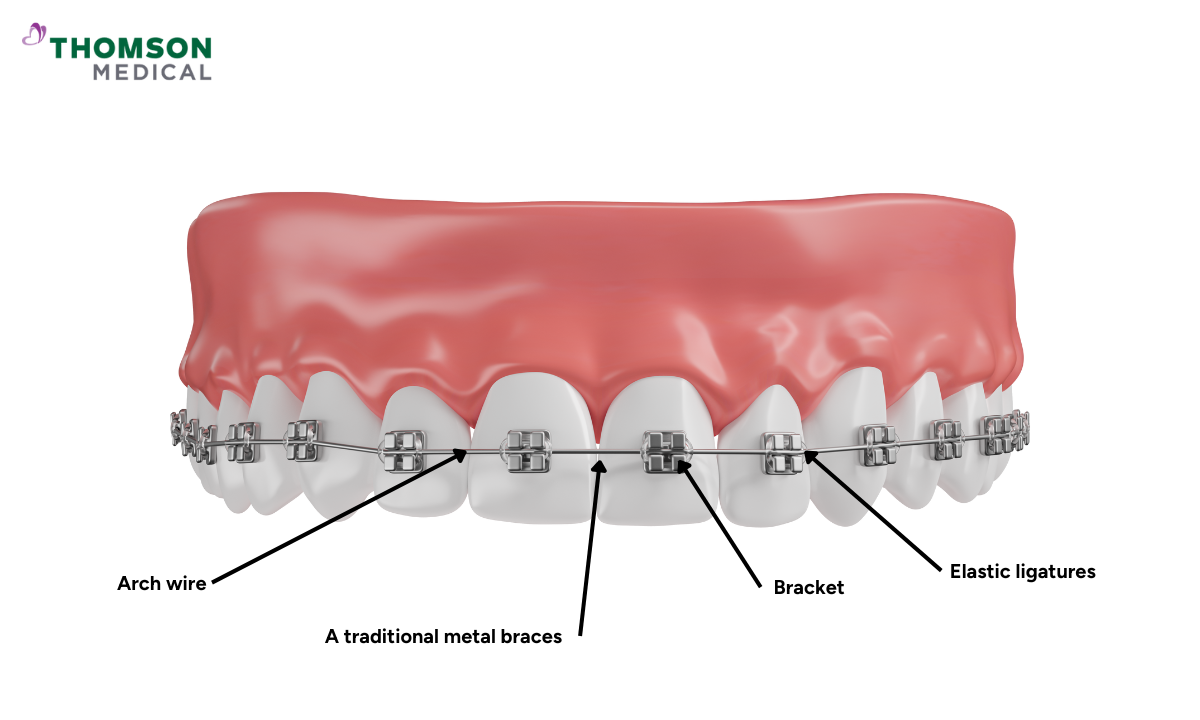
The basic idea is the braces are designed to apply gentle, consistent pressure to gradually nudge your teeth into better positions. It takes time, but it's a trusted method that's worked for millions of people.
Here's what makes it all happen:
Brackets:
They're the anchor points that hold everything together securely.
Arch wire:
Your orthodontist adjusts this wire during routine visits to ensure your teeth receive appropriate pressure.
These adjustments are what gradually move your teeth into place.
Elastic ligatures:
You can select different colours at every visit, making it a bit more personal.
They're changed at each orthodontic appointment to maintain effectiveness.
Braces rubber bands:
They apply targeted pressure to help align jaw positions between the upper and lower jaw.
Your orthodontist will show you how to attach these if they're needed for your treatment.
Coil springs:
They help move teeth into proper position.
Not everyone needs these; it depends entirely on your individual situation.
Getting braces is a commitment, and there will be adjustment periods along the way. But it's important to remember that you're not doing this alone. Your orthodontic team has guided countless patients through this journey, and they'll be there to help you at every step of the way.
Our dental specialists
Loading...
Who can benefit from braces?
Braces treatment can benefit people of almost any age, provided their permanent teeth have fully emerged. Treatment is often recommended between ages 9 and 14, when most permanent teeth are in place and the jaw is still developing. This makes it easier to guide teeth into proper alignment while the bone structure remains responsive.
However, adults can absolutely pursue braces treatment too, as there's no age limit. While treatment may take slightly longer because the bones have fully matured, the results are just as effective and transformative. Regardless of when you start, teeth braces are a reliable way to improve alignment and support better oral health for years to come.
Should I consider getting braces?
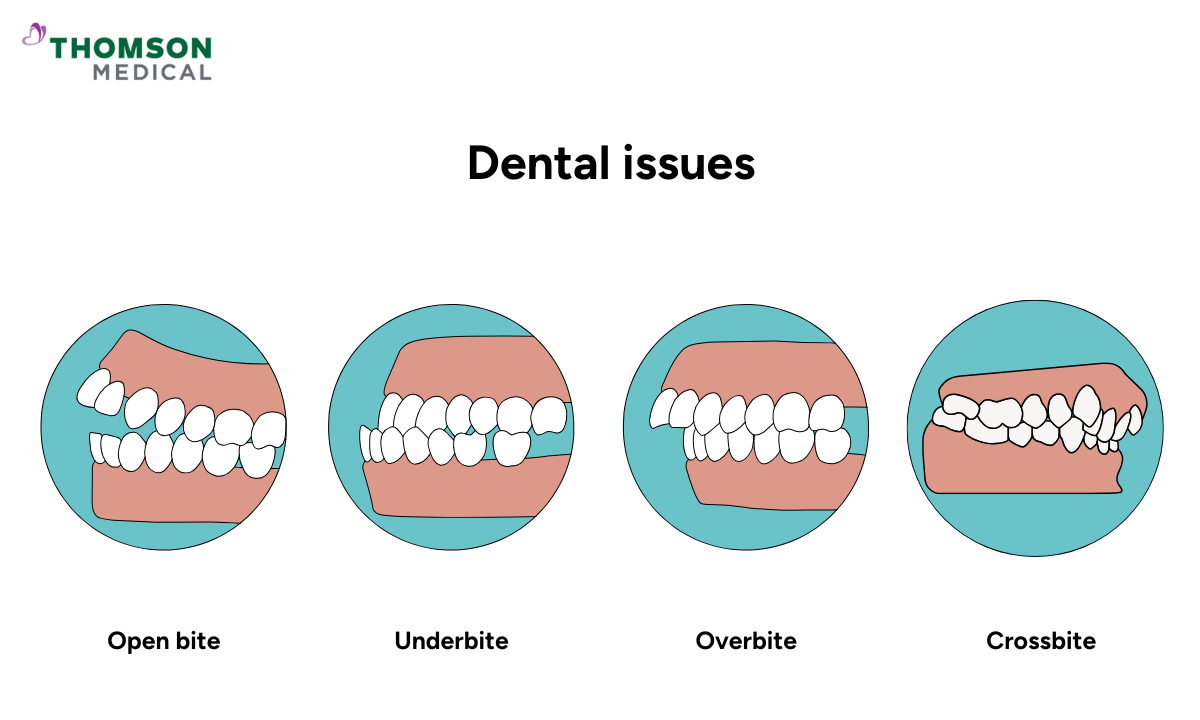
If you or your child has trouble with chewing, cleaning between teeth, or feeling self-conscious about your smile, braces might help. They're designed to address issues like:
Crooked teeth:
Teeth that are improperly positioned and overlap one another, making proper cleaning difficult.
Spacing:
Extra space or tooth gaps between two or more teeth that affect both function and appearance.
Overcrowding:
Not enough room in the jaw for all teeth to fit properly, leading to overlapping or twisted teeth.
Overjet (buck teeth):
The upper front teeth stick out horizontally over the lower front teeth more than they should.
Overbite:
Upper front teeth overlap with lower teeth more than is healthy (further than 2 mm).
Underbite:
Lower teeth and jaw protrude in front of the upper teeth, affecting bite function.
Crossbite:
Upper and lower teeth don't line up properly when the mouth is closed, potentially causing uneven wear.
Open bite:
A gap between the upper and lower teeth even when the mouth is closed.
If you or your child is experiencing any of these over- or underbites or alignment issues, consulting an orthodontist can help determine whether braces treatment is the right solution.
What types of braces are available?
There are several types of braces to choose from, and the right one for you depends on your alignment needs, comfort level, budget, and how visible you want your braces to be.
Here’s a simple breakdown to help you compare your options :
Type | Best for | Pros | Cons | Cost (SGD) |
Conventional metal braces | All types of dental misalignments, budget-conscious families |
|
| 3,500 - 5,000 |
Ceramic braces | Teens and adults concerned about appearance |
|
| 4,500 - 6,500 |
Self-ligating braces | Those wanting fewer orthodontist visits |
|
| 5,500 - 7,000 |
Lingual braces | Adults who want completely hidden braces | Invisible from the front |
| 7,000 - 15,000+ |
Adults and older teens with mild to moderate alignment issues |
|
| Varies |
Some insurance plans may offer dental coverage for braces, and certain clinics also provide discounts for students and full-time National Servicemen (NSF). To understand your exact costs and available benefits, it’s best to check with your dental provider for detailed fee information.
What can I expect when getting braces?
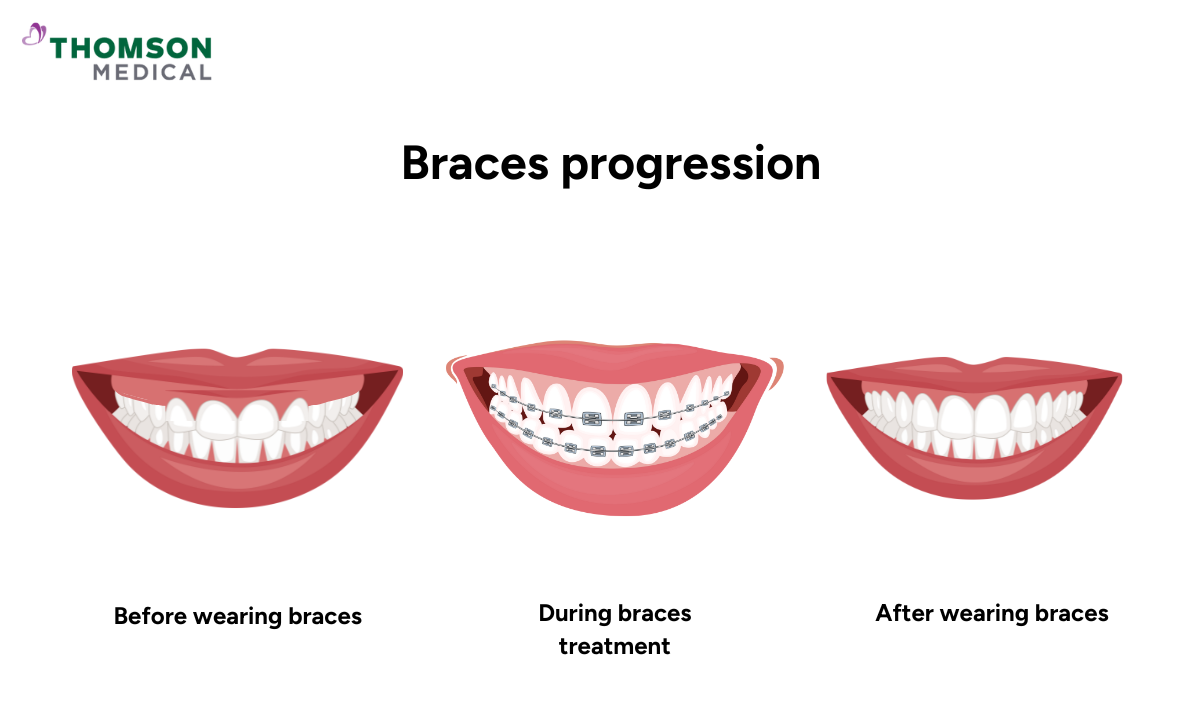
Getting braces happens in a few simple stages, and your orthodontist will guide you every step of the way so you always know what to expect.
Consultation and diagnosis
Your first visit is all about understanding your smile and planning the best treatment. This may include:
A thorough oral exam of your teeth, mouth, and jaw to assess overall health
Questions about any concerns with speaking, chewing, or swallowing
Dental X-ray images or 3D scans to check alignment and identify underlying issues
Impressions of your teeth to help map out your personalised treatment plan
Preparation
Before your braces are put on, your orthodontist will make sure your teeth are ready. This may involve:
Treating any existing issues, such as cavities or severely decayed teeth
Placing spacers about a week before installation if your teeth are very close together
Installation day
Getting braces placed is usually a smooth, comfortable process that takes about 1-2 hours. It typically includes:
A detailed cleaning to remove any plaque or tartar
Applying adhesive to each tooth
Positioning the brackets carefully
Threading the arch wire through the brackets
Securing everything with elastic ligatures (unless you're using self-ligating braces)
Trimming any extra wire for your comfort
Clear, easy-to-follow instructions on how to care for your new braces
Don't worry if it feels a bit new or unusual at first. With a little time and guidance from your orthodontic team, you'll quickly adapt to your teeth braces and the initial strangeness will fade.
If you’re thinking about getting braces, request an appointment at Thomson Medical. Our orthodontic specialists will explain the full process, answer your questions, and create a personalised plan for your smile.
How long does treatment take?
Braces treatment typically takes 1 to 3 years, depending on how much your teeth need to move and the complexity of your case. Self-ligating braces may shorten this timeframe to around 2 years for some patients.
You'll need to visit your orthodontist roughly once a month (every 4-6 weeks) for adjustments – these appointments are essential for keeping your treatment on track.
What happens after my braces come off?
After your braces come off, the next step is a retainer. Think of it as the finishing touch that keeps your teeth in their new, perfectly aligned positions. There are three main types of retainers:
Fixed retainers:
Thin metal wires bonded to the back of your teeth.
Cannot be removed and are often used on lower front teeth.
Commonly used alongside removable retainers for comprehensive protection.
Hawley retainers:
Hard plastic base that sits on the roof of your mouth.
Metal wire wraps around the front of your teeth.
You can remove it for cleaning, and it comes in different colours for personalisation.
Clear retainers:
Made entirely of transparent plastic shaped to fit your teeth precisely.
The most discreet option and more affordable than Hawley retainers.
Also offers protection against teeth grinding, though it's less hard-wearing.
How long to wear retainers
For the first 3-9 months after braces treatment, you'll need to wear your retainer all the time, only removing it for meals and cleaning. Once your teeth have settled into their new positions, you'll transition to wearing it just at night.
Most orthodontists recommend wearing your retainer every night from then on and for good reason. Teeth can shift at any age, and regular retainer use protects the results you've worked so hard to achieve.
What should I expect during treatment?
Wearing braces takes some getting used to, but most discomfort is temporary and manageable. Here's what you might experience:
Mild soreness after getting braces or following adjustments – usually lasts a few days and can be eased with over-the-counter painkillers
Some rubbing against your lips or cheeks as you adjust to your braces. Orthodontic wax helps cushion any tender spots until your mouth gets used to them
To make things easier:
Avoid sticky, hard, or crunchy foods that could damage your braces
Cut harder foods like apples and carrots into smaller pieces
Choose soft foods like yoghurt and steamed vegetables
These adjustments become second nature within a few weeks, and most people adapt to their braces much faster than they expect.
What are the potential risks?
While braces are safe and effective, it's important to understand the possible risks so you can take steps to prevent them:
Tooth discolouration, decay, or gum problems can happen if you don't maintain good oral hygiene and keep up with regular dental visits
Tooth nerve damage is rare and usually only happens in teeth with previous injuries or large fillings
Root shortening is generally minimal and harmless, though significant cases may require stopping treatment early
Teeth shifting back over time can occur if retainers aren't worn as instructed
Jaw growth issues in severe cases may require surgery alongside braces, though this is uncommon
Regular monitoring throughout your braces treatment helps catch any problems early and keeps everything progressing smoothly. Your orthodontist is your partner in this journey, watching carefully to ensure the best possible outcome.
How can I get the best results?
The success of your braces treatment depends significantly on how well you care for your teeth and braces and follow your orthodontist's advice.
Here’s what you can do:
Brush after every meal and use flossers or interdental brush
Attend orthodontist visits every 4–6 weeks and dentist check-ups every 4–6 months
Stick to food restrictions and wear a mouthguard for contact sports
Wear your retainer as instructed after braces are removed
These steps may require some adjustments to your routine, but they're what ensure you get the healthy smile you're working toward.
When should I contact my orthodontist?
Most issues with braces are minor and easily fixed, but it's important to get in touch with your orthodontist if you experience:
Pain that doesn't improve with over-the-counter painkillers
Broken wires or brackets that could cause injury
An injury to your mouth or face
Bleeding or signs of infection in your gums
Please don't worry about bothering your orthodontist – they genuinely want to hear from you. It’s good to address small concerns quickly rather than have them develop into bigger issues. Most problems can be sorted out with a quick appointment, and you'll feel much better once they're resolved.
If you experience persistent pain, broken brackets or wires, mouth injuries, or signs of infection, request an appointment with Thomson Medical. Our orthodontic specialists can quickly assess the issue, provide safe solutions, and help prevent more serious complications.
FAQ
What age is best for braces?
There's no single "best age" because children, teens, and adults can all benefit from orthodontic treatment. However, children and teens between 9 and 14 usually have more favourable outcomes, as their jawbone is still quite responsive to repositioning.
How long do braces last?
Braces treatment with traditional teeth braces usually lasts 1 to 3 years, though self-ligating braces may reduce this to around 2 years for some patients. After your time with braces is complete, you'll need to wear retainers consistently to maintain your teeth in their correct positions.
Do braces hurt?
You may experience temporary soreness or discomfort after the initial fitting and routine adjustments. Over-the-counter pain relief can manage this discomfort, which typically lasts a few days. Generally, your braces shouldn't cause significant pain.
What are the side effects of braces?
Mild effects include temporary discomfort and soreness, mouth irritation from brackets and wires, jaw pain, and difficulty eating initially. These effects are normal, manageable, and temporary. Most patients find they adapt quickly.
What disqualifies you from getting braces?
One primary reason someone may not qualify for teeth braces is poor oral hygiene. If you're not brushing and flossing daily, this could lead to plaque build-up, gum disease, or tooth decay. Before placing braces, your teeth and gums need to be healthy. If oral hygiene is the only barrier, improving your dental care habits can make you eligible for treatment.
Invisalign vs. braces: which option is right for me?
Only your dentist or orthodontist can determine the best option for your unique situation after conducting an oral exam. Generally, Invisalign can correct most mild to moderate orthodontic issues effectively. If your case involves severe dental crowding, complex jaw positions, or significant over- or underbites, traditional teeth braces might be more suitable.
The information provided is intended for general guidance only and should not be considered medical advice. For personalised recommendations and tailored advice, you can consult a dentist at Thomson Medical. Request an appointment with our specialists today.
Reference:
Aref, S., Ravuri, P., Kubavat, A. K., Sowmya, C., Nallamilli, L. V. S., Bhanawat, N., & Tiwari, R. (2024). Comparative Analysis of braces and Aligners: Long-Term Orthodontic Outcomes. Journal of Pharmacy and Bioallied Sciences, 16(Suppl 3), S2385–S2387. https://doi.org/10.4103/jpbs.jpbs_268_24