

After fibroid surgery, you might assume that once the growths are removed, they're gone for good. The reality is a little different.
While surgery removes the fibroids you have, it doesn't change the underlying conditions in your body that allowed them to grow in the first place.
This is why fibroids can come back, even after a successful procedure, particularly if you're still in your reproductive years. Knowing why this happens can help you make sense of what your body is doing and decide on the right follow-up care.
What are fibroids?
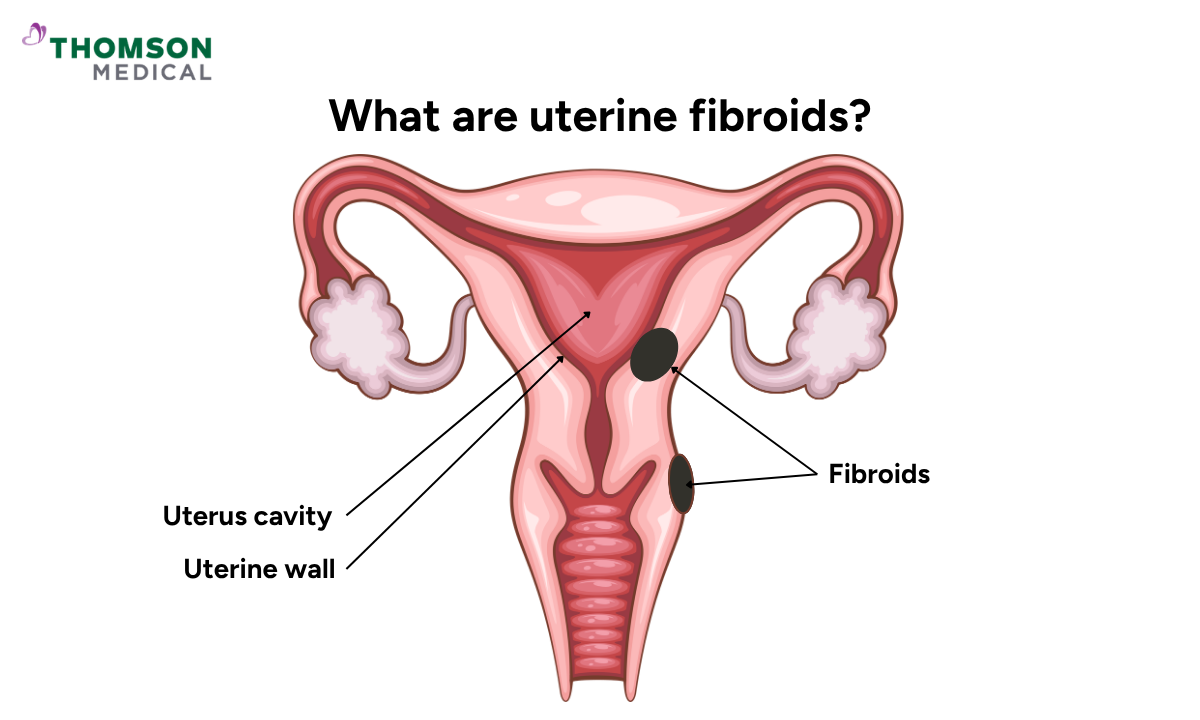
Fibroids are benign (non-cancerous) growths made up of muscle and fibrous tissue that develop in or on your uterus. They are very common, particularly in your 30s and 40s.
They are thought to be influenced by hormones, especially oestrogen and progesterone, as well as genetic factors. If fibroids run in your family, you may be more likely to develop them yourself.
Can fibroids come back after surgery?
Yes, they can, and it is more common than many women realise. Fibroid recurrence is most often seen after a myomectomy, a procedure that removes fibroids while preserving your uterus.
This can be done through different approaches, such as a hysteroscopic myomectomy (through the cervix) or a laparoscopic myomectomy (keyhole surgery through small cuts in the abdomen).
Studies suggest recurrence after myomectomy is not uncommon, though rates vary depending on age, number of fibroids, type of surgery and length of follow-up. Around 15 to 33% of women may develop fibroids again within five years of a myomectomy.
However, every woman's experience is different. Some women do not experience any recurrence, while others may notice new growths over time. This is why regular follow-ups with your doctor remain important, even after a successful surgery.
Our gynaecologists
Loading...
Why fibroids can return after a myomectomy
A myomectomy removes existing fibroids, but it does not change the underlying conditions that allow them to grow.
New fibroids may develop over time for several reasons:
Ongoing hormone activity:
Your body continues to produce oestrogen and progesterone after surgery, which can stimulate new fibroid growth
Genetic factors:
If fibroids run in your family, your body may be more likely to develop them again.
Small fibroids already present:
Very small fibroids may exist at the time of surgery but are too small to detect. These can grow gradually over time.
This is not a reflection of anything you did. It simply reflects how fibroids develop. Recurrence is also more common in younger women, as there are more years of hormonal activity ahead during which new fibroids can form.
If you think your fibroid size may be increasing, even if they are still small, request an appointment with Thomson Medical. Our specialist can assess your fibroid location and size and guide you on suitable next steps for care.
Who is more likely to experience fibroid regrowth?
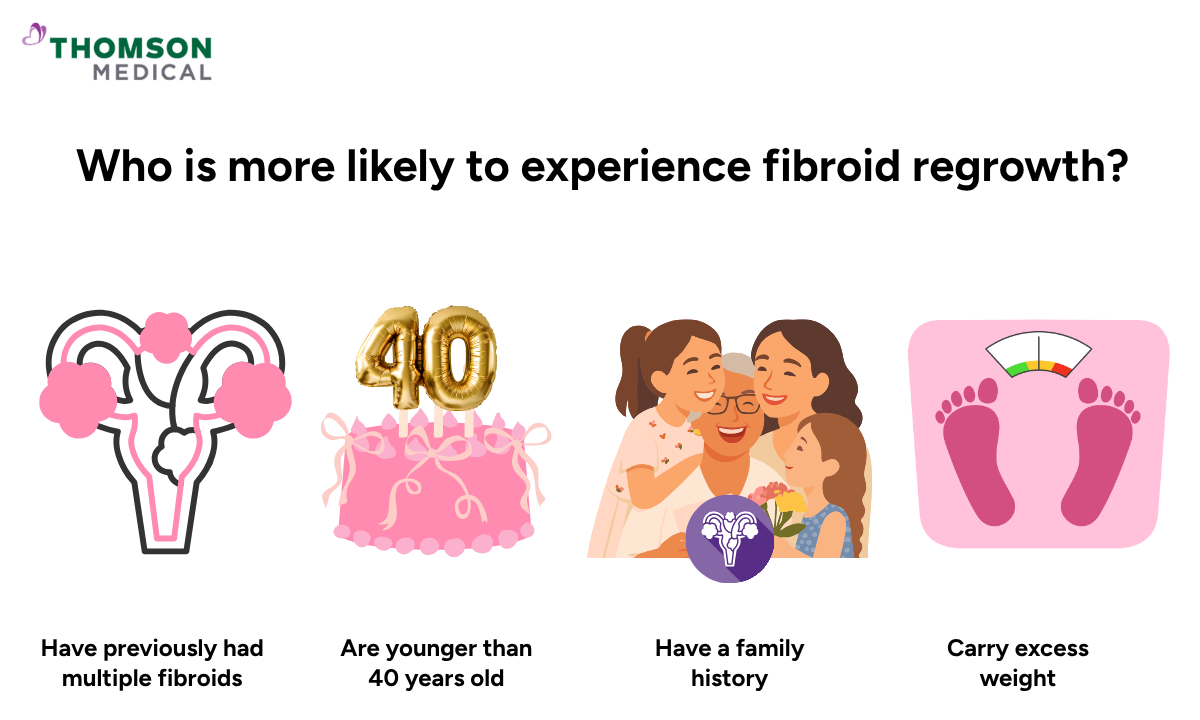
While uterine fibroids can return in any woman who has had a myomectomy, certain factors may increase your personal risk.
You may be at higher risk if you:
Have previously had multiple or large fibroids
Are younger, particularly under the age of 40
Have a family history of uterine fibroids
Carry excess weight, as higher body fat levels can raise oestrogen levels
Even if some of these apply to you, it does not mean fibroids will definitely return. Understanding your risk can simply help guide what follow-up care might look like.
For some women, this may include closer monitoring or discussing fibroid treatment options with their doctor.
How soon could fibroids come back?
Fibroids do not return overnight, so this is not something you need to worry about immediately after surgery.
In most cases, recurrence is often seen within five to ten years after a myomectomy, though this varies from woman to woman. Factors such as age and hormonal activity play an important role in how quickly fibroids may return.
What you can do to support lower recurrence risk
There is no guaranteed way to prevent fibroids from returning, but some lifestyle changes may help support your hormonal balance and reduce the conditions that encourage their growth.
You may find the following helpful:
Maintaining a healthy weight:
Excess body fat can raise oestrogen levels, which may promote fibroid growth.
Eating a balanced diet:
Reducing your intake of red meat, caffeine, and alcohol may be beneficial.
Getting enough vitamin D:
Through safe sun exposure or supplements, as low vitamin D levels have been linked to fibroid growth.
Managing stress:
Ongoing stress can affect hormone balance, so making time to rest and unwind can support your wellbeing.
These steps support overall health, but they cannot guarantee that fibroids will not return. Your doctor can also discuss whether any medical or procedural options are right for you alongside these lifestyle measures.
What are your treatment options if fibroids come back?
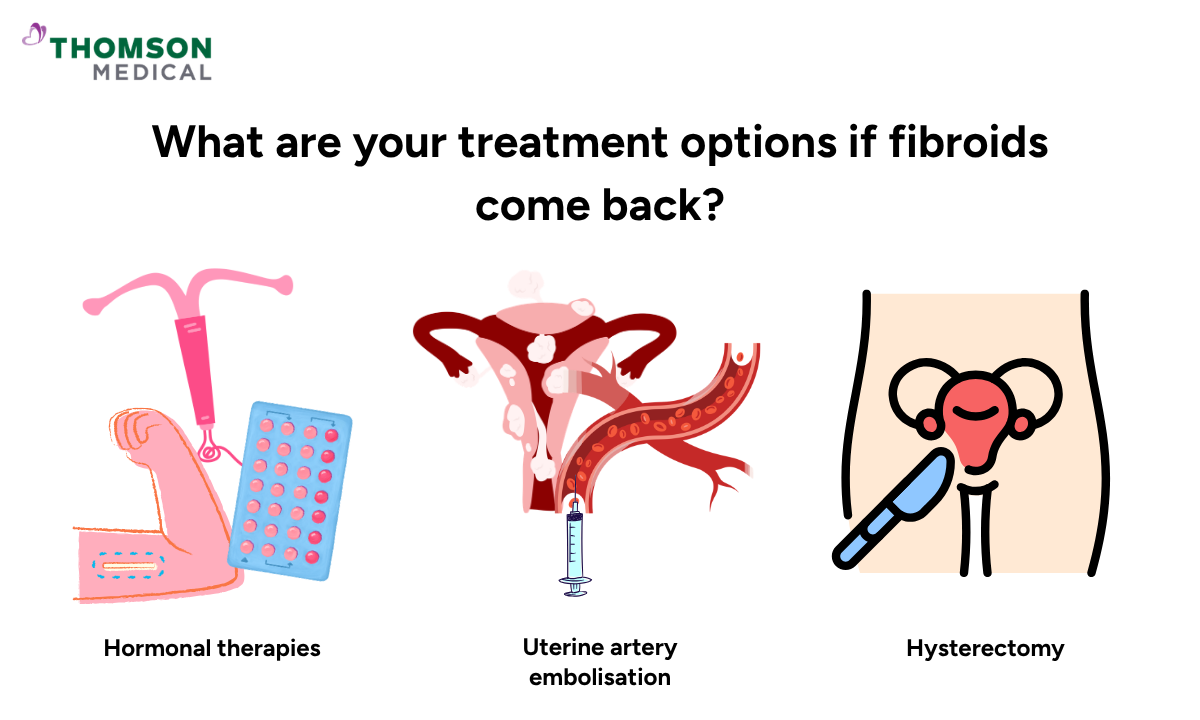
If fibroids return after myomectomy, the options available depend on your fibroid symptoms, the size and location of the new fibroids, and whether preserving fertility or other reproductive goals is important to you.
Hormonal therapies
Hormonal therapies may not be able to remove or permanently shrink fibroids, but they can help regulate oestrogen and progesterone levels, which may slow fibroid growth and ease symptoms.
Depending on what suits you, these may include:
Oral contraceptive pills
Hormonal injections
Uterine artery embolisation
Uterine artery embolisation (UAE) is a minimally invasive procedure that works by blocking the blood supply to fibroids, causing them to shrink. It may also help slow the development of new fibroids over time, making it a useful option for women who want to avoid further surgery.
Hysterectomy
Hysterectomy is the surgical removal of the uterus and is the only option that fully eliminates the possibility of fibroids returning.
This is usually considered when other treatments have not provided enough relief and a future pregnancy is not planned. It may provide lasting relief for women who have had several recurrences and exhausted other options.
If you have experienced repeated recurrences, your conversations with your doctor may shift from treating individual fibroids to addressing the hormonal factors that continue to encourage their growth.
Fibroid recurrence is common, but it does not mean you are back to square one. There are effective options available at every stage, and your doctor can help you find an approach that suits your symptoms, your circumstances, and your plans for the future.
If fibroids have returned after treatment, it is important to seek advice from healthcare providers. Request an appointment with Thomson Medical so our specialists can evaluate your condition, including fibroid location and size, and guide you on suitable next steps for care.
FAQ
How many times can you have a myomectomy?
A myomectomy can be performed more than once, often up to two or three times depending on the development of new fibroids. However, repeat surgeries may be more complex due to the formation of scar tissue (adhesions) in the pelvis from previous procedures.
Is fibroid surgery my only option for removal?
No, fibroid removal surgery is not the only option. Minimally invasive treatments such as uterine artery embolisation (UAE) and radiofrequency ablation are also available. These procedures work by shrinking fibroids rather than surgically removing them.
Can my fibroids grow back?
Yes, fibroids can recur if the uterus is preserved. New fibroids may develop over time depending on hormonal and genetic factors.
Does every recurrence mean treatment is needed?
No. Treatment is not always necessary if fibroids return. If they grow slowly and do not cause symptoms, regular monitoring with ultrasound may be sufficient.
What are the common symptoms of returning fibroids?
Common symptoms may include prolonged or heavy menstrual bleeding, bleeding between periods, pelvic pain, lower back pain, frequent urination, difficulty fully emptying the bladder, and constipation.
How effective are medications in preventing new fibroids?
Medications are generally more effective for symptom control than prevention.
GnRH agonists (a group of medications that lower hormone levels), such as leuprolide, can temporarily shrink fibroids by suppressing oestrogen, usually for six to 12 months. However, prolonged use is limited due to risks such as menopausal symptoms and bone loss.
Hormonal contraceptives (such as pills, injections, implants, or IUDs) do not shrink fibroids but can help manage symptoms like heavy bleeding.
Is UAE an alternative to fibroid surgery?
Uterine artery embolisation (UAE) is a minimally invasive option that avoids surgery. It uses imaging guidance to insert a catheter into the uterine arteries and deliver small particles that block blood flow to fibroids. Over time, the fibroids shrink and symptoms improve, while preserving the uterus and avoiding surgical incisions or general anaesthesia.
The information provided is intended for general guidance only and should not be considered medical advice. For personalised recommendations and tailored advice based on your unique situations, please consult a specialist at Thomson Medical. Request an appointment with Thomson Medical today.
Reference:
Kramer, K. J., Ottum, S., Gonullu, D., Bell, C., Ozbeki, H., Berman, J. M., & Recanati, M. (2021). Reoperation rates for recurrence of fibroids after abdominal myomectomy in women with large uterus. PLoS ONE, 16(12), e0261085. https://doi.org/10.1371/journal.pone.0261085
For more information, contact us:
Thomson Specialists (Women's Health)
Thomson Women's Clinic (TWC)
- Novena:
6592 6686 (Call), 8611 8986 (WA) - Bukit Batok:
6569 0668 (Call), 8686 3525 (WA) - Choa Chu Kang:
6893 1227 (Call), 8282 1796 (WA) Jurong:
6262 8588 (Call), 6262 8588 (WA)- Katong (female doctor):
6970 2272 (Call), 8611 9020 (WA) - Punggol:
6243 6843 (Call), 8811 0328 (WA) - Sembawang: 6753 5228
- Sengkang: 6388 8125
- Serangoon (female doctor): 6382 3313
- Tampines: 6857 6266
- Tiong Bahru: 6276 1525