

Starting cervical cancer treatment is a big step, but it can also raise many questions about how your body and everyday life may change. It's natural to feel concerned about how your treatment could affect your daily life, work, or even close relationships.
Learning what side effects you might experience and the ways they can be eased can help you feel more reassured and better supported as you move through this stage of care.
Common side effects of cervical cancer treatment
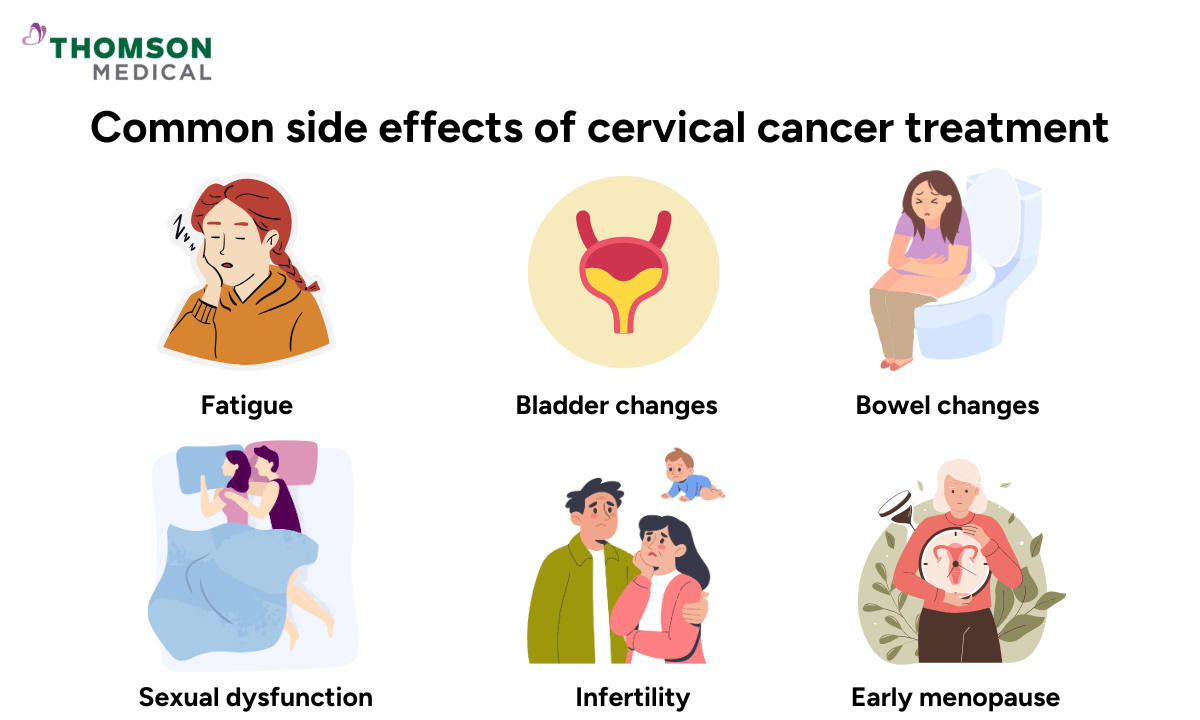
Treating cervical cancer usually means surgery, radiation therapy, chemotherapy, or some mix of these approaches. As everyone's circumstances are different, how your body responds will depend on which treatment you get and how you personally react to it.
So what does treatment actually feel like? Let’s walk through it.
Chemotherapy
Chemotherapy works by killing cancer cells, but the tricky part is that it can't always tell the difference between cancer cells and healthy ones. That's where side effects come in. Some women sail through it with just minor issues, while others have a rougher time.
Common side effects may include:
Digestive changes:
Nausea, vomiting, diarrhoea, constipation, and loss of appetite may occur.
Fatigue:
Feeling more tired than usual or lacking energy
Hair loss:
Thinning or loss of hair on your head and body
Mouth sores:
Sores or pain in your mouth
Blood-related issues:
Easier bruising, bleeding, or increased risk of infection due to lower blood cell counts
Menstrual changes:
Periods may become irregular or stop temporarily if your uterus was not surgically removed.
Infertility:
Chemotherapy can affect ovaries and fertility, although options may be discussed in some situations
There's really no way to predict exactly how your body will handle it. But your doctor will keep a close eye on you throughout the process, and they've got ways to help with whatever side effects come up.
Radiation therapy
Radiation therapy may be given as external beam radiation therapy (EBRT) or brachytherapy (internal radiation). Side effects often occur in nearby tissues, as radiation targets your pelvic area.
Common effects of radiation therapy include:
Fatigue:
This feeling may build up gradually during treatment.
Skin changes:
Redness, dryness, itchiness, or soreness in the treatment area, similar to sunburn
After the whole course of treatment, this area may become darker, more sensitive to the sun, or have permanent redness or hair loss.
Vaginal discomfort:
Increased sensitivity, soreness, or changes in discharge during treatment
Vaginal dryness, narrowing (vaginal stenosis) or scarring can occur after treatment, which may cause pain during sex (dyspareunia).
Gastrointestinal issues:
Nausea, vomiting, and diarrhoea are common due to irritation of the small intestine.
Bladder irritation:
You may need to urinate more often, feel a stinging sensation, or have bladder discomfort.
Early menopause:
Radiotherapy can trigger menopause symptoms such as hot flushes, mood changes, or reduced libido
Infertility:
Radiation can damage the ovaries and uterus, making it impossible to become pregnant.
It’s natural to feel anxious about these side effects, as this all sounds overwhelming. The good news is that most of these side effects can be managed and your oncology team knows how to help. For a lot of women, things start getting better once treatment wraps up.
Surgical treatment
Surgery is one of the main treatments for cervical cancer, especially when the tumour is in the cervix only. Depending on your situation, this could mean removing most of the cervix (called a radical trachelectomy) or even removing the womb entirely (a radical hysterectomy).
Here are some possible risks of cervical cancer surgery:
Infection:
Infection can occur in the wound or abdominal area.
Bleeding:
You may experience bleeding during or after surgery.
Blood clots:
This risk is as with any major operation.
Injury to nearby organs:
During surgery, there is a small risk of injury to nearby organs such as the bladder or bowel.
Infertility:
If the uterus needs to be removed as part of treatment, it may affect your ability to carry a pregnancy in the future.
Early menopause:
If the ovaries are removed during surgery, menopause may occur earlier than expected.
Sexual dysfunction:
Surgery can sometimes impact sexual function, though it's unlikely to affect your ability to feel pleasure or orgasm.
Your surgical team will walk you through everything beforehand, including what to expect, what the risks are, and what recovery looks like. And they'll be with you every step of the way as you heal.
How long do side effects of cervical cancer treatment usually last?
The good news is that many side effects are temporary and often improve within weeks to months after treatment, especially with the right support.
Some effects may last longer or, in a few cases, become permanent. This varies from person to person and depends on the type and intensity of treatment.
It’s important to share any ongoing symptoms with your doctor, as support and treatment options are often available even long after cancer treatment has finished.
Experiencing discomfort during cervical cancer treatment? Request an appointment with Thomson Medical for supportive care and guidance to help make your treatment journey more comfortable.
Our cervical cancer specialist
Loading...
How to manage side effects during treatment

Cervical cancer treatment can affect your body in ways that are both physical and deeply personal. Some changes may feel awkward, embarrassing, or difficult to talk about, but they are far more common than you might think. And every one of them deserves care, understanding, and support.
You may not be able to prevent all side effects completely, but you are not powerless. There are a few simple steps that can help you manage what you're going through and make everyday life a bit easier.
Fatigue
Feeling constantly tired can be frustrating, especially when you want to get back to feeling like yourself. This kind of fatigue isn’t laziness or weakness. It’s your body recovering from treatment.
Try to pace yourself through the day, resting when you need to and keeping your goals small and realistic. Gentle activities such as short walks, nourishing meals, and allowing family or friends to help can make a meaningful difference over time.
Bladder changes
Bladder issues are something nobody wants to admit. Maybe you suddenly need to pee all the time, or it burns when you use the toilet, or you're leaking a bit when you cough or laugh. It may feel mortifying and difficult to talk about.
This is common after cervical cancer treatment. Your doctors and nurse have had this conversation a hundred times. It's not weird to them, and you're not the first person to bring it up.
Let your doctor know if you're having these issues so they can give you advice or prescribe something for the discomfort. You can also use continence pads if you're dealing with leakage or ask to see a continence nurse or physiotherapist who can work out a plan with you.
It’s also helpful to drink lots of water and other fluids but skip any drinks like coffee and alcohol that might irritate your bladder. Pelvic floor exercises can help improve bladder control and reduce leakage. These are simple movements that strengthen the muscles that support your bladder, uterus, and bowel.
Bowel changes
Diarrhoea and constipation, sometimes both in the same week, are as uncomfortable, unpredictable, and embarrassing as the bladder stuff. But it's part of how your body reacts to what it's going through. There are things that can help you; you don't just have to white-knuckle your way through it.
If you have diarrhoea during cervical cancer treatment, stay away from fatty or spicy foods. If you're constipated, add more fibre to your meals.
Sipping peppermint or chamomile tea, doing some gentle exercise, and taking any medications your doctor prescribes or recommends are also helpful.
If bowel problems stick around, tell your doctor so they can help you figure out what's going on.
Changes in your sex life
Intimacy after treatment is one of those things that's really hard to bring up, even with your doctor. You might feel awkward about your body or wonder if your partner will still find you attractive. A lot of women going through this feel the same way.
For the physical stuff, like dryness or pain during sex, there are solutions, such as lubricants, vaginal dilators, and sometimes hormone treatments. Your doctor can help you figure out what works.
But the emotional side matters just as much. Being honest with your partner about what you're feeling, what hurts, and what doesn't, as that's huge. And if you need extra support, a sexual health specialist can really help you navigate this. You don't have to figure it all out on your own.
It is reassuring to know that vaginal dryness and discomfort during sexual intercourse usually get better with time.
Fertility concerns
Worrying about whether you'll still be able to have children isn't just a medical question. It's an important issue for your future, your dreams, and your family.
If having a baby is important to you, you may wish to speak with a fertility specialist before starting treatment. They can walk you through available options like freezing your eggs or embryos.
In case you've already had treatment, it’s best to talk to your doctor about the possibilities of fertility after cancer treatment. Open communication with your partner and healthcare team can help work out a plan together that takes care of both the medical side and how you're feeling emotionally.
Menopause symptoms
When treatment pushes you into menopause, it doesn't ease you in gently. One day you're fine, and suddenly you're dealing with hot flashes that come out of nowhere, nights where you can't sleep, mood swings you didn't see coming, and vaginal dryness. It's a lot to handle all at once.
To manage menopause from cervical cancer treatment, you'll likely need a mix of medical help and lifestyle adjustments. Your doctor might recommend medications or hormone therapy, while on your end, regular exercise, eating plenty of fibre, and drinking enough water can all make a difference.
Don't overlook the emotional side either. Counselling or joining a support group can really help. Relaxation practices like deep breathing, meditation, or yoga can ease some of the stress that comes with these changes.
Long-term care and follow-ups

After cervical cancer treatment, regular follow-up visits are an important part of care. These visits help monitor recovery, manage long-term side effects, and check for any sign of recurrence.
Beyond physical health, these appointments are also a space to talk about your emotional wellbeing, relationships, and quality of life. Attending these appointments and sharing any concerns or discomfort can help your doctor support you more effectively.
Follow-up is usually more frequent at first and gradually becomes less often over time:
Every 3–4 months for the first 2 years
Every 6–12 months for years 3–5
Annually after 5 years if there is no recurrence
Cervical cancer treatment can be challenging, but many women find ways to stay comfortable, connected, and resilient throughout treatment and beyond.
If you would like guidance on follow-up care or have concerns during recovery, request an appointment with Thomson Medical. Our O&G oncology team can support you through each stage of healing.
FAQ
How long does it take to recover from cervical cancer surgery?
Recovery depends on the type of cervical cancer surgery. Some procedures, like a conisation, take a few days to a week, while more extensive surgeries, like a hysterectomy, can require 4 to 6 weeks for full recovery.
How long do I stay in hospital after cervical cancer surgery?
For minimally invasive procedures, such as laparoscopic or robotic surgery, most women stay in hospital for 1–2 days. More extensive open abdominal surgery usually requires a longer stay of around 3–5 days.
Which days are the toughest after chemotherapy?
The first 2–3 days after chemotherapy are often the most challenging, as fatigue and nausea may peak during this time. However, the exact timing and severity of side effects depend on the specific drugs used.
How can I recover as quickly as possible from chemotherapy?
Recovery is best supported by adequate rest, good nutrition, staying hydrated, and gentle activity when possible. Always follow your doctor’s advice, as they can tailor recommendations for your specific treatment and needs.
What should I avoid after radiotherapy?
After radiotherapy, it’s best to avoid:
Sun exposure to the treated area
Harsh skin irritants, like scented soaps and tight clothing
Extreme heat or cold, such as hot tubs, heating pads, or ice packs
Sticky substances, like tape, on the irradiated skin
Shaving the treated area
Perfumes or lotions that your doctor hasn't recommended
Is it safe for my family to stay near me after radiotherapy?
It is generally safe for your family to stay near you after external beam radiotherapy. This type of treatment uses a machine outside your body, and once the machine is off, the radiation is gone; you are not radioactive. However, if you had internal radiation (brachytherapy) or systemic radiation (like radioactive iodine), you may need to take specific precautions for a short time.
The information provided is intended for general guidance only and should not be considered medical advice. For personalised recommendations and advice based on your unique situation, please consult a specialist at Thomson Medical. Request an appointment with Thomson Medical today.
For more information, contact us:
Thomson Specialists (Women's Health)
Thomson Women's Clinic (TWC)
- Novena:
6592 6686 (Call), 8611 8986 (WA) - Bukit Batok:
6569 0668 (Call), 8686 3525 (WA) - Choa Chu Kang:
6893 1227 (Call), 8282 1796 (WA) Jurong:
6262 8588 (Call), 6262 8588 (WA)- Katong (female doctor):
6970 2272 (Call), 8611 9020 (WA) - Punggol:
6243 6843 (Call), 8811 0328 (WA) - Sembawang: 6753 5228
- Sengkang: 6388 8125
- Serangoon (female doctor): 6382 3313
- Tampines: 6857 6266
- Tiong Bahru: 6276 1525