

When your arm tingles, your fingers feel weak, or when a dull ache runs down your shoulder, it's natural to assume that the problem may lie on the surface. Often, though, the source sits higher up, in the cervical spine, where nerves branch out from the neck to the arms and hands.
Your doctor may recommend a cervical spine MRI even when your neck itself doesn't hurt. Here's what the scan looks at, what it can reveal, and how to prepare for your appointment.
What is a cervical spine MRI scan?
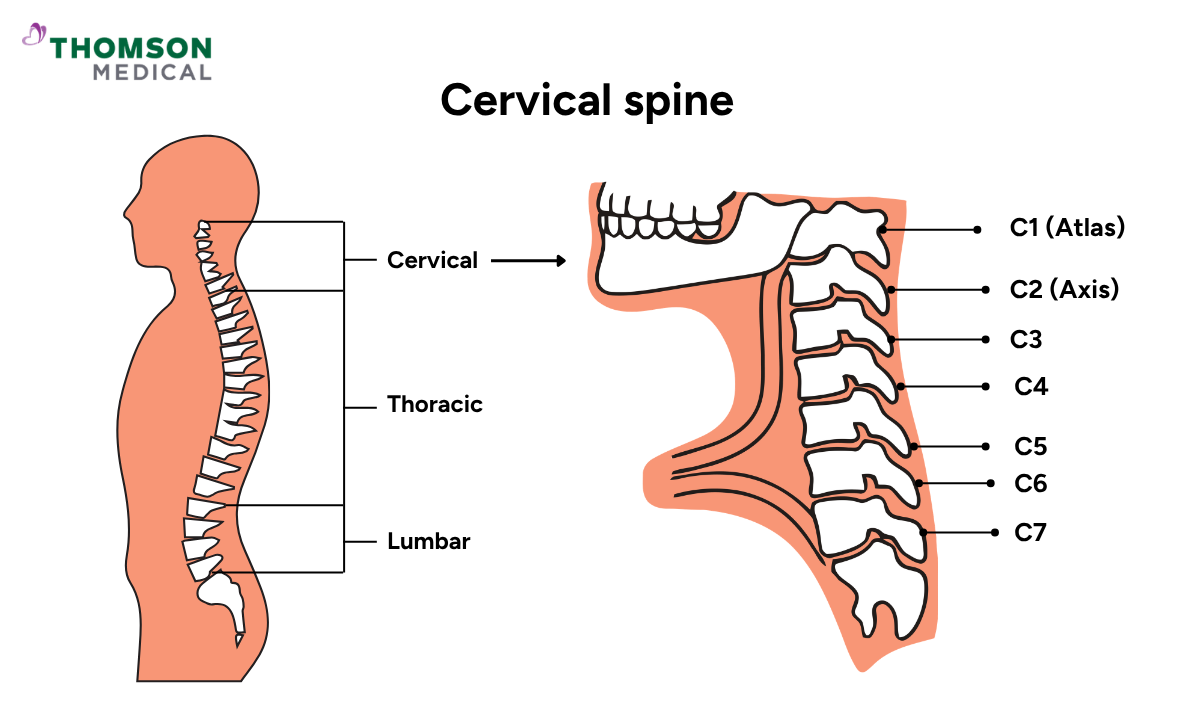
A cervical spine MRI scan is an imaging test that takes detailed pictures of your neck and the upper part of your spine.
MRI itself stands for “Magnetic Resonance Imaging." It works by using magnetic fields and radio waves to produce clear images of your bones, discs, nerves, and surrounding soft tissues.
Because it does not involve radiation, an MRI scan is generally considered safe and can be repeated if needed. It also shows soft tissue detail that X-rays cannot capture as clearly.
Why might you need a cervical spine MRI?
If you have been experiencing discomfort in your neck, arms, or hands, a cervical spine MRI can help your doctor understand whether these are linked to the nerves or structures in your cervical spine.
You may be referred for a cervical spine MRI if you are experiencing:
A recent neck injury
Symptoms that may suggest a disc problem or nerve compression
Neck or shoulder pain that does not settle with rest or simple treatment
Weakness in your arms or hands
Headaches that seem to originate from the back of your neck
Dizziness, balance problems, or walking difficulties, especially if they occur with weakness, numbness, or other neurological symptoms
By looking in detail at your cervical spine, this scan can help your doctor better understand your symptoms and what to do next.
What can a cervical spine MRI detect?
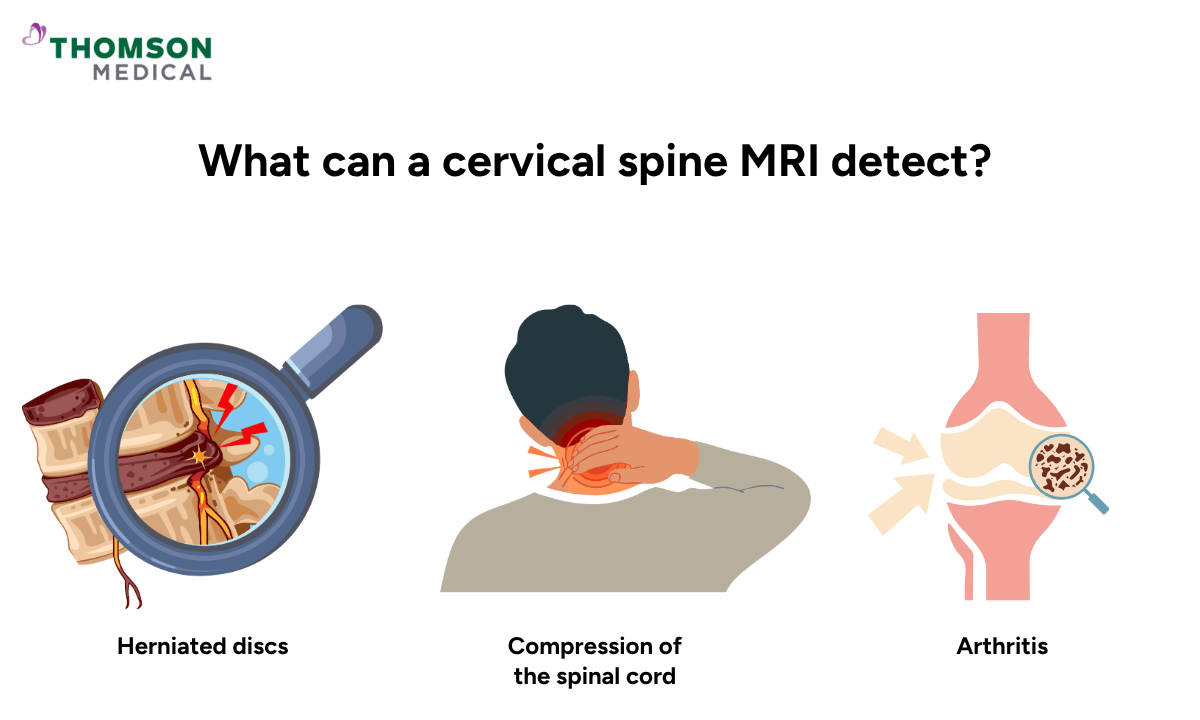
An MRI scan is able to highlight structures that other scans may miss. It can reveal changes in the bones of your spine and the surrounding soft tissues.
A cervical spine MRI may help identify:
Herniated or bulging discs, where the soft cushion between the bones of your spine slips out of place and may press on nearby nerves
Compression of the spinal cord, which may cause pain, tingling, or weakness
Spinal stenosis, a narrowing of the spinal canal that puts pressure on the nerves
Age-related wear and tear in your neck joints and discs
Tumours or cysts near the spine
Infections or inflammation affecting the soft tissues of your spine
Degenerative changes such as cervical spondylosis or facet joint arthritis
How is a cervical spine MRI performed?
The scan itself is straightforward and painless. Knowing what to expect beforehand can help you feel more at ease on the day.
During your scan, you can expect the following:
You will lie down on a padded table that slides slowly into the MRI machine.
A small frame called a coil may be placed gently around your neck to help capture sharper images.
You will need to stay as still as possible during the scan so the images come out clearly.
The machine will make loud knocking and buzzing noises, and this is completely normal. You will be given earplugs or headphones to make it more comfortable.
You can speak with the radiographer at any time through an intercom built into the machine.
The scan usually takes between 30 and 60 minutes, depending on what needs to be assessed.
In some cases, a contrast dye (a liquid that helps highlight specific structures) may be injected into a vein before or during the scan. This helps certain areas, such as inflammation or tumours, show up more clearly on the images. Your doctor or radiographer will let you know in advance if this is needed for your scan.
Knowing what happens during a cervical spine MRI can help you feel more prepared and at ease. Request an appointment with Thomson Medical for guidance on the procedure and what it can assess.
Our cervical spine surgeon
Loading...
How to prepare for your scan
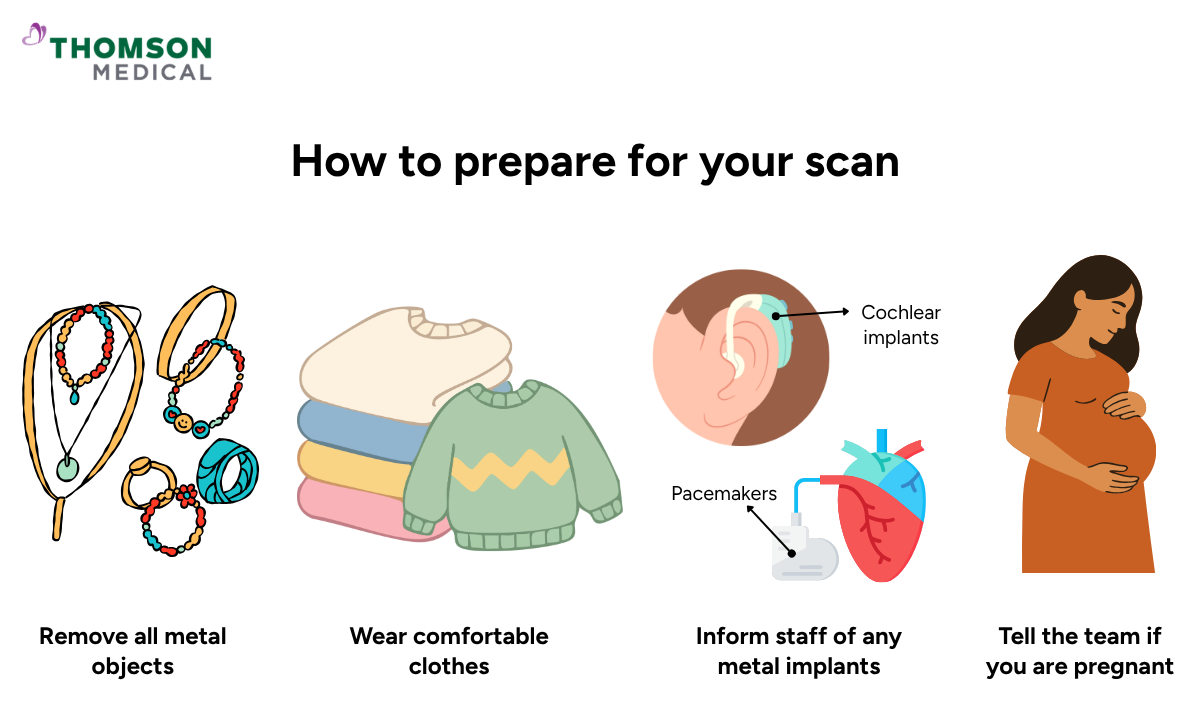
Preparing for a cervical spine MRI is rather straightforward. There is usually no need for fasting before your appointment.
To help your scan go smoothly, it is worth keeping the following in mind:
Remove all metal objects before entering the scanning room, including jewellery, watches, and hearing aids
Wear comfortable, loose clothing without metal zips or clasps, or be prepared to change into a hospital gown
Let your care team know about any metal implants, such as pacemakers, cochlear implants, or joint replacements
Inform your team if you are pregnant
The radiographer will ask about these things before the scan, so you do not need to remember everything. Being open about any concerns helps the team look after you on the day.
What are the risks and side effects of a cervical spine MRI?
A cervical spine MRI scan is considered a low‑risk procedure for most people, but it is still important to understand the possible side effects and limitations.
Discomfort during the scan
The most common experience is mild discomfort from lying still for an extended period, particularly if you have existing neck pain. The machine also produces loud knocking sounds throughout the scan. You will be given earplugs or headphones to make this more manageable.
Anxiety or claustrophobia
Some people feel anxious or claustrophobic inside the MRI machine. This is a rather common occurrence that many go through. If you think this may affect you, do share with the team during booking in order to cater for the necessary preparations.
Contrast dye reactions
In some cases, a contrast dye is injected into a vein. Some people notice mild nausea or a brief metallic taste after the injection, both of which pass quickly.
Serious allergic reactions are uncommon, but your care team will ask about any known allergies beforehand. Your care team may also ask about kidney disease, as this can affect whether contrast is suitable.
Metal implants
Certain implants are incompatible with MRI. The magnetic field can interfere with how these devices function. You will always be screened for implants before the scan proceeds.
Pregnancy
MRI does not use ionising radiation and may be used during pregnancy. However, non-urgent MRI scans are generally avoided in the first trimester unless your doctor considers it clinically necessary. If contrast dye is needed, your doctor will advise whether it is medically appropriate in your case.
How much does a cervical spine MRI cost in Singapore?
The cost of a cervical spine MRI in Singapore varies depending on where you have the scan done.
At subsidised rates in public hospitals, a cervical spine MRI ranges from SGD 400 to SGD 1,000. While cervical spine MRI in private hospitals can cost from around SGD 900 up to over SGD 2,500, depending on scan complexity and other factors, such as:
Whether contrast dye is required
The facility you choose (public or private)
Your eligibility for subsidies or insurance coverage
Whether a specialist consultation is included
Singapore citizens and permanent residents may use MediSave to help cover the cost if eligible. Always verify current pricing and coverage directly with the hospital or imaging centre.
What happens after the scan?
Once your scan is complete, you can leave immediately. No recovery time is needed.
After your scan, the process is straightforward:
If contrast dye was used, the team may ask you to wait briefly and drink some water before you leave.
A radiologist will review your images and prepare a written report for your referring doctor.
Your results will be discussed at a follow-up appointment.
If the scan shows no significant concerns, your doctor will let you know and advise whether any follow-up is needed. If something is found, your doctor will discuss the next steps for you.
Waiting for scan results can feel uncertain. Request an appointment with Thomson Medical to go through your report with a specialist and understand what it means for your health.
FAQ
Is an MRI better than a CT scan for neck problems?
It depends on what your doctor is looking for. An MRI is generally preferred for assessing soft tissues, nerves, and discs. However, a CT scan may be more appropriate when bone detail or speed is the priority, for example, following an injury.
Is a cervical MRI safe during pregnancy?
MRI does not use radiation, which makes it a preferred imaging option during pregnancy when needed. It is usually avoided in the first trimester unless your doctor feels it is clinically necessary. Contrast dye is also usually avoided unless there is a clear medical reason for its use.
Can I move during a cervical spine MRI?
It is best to keep as still as you can during the scan, as movement can affect image clarity.
Is contrast dye always needed for a cervical MRI?
No, contrast dye is not always required. It is only used when it helps to provide clearer images or to highlight specific tissues or abnormalities.
Can you keep your eyes closed during an MRI?
Yes. Keeping your eyes closed during the scan is perfectly fine. Many people find this helps them relax and stay calm, particularly if they feel uncomfortable in enclosed spaces.
The information provided is intended for general guidance only and should not be considered medical advice. For personalised recommendations and tailored advice based on your unique conditions, request a consultation with Thomson Medical.
For more information, contact us:
Thomson Medical Concierge
- 8.30am - 5.30pm
- WhatsApp: 9147 2051
Need help finding the right specialist or booking for a group?
Our Medical Concierge is here to help you. Simply fill in our form, and we'll check and connect you with the right specialist promptly.
Notice:
The range of services may vary between Thomson clinic locations. Please contact your preferred branch directly to enquire about the current availability.
Get In Touch