

In Traditional Chinese Medicine (TCM), good health starts with good digestion. When your digestive system is weak, it affects everything from your energy levels to your sleep quality and even your skin.
The solution for this might be simpler than you think. TCM has long used warming herbs to support digestive health, and many of these powerful remedies are herbs you use every day in cooking. From black pepper to fresh ginger, these simple ingredients can help fire up your digestion, reduce bloating, and restore balance to your system.
How TCM views your digestion
In TCM, a happy digestion means a happy Spleen. While eating good wholesome food is important, having good digestion is even more important.
You may be eating healthy, but without a good digestive system, the rest of your health may be affected, too.
Some signs of indigestion include bloating, belching, a foul taste in your mouth, poor sleep, lack of energy, skin issues, bowel movement problems, or even menstrual issues.
Imagine a pot resting over a fire. The pot represents your Spleen, and the fire is the warmth from your Kidney Yang. This is how TCM views the digestive system.
For healthy digestion and metabolism, you need to keep this digestive fire strong so that food can be broken down and transformed into energy and blood to invigorate your organ functions.
5 Warming Chinese herbs for digestion
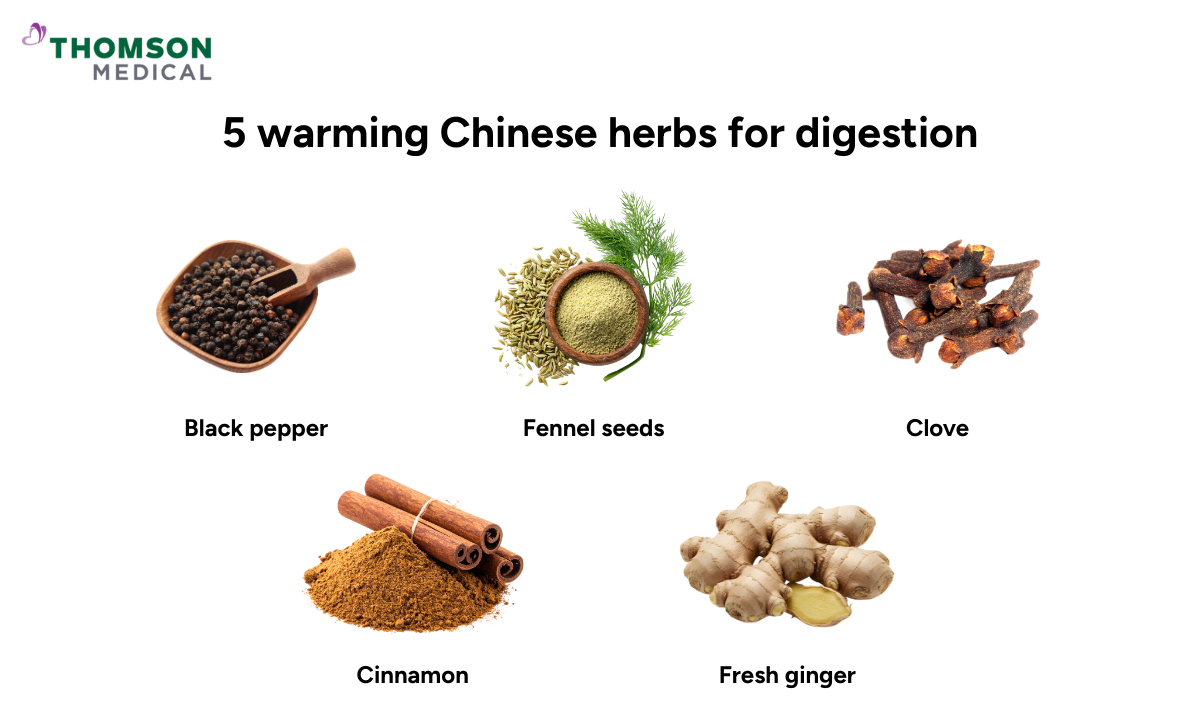
Here are some TCM herbs that you might already have in your pantry. They may not be as “fancy” as the lion’s mane mushroom, ashwagandha, or reishi mushrooms, but these unsung heroes in your kitchen can do wonders for your digestive system.
The herbs that are good for digestion are usually warming. They can be spicy, hot, and aromatic in flavour. They warm your digestive system, stimulate digestion, and tonify your Qi (your vital life energy). Each herb also has unique functions that support different aspects of your health.
Black pepper (Hu jiao - 胡椒)
This common spice warms your body and expels cold. It’s especially helpful for relieving stomach colds with vomiting, diarrhoea, and abdominal pain.
Fennel seeds (Xiao hui xiang - 小茴香)
Fennel seeds warm your Liver, which helps relieve side rib pain, menstrual pain, and hernia. They also warm your Kidneys and ease lower back pain.
Clove (Ding xiang - 丁香)
Clove is a warming spice that’s especially good for your stomach. It relieves symptoms such as vomiting, hiccups, abdominal pain, and diarrhoea.
Beyond digestion, clove also warms your Kidneys and assists Yang energy. It supports a weak back and knees, as well as excessive clear vaginal discharge from a cold in the womb.
Cinnamon (Rou gui - 肉桂)
Cinnamon is one of the most powerful warming herbs in TCM. It warms your Kidney’s Ming-Men fire (or “Life gate fire”), making it helpful if you have an aversion to cold, cold limbs, a weak back, impotence, or frequent urination.
Cinnamon also warms and unblocks your meridians, relieving menstrual pain and body aches. In TCM, it’s known for “leading the fire back to its source (引火归元)”, which is especially good for conditions where you experience heat in your upper body and cold in your lower body.
Fresh ginger (Sheng jiang - 生姜)
Ginger is helpful for firing up your digestive system and treating nausea in particular. It warms up your body to induce sweating, which expels cold, and it also helps relieve aches and pains. If you need something stronger, dried ginger has a more intense effect.
To discover which herbs are most suitable for your digestive concerns and learn how to use them safely, schedule an appointment with Thomson Chinese Medicine for personalised guidance.
Our TCM physicians
Loading...
Who should use these herbs?
These warming herbs are ideal if you’re always feeling a little cold, sluggish, or lethargic. They’re also helpful if you’re inclined to have excess phlegm and easily get bloating or indigestion.
However, it is better to limit these herbs if you have heaty symptoms such as:
Feeling hot and thirsty
Having a flushed red face
Getting mouth ulcers easily
Producing thick yellow phlegm
Having a yellow tongue coating
Instead, you might benefit more from some cooling herbs such as peppermint, chrysanthemum, elderflower, and radish.
TCM lifestyle tips for better digestion

Together with herbs, TCM offers valuable lifestyle practices that support your digestive health:
Eat mindfully and slowly:
Your Spleen works best when you're relaxed, so take time to chew your food thoroughly.
Choose warm over cold:
In TCM, cold foods and drinks weaken your digestive fire. Try to eat cooked, warm meals, especially if you already have a weak digestive system. Warm water is also preferable to iced drinks.
Respect your body's clock:
Try to eat your largest meal at midday when your Spleen is most active, and keep dinner lighter. Avoid eating late at night when your digestive fire naturally dims.
Don't overeat:
In TCM, it’s best to stop eating when you're about 70-80% full. Eating too much can overwhelm your digestive system and leave you feeling bloated.
Stay active after meals:
A gentle 10-15 minute walk after eating helps your Qi circulate and supports digestion. Avoid lying down immediately after meals, as this can create stagnation.
Manage your stress:
Worry and overthinking directly affect your Spleen in TCM. Find ways to manage stress through gentle exercise, meditation, or activities that bring you joy.
These simple habits, combined with warming herbs, can create a strong foundation for your digestive wellness.
If you're struggling with persistent digestive issues, schedule an appointment with Thomson Chinese Medicine. Our specialists will create a personalised treatment plan based on your unique constitution and needs.
FAQ
What are signs of poor digestion?
Common signs of poor digestion include bloating, belching, excessive gas, a foul taste in your mouth, feeling unusually tired after eating, irregular bowel movements, poor sleep quality, low energy throughout the day, skin problems, and for women, menstrual problems. If you experience several of these symptoms regularly, your digestive system may need support.
What to avoid when taking Chinese herbs?
It’s best to avoid consuming these warming herbs if you have heaty symptoms such as feeling constantly hot, having a flushed face, experiencing mouth ulcers, or producing yellow phlegm.
When taking the herbs, don’t combine them with cold or raw foods, as this counteracts their warming effect. If you're taking medications, consult your TCM physician first about potential interactions.
Are these herbs safe for children?
Yes, these herbs are generally safe for children, but in smaller amounts. For children over 3 years old, you can use about one-quarter to one-third of an adult dose.
Fresh ginger tea and cinnamon are usually the gentlest options for your little ones. However, it's best to seek professional advice before giving herbs to your child regularly.
Can pregnant women use these herbs?
Pregnancy requires extra caution with herbs. While fresh ginger is often recommended for morning sickness in early pregnancy, stronger warming herbs like cinnamon, clove, and large amounts of black pepper should be avoided, as they can be too stimulating.
If you are pregnant, always consult your TCM physician before using any herbs.
Can you use these herbs on a daily basis?
If you have a cold constitution and weak digestion, using these herbs daily in cooking amounts is safe and beneficial.
However, if you're planning to use them in larger doses, such as strong herbal teas or supplements, it's important to discuss with your TCM physician first. They can recommend the suitable dosages and duration for your specific condition.
How long will it take to see results?
This varies depending on your condition. For symptoms like bloating or nausea, you might feel relief within 20-30 minutes of consuming ginger or fennel tea. For chronic digestive issues, you may need to use these herbs consistently for 2-4 weeks before noticing improvement.
Remember that herbs work best when they are combined with proper eating habits and lifestyle changes.
The information provided is intended for general guidance only and should not be considered medical advice. For personalised recommendations and advice based on your unique situation, schedule an appointment with Thomson Chinese Medicine today.
Physician Jun Negoro
Traditional Chinese Medicine
Thomson Chinese Medicine (TCM Paragon Medical Centre) and 1 other
English, Mandarin
Alliance MediNet
