

Living with chronic pain takes a toll on both your body and your emotions. You may have moments of frustration, doubt, or fatigue. Those feelings are understandable.
Chronic pain is complicated, but you can manage it. Many people find real relief when they combine medical care with the right support and coping methods. Let's look at what chronic pain actually is and what might help you start feeling better.
What is chronic pain?
When pain sticks around for more than three months, doctors call it chronic pain. While acute pain warns you something's wrong and then goes away as you heal, chronic pain doesn't follow that pattern.
Sometimes, even when your original injury has healed completely, the pain remains. At other times, something is still happening in your body, but the pain you feel doesn't always match what tests or scans show.
Common types of chronic pain

Chronic pain is different for everyone. You might describe yours as aching, burning, stabbing, tight, or deep and hard to pinpoint. It may even change from day to day, which can make it feel unpredictable and harder to explain to others.
Some common types of chronic pain include:
Musculoskeletal pain:
This type covers chronic back pain, neck pain, shoulder pain, or osteoarthritis-related joint pain.
It often gets worse with certain movements and may fluctuate from day to day.
Neuropathic pain:
Neuropathic pain comes from irritated or damaged nerves, such as post-surgical or diabetic nerve pain (diabetic neuropathy).
You may describe it as burning, tingling, shooting, or electric-like.
Chronic headaches and migraines:
Headaches or migraines are considered chronic when you have them on at least 15 days each month for at least three months.
Stress, poor sleep, hormonal shifts, and a sensitive nervous system can all trigger them.
Visceral pain (internal organs):
This includes chronic belly or pelvic pain.
It might feel deep, achy, or crampy, and scans often don't show what's causing it.
Cancer pain:
If you’re living with or recovering from cancer, you may experience ongoing pain.
This can happen because of the cancer itself, especially if it affects surrounding tissues, or as a side effect of treatments like chemotherapy, radiation therapy, or surgery.
No matter what type of pain you have, it often affects more than just the area that hurts. It can disrupt your sleep, drain your energy, and make everyday tasks feel more challenging. Over time, it may also affect your mood and ability to concentrate, especially if it has been going on for several months.
Symptoms of chronic pain
For many people, chronic pain becomes a constant companion that slowly drains your energy, affects your mood, and changes your daily routine.
Common symptoms of chronic pain include:
Aching, burning, throbbing, or sharp discomfort that won't go away after three months
Pain that gets worse with certain movements or when you're stressed
Being more sensitive to touch or pressure
Stiffness or not being able to move as freely
Feeling exhausted, especially when pain keeps you up at night
Trouble focusing or feeling mentally foggy
Mood changes like frustration, irritability, or just not feeling motivated
You might also notice the pain doesn't follow a pattern. Some days feel manageable, while others feel overwhelming for no clear reason. That unpredictability can be as hard to deal with as the pain itself.
When to see a pain management specialist
Pain management specialists often work with a team that includes doctors, physical therapists, and mental health professionals. This team approach can work better than trying just one thing.
You should consider seeing a pain management specialist if your pain has lasted for more than three months and has not improved with basic treatment.
You should also consider seeking specialist care if:
Your current medications are not providing enough relief
Pain is interfering with your work, sleep or daily activities
You are experiencing side effects from your treatment.
The cause of your pain is unclear.
You feel unsure about what to try next.
You do not need to wait until the pain becomes unbearable. If it is affecting your quality of life, seeking additional support can help you to explore more structured and comprehensive treatment options.
A pain management specialist can assess your condition in detail and develop a personalised treatment plan.
A structured, personalised pain management plan may help you regain function and reduce the impact of pain on your daily life. Request an appointment with our specialists to explore options tailored to your needs.
Our chronic pain specialists
Loading...
How To Handle Chronic Pain
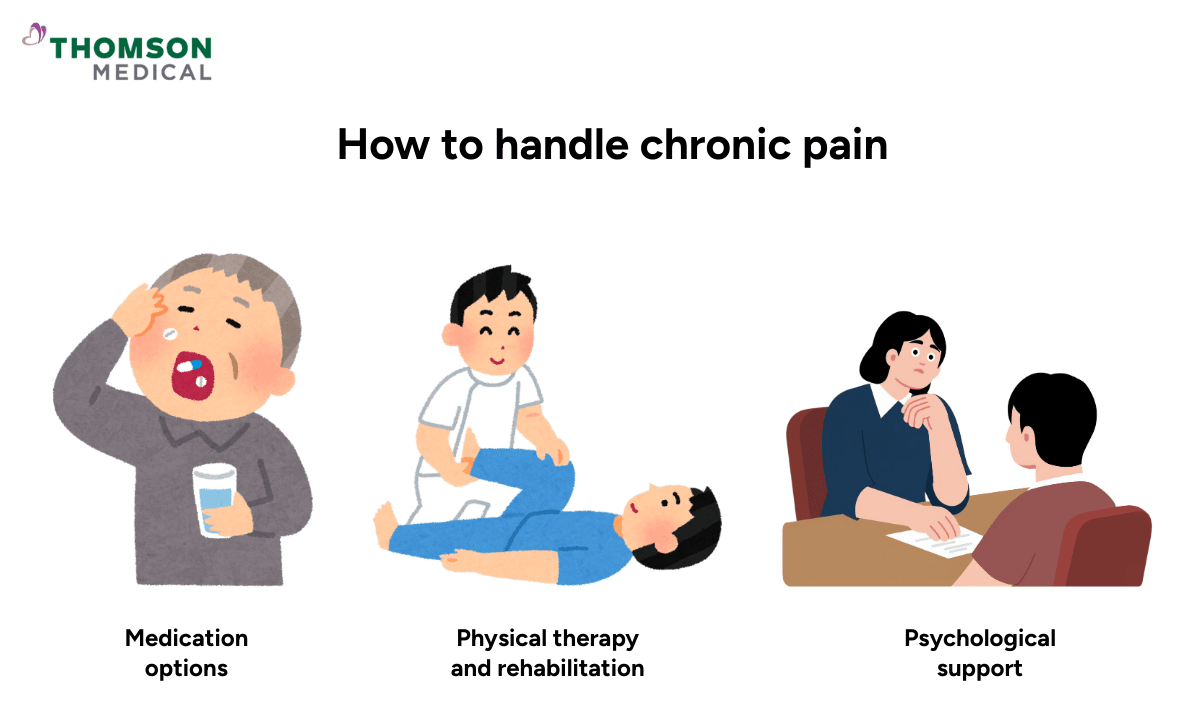
If you've tried medications or therapies that haven’t helped as much as you expected, you might feel discouraged. There may not be a single cure for chronic pain, but the right combination of approaches often brings real improvement.
Medication options
Depending on the cause and nature of your pain, your doctor may recommend:
Anti-inflammatory medications
Nerve-targeting medications
Muscle relaxants
Other specialised treatments, such as antidepressant therapy
The goal isn't always to eliminate pain completely – it’s to reduce pain enough so you can function more comfortably.
Your doctor will start you on the lowest dose that works and check in regularly to see how it is working.
Not all pain medications have the same risk of dependence. In many cases, especially with non-opioid options or nerve medications, the focus is on calming down pain signals rather than creating reliance.
Physical therapy and rehabilitation
You might worry that exercise will make things worse or cause more damage. But in most cases, carefully guided movement is one of the best tools for managing chronic pain.
Chronic pain often creates a cycle: pain makes you move less, your muscles get weaker, your joints get stiffer, and your nervous system becomes even more sensitive. Over time, even simple activities can feel harder than they used to. Physical therapy helps break that cycle.
With consistent practice, movement can:
Reduce stiffness
Improve blood flow to your muscles and joints
Calm down pain sensitivity
Improve your posture and how your body moves
Increase what you can do each day without pain
Over time, this might mean walking farther without needing to stop, sitting longer without discomfort, or getting back to hobbies you've been avoiding.
Rehabilitation for chronic pain isn't about pushing through severe pain or "no pain, no gain". It's about adding movement slowly and gradually so your nervous system learns that activity is safe again.
Psychological support
Chronic pain affects more than your body. Ongoing discomfort can increase stress, mess with your sleep, and bring down your mood – and those things can make pain worse. Addressing this connection doesn't mean your pain is in your head. It means your nervous system and emotions are closely linked, and working with both can help you manage chronic pain better.
Techniques that can help with chronic pain include:
Cognitive behaviour therapy (CBT):
CBT helps you spot unhelpful thought patterns, reduce fear of movement, cope better during flare-ups, and build better sleep habits.
You'll meet with a trained psychologist, usually once a week or more if needed, in sessions tailored to your situation and pace.
Mindfulness:
Mindfulness can reduce stress, relax tense muscles, improve sleep, and lower how intensely you feel pain.
You can practise it at home by spending 5–10 minutes focusing on slow breathing or gently noticing body sensations without reacting to them.
When you're living with chronic pain, improvement often comes quietly. You might find you sleep better, walk a bit farther, or bounce back from flare-ups faster. These small steps might not feel dramatic, but they matter – and over time, they build into real, lasting change.
Living with chronic pain does not mean giving up the activities you value or accepting discomfort as your new normal. Our multidisciplinary team is here to support you with a personalised approach. Request a consultation with Thomson Medical when you feel ready.
FAQ
What conditions can cause chronic pain?
Chronic pain can develop from many different underlying conditions, including:
Musculoskeletal problems, such as chronic lower back pain, osteoarthritis, or lumbar spinal stenosis
Headache syndromes, including chronic migraines or tension-type headaches
Nerve pain caused by irritated or damaged nerves
Phantom limb pain is pain felt in a limb that has been amputated, due to changes in the nervous system
Orofacial pain is persistent pain in the face, jaw, or mouth region
What does chronic pain feel like?
Chronic pain can feel different for each person. You might describe it as aching, burning, throbbing, stabbing, or tight. It may come and go or stay constant, and it can change in intensity from day to day.
Do chronic pains go away?
Some types of chronic pain improve significantly over time, especially with the right treatment plan. In other cases, pain may not disappear completely, but many people learn to manage it well and regain function and quality of life.
How do I stop chronic pain?
Managing chronic pain often involves a combination of:
Medication
Physical therapy
Psychological therapy
How do doctors test for chronic pain?
Doctors diagnose chronic pain based on your medical history, physical examination, and how pain affects your daily life. Imaging or blood tests may be used when needed, but normal test results do not mean your pain isn’t real.
How do I sleep with chronic pain?
Improving sleep with chronic pain often involves:
Good sleep hygiene, such as consistent bedtime routines and limiting screens
Relaxation techniques or meditation practices to calm the nervous system before bed
Managing pain levels earlier in the evening
The information provided is intended for general guidance only and should not be considered medical advice. For personalised recommendations and tailored advice based on your unique situations, please consult a specialist at Thomson Medical. Request an appointment with Thomson Medical today.
For more information, contact us:
Thomson Medical Concierge
- 8.30am - 5.30pm
- WhatsApp: 9147 2051
Need help finding the right specialist or booking for a group?
Our Medical Concierge is here to help you. Simply fill in our form, and we'll check and connect you with the right specialist promptly.
Notice:
The range of services may vary between Thomson clinic locations. Please contact your preferred branch directly to enquire about the current availability.
Get In Touch