

If you or someone close to you has a high risk of colorectal cancer or has recently been diagnosed, it is completely understandable if you feel anxious and want to understand the condition better. Knowing the risk factors, symptoms, and available treatments can help you feel more informed about your health and the steps you can take.
What is colorectal cancer?
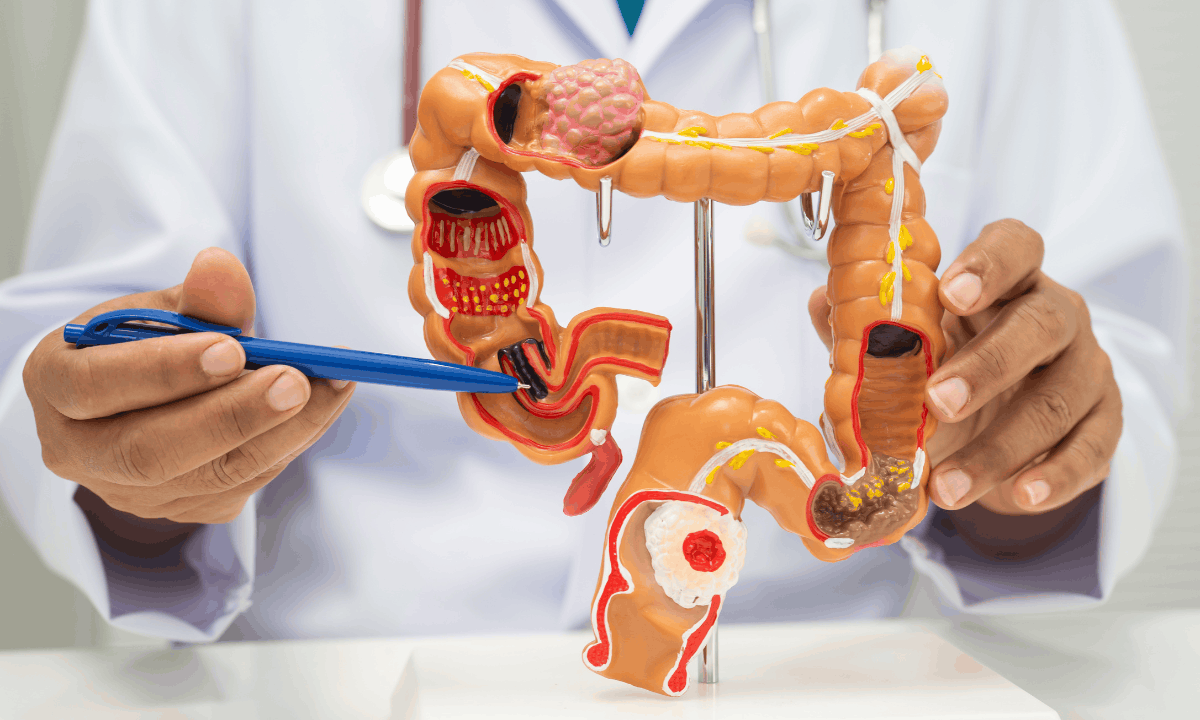
Colorectal cancer, also known as bowel cancer, is a type of cancerous growth that develops in the colon or rectum. The colon is the longest part of the large intestine, while the rectum is the final section before the anus.
Many colorectal cancers develop from polyps, which are growths on the inner lining of the colon or rectum. Although most polyps do not become cancerous, some can change over many years. In Singapore, colorectal cancer is one of the most commonly diagnosed cancers in both men and women.
What are the risk factors of colorectal cancer?
There are risk factors that may make someone more likely to get colorectal cancer. They may come from a biological and inherited condition or other factors related to your lifestyle.
Biological and genetic risk factors
There are several biological and genetic risk factors for colorectal cancer. These include:
History of cancer or polyps:
If you or your family have a history of colorectal cancer or polyps, you are more likely to develop the condition in the future.
Older age:
As you get older, the risk increases because cell changes may lead to cancer build up in the bowel over time.
Inherited health conditions:
Some inherited conditions, such as Lynch syndrome and familial adenomatous polyposis (FAP), may increase the risk of this gastrointestinal cancer.
Inflammatory bowel disease:
Long-standing ulcerative colitis or Crohn’s disease affecting the colon is also associated with a higher risk of colorectal cancer.
Lifestyle-related risk factors
There are several lifestyle-related factors that may lead to colorectal cancer, such as:
Obesity
Physical inactivity
Smoking
Moderate to heavy alcohol consumption
A diet high in red and processed meat
A diet low in fibre-rich foods
If you are concerned about your risk because you are having one or more risk factors mentioned above, consider arranging a consultation with an oncology specialist to examine your condition. Schedule an appointment with Thomson Medical.
Our colorectal cancer specialists in Singapore
Loading...
Colorectal cancer symptoms
Initially, these cancerous growths may not cause any symptoms, but when they do appear, they can manifest in various ways. These symptoms include:
Blood in the stool or bleeding from the rectum
A persistent change in bowel habits, including persistent diarrhoea or constipation
A feeling that the bowel does not empty completely after passing stool
Ongoing abdominal discomfort, including bloating, cramps, gas, pain, or a persistent feeling of fullness
Unexplained weight loss or reduced appetite
Ongoing tiredness or weakness
Anaemia
Nausea or vomiting
When do you need to see a doctor?
It is encouraged to see a doctor to examine persistent or unexplained symptoms mentioned above. It is also recommended to visit a doctor if you notice a new change that does not go away, worsens, or concerns you.
You shouldn’t diagnose the cause yourself, as many bowel symptoms may have causes other than colorectal cancer and require a proper assessment from a doctor.
Stages of colorectal cancer
There are 5 stages of colorectal cancer according to the American Joint Committee on Cancer (AJCC) TNM system. These stages of cancer depend on the tumour’s size and depth, whether it has spread into nearby structures or lymph nodes, and whether it has spread to distant parts of the body.
Stage 0: at this stage the cancer cells are limited to the innermost lining of the bowel.
Stage 1: this is when the cancer has grown into deeper layers of the bowel wall but has not spread to lymph nodes or distant sites.
Stage 2: this stage occurs when the cancer has grown through the bowel wall or into nearby tissues but has not reached nearby lymph nodes.
Stage 3: at this stage the cancer has spread to nearby lymph nodes but not to distant organs.
Stage 4: this is the last stage when the cancer has spread to distant parts of the body, such as the liver or lungs.
What are the types of colorectal cancer?
Most colorectal cancers are adenocarcinomas, which are a type that starts in gland cells in the lining of the colon or rectum.
Meanwhile, the less common colorectal cancer types include:
Neuroendocrine tumours: develop in neuroendocrine cells, which are found in the gastrointestinal tract.
Primary colorectal lymphoma: a rare cancer type that can affect lymphatic tissue in the colon or rectum.
Gastrointestinal stromal tumours (GISTs): are rare tumours that arise from specialised cells in the wall of the digestive tract. This type of cancer commonly affects the stomach or small intestine.
Leiomyosarcomas: rare cancers that begin in smooth muscle cells in the bowel wall.
Anorectal melanoma: a rare cancer that begins in the pigment-producing cells, called melanocytes, in the anus or rectum.
Colorectal cancer screening
To support early detection, the Healthier SG Screening programme offers subsidised colorectal cancer screening for eligible individuals. Additionally, routine colorectal cancer screening is also recommended for average-risk men and women aged 50 years and above, even if they feel well and have no symptoms.
Depending on your individual needs, your doctor may recommend one of the following tests:
FIT stool test:
A faecal immunochemical test (FIT) is a non-invasive screening method that detects hidden blood in the stool. These tiny traces of blood can indicate the presence of colorectal polyps or cancerous cells in the colon.
This test can help to detect these growths at an early stage, when they are more likely to respond to treatment. It can also be performed easily in the comfort of your home, which is why it is often used for routine colorectal cancer screening.
Colonoscopy:
Colonoscopy is a procedure where doctors examine the lining of the rectum and colon. During a colonoscopy, a doctor passes a thin, flexible tube with a camera through the anus and rectum to examine the colon.
If you do not have risk factors that require closer monitoring, your doctor may recommend a colonoscopy for screening every 5 to 10 years.
How doctors diagnose colorectal cancer
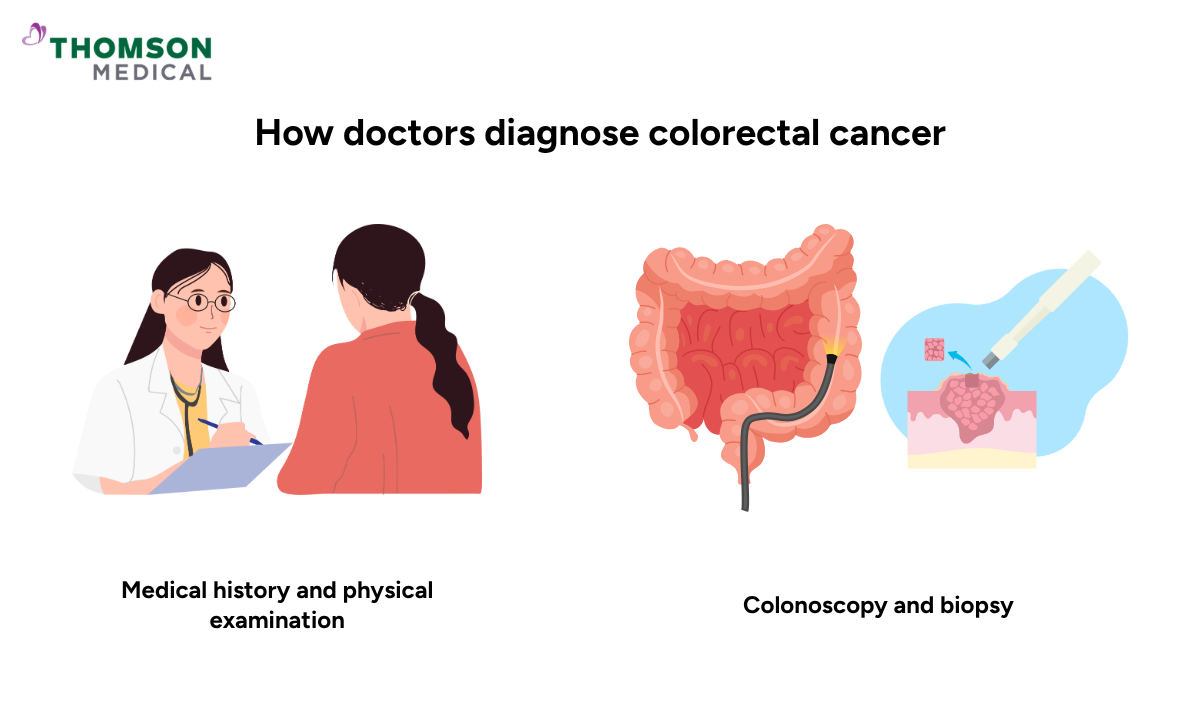
Doctors may perform several tests to investigate symptoms and diagnose colorectal cancer.
Medical history and physical examination
The doctor may ask about your symptoms, medical conditions, medications, and personal or family history of colorectal cancer or polyps.
They may examine the abdomen and perform a digital rectal examination, where they use a gloved finger to check the rectum for abnormalities.
Colonoscopy and biopsy
If doctors find an abnormal area or polyp during a colonoscopy, they may perform a biopsy, where they take a small tissue sample. The doctor then sends the sample to the laboratory, where a pathologist examines the tissue to confirm whether cancer is present.
What are colorectal cancer treatment options?
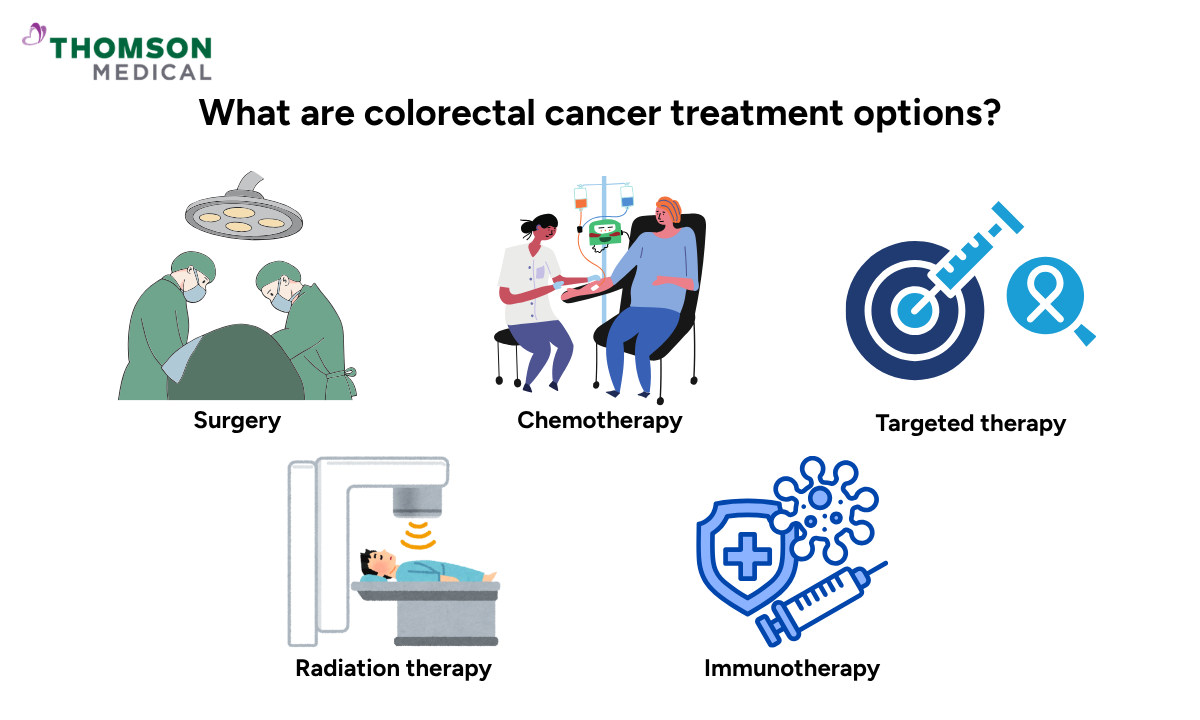
The treatment varies based on the stage of the disease and may include several options that you can discuss with your doctor.
Surgery
Surgery is often the main treatment for localised colon or rectal cancer. Depending on the cancer’s location and extent, surgeons may remove the tumour, part of the colon or rectum, and nearby lymph nodes.
Chemotherapy
Chemotherapy uses anti-cancer medicines that are administered intravenously, orally, or both. Doctors may use it before surgery to shrink some tumours and after surgery to help reduce the risk of recurrence in selected cases, or control cancer that has spread or cannot be removed with surgery.
Targeted therapy
Targeted therapy uses medicines that act on specific features of cancer cells that support their growth or spread. Unlike chemotherapy, these medicines target particular features of the tumour.
Doctors use tumour testing to determine whether targeted therapy may be appropriate, most often for advanced or metastatic colorectal cancer.
Radiation therapy
Radiation therapy uses high-energy radiation to damage cancer cells. Doctors use it more commonly for rectal cancer than colon cancer. It may be given before surgery, sometimes with chemotherapy, to shrink a tumour and reduce the chance of recurrence in the pelvis.
Doctors may also use radiotherapy to control symptoms such as pain, bleeding or blockage when cancer has returned, spread or cannot be removed with surgery.
Immunotherapy
Immunotherapy uses medicines that help your immune system to recognise and respond to cancer cells. For colorectal cancer, doctors use it only when tests show that the cancer has certain features that make it more likely to respond to this treatment.
Doctors may consider immunotherapy before surgery for selected cancers or for cancer that cannot be removed, has returned, or has spread.
If you are unsure which colorectal cancer treatment is right for you, an oncology specialist can help you understand your options based on your cancer type and stages. Schedule an appointment with Thomson Medical.
FAQ
What helps lower the risk of colorectal cancer?
You may be able to lower your risk of the cancer with a healthy lifestyle that includes:
- Eating a healthy diet that includes fibre-rich foods, such as wholegrains, fruit, and vegetables
- Avoiding processed food
- Limiting red meat consumption
- Limiting alcohol
- Staying physically active
- Maintaining a healthy weight
- Not smoking
Screening may also help by finding polyps at an early stage, allowing them to be removed before they become cancerous.
Will you need a stoma or colostomy bag after surgery?
After colorectal cancer surgery, you may need a stoma, which is an opening that a surgeon creates on your tummy to allow stool to leave your body. After surgery, your doctor will attach a colostomy bag over the opening to collect stool.
Your surgeon may create a temporary stoma to give the bowel time to heal. Meanwhile, some people need a permanent stoma if surgery removes the rectum and anus.
Does early-stage colorectal cancer require chemotherapy?
Not everyone with early-stage colorectal cancer needs chemotherapy. Stage 0 cancer can often be removed during colonoscopy, whereas surgery is usually the main treatment for stage 1 cancer. Meanwhile, for stage 2 cancer, your doctor may consider chemotherapy based on the cancer’s features and risk of recurrence.
Can colorectal cancer recur after treatment?
Colorectal cancer can return near the original site or in another part of the body after treatment. To check this recurrence and monitor your recovery, you may need regular follow-up appointments, blood tests, scans, and colonoscopies.
The information provided is intended for general guidance only and should not be considered medical advice. For personalised advice based on your unique conditions, schedule an appointment with Thomson Medical.
References
Amin, M. B., Greene, F. L., Edge, S. B., Compton, C. C., Gershenwald, J. E., Brookland, R. K., Meyer, L., Gress, D. M., Byrd, D. R., Winchester, D. P. (2017). The Eighth Edition AJCC Cancer Staging Manual: Continuing to build a bridge from a population-based to a more "personalized" approach to cancer staging. CA: a cancer journal for clinicians, 67(2), 93–99. https://doi.org/10.3322/caac.21388
For more information, contact us:
Thomson Medical Concierge
- 8.30am - 5.30pm
- WhatsApp: 9147 2051
Need help finding the right specialist or booking for a group?
Our Medical Concierge is here to help you. Simply fill in our form, and we'll check and connect you with the right specialist promptly.
Notice:
The range of services may vary between Thomson clinic locations. Please contact your preferred branch directly to enquire about the current availability.
Get In Touch