

If you find out you have a polyp during a scan or a screening, you may have a lot of questions. You might be wondering if it's serious or if it needs to be treated.
The good news is that polyps are very common, and most of them are not dangerous. Understanding how they form, when they might need help, and how to treat them can change how you feel about taking care of your health.
What is a polyp?
A polyp is a small bump that forms on the inside of some of your body's organs.
They can grow in many places, such as your:
Colon
Stomach
Uterus
Nose
Throat
Whether they form in your colon or your throat, the process is generally the same: when cells in a certain area grow and divide more than usual, they make a small bump or projection called a polyp. This usually happens slowly and might not cause any problems immediately.
What do polyps look like?
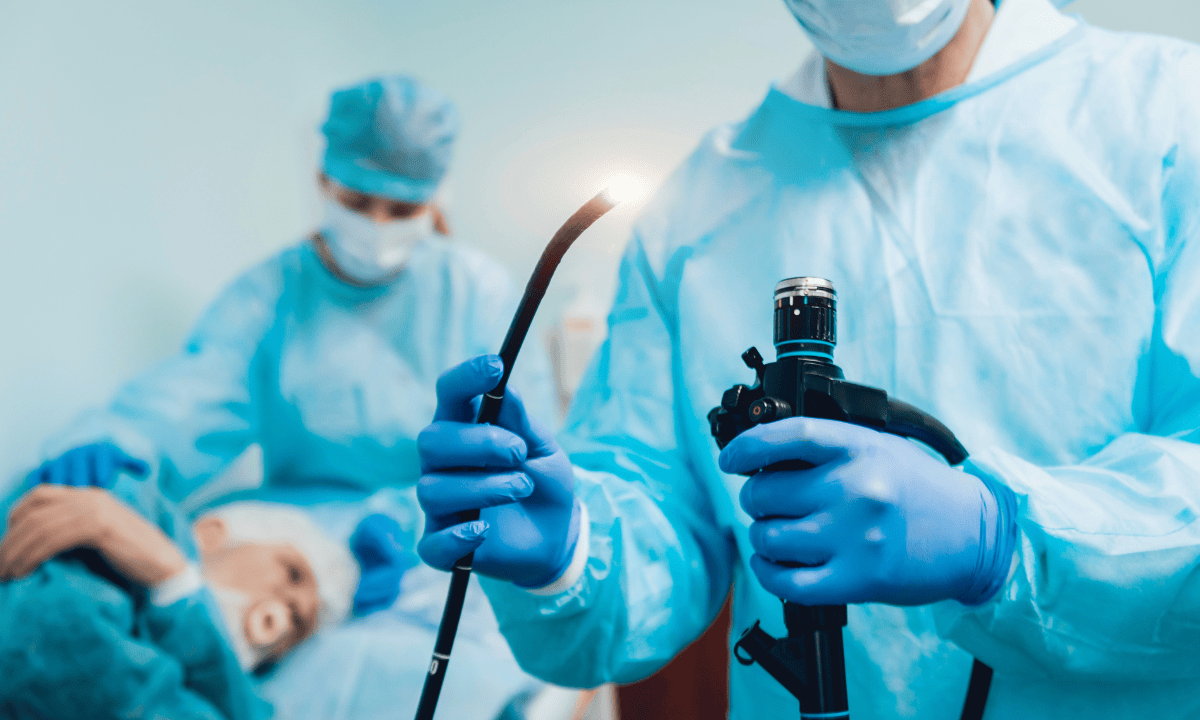
Polyps can look very different depending on where they are and how big they are.
A few are flat and a little bit raised so that they blend in with the lining around them.
Some are pedunculated – meaning they grow on a stalk and look like a small mushroom.
Sessile polyps are flat against the surface of the organ.
They also come in different sizes, from a few millimetres to bigger ones that grow over time.
You usually can't see or feel polyps because they grow inside your body. Most of the time, they are found by chance during routine tests like a colonoscopy, endoscopy, or imaging scan.
Common symptoms of polyps
Most polyps don't cause any symptoms, especially in the early stages. This is why they are often found during routine screenings instead of because of discomfort.
When symptoms do show up, they depend on where the polyp is.
Colorectal polyps |
|
| |
Irregular bleeding | |
| |
Laryngeal polyps |
|
None of these signs are only caused by polyps, but they are worth paying attention to. They're your body's way of saying that something might need more attention.
It's important to get them checked if you notice any changes that persist or feel unusual. Your doctor can look at what you're going through and tell you if you need more tests or follow-up.
If you’ve noticed ongoing or unusual symptoms, our doctors can help you understand what you’re experiencing, assess your risk, and guide you on whether further tests or follow-up are needed. Request an appointment with Thomson Medical.
Our specialists
Loading...
What makes polyps happen?
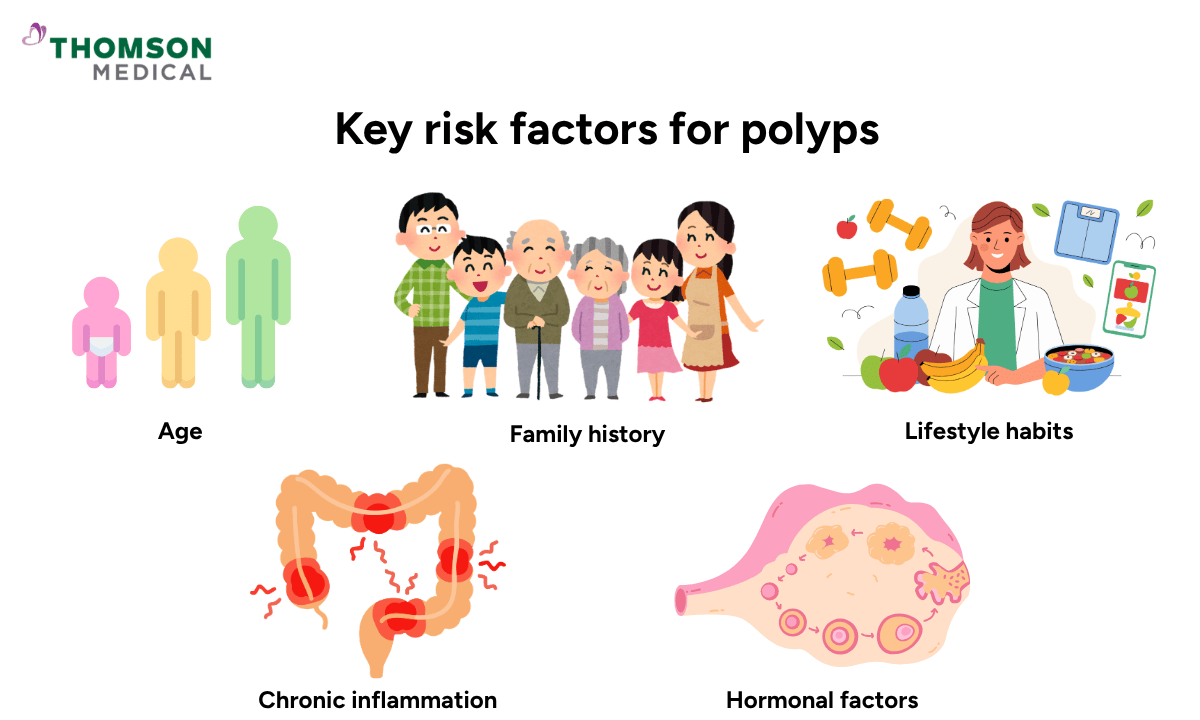
It's normal to wonder what caused polyps to form in the first place if they were found during a routine check.
In most cases, there's no single reason.
Polyps are likely to form based on these factors:
Age:
The older you get, the more likely you are to get polyps.
Family history:
If you have close relatives with polyps or certain types of cancer, you may be more likely to get them.
Lifestyle habits:
Eating a lot of junk food, staying inactive, smoking, and drinking a lot of alcohol can change how cells grow and fix themselves.
Chronic inflammation:
Ongoing irritation in your colon or nasal passages may make it more likely that polyps will form over time.
Hormonal factors:
These might be involved in some types, such as uterine polyps.
It's also important to know that polyps can grow in healthy people, so finding one doesn't always mean something is wrong.
Learning this can also help you develop healthy habits and remind you why it's important to get screened regularly to catch problems early.
How serious is a polyp?
It's normal to want to know what a polyp means for your health and if you should be worried about it.
A lot of polyps stay small and don't cause any problems. As they get bigger, they can have an effect on how your body works, especially if you don't monitor them.
The type, size, and location of the polyp have a big effect on what happens:
Uterine polyps can cause heavy or irregular bleeding, and in some cases, they can make it harder to get pregnant.
Sometimes, big colorectal polyps can cause abdominal pain and block your large intestine (bowel).
Nasal polyps can block your sinuses for a long time, which can make breathing or congestion a constant problem.
Laryngeal (vocal cord) polyps can change the way your voice sounds, making it hoarse or tired all the time.
Most polyps can be treated well and don't affect your quality of life if they are found early and treated properly.
Do polyps ever become cancer?
Most polyps are considered benign (non-cancerous). However, colon adenomas and some gastric/endometrial polyps carry precancerous risk if untreated.
This process usually takes years, which gives your doctor time to find and remove these polyps before they become a problem.
Do you have to remove all polyps?
A lot of people want to know if their polyp needs to be removed and what that might mean. Surgical removal can be scary, but not every polyp needs to be removed.
That said, many are removed as a precaution, particularly when there's any uncertainty about their type or how they might change over time.
A polyp can often be taken out during the same exam that finds it, especially in the colon. There is no need for a separate procedure or another hospital visit. It's an easy step that lowers your risk in the future while keeping things as simple as possible for you.
What happens if you don't need a polyp removal?
If your polyp is small and considered low risk, your doctor may suggest monitoring it instead of removing it right away.
Monitoring allows you to avoid unnecessary procedures while still ensuring nothing is missed. By sticking to a regular screening schedule, you can stay on top of your health without constant worry.
Have you been diagnosed with a polyp and are unsure what it means? Our doctors at Thomson Medical can help you understand your diagnosis, assess your risk, and recommend the next appropriate steps – whether that’s monitoring or treatment. Request an appointment today.
FAQ
How are polyps usually found?
Polyps are often found during routine screening tests, even when you do not have any symptoms. For example, colorectal polyps are commonly detected during a colonoscopy, while other types may be identified through endoscopy, imaging scans, or physical examinations.
Can polyps run in families?
If you have a family history of polyps or certain types of cancer, especially colorectal cancer, your risk may be higher. In these cases, your doctor may recommend an earlier or more frequent screening schedule to monitor your health more closely.
How to stop polyps from growing?
You can reduce your risk of polyps growing or recurring by:
Maintaining a balanced, fibre-rich diet
Limiting processed foods and red meat
Staying physically active
Avoiding smoking
These habits support overall cancer prevention and help create a healthier environment in your body.
Can polyps go away naturally?
No, polyps usually do not go away on their own and cannot be removed through natural methods. Rare exceptions include small nasal or uterine polyps that may shrink if underlying inflammation resolves. If a polyp is found, your doctor will advise whether it should be monitored or removed, depending on its type and risk.
Are polyps considered high risk for colon cancer?
Not all colon polyps are high risk. Hyperplastic polyps, inflammatory polyps, and pseudopolyps (which are often seen in patients with conditions like inflammatory bowel disease) are usually low risk and rarely develop into cancer.
However, certain types, such as adenomatous polyps (adenomas) and some serrated polyps, have a higher risk of developing into colorectal cancer over time if left untreated.
How painful is polyp removal?
Polyp removal is usually not painful. For example, during a colonoscopy, you are typically given sedation to keep you comfortable throughout the procedure.
The information provided is intended for general guidance only and should not be considered medical advice. For personalised recommendations and advice based on your unique situation, please consult a specialist at Thomson Medical. Request an appointment with Thomson Medical today.
For more information, contact us:
Thomson Medical Concierge
- 8.30am - 5.30pm
- WhatsApp: 9147 2051
Need help finding the right specialist or booking for a group?
Our Medical Concierge is here to help you. Simply fill in our form, and we'll check and connect you with the right specialist promptly.
Notice:
The range of services may vary between Thomson clinic locations. Please contact your preferred branch directly to enquire about the current availability.
Get In Touch