

When your dentist recommends a dental crown, it's normal to wonder: Do I really need this? What does the process involve? Will it look natural? In fact, dental crowns are one of the most effective ways to save and strengthen a damaged tooth. They restore both function and appearance, allowing you to keep your natural tooth.
Here's everything you need to know about dental crowns, from what they are and when you might need one to how they're made and how to care for them.
What is a dental crown?
A dental crown is a tooth-shaped cap that is placed over a damaged or weakened tooth to restore its shape, size, strength, and appearance. It is also known as a dental cap.
Your dentist may suggest a crown when a tooth is damaged or weakened by decay, fractures, large fillings, or other dental issues. A crown can also enhance the appearance of your tooth, making it look natural and beautiful, so you can feel more confident.
How do you know if you need a dental crown?
Your dentist will assess your tooth to determine if you need a crown. Here are some common situations:
Large cavities:
When a tooth has a large cavity that cannot be effectively restored with a dental filling, a crown provides the structural support your tooth needs.
Fractured or cracked teeth:
Teeth that are fractured or cracked may be at risk of further damage or infection. A crown can help hold the tooth together, preventing fractures and keeping it stable.
Weakened teeth:
If your teeth have been weakened by decay, large fillings, or root canal treatment, a dental crown can provide extra strength and support.
Restoration of worn-down teeth:
If your teeth are experiencing significant wear, whether from bruxism (teeth grinding) or erosion, crowns can rebuild them to their natural shape and function.
Cosmetic improvement:
Dental crowns can enhance the colour, shape, and alignment of your teeth, helping you feel more confident.
Protection after root canal treatment:
After a root canal treatment, your tooth becomes fragile. That's why your dentist may suggest placing a crown over the treated tooth to provide protection and prevent further damage.
Covering dental implants:
Dental crowns are usually attached to dental implants to replace missing teeth. The crown is the visible part that looks and functions like a natural tooth.
Your dentist will only recommend a crown after carefully checking your tooth and overall oral health. If a crown is the best option, they’ll explain why and help you choose the type that works best for your specific needs.
Dental crown material: What are they made of?
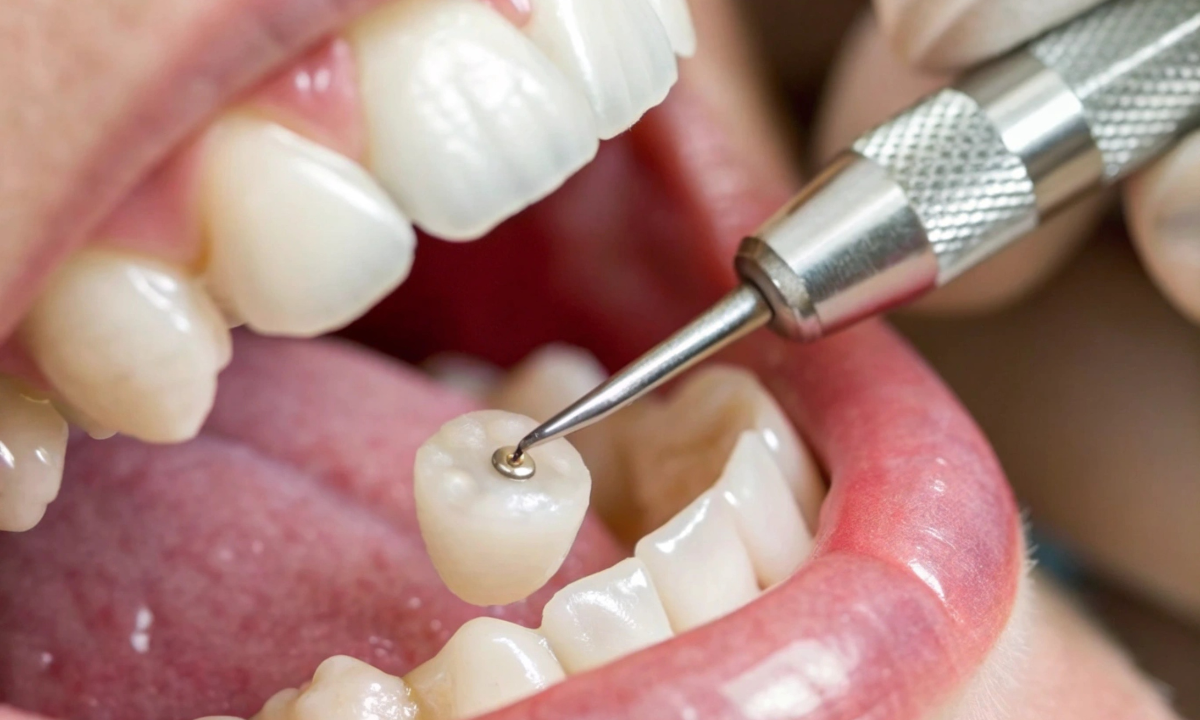
Dental crowns can be made from different materials, and each offers unique benefits. Your dentist will help you choose the right material based on the tooth's location, your aesthetic preferences, and your budget.
Here are some common materials used for dental crowns:
Porcelain fused to metal (PFM):
These crowns have a strong metal base covered with tooth-coloured porcelain to provide a natural look. They are commonly used for both front and back teeth.
All-ceramic (E-max) or all-porcelain:
Porcelain crowns are made entirely from ceramic or porcelain materials, offering the most natural appearance. They are often used for front teeth or if you are sensitive to metals.
Metal (gold or other alloys):
Metal crowns, including gold and other metal alloys, are known for their strength and durability. They are less abrasive to opposing teeth but may not be suitable for visible areas because of their metallic appearance.
Zirconia:
Made from a strong and durable ceramic material called zirconium oxide, zirconia crowns provide a good balance of strength and natural aesthetics. They’re also suitable for both front and back teeth.
Composite resin:
These crowns are made from tooth-coloured composite resin materials. They are more affordable but less durable than other options. They’re often used for temporary crowns or in specific cases.
Stainless steel:
These pre-made crowns are durable and cost-effective and usually used as temporary solutions, especially for children.
If you are unsure which option is right for you, schedule an appointment with Thomson Medical. Your dentist will walk you through these options, considering factors such as durability, appearance, and cost, to help you find the best fit for your smile.
Our dentist
Loading...
What are the risks of getting a crown?
Dental crowns are usually safe and effective, but it’s helpful to know what you should look for:
Sensitivity:
You may experience sensitivity to hot or cold temperatures after getting your crown. This sensitivity usually goes away within a few days to a week. If it persists, it is important to reach out to your dentist.
Allergic reactions:
Even though it’s uncommon, some people may be allergic to certain materials, such as metals or ceramics. If you have any known allergies or sensitivities, let your dentist know before the procedure.
Discomfort or pain:
Some discomfort or mild pain is normal because your tooth and surrounding tissues adjust. Over-the-counter pain relievers can help you manage this discomfort.
Chipped or cracked crown:
Crowns are durable, but they can chip if you chew on hard objects or grind your teeth. Being gentle with your teeth and avoiding these habits can help keep your crown in good shape for longer.
Loose crown:
If a crown is not properly cemented or bonded, it may become loose. If this happens, contact your dentist so they can fix it.
Gum issues:
Without proper oral hygiene, you may develop gum inflammation or infection around the crown. Regular brushing, flossing, and dental check-ups can help prevent this.
If you experience any concerns or discomfort after getting a dental crown, don't hesitate to reach out to your dentist. They're there to help and make sure you're comfortable.
Dental crown procedure: How are they made?
The dental crown procedure usually involves two visits to your dentist:
First visit – Tooth preparation:
Your dentist will examine your tooth and discuss the treatment plan with you.
After numbing the area for your comfort, they'll carefully shape the tooth to make room for the crown.
An impression or digital scan of your tooth is taken and sent to a dental laboratory, along with details about the crown's shade and shape.
A temporary crown may be placed to protect your tooth while the permanent one is being made.
Second visit – Crown placement:
Once your custom crown is ready, you'll return to the dental clinic for a try-in.
Your dentist will check the fit, colour, and how it feels when you bite.
If needed, your dentist will adjust it to make sure it looks natural and feels comfortable.
When everything is perfect, the crown is permanently cemented or bonded onto your tooth.
Your dentist will provide you with care instructions and schedule follow-up appointments to ensure everything is healing well.
What to expect after getting a crown?
After getting a dental crown, it’s normal to wonder what happens next. Here’s what you can expect during the first few days:
Numbness after anaesthesia:
If local anaesthesia was used during the process, you'll feel numb for a few hours. Avoid chewing on that side until the feeling returns to prevent accidental biting.
Sensitivity:
It is completely normal to have some sensitivity in the treated tooth for a few days. It should gradually decrease. Your dentist may suggest over-the-counter pain relievers to help manage discomfort.
Adjustment period:
It may take a few days for you to get used to the new crown, especially if your bite was adjusted. If you experience persistent discomfort or if the bite feels uneven, contact your dentist.
Follow-up appointments:
Attend any follow-up appointments scheduled so your dentist can check the fit of the crown, make any necessary adjustments, and ensure everything is healing properly.
If you notice persistent pain, swelling, or any signs of complications, such as a loose crown, contact your dentist right away. Early intervention can prevent more issues.
Everyone’s experience is different, and your dentist will provide personalised guidance based on your specific case.
How do you care for your dental crown?
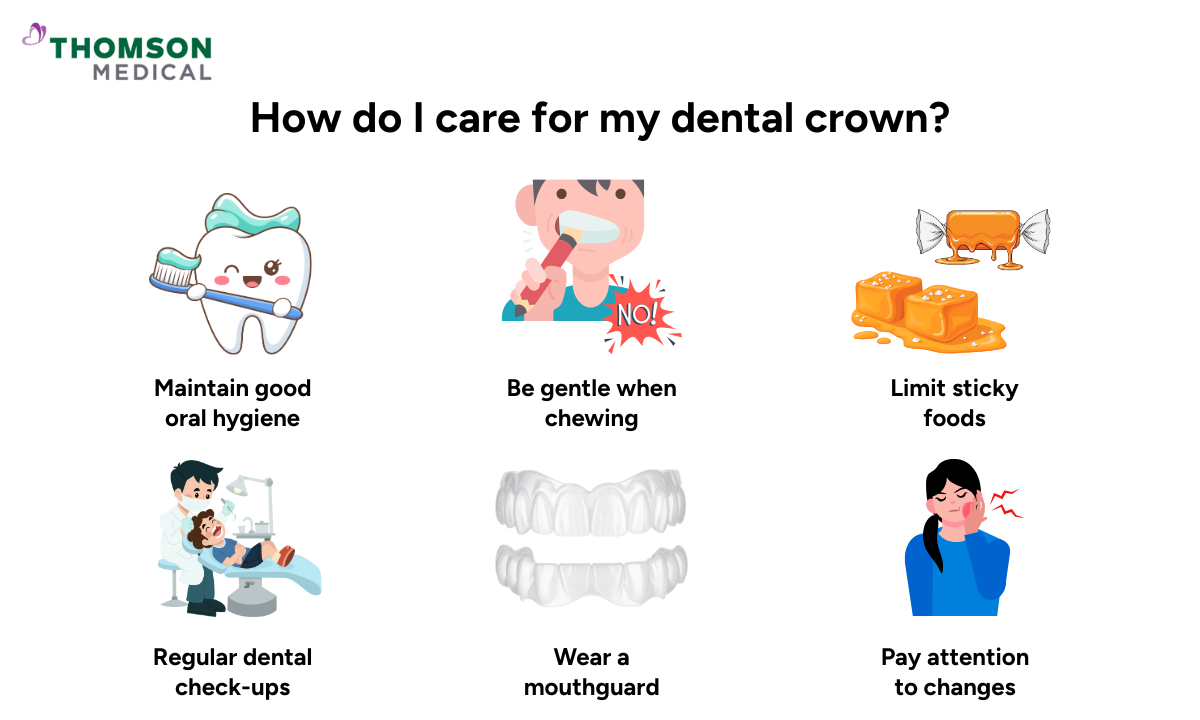
Taking care of your crown doesn't require anything special. Here are some tips you can follow:
Maintain good oral hygiene:
Brush your teeth at least twice a day with fluoride toothpaste and a soft-bristle brush. Floss daily around the crown to keep the area clean. This helps prevent gum disease and decay.
Be gentle when chewing:
Avoid chewing on hard objects, such as ice, popcorn kernels, or hard candies, as they can damage the crown. Don’t use your teeth to open packages or bite on non-food items.
Limit sticky foods:
Sticky foods like caramel and toffee can potentially pull on the crown or get stuck around it.
Regular dental check-ups:
Visit your dentist for dental check-ups and cleanings. They will monitor your crown and surrounding oral tissues to catch any issues early.
Wear a mouthguard:
If you grind your teeth at night or participate in activities that pose a risk of dental injury (such as contact sports), consider wearing a mouthguard to protect your crown from damage.
Pay attention to changes:
If you experience persistent pain, sensitivity, or changes in the way your crowned tooth feels, contact your dentist as soon as possible. These could be signs of issues that need attention.
With proper care, your crown can last for many years, keep your tooth protected, and help you feel more confident.
What is the price for a dental crown?
In Singapore, the cost of a dental crown can range from SGD 700 to SGD 3,000 per tooth, depending on the material and the clinic you choose.
CHAS cardholders can get subsidies for up to 4 permanent crowns per year. CHAS Orange cardholders receive an SGD 84.50 subsidy, while Blue cardholders get SGD 127.50 per crown.
MediSave usually doesn’t cover general dental treatments, such as dental crowns, unless they are part of a surgical procedure deemed medically necessary. Non-surgical dental treatments, including routine check-ups and dental crowns, are not eligible for MediSave claims.
Your dentist can provide a detailed cost estimate based on your specific needs and help you understand your payment options.
If you're experiencing tooth pain or damage and think you might need a dental crown, schedule an appointment with Thomson Medical today. Our dentists will evaluate your tooth, explain your treatment options, and provide a clear cost estimate tailored to your needs.
FAQ
Is it painful to get a crown?
The procedure itself shouldn’t be painful. Your dentist will numb the tooth and surrounding tissues with local anaesthesia, so you won’t feel pain during the procedure.
After the procedure, you may experience some sensitivity or mild discomfort, but this is temporary.
How long does a dental crown last?
With proper care, a dental crown can last for an average of 10 to 15 years or even longer. Regular dental check-ups and good oral hygiene practices can help it last as long as possible. If a crown becomes damaged or worn over time, it can be replaced.
How long does it take to get a dental crown?
The process usually requires two visits. During the first visit, the tooth is prepared, and impressions are taken. A temporary crown may be placed. The final crown is fabricated in a dental laboratory, which usually takes a few weeks. During the second visit, the permanent crown is cemented or bonded to your tooth.
Can a crowned tooth get cavities?
While the crown itself cannot get cavities, the natural tooth underneath the crown can still develop decay, especially around the edges where the crown meets your tooth. That’s why maintaining good oral hygiene, including regular brushing and flossing, is important to protect the tooth structure beneath your crown.
Can I eat normally with a dental crown?
Yes, once the crown is securely in place, you can enjoy a normal diet. However, it's best to avoid biting on hard objects or chewing excessively sticky foods to prevent potential damage to the crown.
How do I know if I need a crown or a filling?
This depends on how much of your tooth is affected. Smaller defects or cavities can usually be restored with fillings that are more conservative and preserve more of your natural tooth structures.
However, if the defect or decay is too extensive, your dentist may suggest a dental crown for better long-term protection. Crowns are also commonly used for heavily broken-down front teeth where aesthetics matter and after root canal treatment to help protect and strengthen the tooth.
Your dentist will examine your tooth and explain which option is best for your situation.
The information provided is intended for general guidance only and should not be considered medical advice. For personalised recommendations and tailored advice based on your unique situation, please consult a specialist at Thomson Medical. Schedule an appointment with Thomson Medical today.