

You may have seen athletes wearing mouth guards to protect their teeth during contact sports. But these devices are not just for shielding against sports injuries. They can also prevent damage from night time teeth grinding and help maintain tooth alignment after orthodontic treatment.
Since different types serve different purposes, knowing which mouth guard suits your needs can help you protect your oral health effectively.
What are mouth guards?
A mouth guard is a protective device designed to protect your teeth, gums, and mouth from injury. It works by acting as a protective barrier between your upper and lower teeth while also helping to distribute direct impact exerted on the teeth during a combat or contact sport. They also help lower the risk of certain dental injuries by providing an extra layer of protection.
Besides acting as a protective barrier during physical activity, there are two other types of mouth guards:
Night guards:
Used to prevent damage from teeth grinding while you sleep
Retainers:
Used after dental treatments like braces to keep your teeth aligned
When is it recommended to use a mouth guard?
If you regularly engage in physical activities or experience any of the following conditions, you can consider using a mouth guard.
Sport activities
If you regularly take part in contact or combat sports such as football, basketball, or martial arts, your teeth, gums and jaw may be exposed to external impact. These forces can lead to chips, fractures, or injury to the soft tissues. In some cases, they may also help minimise certain sports-related dental injuries.
To minimise these risks, it's recommended that you wear a properly fitted guard to protect your teeth during sporting activities.
Bruxism (teeth grinding)
Bruxism is a condition where an individual grinds or clenches their teeth, either during sleep or while awake, often due to stress or tension.
Over time, this constant pressure can wear down the tooth enamel and lead to mild, moderate, or severe enamel erosion.
Temporomandibular joint (TMJ) disorders
TMJ disorders affect the jaw joint and the surrounding muscles that control jaw movement. Symptoms may include pain, stiffness or discomfort when talking, chewing, or opening the mouth widely.
Post-orthodontic care
After completing orthodontic treatment and achieving proper tooth alignment, it's important to maintain these results. Wearing retainers as advised helps ensure that your teeth remain stable and in their corrected positions.
Sleep apnoea
If you have mild sleep apnoea, your doctor may recommend a customised oral appliance to help keep your airway open throughout the night. Then, your dental professional will assess your symptoms and advise whether this option is suitable for you.
Where can you get a mouth guard?
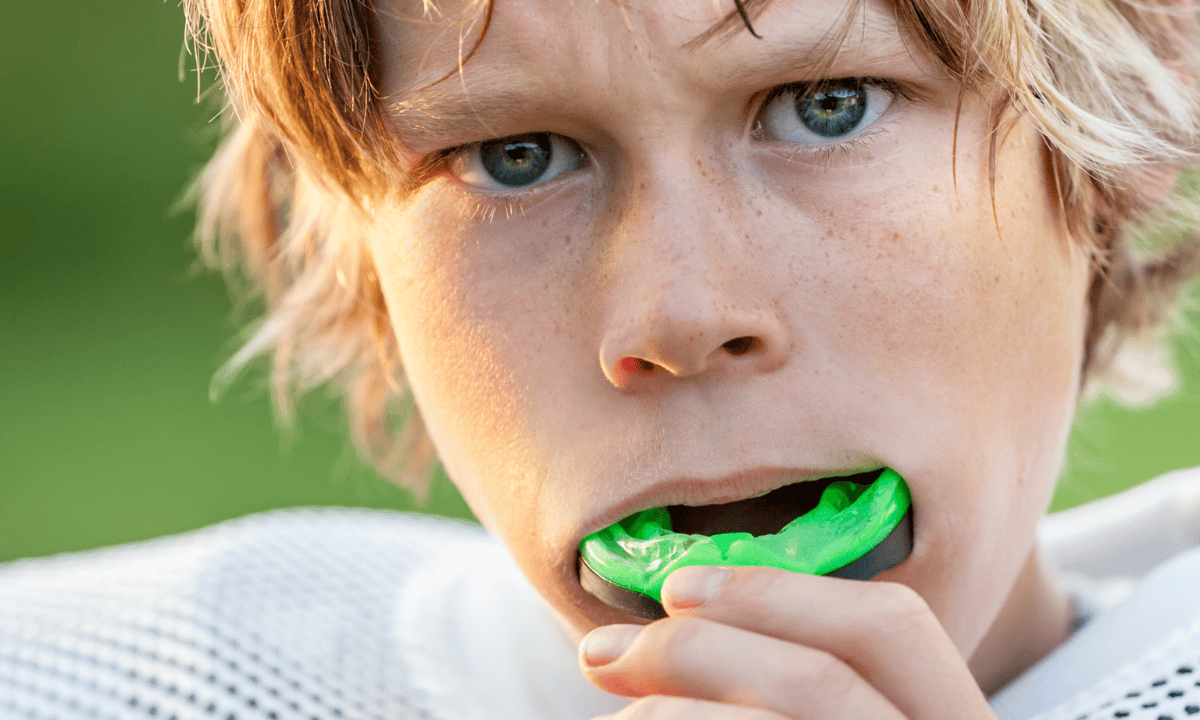
Depending on your needs and budgets, a mouth guard can be purchased off the shelves at pharmacies or sports shops or custom-made for you by your dentist.
Store-bought guards are the most affordable option and easiest to find, while a custom-made mouth guard will be customised for you at the dental clinic.
Store-bought mouth guard
If you choose to purchase it from a store, there are two options to choose from, pre-made guards or boil-and-bite models.
Pre-made:
A pre-made or stock mouth guards is the most convenient and accessible option with affordable prices. You can use it as needed immediately after purchasing it.
However, it may feel bulky or uncomfortable, as it may not fit properly and could interfere with breathing or speaking.
Boil-and-bite mouth guards:
A good option for you if the ready-made options do not fit your teeth.
Soften this boil-and-bite guard by boiling it in hot water, then bite down while it's still warm to get a more customised fit.
While this type of guard offers more comfort, it may still not be able to match the comfort of custom options.
Custom-made mouth guard
Unlike a pre-made or boil-and-bite product that you can buy at the pharmacy, to have a custom-made mouth guard, you need to visit a dental clinic. This type of guard offers the most comfort and maximum protection, although it comes with a higher cost.
Types of mouth guard
Whether you choose a store-bought guard or a custom-fitted one, there are three main types of mouth guards designed to support different needs.
Sports mouth guard
A sports mouth guard is suitable for protecting your teeth and gums from sudden impact during high-risk sports. This includes contact or combat sports such as MMA and boxing. The benefits of using a guard include:
- Acting as a cushioned barrier that provides effective protection and helps prevent damage such as chipped or broken teeth.
- Preventing cuts and bruises to the lips, gums and inner cheeks through its impact-absorbing material.
- Helping to reduce the risk of jaw injuries by absorbing and dispersing external impact.
Night guard
Also known as a dental guard, this type of guard is worn during sleep to protect against teeth grinding, known as bruxism, and to help relieve discomfort linked to TMJ disorders. The benefits of wearing a night guard include:
Protecting the teeth from grinding and helping to prevent enamel from wearing down.
Reducing the risk of cracked teeth or damaged fillings caused by constant pressure.
Helping to relieve pressure on the jaw and reduce symptoms of TMJ disorders, such as jaw pain, clicking and headaches.
Supporting better sleep by minimising grinding or clenching that may disturb rest.
Retainer
A retainer is designed for individuals who have completed orthodontic treatment and need to maintain proper tooth alignment. It's thinner than a night guard but still provides sufficient support to keep the teeth in their corrected position. It may also offer mild protection for those who experience teeth grinding.
If you would like to use a mouth guard but are unsure which one is right for your condition or needs, request an appointment with Thomson Dental Centre. Our dentists will help you explore what options are available and advise on the appropriate guard choice.
Our dental specialists in Singapore
Loading...
What is the process of getting a custom mouth guard?
To get a custom-fitted mouth guard, you will need to visit your dentist. Generally, this is what you can expect when getting your custom guard made.
Creating a model of your teeth
Your dentist will begin by discussing your needs, which may include:
Protection during sports
Support for bruxism or teeth grinding
Relief for TMJ disorders
Post-orthodontic maintenance
General enhancement of comfort and dental protection
After this, your dentist will take detailed impressions of your upper and lower teeth using dental putty. The putty is held against your teeth for several minutes to capture the exact shape of your teeth and gums.
In some clinics, digital scanning may be used instead. This creates a highly accurate 3D image of your teeth without the need for traditional impression material. These moulds or digital scans are then sent to a dental laboratory to begin the fabrication process.
Fabricating the mouth guard
At the laboratory, the dental team uses your mould or 3D scans to create a plaster model of your teeth. This replica ensures that the guard fits closely to your natural tooth shape.
A thermoplastic material is then heated and vacuum-formed over the model. As it cools, it takes on the precise contours of your teeth and gums. The edges are trimmed and polished to ensure comfort and stability during use.
Fitting and adjustments
Your custom mouth guard is returned to your dentist for final fitting. During this appointment, your dentist will:
Check the fit and stability of the guard
Ensure it does not affect speech or breathing
Make any necessary adjustments, such as smoothing rough edges or refining tight areas
After the fit is confirmed, your dentist will provide instructions on how to clean, store, and care for your guard to maintain its longevity and effectiveness.
If you are considering a custom mouth guard, request a consultation at Thomson Medical today. Our dentists can recommend the most suitable option based on your needs and provide personalised guidance for long-term care.
Cost of mouth guard in Singapore
The cost of mouth guards in Singapore may vary depending on whether you purchase it in the store or have it custom-made.
- Store-bought mouth guards:
- Can range from as low as SGD 10 in an online store to upwards of SGD 100, depending on the quality and brand.
- Custom-made mouth guards:
- They are usually more expensive, as they can go from around SGD 400 to 1000.
Other than that, there may be an additional consultation fee ranging from SGD 20 to 60. There are also other factors that may affect the cost of your guard, such as:
- The type of material:
- Higher-quality materials may carry a premium price but may offer better protection.
- The technology used to make the guard:
- Mouth guard manufacturing techniques such as 3D printing or milling may contribute to higher costs.
Unfortunately, mouth guards are not covered by Medisave or the Community Health Assist Scheme (CHAS). However, some private health insurance plans may offer partial or full coverage for dental appliances such as mouth guards. For detailed fee information and payment options, please consult your dental care provider and insurers directly. Please note that fees are subject to change and may vary between different dental clinics.
Taking proper care of your mouth guard
Just as daily dental care removes bacteria and keeps your teeth clean, your mouth guard also requires maintenance to keep its hygiene. Here are some ways you can take care of your mouth guard, such as:
Regular cleaning:
Clean your mouth guard immediately after use by rinsing it with cool water and using a soft-bristled toothbrush with nonabrasive toothpaste or mild soap.
Gently brush all surfaces of the guard to remove saliva, bacteria, and debris, being careful not to use abrasive materials that could damage it.
For deep cleanings, you can soak it in an antimicrobial solution, such as alcohol-free mouthwash or use a specialised cleaning solution, for 10-15 minutes once every week or two.
Proper storage:
Before storing your mouth guard, ensure that it is completely dry. After that, you can store it in a clean, breathable container to ensure that there is no moisture that could cause bacteria or mould growth.
Check for wear and tear:
Regularly inspect your mouth guard for any signs of damage, such as cracks, tears, or rough edges. Because these damages can compromise its protective abilities and may cause irritation to your gums.
If you notice any damage, replace the guard promptly to maintain optimal protection.
Be careful with the heat:
If you're using a boil-and-bite mouth guard, avoid exposing it to high heat once it has been moulded. Doing so can cause deformation and may affect its fit on your teeth.
FAQ
What does wearing a mouth guard do?
Wearing a mouth guard helps protect your teeth and other soft tissues in the mouth from external forces during contact sports. It works by absorbing and dispersing the force across a broader area, thereby reducing the severity of the impact.
What is the difference between a sports mouth guard and a night guard?
The difference between a sports mouth guard and a night guard is their intended use and design. Sports mouth guards are designed to absorb sudden impacts to the teeth and prevent chipped or broken teeth. While night guards are designed to protect your teeth during sleep from grinding or clenching.
How many hours can you wear a mouth guard?
You can use your mouth guard for a couple of hours, but it's not advisable to use it more than 8 hours every day. Because it can trap bacteria and prevent saliva from reaching the surface of your gums, it may cause a cavity in the teeth in the long run.
To use at night, you should use a night guard that includes openings to let saliva circulate on the teeth and help neutralise cavity-causing bacteria.
What are the disadvantages of night guards?
Although a night guard works as a protection against bruxism, it also has a few downsides, such as:
It might be a little pricey, especially if you make it custom fit.
The quality of your night guard may affect how easily it becomes loose or damaged.
New users may experience increased salivation or dryness in the mouth.
Do you need to clean your night guard regularly?
Yes, each time you wear your night guard, you should rinse it with warm water and a mild soap as soon as you wake up. You can also do a deep cleaning by soaking it in mouthwash for 10-15 minutes once every week or two to ensure its hygiene.
Can a mouth guard help with jaw pain?
Yes, certain types of mouth guards, especially night guards designed for bruxism, can help reduce pressure on the jaw and ease symptoms such as jaw pain, muscle tension and headaches. A dental assessment is recommended to determine the most suitable guard for your needs.
The information provided is intended for general guidance only and should not be considered medical advice. For personalised recommendations and tailored advice, please consult a specialist by requesting an appointment with Thomson Dental Centre today.