

The first few weeks after fibroid surgery bring a mix of things to manage, such as soreness, bloating, low energy, and occurrence of constipation from the pain medication. Eating well won’t make the healing go faster, but it can make this stretch more comfortable.
To assist with your recovery, consume enough protein to support tissue repair, enough fibre and fluids to keep it moving, and iron if heavy bleeding before surgery left your levels low. Here’s what tends to help in the weeks after a myomectomy or hysterectomy, what to be cautious with, and when to check in with your care team.
How does surgery affect your body?
After a myomectomy or hysterectomy, your body puts most of its energy into healing. Some swelling and tenderness around the wound is a normal part of that process. You may feel more tired than expected, and constipation and bloating are common in the first few weeks.
If you have had a hysterectomy and your ovaries were also removed, your hormone levels will shift. This may affect your mood, energy, and digestion. Knowing what to expect makes it easier to spot what is normal and what might need medical attention.
Does your diet after fibroid surgery matter?
Good nutrition gives your body the nutrients it needs to repair tissue, restore energy, and recover steadily. What you eat affects how that repair process goes.
It helps your body to:
Rebuild the muscle tissue around the wound
Restore your blood levels, especially if you lost blood during surgery
Keep your digestion moving
Keep your immune system working well while it is focused on the wound
Stabilise your mood and energy
Each of these functions relies on different nutrients, which is why eating a variety of foods matters more than focusing on any single food or supplement.
Our O&G specialists
Loading...
What to eat after fibroid surgery
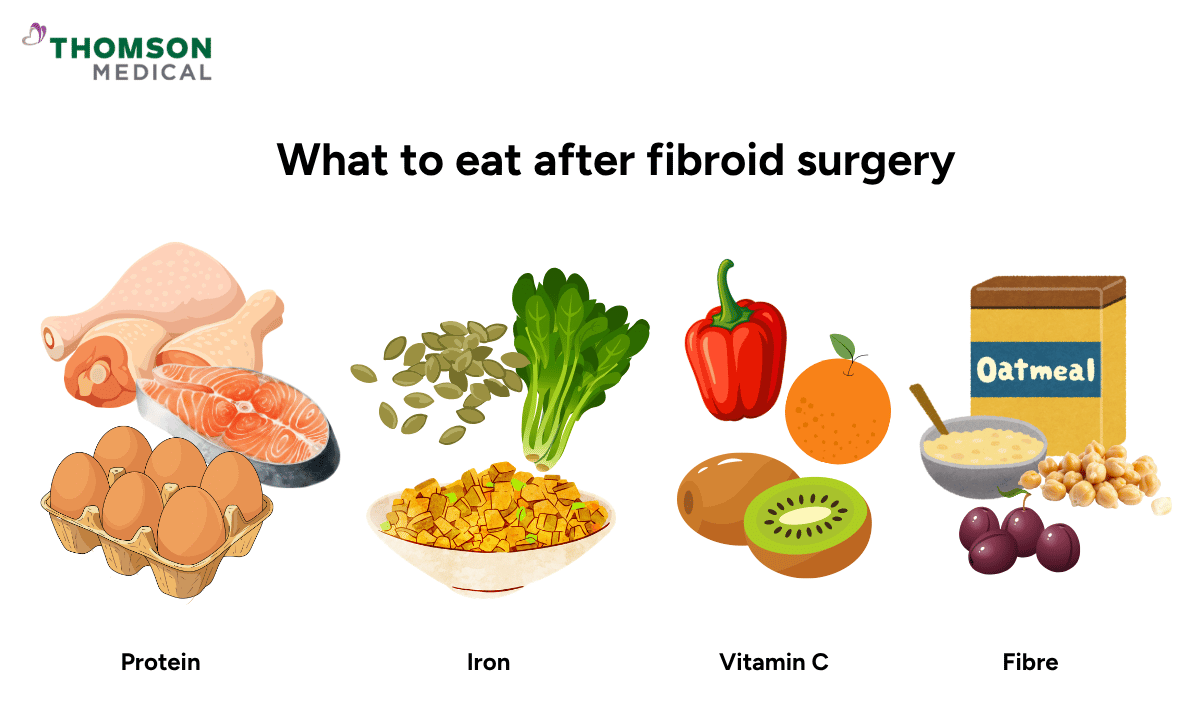
Eating well after surgery does not need to be complicated. A few key nutrients do most of the work in the weeks after surgery, and getting enough of them may help support how your body heals.
Protein
Protein is what your body uses to rebuild the tissue around your wound.
Good protein-rich foods include:
Eggs, chicken, turkey, and fish
Lentils, chickpeas, and beans
Tofu and dairy products like yoghurt and cheese
Spreading your intake across the day, in moderate portions at each meal, helps your body absorb and use it more effectively than eating it all at once.
Iron
If you lost blood during surgery, your iron levels may be lower than usual. This could make you feel more tired than usual and, in some cases, may affect your iron levels enough to require a supplement. Your doctor may check your iron levels with a simple blood test.
Good sources of iron include:
Leafy vegetables like spinach and kale
Red meat in moderate amounts
Pumpkin seeds, lentils, and fortified cereals
Pairing iron-rich foods with a source of vitamin C, such as a glass of orange juice or some sliced tomatoes, helps your body absorb the iron more effectively.
Vitamin C
Vitamin C supports wound healing by helping your body produce collagen, the protein that holds repaired tissue together. It also plays a role in keeping your immune system functioning well during recovery.
Good sources of vitamin C include:
Oranges, kiwis, and strawberries
Bell peppers
Broccoli and tomatoes
You may get enough vitamin C through a balanced recovery diet without needing supplements. If your appetite is low after surgery, having small amounts of these foods throughout the day could still help support your recovery.
Fibre
Fibre supports healthy digestion and regular bowel movements, which may be especially helpful as constipation is common after surgery.
Good fibre sources include:
Oats and whole grains
Lentils and chickpeas
Fruit such as pears and prunes
Vegetables such as carrots and courgettes
It’s usually better to slowly increase your fibre intake over time rather than adding a large amount all at once, as sudden increases could cause bloating.
Healthy fats
Healthy fats play an important role in reducing inflammation and supporting your body's healing process.
Good sources of healthy fats include:
Nuts and seeds such as almonds, walnuts, flaxseeds, and chia seeds
Avocado
Olive oil
Adding small amounts to your meals and snacks throughout the day helps keep your energy stable and supports tissue repair.
Water
Staying well hydrated is one of the simplest things you could do to support your recovery. Your body uses water in almost every part of the healing process, and dehydration may worsen both constipation and fatigue.
Aim for six to eight glasses a day. Herbal teas and broths count towards your total. If your urine is pale yellow, you are drinking enough.
If your appetite is low in the first few days, focus on protein and fluids before anything else. When your appetite is limited, these two have the greatest impact on healing.
To discuss personalised post-surgery diet plans tailored to your needs, request an appointment with Thomson Medical.
What should you limit during recovery?
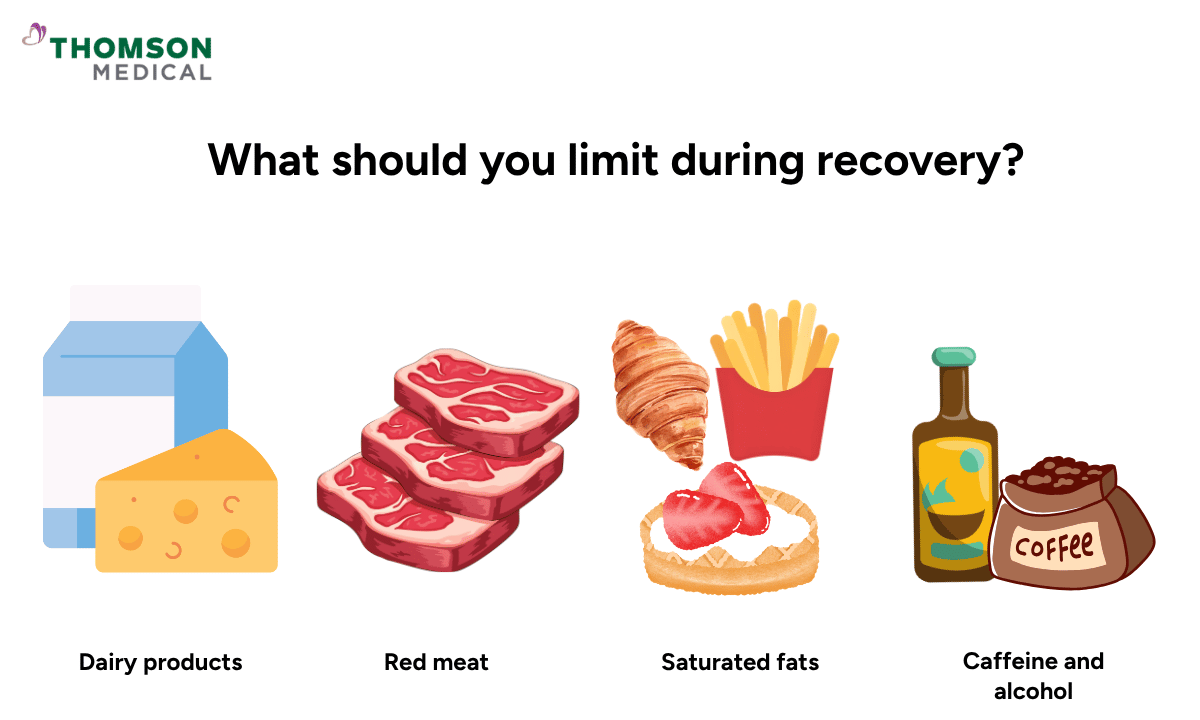
Some foods place extra strain on your body at a time when its energy is better spent on healing. It is not about being restrictive – just being mindful for a few weeks.
Dairy products
Dairy is generally well tolerated after surgery and could be a useful source of protein and calcium. However, full-fat dairy products such as cream, butter, and hard cheeses may feel harder to digest in the early weeks.
If you notice bloating or discomfort after eating dairy, switching to lower-fat or dairy-free alternatives temporarily may help. Unless you have a known sensitivity, dairy does not need to be cut out entirely.
Red meat
Red meat could be a helpful source of iron during recovery, but large amounts may be harder to digest and may contribute to constipation.
Saturated fats
Foods high in saturated fats such as fried foods, pastries, and fatty processed meats could promote inflammation at a time when your body is working to heal.
Salt
Salty foods may worsen bloating and water retention, which are both common in the weeks after surgery. Try to limit processed foods, ready meals, and heavily seasoned dishes, as these tend to be the main sources of hidden salt in the diet.
Caffeine and alcohol
Caffeine may act as a mild diuretic (may make you pass urine more often) and may disrupt sleep, both of which could be unhelpful during recovery. It may also make bloating and digestive discomfort feel worse for some people.
It is worth avoiding alcohol in the early weeks, as it may interfere with healing and may interact with any medications you are taking.
Sugary and carbonated drinks
Fizzy drinks may worsen bloating, which is already common after surgery. Sugary drinks and processed snacks offer little nutritional value at a time when your body benefits most from foods that actively support repair.
As your recovery progresses and your energy returns, most of these could be reintroduced gradually. For now, keeping them to a minimum reduces the burden on your body.
How could you manage common symptoms through diet?
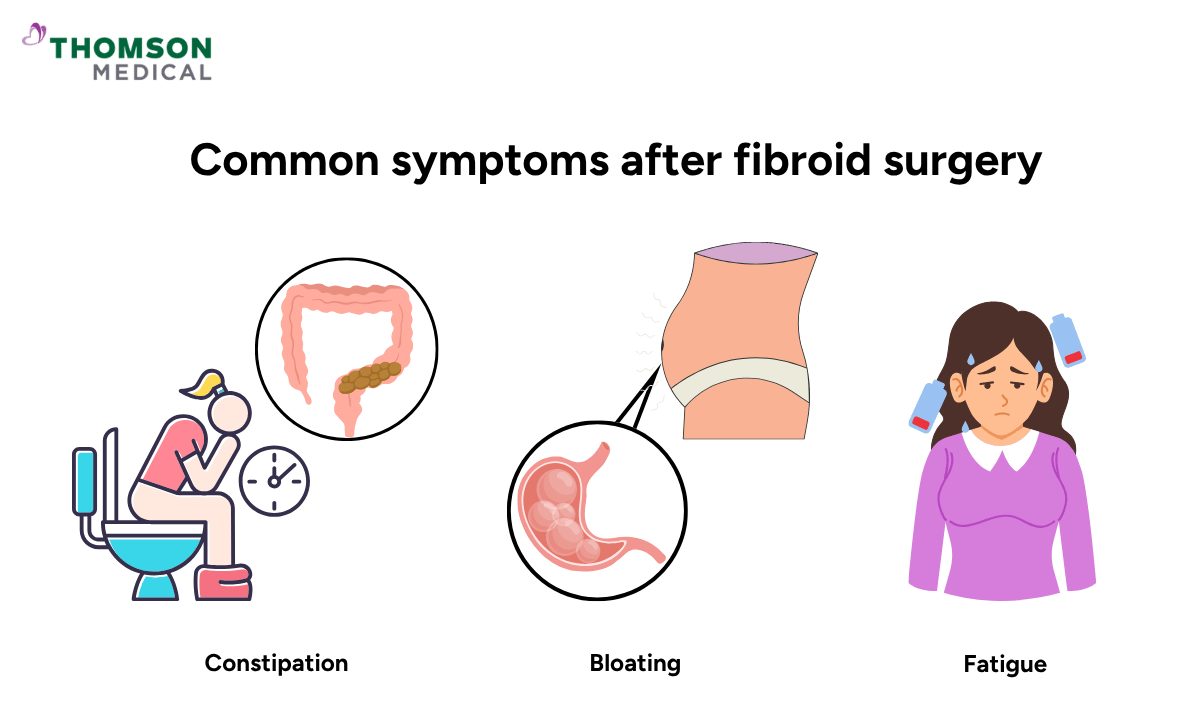
Certain symptoms are very common after fibroid removal surgery, and what you eat may help ease how uncomfortable they feel.
Constipation
Your digestive system may take a little longer to return to normal after surgery. Anaesthesia and pain relief medication may slow bowel movements in the first few days.
To help ease this:
Prunes, pears, oats, and flaxseeds are particularly helpful for stimulating digestion
Drinking water consistently throughout the day, rather than only when you feel thirsty, also helps
If you have not had a bowel movement by day three or four, speak to your doctor, as they may recommend a short-term laxative.
Bloating
You may also notice some bloating as your digestion slows temporarily after surgery, which may cause gas to build up more easily.
To manage this issue, you could try:
Smaller, more frequent meals rather than large portions
Eating slowly and chewing well to reduce the amount of air you swallow
Peppermint tea, which helps relax the muscles in your gut
For most women, bloating usually improves within two to three weeks as your digestion gradually returns to normal.
Fatigue
Fatigue after surgery is normal. Your body directs most of its energy toward healing, even when you are resting.
To help manage it:
Eat regularly, even if your appetite is low
Keep small snacks nearby so eating does not feel like an effort
Having steady snack options nearby may help keep your blood sugar stable between meals. A banana with nut butter, yoghurt with berries, or a small handful of nuts all work well
For most women, energy starts to return gradually around weeks three to four. It could take longer if you had a hysterectomy or lost a considerable amount of blood during surgery.
When could you get back to eating normally?
Most women return to their usual diet within a few days of surgery, though this may vary depending on the type of procedure you had. In the first day or two, plain and gentle foods tend to be easiest on your digestion. Plain rice, toast, soup, and porridge are all good starting points.
Add foods back in at a pace that feels right for you. There is no need to rush back to your usual diet before your body is ready. By weeks two to three, most people are eating normally again. If certain foods are still causing discomfort at that point, it is worth keeping a brief note of what seems to trigger it.
Returning to your usual diet after surgery may take a little time, and introducing the right foods could support your recovery. If you have concerns about your diet after fibroid surgery, request an appointment with Thomson Medical.
FAQ
What nutrients can help my body heal after fibroid surgery?
Key vitamins and minerals, like iron, vitamin C, and zinc, support recovery by helping with blood replenishment, tissue repair, and immune function. Eating a balanced diet with fruits, vegetables, lean protein, and whole grains ensures you get these essential nutrients.
How long does it take to heal after fibroid surgery?
Internal recovery after fibroid surgery varies but may take around four to eight weeks, depending on the type of surgery and how your body responds. Open surgery, or a hysterectomy, may take longer than a laparoscopic procedure.
What should I drink after fibroid surgery?
Aim for around six to eight glasses of water a day. You can also include herbal teas, broths, and diluted fruit juices or smoothies to support hydration. If your urine is pale yellow, you are drinking enough.
What fruits are good to eat after fibroid surgery?
Fruits that are high in fibre and natural antioxidants are good choices. Berries, citrus fruits, pears, bananas, and prunes are all worth including. Prunes and pears are particularly helpful if constipation is a concern in the first week or two.
Should I take supplements after fibroid surgery?
For most women, eating a varied and balanced diet provides the nutrients needed to recover well. If your appetite has been poor or your iron levels are low following blood loss during surgery, your doctor may recommend an iron supplement, a general multivitamin, or both, depending on your needs. Only take supplements recommended by your doctor.
How should I plan my meals after fibroid surgery?
After surgery, aim for small, frequent meals that are gentle on the digestive system. Include lean proteins, whole grains, and plenty of fruits and vegetables to provide energy and support recovery. Eating slowly and staying hydrated may help reduce bloating and improve digestion.
The information provided is intended for general guidance only and should not be considered medical advice. For personalised recommendations and tailored advice based on your unique conditions, request a consultation with Thomson Medical.
For more information, contact us:
Thomson Specialists (Women's Health)
Thomson Women's Clinic (TWC)
- Novena:
6592 6686 (Call), 8611 8986 (WA) - Bukit Batok:
6569 0668 (Call), 8686 3525 (WA) - Choa Chu Kang:
6893 1227 (Call), 8282 1796 (WA) Jurong:
6262 8588 (Call), 6262 8588 (WA)- Katong (female doctor):
6970 2272 (Call), 8611 9020 (WA) - Punggol:
6243 6843 (Call), 8811 0328 (WA) - Sembawang: 6753 5228
- Sengkang: 6388 8125
- Serangoon (female doctor): 6382 3313
- Tampines: 6857 6266
- Tiong Bahru: 6276 1525