

Irregular periods, pelvic discomfort, or difficulty conceiving can understandably lead you to search for answers, resulting in two commonly mentioned conditions: ovarian cysts and polycystic ovary syndrome, or PCOS.
Although both involve the ovaries, they are not the same. Ovarian cysts are fluid-filled sacs that can develop at different stages of your cycle, while PCOS is a hormonal condition that affects how your ovaries function.
Understanding how these conditions differ, what symptoms they cause, and how they are diagnosed can help you have clearer conversations with your doctor and feel more confident about your next steps.
What are ovarian cysts?
Ovarian cysts are fluid-filled sacs that develop on or inside your ovaries. The most common type, called follicular cysts, develops when a follicle doesn't release an egg during ovulation. They usually form naturally as part of your menstrual cycle.
Ovarian cysts are actually quite common and harmless. Many women develop cysts during their reproductive years without even knowing it. This is because these cysts usually cause no symptoms and disappear on their own within a few weeks or months.
However, some cysts can grow larger or persist longer than expected.
When this happens, you might notice symptoms such as:
Bloating
Discomfort
It's natural to feel concerned if you're diagnosed with an ovarian cyst. Fortunately, even when they cause symptoms, most can be managed with monitoring or treatment.
What is PCOS?
Polycystic ovary syndrome (PCOS) is a common hormonal condition that affects how your ovaries work throughout your reproductive years.
Unlike ovarian cysts that come and go, PCOS is an ongoing condition that involves multiple aspects of your hormonal health. This condition happens when your ovaries create too many male hormones (called androgens).
This hormonal imbalance can lead to:
Irregular and missed periods
Unpredictable ovulation
Without regular ovulation, your follicles don't fully develop and release eggs. They stay small and gather in your ovaries, which is what creates that 'polycystic' appearance on ultrasound.
PCOS is an ongoing condition. It doesn't disappear easily, and you'll need regular check-ups to monitor it. Still, there are many effective ways to manage it. With the right support and treatment, many women lead healthy and fulfilling lives.
Key differences between ovarian cyst and PCOS
Both conditions affect your ovaries, so how can you distinguish them? Let’s take a closer look at their key differences so you can better understand what might happen with your body.
Causes
Ovarian cysts and PCOS develop in different ways, and their underlying causes are quite distinct. While ovarian cysts usually form as part of your normal menstrual cycle, PCOS is linked to ongoing hormone imbalances.
Ovarian cysts
You’re more likely to develop ovarian cysts if you have:
Hormonal fluctuations during your menstrual cycle
Endometriosis
Pelvic infections
Pregnancy, especially in the early stages
Most ovarian cysts form as a natural part of your body’s processes. They're not a sign that something is wrong with your health. Most usually shrink within 60 days without any treatment.
PCOS
PCOS, on the other hand, is caused by:
Genetic factors that run in families
Insulin resistance
Chronic low-grade inflammation
Hormonal imbalance, especially androgen levels
Knowing the root causes of the two conditions helps explain why they are often confused and why they need different treatment and care. It also helps your doctor create the right approach for your specific situation.
Symptoms
The symptoms you experience can give you clues about whether you’re dealing with ovarian cysts or PCOS.
Ovarian cysts
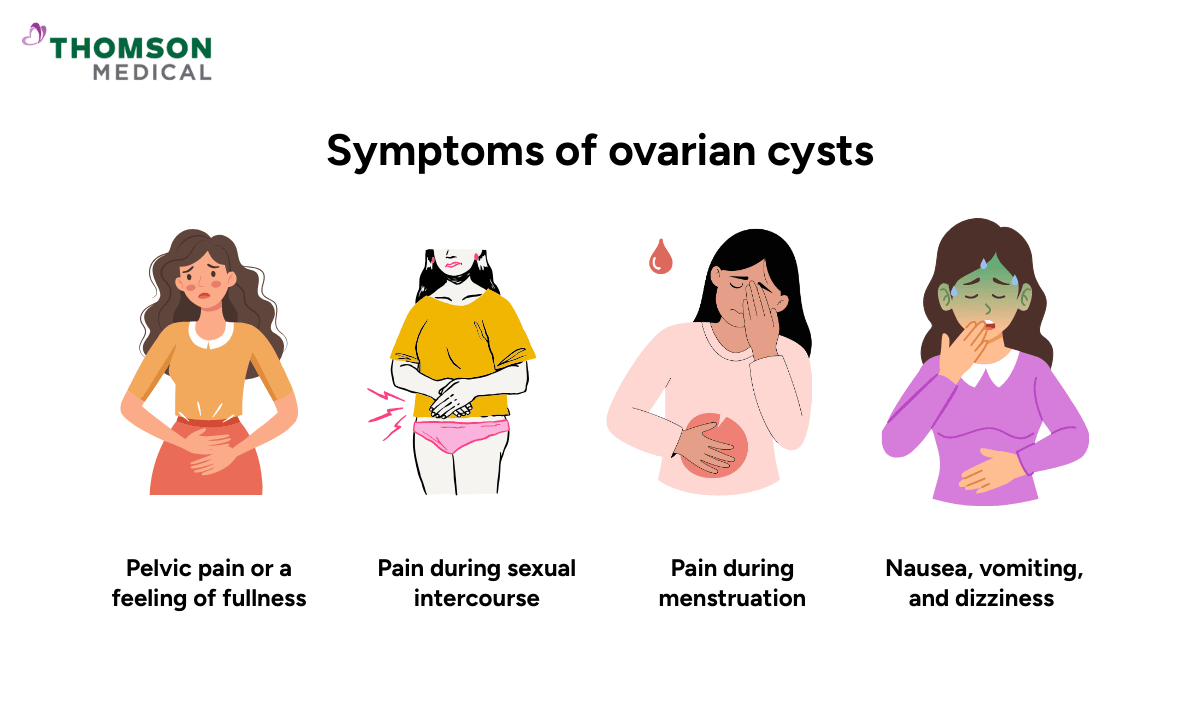
If your ovarian cysts are small, they may not show any symptoms. That’s why, most of the time, these cysts are only found during routine check-ups.
When the cysts become larger, you may notice:
Pelvic pain or a feeling of fullness
Pain during sexual intercourse (dyspareunia)
Pain during menstruation
Nausea, vomiting, and dizziness
PCOS
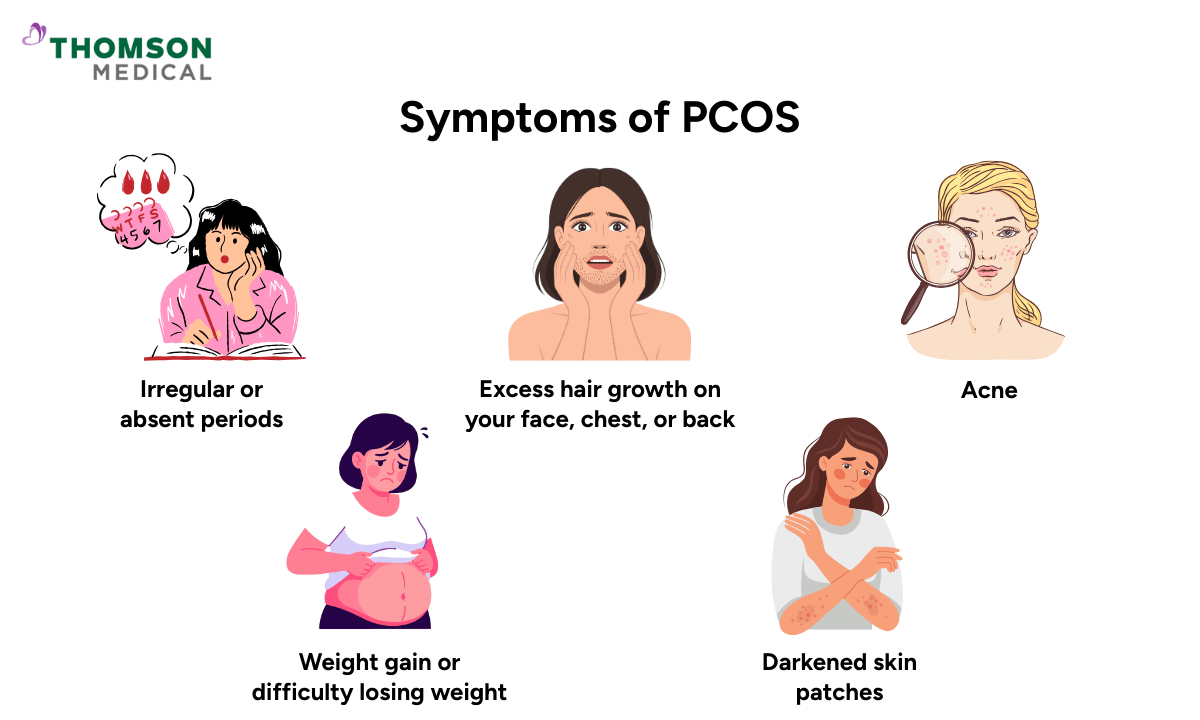
Unlike ovarian cysts, PCOS involves a range of symptoms that affect different parts of your body.
If you have PCOS, you may notice:
Irregular or absent periods
Excess hair growth on your face, chest, or back
Acne, especially along your jawline, chest, and upper back
Weight gain or difficulty losing weight
Darkened skin patches, particularly in body creases
The symptoms of PCOS tend to be more persistent and widespread as compared to ovarian cysts. This may sound worrying, but PCOS is manageable. Your doctor will work with you to understand your symptoms, talk through your options, and help you decide on the next steps that feel right for you.
Appearance on Ultrasound
When your doctor performs an ultrasound, ovarian cysts and PCOS show up quite differently.
Ovarian cysts | PCOS |
|
|
An ultrasound is just one part of the diagnostic process. Your doctor will also consider your ultrasound findings along with your symptoms, medical history, and hormone levels to have the accurate assessment of your condition.
If you have questions about your ultrasound, your doctor will take the time to explain what they find and what it means for your health.
Hormone levels
Hormone testing is one of the clearest ways that helps your doctor distinguish between ovarian cysts and PCOS, because these conditions have different hormonal profiles.
Ovarian cysts
With ovarian cysts, your hormone levels are usually:
Normal in most cases
Occasionally showing temporary hormone fluctuations
PCOS
With PCOS, blood tests often reveal:
Elevated androgen levels (testosterone, DHEAS)
Higher LH (luteinising hormone) to FSH (follicle-stimulating hormone) ratio
Elevated insulin levels or insulin resistance
Sometimes lower progesterone levels due to irregular ovulation
These hormonal changes are important for diagnosing PCOS. They explain many of the symptoms you may experience, from irregular periods to excess hair growth.
Impact on fertility
If you’re trying to get pregnant, it’s natural to wonder how ovarian cysts or PCOS may affect your fertility.
Ovarian cysts
In most cases, ovarian cysts don’t affect your fertility. However, if they’re large, they may block or disrupt your ovaries or fallopian tubes, which affects your fertility.
Fortunately, your fertility usually returns to normal once the cysts are treated or resolve on their own, especially with functional cysts.
PCOS
PCOS, on the other hand, can have a more significant impact on fertility. When your ovulation is irregular or absent, it may make it harder for you to predict fertile windows. This means you may need more time to conceive naturally.
That said, if you’re concerned about your fertility, don’t hesitate to discuss it with your doctor. Many women with PCOS can successfully have a baby with the right treatment. Meeting with a fertility expert can help you explore your options and tailor the care plan based on your fertility goals.
If something doesn’t feel right or you’re unsure whether you have ovarian cysts or PCOS, schedule an appointment with Thomson Medical. Our specialist will evaluate your condition and create a personalised treatment plan for you.
Our women’s health specialist
Loading...
How doctors diagnose ovarian cysts and PCOS
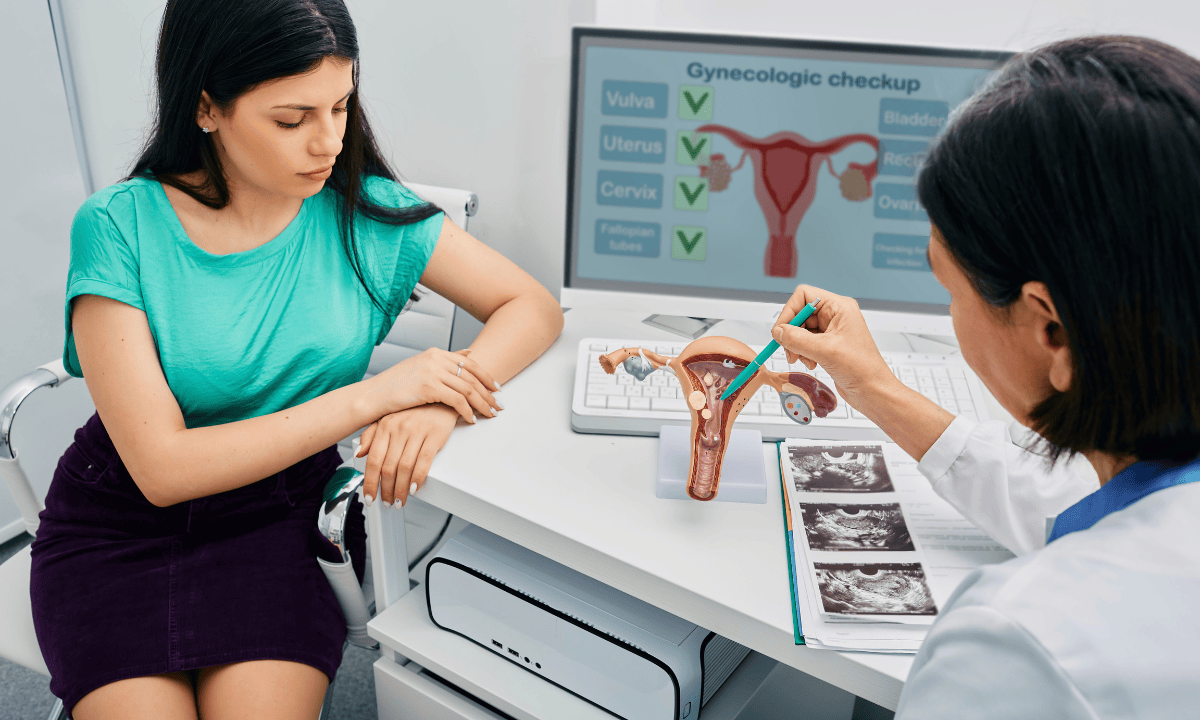
When you're experiencing symptoms, checking with your doctor will give you clear answers. To find out what’s going on, your doctor will combine different approaches.
Ovarian cyst
Your doctor may start with a pelvic exam. If they find something, such as enlarged areas or masses, they may order an ultrasound scan to get a clear picture of the cyst’s size, location, and characteristics.
Most of the time, your doctor will suggest monitoring the cyst with follow-up ultrasounds (usually 1-3 months) to see if it goes away naturally. For complex cysts, they may order blood tests, such as CA-125, to check for any concerns.
PCOS
PCOS diagnosis is based on the Rotterdam criteria, which require at least 2 out of 3 of the following:
Hyperandrogenism:
Excess hair growth, acne, or blood test results showing high androgen levels.
Irregular or absent periods:
Fewer than 8 periods per year or cycles longer than 35 days.
Polycystic ovaries:
More than 12 follicles in one ovary and/or an ovarian volume of more than 10 cm³ on pelvic ultrasound.
The diagnostic process may take some time, but this helps ensure you receive the right care for your specific condition.
Treatment options for ovarian cysts and PCOS
Fortunately, both ovarian cysts and PCOS can be managed effectively with the right treatment approach. Your doctor will work with you to create a treatment plan based on your symptoms, health goals, and whether you’re trying to get pregnant.
Ovarian cysts
Most ovarian cysts don’t require any treatment at all, especially if they’re small.
If you have these cysts, your treatment plan may include:
Watchful waiting:
Most functional cysts usually go away on their own. Still, your doctor will suggest an ultrasound follow-up within a few weeks or months to monitor them.
Medications:
Your doctor may prescribe hormonal birth control pills (also called oral contraceptive pills).
Surgery:
In some cases, if your ovarian cysts are large and cause persistent symptoms, your doctor may discuss surgical removal of the cysts.
PCOS
PCOS treatment focuses on managing symptoms and reducing health risks in the long term. Because PCOS affects different parts of your body, your care plan may include several approaches.
Here’s what you can expect:
Contraception:
Your doctor may prescribe birth control pills to regulate your menstrual cycles.
Insulin-sensitising medication:
Metformin is a medication that helps control insulin. This medication also reduces ovarian androgen production, which helps manage PCOS symptoms.
If you are planning to have a baby, your doctor will suggest:
Fertility drugs:
These medications help trigger ovulation (the release of eggs), such as clomiphene citrate, letrozole, or gonadotropins.
In-vitro fertilisation (IVF):
Your doctor will recommend IVF when the fertility medication doesn’t work well. Your eggs are collected and fertilised with your partner’s sperm in a lab before being transferred to your uterus.
Every woman's experience with ovarian cysts or PCOS is different. Because of this, your doctor will consider your specific symptoms, medical history, and personal goals when discussing the right approach for you. If you have questions about any aspect of your care, they can provide information tailored to your circumstances.
If you're concerned about PCOS, ovarian cysts, or other potential reproductive health issues, schedule an appointment with Thomson Medical. Our specialists will take the time to understand your symptoms, answer your questions, and work with you to create a personalised care plan that supports your health and fertility goals.
FAQ
Can ovarian cysts turn into PCOS?
No, ovarian cysts cannot turn into PCOS. These are two separate conditions with different underlying causes.
PCOS is a hormonal disorder (high androgens, insulin resistance) causing irregular periods, while ovarian cysts are fluid-filled sacs, often from the menstrual cycle.
Is PCOS more serious than ovarian cysts?
Yes, PCOS is generally considered more serious than common ovarian cysts. PCOS is a chronic hormonal disorder with systemic effects, increasing the risk for diabetes, heart disease, and infertility.
Ovarian cysts, on the other hand, are harmless and temporary fluid sacs, though large or ruptured ones can cause pain or complications.
Can you have both ovarian cysts and PCOS at the same time?
Yes, you can have ovarian cysts and PCOS at the same time. This is because PCOS often causes multiple small follicles (often called cysts) to form on the ovaries due to hormonal imbalances. However, you can also have regular cysts separately from PCOS.
Do ovarian cysts cause weight gain like PCOS does?
Ovarian cysts may cause temporary weight gain from bloating or fluid accumulation in your body, while PCOS is a metabolic disorder that can cause weight gain because of insulin resistance.
However, if you experience ovarian cysts with sudden and persistent weight gain, it is important to see your doctor as soon as possible.
How are treatments for ovarian cysts and PCOS different?
Ovarian cysts often need monitoring or removal, while PCOS is managed with lifestyle changes and medication to balance hormones and regulate cycles.
Can lifestyle changes help manage both conditions?
Yes, lifestyle changes are crucial for managing both PCOS and ovarian cysts. They help improve:
Insulin sensitivity
Regulate hormones
Manage weight
Reduce inflammation
All of these help address the root causes and symptoms of PCOS and may help prevent common functional cysts.
The information provided is intended for general guidance only and should not be considered medical advice. For personalised recommendations and advice based on your unique situation, please consult a specialist at Thomson Medical. Request an appointment with Thomson Medical today.
For more information, contact us:
Thomson Specialists (Women's Health)
Thomson Women's Clinic (TWC)
- Novena:
6592 6686 (Call), 8611 8986 (WA) - Bukit Batok:
6569 0668 (Call), 8686 3525 (WA) - Choa Chu Kang:
6893 1227 (Call), 8282 1796 (WA) - Jurong:
6262 8588 (Call), 6262 8588 (WA) - Katong (female doctor):
6970 2272 (Call), 8611 9020 (WA) - Punggol:
6243 6843 (Call), 8811 0328 (WA) - Sembawang: 6753 5228
- Sengkang: 6388 8125
- Serangoon (female doctor): 6382 3313
- Tampines: 6857 6266
- Tiong Bahru: 6276 1525
Notice
The range of services may vary between TWC/TS locations. Please contact your preferred branch directly to enquire about the current availability.
Request an Appointment