

If you've had a hysterectomy or are preparing for one, wondering about weight changes is completely natural. It is one of the most common concerns women have after this surgery, and it makes sense to want to know what lies ahead.
A hysterectomy does not directly cause weight gain. However, your body does go through changes during recovery time that can affect your weight.
Understanding why weight changes happen after a hysterectomy, and what factors play a role, can help you feel more prepared during recovery.
What to expect after a hysterectomy
Recovery time varies depending on the type of hysterectomy surgery you had. A minimally invasive (laparoscopic or vaginal) procedure typically takes 2 to 4 weeks. An open abdominal hysterectomy usually requires 6 to 8 weeks. Your surgeon will give you a more personalised timeline.
During this time, you'll usually be less active than usual. It's normal to notice changes in your weight, belly shape, and energy levels. For most women, weight stabilises within a few months as activity returns to normal and post-surgical fluid retention settles.
Does a hysterectomy directly cause weight gain?
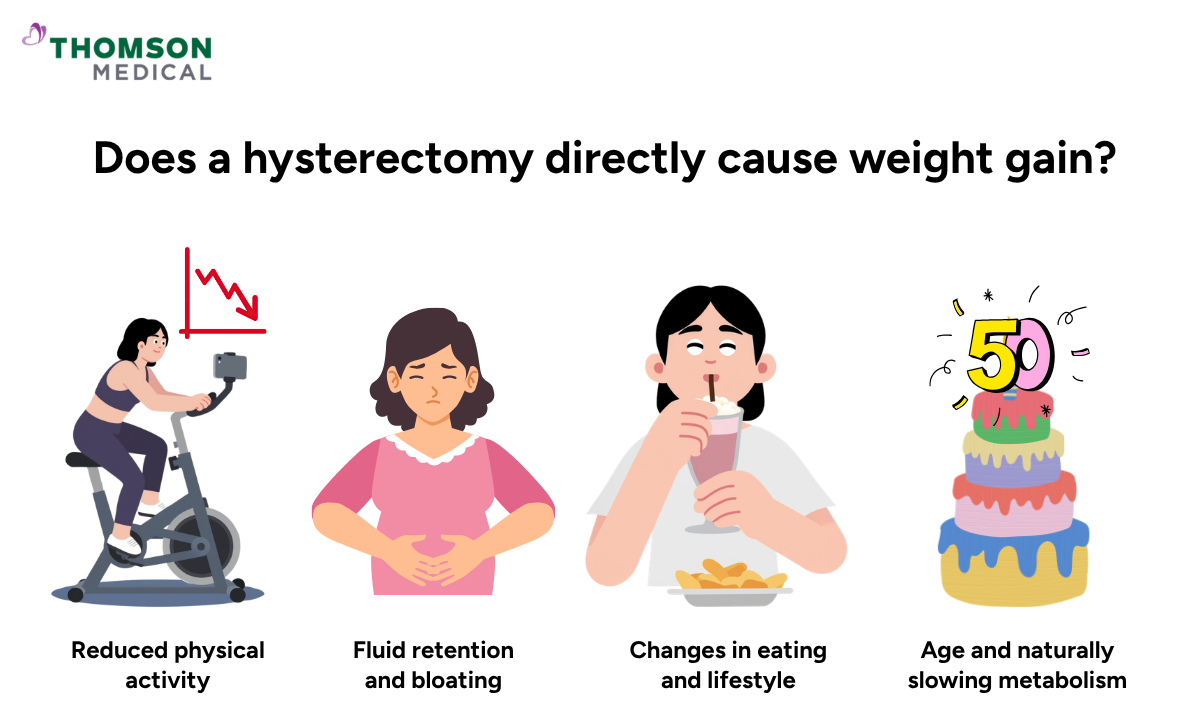
While the surgery itself isn't the direct cause, weight changes after a hysterectomy don't happen without a reason. Several factors during recovery can contribute to weight changes.
Hormonal changes
Whether your ovaries were removed during surgery makes a difference here. If your ovaries were removed, your oestrogen and other hormones would drop suddenly. This can slow your metabolism, redistribute fat towards your abdomen, and lead to gradual loss of muscle mass.
If your ovaries were kept, hormonal changes are usually minimal, and weight changes are less likely to be hormone-related.
Reduced physical activity
In the first few weeks after surgery, your movement will be limited. This means you're burning fewer calories than usual, which can lead to small, short-term changes in your weight.
Fluid retention and bloating
Swelling after surgery is normal. Your body retains fluid as part of the healing process, which can temporarily increase the number on the scale. This usually resolves within a few weeks as healing progresses.
Changes in eating and lifestyle
Recovery can be emotionally and physically draining. Stress, changes in appetite, or side effects from pain relief medication can all affect how much or what you eat, which may have a short-term impact on your weight.
Age and naturally slowing metabolism
If you're in your 40s or 50s, your metabolism may already be naturally beginning to slow. This isn't caused by the surgery and is a normal part of ageing.
Some people notice a small increase in weight in the first few months after surgery. However, most of this is temporary fluid retention and reduced activity rather than permanent fat gain. The important thing to know is that these changes are not a sign that something is wrong with your recovery.
Weight fluctuations can be common during recovery time after a hysterectomy. Request an appointment with Thomson Medical to discuss what’s normal, what to watch for, and strategies to maintain your wellbeing.
How to manage your weight gain after a hysterectomy
Weight changes during recovery are often temporary. Making some simple lifestyle changes can support your healing and help you manage your weight during recovery.
Eat well to support your recovery
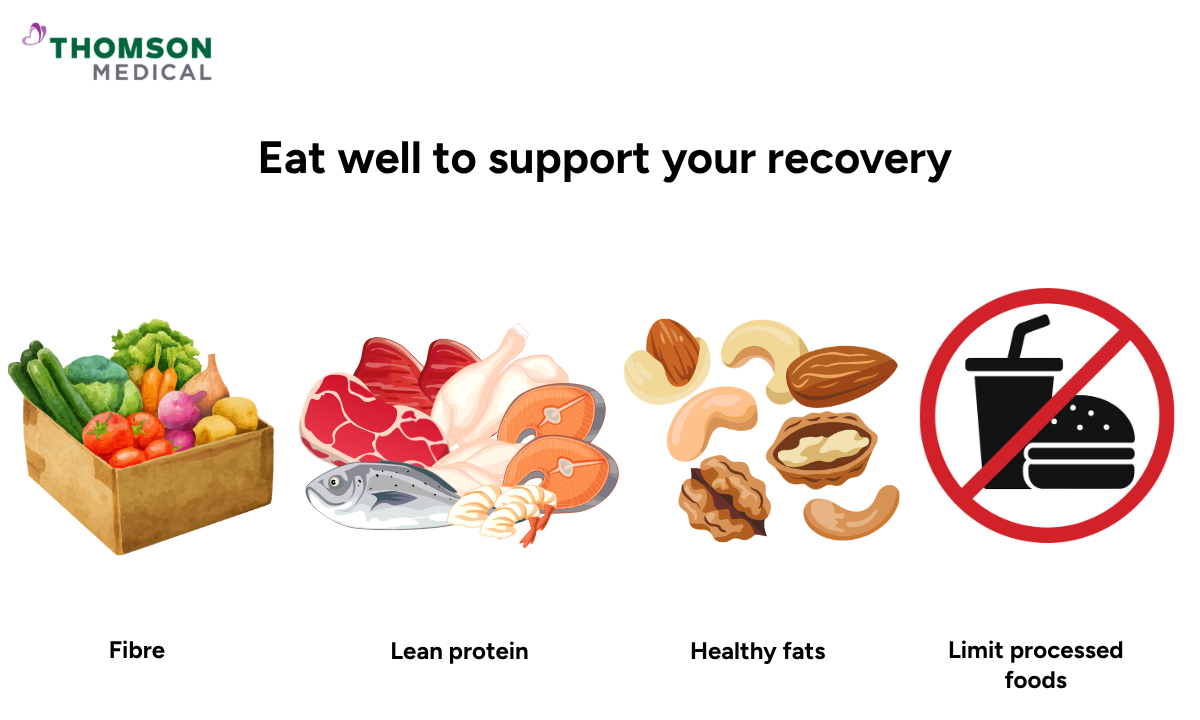
During recovery, your body needs more nutrients than usual as it repairs tissue, manages inflammation, and adjusts to hormonal changes.
A few simple changes can go a long way:
Eat plenty of fibre through vegetables, fruits, and whole grains to support digestion and help you feel fuller for longer
Include lean protein such as fish, chicken, eggs, and legumes, which help preserve muscle mass during recovery
Choose healthy fats like nuts, seeds, avocado, and olive oil, which support your overall health and help you feel satisfied between meals
Limit processed foods, sugary drinks, and excess salt, as these can contribute to bloating and make weight management harder
Drink plenty of water to stay hydrated, support your metabolism, and reduce bloating
You don’t need to change everything at once. By focusing on balanced nutrition and staying well hydrated, you can support your recovery while also caring for your overall well-being during this time.
Move at your own pace
Getting back to physical activity is an important part of recovery, but taking it slowly matters.
You may start with gentle movement and build up over time.
Weeks 0 to 2:
Start with short, gentle walks around the house.
Weeks 2 to 6:
Gradually increase your walking time and add gentle stretching.
Weeks 6 to 12:
Introduce light strength training and pelvic floor exercises, if you have been cleared to do so.
If you had an open abdominal hysterectomy, core and abdominal exercises may need to be delayed further.
After 12 weeks:
Progress to moderate cardio and resistance training, with your doctor's approval.
Pelvic floor and core exercises are especially important during this time, as they support your pelvic area and help with internal recovery. Once you’re past 12 weeks, aim for at least 150 minutes of moderate activity each week to maintain muscle, support your metabolism, and keep you feeling well.
Always follow your doctor's guidance on when it is safe to resume activity, as everyone's recovery is different.
Be kind to yourself
After a hysterectomy, your body is adjusting to important changes, whether that is hormonal shifts, reduced activity, or both. It's easy to focus on the scale during this time, but weight is just one part of a much bigger recovery picture.
These small shifts in focus can help:
Track how you feel, how your clothes fit, and improvements in your strength and energy, rather than focusing solely on the number on the scale
Set practical goals that account for hormonal changes and the time your body needs to heal
Celebrate small steps forward, because they all add up
Being patient with your body during this time is just as important as any dietary or lifestyle change you make.
Can hormone replacement therapy help with weight?
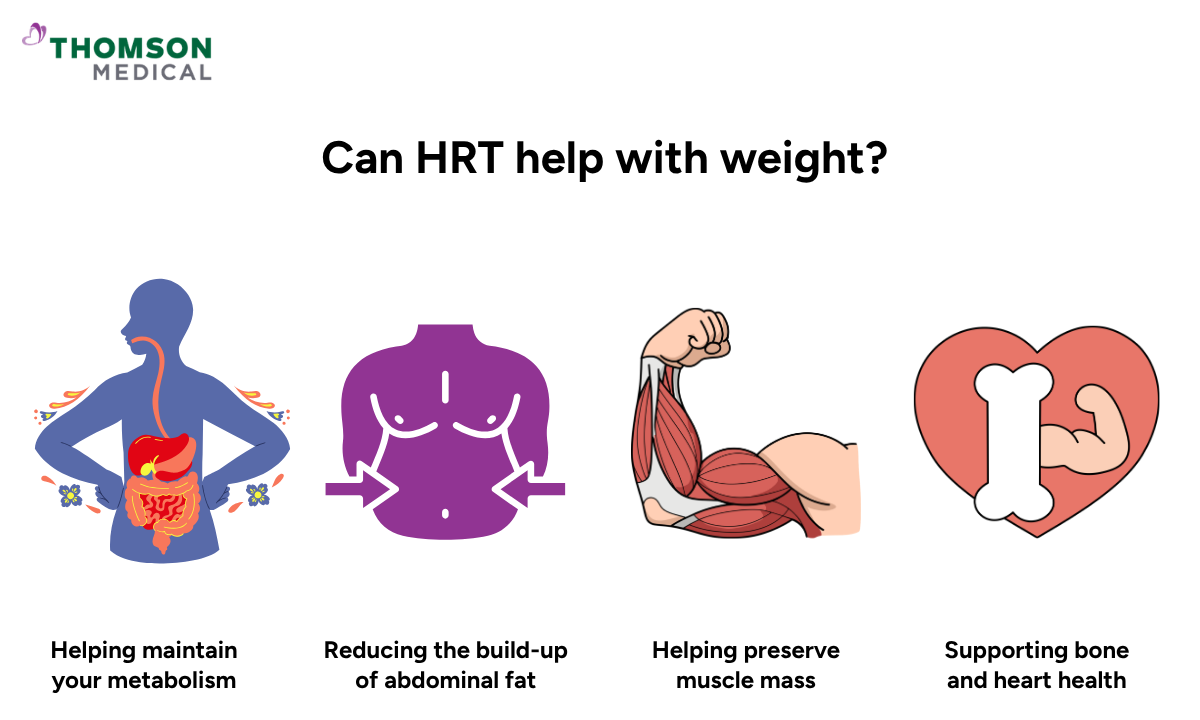
If your ovaries were removed, your doctor may discuss hormone replacement therapy (HRT) with you. HRT restores oestrogen levels, which can help your body adjust to the hormonal shifts that follow surgery.
When it comes to weight specifically, HRT may help by:
Helping maintain your metabolism
Reducing the build-up of abdominal fat that can follow a drop in oestrogen
Helping preserve muscle mass
Supporting bone and heart health, which are also affected by falling oestrogen levels
Some women worry that HRT will cause weight gain. For most women, this is unlikely – and for some, it may actually support healthier body composition after surgery. However, HRT isn't suitable for everyone, and your doctor will consider your full medical history before recommending it.
Recovery is different for everyone, and it’s normal if yours doesn’t follow a straight line. Weight changes after a hysterectomy are related to your body healing, your hormones adjusting, and your activity gradually returning to normal. With consistent steps, many women find their weight and energy return to a comfortable level over time.
If you’re experiencing weight changes after your hysterectomy, request an appointment with Thomson Medical. Our specialists can discuss whether hormone replacement therapy (HRT) is suitable for you and provide personalised guidance to support your recovery and wellbeing.
Our hysterectomy surgeons in Singapore
Loading...
FAQ
Is it hard to lose weight after a hysterectomy?
It can feel harder for some women, particularly if your oestrogen levels have dropped after ovary removal. However, with a healthy diet and gradual return to regular exercise, managing your weight is very much possible.
Does your belly change after a hysterectomy?
It can. Some women find their lower belly feels flatter after the uterus is removed. However, if oestrogen levels drop, fat may shift towards your midsection (around the stomach and waist) over time.
Why have I gained weight after a hysterectomy?
It’s most often a combination of reduced activity, hormonal shifts, fluid retention, and changes in appetite or stress levels. Speaking to your doctor may help you work out which factors apply to you.
What should I eat after a hysterectomy?
Focus on fibre, dietary protein, and healthy fats. Vegetables, fruits, whole grains, fish, eggs, and legumes are all good choices. Try to limit processed foods, added sugars, and excess salt.
Does it matter whether my ovaries were removed?
Yes. If your ovaries were removed, you may be more likely to gain weight around your abdomen due to falling oestrogen levels. If your ovaries were kept, weight changes are more likely linked to recovery and lifestyle factors.
Why do some women gain weight after a hysterectomy while others lose it?
Every woman's experience is different. Some lose weight if fibroids or the uterus was contributing to bloating beforehand. For others, reduced activity and hormonal changes tip the balance the other way.
The information provided is intended for general guidance only and should not be considered medical advice. For personalised recommendations and advice based on your unique situation, please consult a specialist at Thomson Medical. Request an appointment with Thomson Medical today.
For more information, contact us:
Thomson Specialists (Women's Health)
Thomson Women's Clinic (TWC)
- Novena:
6592 6686 (Call), 8611 8986 (WA) - Bukit Batok:
6569 0668 (Call), 8686 3525 (WA) - Choa Chu Kang:
6893 1227 (Call), 8282 1796 (WA) Jurong:
6262 8588 (Call), 6262 8588 (WA)- Katong (female doctor):
6970 2272 (Call), 8611 9020 (WA) - Punggol:
6243 6843 (Call), 8811 0328 (WA) - Sembawang: 6753 5228
- Sengkang: 6388 8125
- Serangoon (female doctor): 6382 3313
- Tampines: 6857 6266
- Tiong Bahru: 6276 1525