
.png%3Fbranch%3Dprod&w=3840&q=75)
Waking up with red, itchy and inflamed skin, despite following a careful skincare routine, can be worrying and frustrating. It's likely that you're experiencing an eczema flare-up, which can interfere with your sleep and daily routine. Identifying your triggers and choosing the right treatment can help you find relief.
What is an eczema flare-up?
.png?branch=production)
An eczema flare-up occurs when the symptoms of eczema suddenly worsen or return after initially showing signs of improvement. Your skin becomes more inflamed and red with a skin rash, and it can become extremely itchy.
What causes a flare-up is that something has triggered your immune system to become overactive, resulting in inflammation that weakens your natural skin barrier. Everyone's experience is different. Some people only experience the occasional flare-up, while others find themselves managing them regularly.
Common triggers of eczema flare-ups
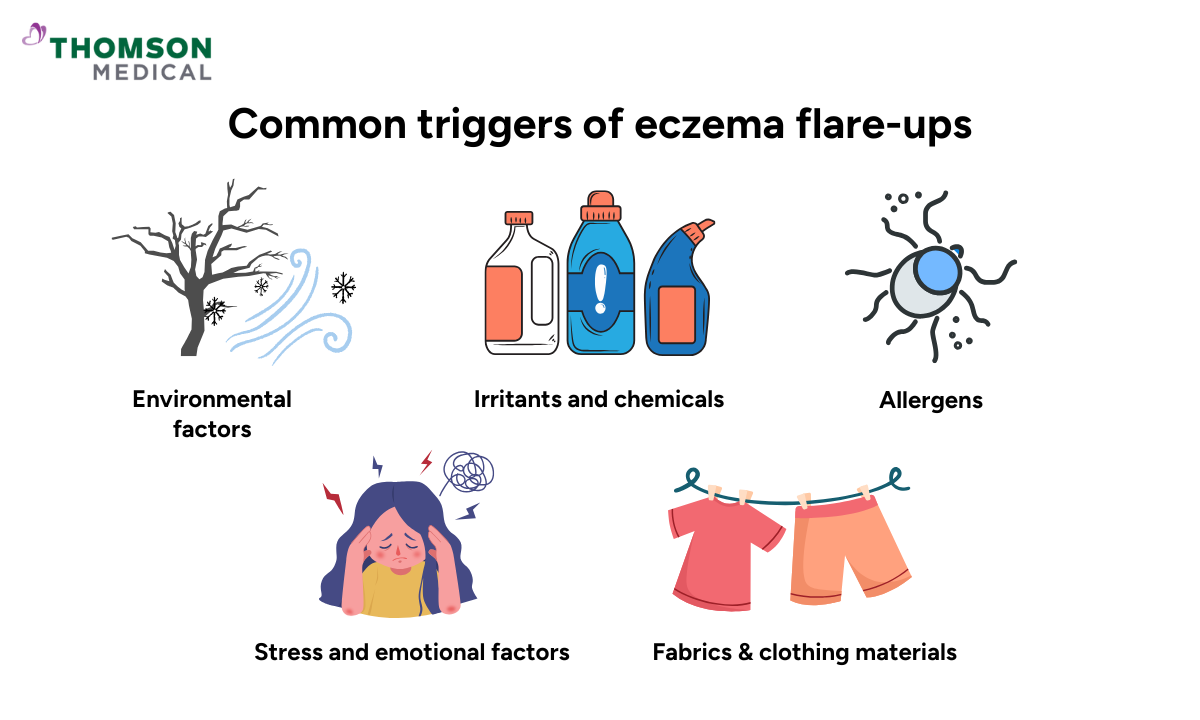
Knowing what sets off flare-ups is key to preventing them. Once you have identified these common triggers, you can avoid them and keep your skin calm.
Environmental factors
Sometimes, the culprit is in the air around you. For example, the cold, dry conditions of winter can leave your skin parched and vulnerable. Similarly, summer's heat and humidity can cause you to sweat more, which may irritate sensitive skin.
The quality of the air you breathe also matters, as pollution and indoor pollutants, such as cigarette smoke, can worsen inflammation.
Irritants and chemicals
You might be surprised to learn that everyday products sitting in your bathroom or laundry room could be working against you. Common culprits include:
Harsh soaps and body washes with strong fragrances
Laundry detergents and fabric softeners containing perfumes or dyes
Household cleaning products with strong chemicals
Hand sanitisers and disinfectants that dry out your skin
Many people might not realise this, but just because a product is labelled "natural" doesn't mean that it won't irritate your skin. Always test new products on a small patch of your skin first.
Allergens
Your immune system might be reacting to things you encounter every day, such as:
- House dust mites in bedding, carpets, and upholstered furniture (sofas, armchairs, etc.)
- Pet dander from cats, dogs, and other animals
- Pollen from trees, grasses, and weeds
- Mould spores in damp environments
- Certain foods, such as eggs, dairy, nuts, soy, and wheat
If you suspect allergens are triggering your flare-ups but aren't sure which ones, a skin prick test can provide clear answers. This simple diagnostic procedure tests your skin's reaction to small amounts of common allergens.
Stress and emotional factors
Your emotional state has a direct impact on your skin's condition. Stress, worry, and anxiety don't just live in your head. They release hormones that travel through your body, sparking inflammation wherever your skin is vulnerable.
Therefore, taking time to breathe deeply, move your body, or share your worries with someone who cares can genuinely help your skin heal.
Fabrics and clothing materials
What you wear next to your skin is more important than you might think. Scratchy wool jumpers or synthetic workout clothes can trap sweat and cause friction, which can worsen inflammatory skin conditions.
Stick with cotton where possible, and wash new clothes before wearing them for the first time to remove any manufacturing chemicals that could trigger flare-ups.
If you're struggling to identify your triggers or manage flare-ups on your own, schedule an appointment with Thomson Specialist Skin Centre. Our skin specialist (dermatologist) can help identify the cause of the flare-ups and recommend the most suitable treatments.
Symptoms of an eczema flare-up
Catching an eczema flare-up early gives you the best chance of getting ahead of it. During a flare-up, you may experience the following symptoms:
- Intense itching that worsens at night and disrupts your sleep
- Red or darkened patches of skin, depending on your skin tone
- Dry, cracked, or scaly skin that feels rough to the touch
- Small, raised bumps that may leak fluid when scratched
- Swollen or inflamed skin in the affected areas
- Sensitive skin from scratching
- Thickened skin from chronic scratching and rubbing
You'll most often notice these changes on your hands, feet, elbows, knees, face, and neck, but flare-ups can pop up anywhere. Severe symptoms can make your skin crack and bleed, thereby increasing the risk of infection.
Our skin specialist in Singapore
Loading...
How to treat an eczema flare-up at home
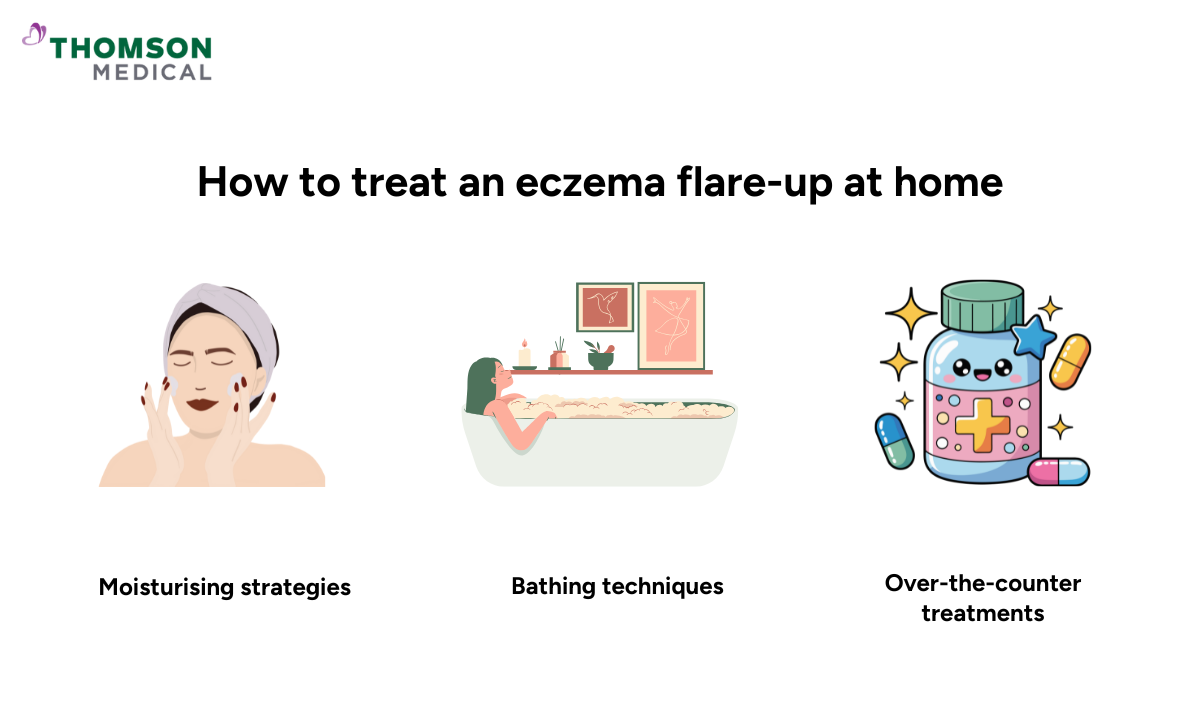
When a flare-up begins, responding quickly can make a difference. These home remedies can help soothe your skin and keep the discomfort from escalating.
Moisturising strategies
Keeping your skin well hydrated is the basic step in managing eczema. Immediately after bathing, apply a thick, fragrance-free moisturiser or topical cream to damp skin to seal in moisture.
Reapply throughout the day, particularly to areas that tend to dry out. Seek products containing ceramides to rebuild your skin's barrier or ingredients such as colloidal oatmeal to calm irritation.
Cool compresses and bathing techniques
When the itching feels unbearable, reach for a cool, wet compress. Press it gently against the inflamed area and leave it there for 10 to 15 minutes.
Your bath routine matters too. Soak in lukewarm water for 10 to 15 minutes, adding colloidal oatmeal or bath oil to the water for extra soothing power. Hot water might feel tempting, but it actually strips away the oils your skin needs. When you're done, pat yourself dry with a soft towel instead of rubbing.
Over-the-counter treatments
You don't always need a prescription to find relief. Several over-the-counter options can help, such as:
Hydrocortisone cream (1%) can reduce inflammation and itching when applied as directed
Anti-itch lotions containing pramoxine or menthol provide temporary relief
Antihistamines can help reduce itching, especially at night
Read the instructions carefully. If you're considering using hydrocortisone cream on your face or for more than a week, check with your skin specialist first.
Preventing future eczema flare-ups
Prevention is your best defence against eczema flare-ups. By taking consistent care of your skin and avoiding known triggers, you can reduce how often flare-ups happen and how severe they are.
Here are some practical steps that can help protect your skin:
Identify and avoid your personal triggers by keeping a diary of flare-ups
Use gentle, fragrance-free products on your skin and for laundry
Keep your fingernails short to minimise damage from scratching
Wear soft, breathable fabrics like cotton
Maintain a comfortable room temperature and humidity level
Manage stress through relaxation techniques, exercise, or counselling
Stay hydrated by drinking plenty of water throughout the day
Small, daily routines like these can add up to make a meaningful difference. When you stay consistent with your skincare habits, you're giving your skin the support it needs to stay calmer and healthier.
When to see a doctor for an eczema flare-up
While home care is effective for many flare-ups, there are times when professional help is necessary. You should see a doctor if:
Your flare-up doesn't improve after one week of home treatment
The itching is severe enough to disrupt your sleep or daily activities
You notice signs of infection, such as increased redness, warmth, swelling, pus, or fever
The affected area is spreading rapidly despite treatment
Your eczema is affecting your quality of life or mental wellbeing
You're unsure about which treatments are safe to use
If you're experiencing any of these symptoms, schedule an appointment with Thomson Specialist Skin Centre. Our doctors can provide a complete evaluation and work with you to find the right treatment approach.
FAQ
How long does an eczema flare-up last?
An eczema flare-up often lasts a few days to several weeks, depending on the severity and how quickly you start treatment. With proper care and medication, most flare-ups improve within one to three weeks. Without treatment or continued exposure to triggers, symptoms may last longer.
Is eczema contagious?
No, eczema is not contagious. You cannot catch it from someone else or pass it to others through physical contact. Eczema is caused by a combination of genetic factors and an overactive immune response, not by bacteria or viruses that spread between people.
Can eczema be cured permanently?
There is no permanent cure for eczema at this time. It can be effectively managed with proper skincare, trigger avoidance, and medical treatments when needed. Many children with eczema see their symptoms improve or disappear as they grow older, though some people continue to experience flare-ups throughout their lives.
Can stress cause eczema flare-ups?
Yes, stress is a common trigger for eczema flare-ups. When you're stressed, your body releases hormones that can trigger inflammation and worsen your symptoms. Managing stress through techniques like deep breathing, meditation, regular exercise, and getting enough sleep can help reduce how often flare-ups occur.
Should I moisturise during a flare-up?
Yes, moisturising is essential during an eczema flare-up. Apply a thick, fragrance-free moisturiser several times a day to help repair your skin's barriers and reduce dryness. Moisturising works best when combined with prescribed treatments and can speed up your recovery.
Can diet affect eczema flare-ups?
For some people, certain foods can trigger eczema flare-ups, especially if they have food allergies. Common trigger foods include eggs, dairy, nuts, soy, and wheat, although they can vary between individuals. If you suspect a food is causing your flare-ups, keep a food diary and talk to your doctor before making dietary changes.
The information provided is intended for general guidance only and should not be considered medical advice. For personalised recommendations and tailored advice based on your unique situation, please consult a specialist at Thomson Specialist Skin Centre. Schedule an appointment with Thomson Specialist Skin Centre today.