
.png%3Fbranch%3Dprod&w=3840&q=75)
When you have unpredictable spotting between periods or heavier flows than usual, it can feel unsettling and frustrating. If tests have shown endometrial polyps, it is natural to have questions about what this means and whether treatment will help you feel better.
Endometrial polypectomy is a commonly performed procedure in Singapore that removes these growths and helps address the symptoms they may cause. Learning how the procedure works, what recovery involves, and whether it is the right option for you can help you move forward with greater clarity and confidence.
What is endometrial polypectomy?
Endometrial polypectomy is a procedure to remove polyps from your uterine lining. These are small, soft growths attached to the uterine wall, ranging from a few millimetres to several centimetres in size.
The procedure is performed using hysteroscopy. A thin tube with a camera is gently guided through your vagina and cervix, allowing your doctor to see inside your uterus and remove the polyps without any external cuts.
While most endometrial polyps are benign and non-cancerous, it’s natural to feel unsettled when you discover any growth. Removing them not only helps relieve uncomfortable symptoms but also gives you clarity and reassurance through proper tissue examination. This way, you can move forward with peace of mind about your health and well-being.
Symptoms of endometrial polyps
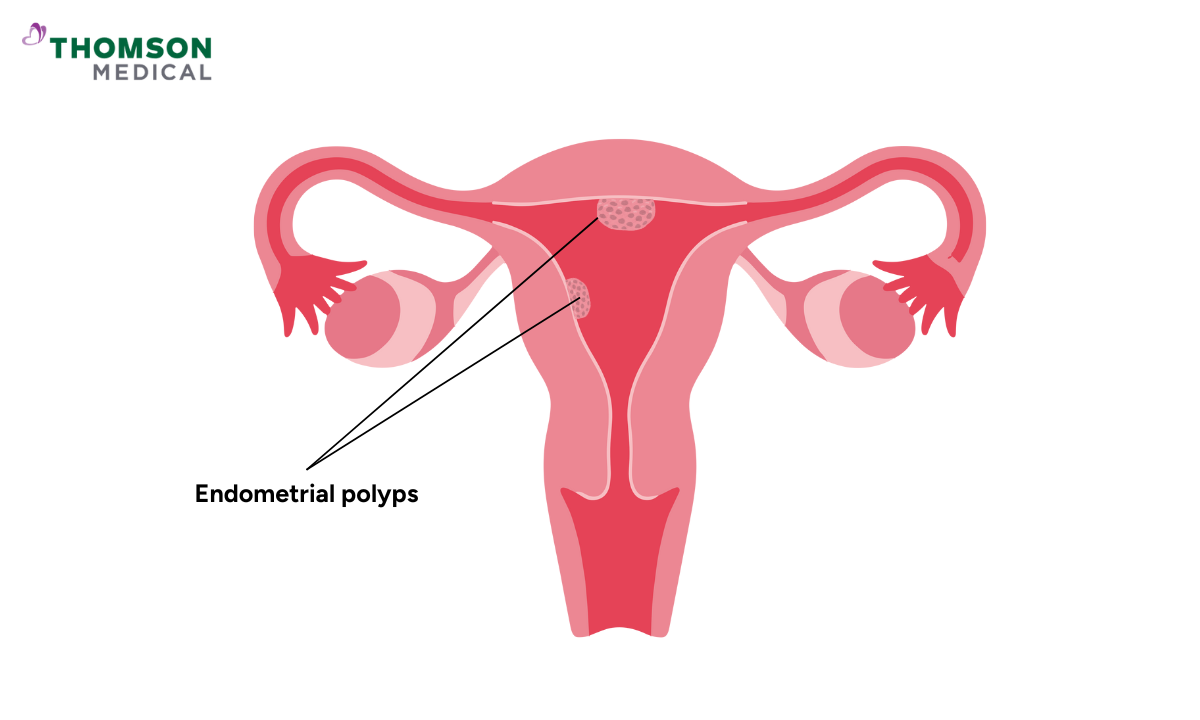
Many women with endometrial polyps don't experience any symptoms at all. The polyps are often only discovered during routine examinations or scans. When symptoms do appear, they can start to affect how you feel day to day.
If you have endometrial polyps, you might notice:
Irregular menstrual bleeding, such as bleeding between periods or unpredictable cycle lengths
Heavy menstrual periods that last longer than usual
Bleeding after menopause
Difficulty getting pregnant or recurrent miscarriages
Spotting or light bleeding after sexual intercourse
While these symptoms can stem from different causes, it's worth having them checked – especially if you're noticing bleeding after menopause, ongoing irregular bleeding that's affecting your daily life, or finding it difficult to conceive after several months of trying.
Early evaluation helps your doctor identify the cause and recommend the right treatment for you. Addressing these concerns means you can return to your daily routine with greater ease and confidence, without the worry of potential long-term complications affecting your health or fertility goals.
If you're experiencing any of these symptoms, schedule an appointment with Thomson Medical, where our specialists can assess your condition and discuss the appropriate options for you.
Endometrial polypectomy procedure in Singapore
It’s completely natural if you're feeling uncertain about what lies ahead. Knowing what to expect during your endometrial polypectomy can help ease those concerns and help you feel more prepared.
What to expect before the procedure
Your doctor will first confirm the polyps through a pelvic ultrasound or hysteroscopy. You'll also discuss your medical history and any medications you're currently taking.
Before the procedure, there are a few simple steps to follow:
Avoid eating or drinking for 6 to 8 hours if you're having sedation or anaesthesia
Arrange for someone to take you home afterwards
Stop taking certain medications, such as blood thinners, if your doctor advises
The procedure is usually scheduled during the first half of your menstrual cycle. This is when your uterine lining is thinner, making it easier for your doctor to see and remove the polyps.
During the endometrial polypectomy procedure
The procedure itself is relatively quick, usually taking 15 to 30 minutes. It's done as an outpatient procedure, which means you'll be able to go home the same day.
You'll receive either local anaesthesia with sedation or general anaesthesia, depending on what your doctor recommends and what feels right for you. The anaesthesia ensures you won't feel any discomfort during the procedure.
Once you're comfortable and relaxed, your doctor will:
Gently guide a hysteroscope through your vagina and cervix into your uterus
Look at the uterine lining to find the polyps
Remove the polyps using specialised instruments
The removed tissue is sent to a laboratory for examination to confirm it's benign. Throughout the procedure, your medical team will be right there with you, monitoring you closely to make sure you're comfortable and safe.
After the endometrial polypectomy procedure
You'll rest in a recovery area for 1 to 2 hours while the anaesthesia wears off. Most women go home the same day.
In the days following your procedure, you may experience these signs:
Mild cramping similar to period pain
Light spotting or bleeding for a few days
Watery discharge
Most women return to their usual activities within 1 to 2 days. Your doctor may suggest avoiding strenuous exercise and sexual intercourse for about a week, as it allows your uterine lining to heal properly and reduces the risk of bleeding or infection.
Don’t hesitate to get in touch with your doctor if you notice heavy bleeding, severe pain, fever, or foul-smelling discharge. Your doctor will arrange a follow-up appointment to discuss the tissue examination results and see how you're recovering.
If you have questions about what to expect during recovery or are concerned about any post-procedure symptoms you're experiencing, schedule an appointment with Thomson Medical. Our team can provide guidance on your recovery and ensure you're healing properly.
Our obstetrics & gynaecology specialist
Loading...
Benefits of removing endometrial polyps
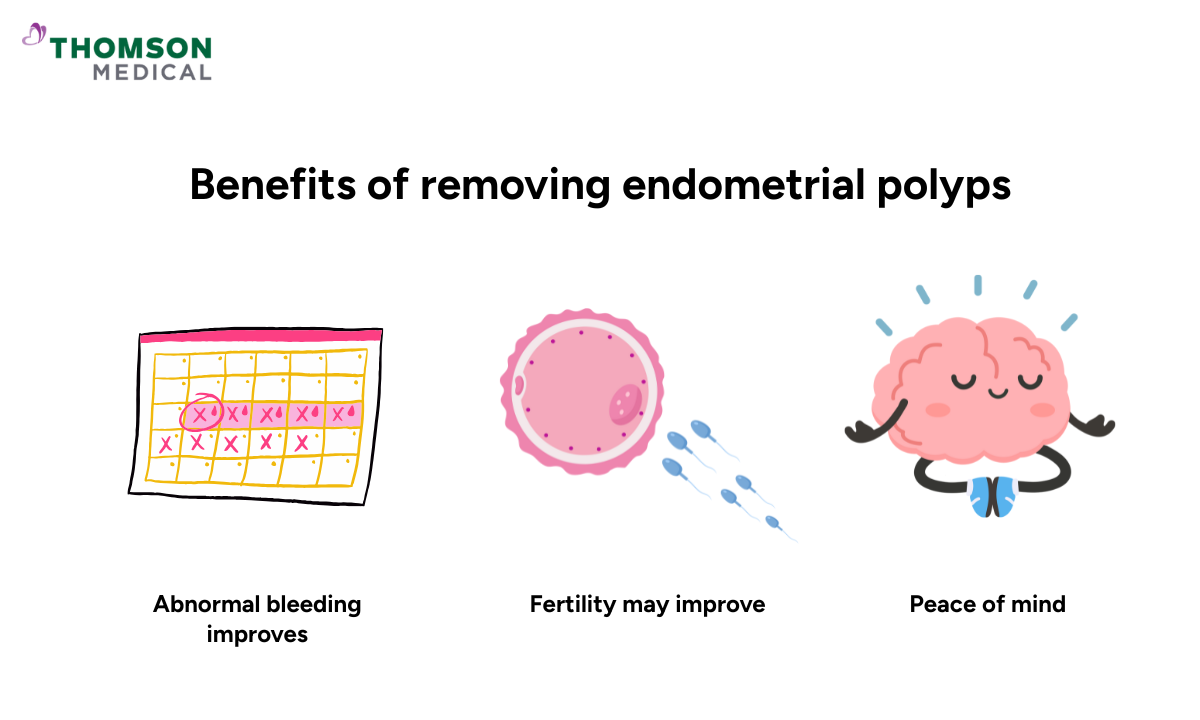
If you've been dealing with uncomfortable symptoms, removing endometrial polyps can make a real difference to how you feel day to day and help address health concerns that may be affecting you.
Here's what you might experience after endometrial polypectomy:
Your abnormal bleeding often settles down, giving you back a sense of control over your cycle and daily routine.
Your chances of conceiving may improve, as polyps can get in the way of embryo implantation or raise the risk of miscarriage.
You'll have peace of mind knowing the tissue has been examined and any serious conditions ruled out.
Once the polyps are gone, there's less chance of the same symptoms troubling you again.
Many women notice their symptoms ease within the first few menstrual cycles after the procedure, with periods becoming more predictable and manageable.
If heavy or irregular bleeding has been affecting your life, or if you're hoping to conceive, removing endometrial polyps may be a helpful step forward.
Cost of endometrial polypectomy in Singapore
Understanding the costs involved can help you plan ahead and make informed decisions about your care.
The cost of endometrial polypectomy in Singapore depends on several factors, including whether you choose a public or private hospital, the type of anaesthesia used, and how complex your procedure is.
You can expect costs to range from:
Public Hospitals (Subsidised):
SGD 620 to SGD 1,600
Public Hospitals (Private/Unsubsidised):
SGD 2,800 to SGD 4,000
Private hospitals:
SGD 6,600 to SGD 10,500 or more
Please note that these cost estimates are based on 2025/2026 rates and may change over time.
It's worth knowing that Medisave can often help you cover part of the procedure, subject to prevailing limits and eligibility criteria.
During your consultation, your doctor will provide a personalised cost estimate based on your specific needs. This is also a good opportunity to discuss payment options, insurance coverage, and any questions you may have about managing the costs.
While finances are naturally part of your decision-making, it helps to know that addressing symptomatic polyps can ease ongoing discomfort and support your fertility goals if you're hoping to conceive. Many women find that taking this step brings both physical relief and greater clarity about their reproductive health.
FAQ
Do all uterine polyps need to be removed?
Not always. Small, symptom-free polyps may simply be monitored. However, removal is usually recommended if you're experiencing symptoms like abnormal bleeding, have difficulty conceiving, or if your doctor needs to examine the tissue to rule out anything concerning.
What are the risks of polyp removal (polypectomy)?
Endometrial polypectomy is generally safe, but like any procedure, it carries some risks. These include infection, bleeding, damage to the uterine wall, and complications from anaesthesia, even though it’s rare. Your doctor will discuss these risks with you beforehand.
Can endometrial polyps be cancerous?
Most endometrial polyps are benign (non-cancerous). However, in rare cases, they can contain precancerous or cancerous cells, particularly in postmenopausal women. This is why removed polyps are always examined in a laboratory.
What is the recovery time after endometrial polypectomy?
Most women recover within 1 to 2 days and can return to normal activities quickly. You may experience mild cramping and light spotting for a few days. Your doctor will advise you to avoid strenuous activities for about a week.
Will polyp removal affect my fertility or chances of pregnancy?
No, removing polyps normally improves fertility rather than harming it. Polyps can interfere with embryo implantation, so their removal may actually increase your chances of conceiving.
Can endometrial polyps come back after they are removed?
Yes, polyps can recur in some women, particularly if underlying hormonal issues aren't addressed. Regular follow-up with your doctor can help monitor for any new growths.
The information provided is intended for general guidance only and should not be considered medical advice. For personalised recommendations based on your medical conditions, request an appointment with Thomson Medical.
For more information, contact us:
Thomson Specialists (Women's Health)
Thomson Women's Clinic (TWC)
- Novena:
6592 6686 (Call), 8611 8986 (WA) - Bukit Batok:
6569 0668 (Call), 8686 3525 (WA) - Choa Chu Kang:
6893 1227 (Call), 8282 1796 (WA) - Jurong:
6262 8588 (Call), 6262 8588 (WA) - Katong (female doctor):
6970 2272 (Call), 8611 9020 (WA) - Punggol:
6243 6843 (Call), 8811 0328 (WA) - Sembawang: 6753 5228
- Sengkang: 6388 8125
- Serangoon (female doctor): 6382 3313
- Tampines: 6857 6266
- Tiong Bahru: 6276 1525
Notice
The range of services may vary between TWC/TS locations. Please contact your preferred branch directly to enquire about the current availability.
Request an Appointment