
.png%3Fbranch%3Dprod&w=3840&q=75)
If you have had a hysterectomy and are still dealing with pelvic pain, you may be wondering whether something has been missed. Living with returning symptoms after a major surgery is exhausting, and it is worth getting an assessment to figure out what your body might be telling you.
Endometriosis after a hysterectomy is a real and recognised condition. With the right medical guidance, there are steps you can take to feel more like yourself again.
Can you still have endometriosis after a hysterectomy?
.png?branch=production)
It may come as a surprise, but endometriosis can sometimes persist even after a hysterectomy.
This is because endometriosis is not a disease of the uterus itself. It is a condition where tissue similar to your uterine lining grows outside your uterus, in areas such as the ovaries, bowel, bladder, or deeper pelvic tissues.
Because these implants exist beyond the uterus, removing the uterus alone may not remove all of them. If any tissue remains, it can continue to cause symptoms. Many women do find meaningful relief after a hysterectomy, though it may not be a complete cure for everyone.
Why endometriosis may persist or return
Even after a carefully performed hysterectomy, there are a few reasons why endometriosis symptoms may continue or come back over time.
Remaining implants
Endometriosis implants can sometimes be very small or hidden in hard-to-reach areas. Even with careful surgery, tiny patches of tissue may be left behind. If any tissue remains, it may continue to cause pain or discomfort after surgery.
The role of oestrogen
Oestrogen encourages endometriosis tissue to stay active. If your ovaries are kept during a hysterectomy, they will carry on producing oestrogen, which can stimulate any remaining implants.
Even if the ovaries are removed, your body still makes small amounts of oestrogen from fat tissue and the adrenal glands. In some cases, this may be enough to keep residual endometriosis going.
Scar tissue and adhesions
Surgery can sometimes cause scar tissue to form in the pelvis, known as adhesions. This scar tissue can cause pain that feels very similar to endometriosis, even when endometriosis itself is no longer active.
Knowing why endometriosis can persist after surgery can also make it easier to recognise the symptoms that may appear afterwards.
If you are unsure whether your ongoing pain is caused by remaining endometriosis, adhesions, or something else entirely, schedule an appointment with Thomson Medical. Our doctors can help identify what is driving your symptoms and recommend a suitable path forward.
Symptoms to watch for after hysterectomy
If you have had a hysterectomy and are noticing ongoing or returning pelvic pain, it is important not to dismiss it. Persistent symptoms after surgery deserve attention, and there are several signs that may suggest endometriosis is still present.
You may notice some of the following:
Pelvic pain that is dull and constant, or sharp and recurring, particularly if your ovaries are still in place and hormonal cycles continue
Pain during intercourse, which may indicate that endometriosis is affecting deeper pelvic structures
Lower back pain or discomfort that radiates to your hips
Bowel or bladder symptoms such as painful bowel movements, bloating, constipation, diarrhoea, or discomfort when urinating. These may suggest endometriosis involving the bowel or bladder
Every woman's experience is different, and symptoms can vary in type and intensity. If any of these feel familiar, it is worth having a conversation with your doctor.
Treatment options for endometriosis after hysterectomy
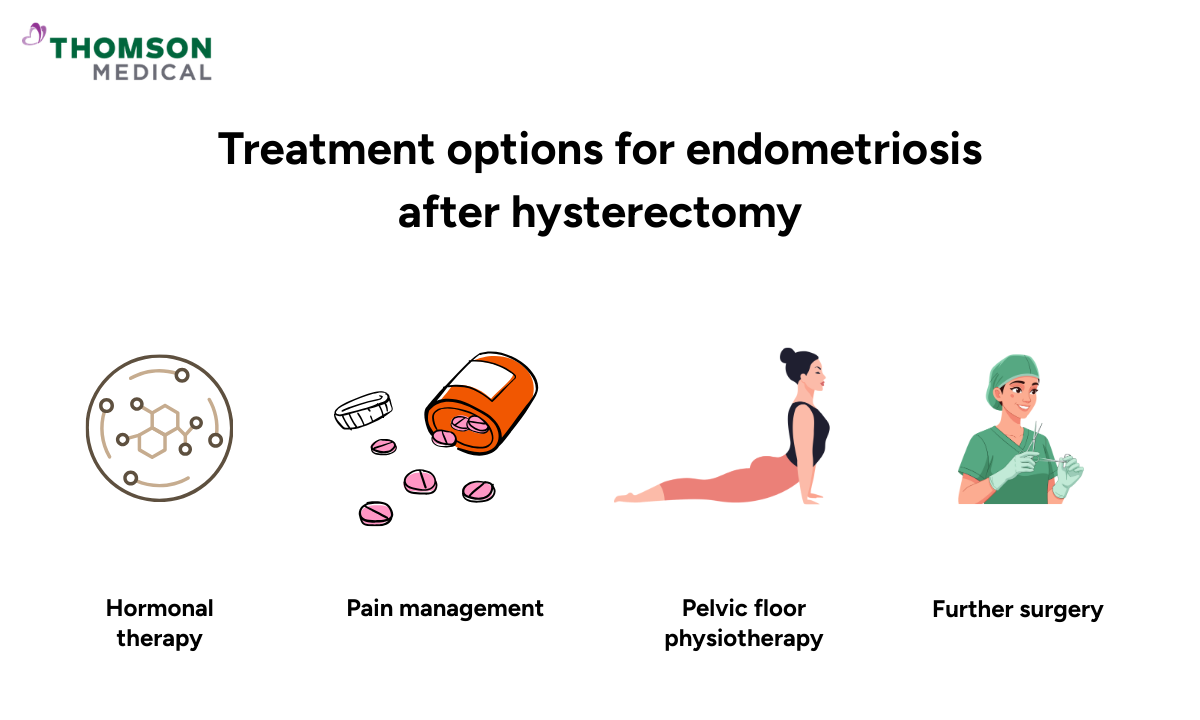
If symptoms persist after your hysterectomy, there are several ways to help manage them. Your doctor will work with you to find an approach that suits your individual needs and health goals.
Hormonal therapy
Since oestrogen can stimulate remaining endometriosis tissue, hormonal therapy is often one of the first options considered. This may include medications that help reduce or regulate oestrogen levels, calming any residual implants. Your doctor will advise on which type is right for you.
Pain management
Managing day-to-day discomfort is an important part of feeling well after surgery.
Anti-inflammatory medications may help ease pelvic pain, while medications that target nerve-related discomfort may be considered if pain has become chronic. A personalised plan can make a meaningful difference to your quality of life.
Pelvic floor physiotherapy
Pelvic floor physiotherapy is often overlooked, but it can be genuinely helpful, especially when chronic pain has caused the surrounding muscles to tighten over time.
A trained physiotherapist can work with you to release muscle tension and address pain that may not be directly caused by endometriosis itself. Many women find this a valuable part of their recovery.
Further surgery
If other treatments have not brought enough relief, surgery may be an option to remove any remaining endometriosis implants. It is not usually the first step, but for some women it can make a real difference. This is always a personal decision that you would work through carefully together with your doctor.
If you are living with persistent symptoms after a hysterectomy and are unsure which treatment direction is right for you, schedule an appointment with Thomson Medical. Our doctors can review your situation and walk you through the options available to help you feel more like yourself again.
When you should see a doctor
Pelvic pain after a hysterectomy is not something you need to simply push through.
It is worth reaching out to your doctor if you experience any of the following:
Persistent pelvic pain that does not improve or interferes with daily life
Pain during intercourse, bowel movements, or urination
Symptoms that feel similar to your endometriosis before surgery
Chronic fatigue that is affecting your wellbeing
The sooner you seek advice, the sooner you can get the support you need.
Persistent symptoms after hysterectomy can feel discouraging, but with the right evaluation and care, many women are able to regain comfort and improve their quality of life.
Gynaecologists at Thomson Medical
Loading...
FAQ
Are there any non-surgical treatments for endometriosis that persists after hysterectomy?
Yes. Hormonal therapy can help reduce oestrogen and calm remaining implants. Pain management medications can ease ongoing discomfort, and pelvic floor physiotherapy is worth considering if muscle tension is contributing to pain. Your doctor can help identify the suitable approach for you.
What are the chances of endometriosis coming back after a hysterectomy?
This depends on whether the ovaries were removed and how extensive the disease was before surgery. If your ovaries are kept, oestrogen continues to be produced, increasing the likelihood of recurrence. If both your uterus and ovaries are removed, the risk is lower – though not zero.
Can endometriosis continue after menopause?
It is less common but possible. While oestrogen declines naturally after menopause, your body still produces small amounts from fat tissue and the adrenal glands. Women using hormone replacement therapy (HRT) may also experience persistent symptoms.
Can you still have endometriosis if you don't have a uterus?
Yes. Endometriosis is not a disease of the uterus. Implants can exist on the ovaries, bowel, bladder, and deeper pelvic tissues. Removing the uterus does not automatically remove these.
What is often mistaken for endometriosis?
Several conditions can cause similar symptoms, including:
Irritable bowel syndrome (IBS), which involves bloating, abdominal pain, and changes in bowel habits
Interstitial cystitis, which causes bladder pressure and pelvic discomfort
Pelvic floor muscle dysfunction, which involves chronic pelvic pain and pain during intercourse
Scar tissue (adhesions), which can cause post-surgical pain that can closely mimic endometriosis
Does having a full hysterectomy cure endometriosis?
Not always. While hysterectomy significantly reduces recurrence risk, it cannot guarantee complete resolution. It is best understood as a meaningful treatment rather than a definitive cure.
The information provided is intended for general guidance only and should not be considered medical advice. For personalised recommendations and advice based on your unique situation, please consult a specialist at Thomson Medical. Request an appointment with Thomson Medical today.
For more information, contact us:
Thomson Specialists (Women's Health)
Thomson Women's Clinic (TWC)
- Novena:
6592 6686 (Call), 8611 8986 (WA) - Bukit Batok:
6569 0668 (Call), 8686 3525 (WA) - Choa Chu Kang:
6893 1227 (Call), 8282 1796 (WA) - Jurong:
6262 8588 (Call), 6262 8588 (WA) - Katong (female doctor):
6970 2272 (Call), 8611 9020 (WA) - Punggol:
6243 6843 (Call), 8811 0328 (WA) - Sembawang: 6753 5228
- Sengkang: 6388 8125
- Serangoon (female doctor): 6382 3313
- Tampines: 6857 6266
- Tiong Bahru: 6276 1525
Notice
The range of services may vary between TWC/TS locations. Please contact your preferred branch directly to enquire about the current availability.
Request an Appointment