

When you experience persistent stomach pain that doesn't improve with initial treatment, you might want to understand what's happening with your digestive system. In this situation, your doctor may recommend an endoscopy, a colonoscopy, or both to investigate your digestive issues.
Knowing the difference between these two procedures may help you to make an informed decision about which procedure is appropriate for your condition.
What is an endoscopy?
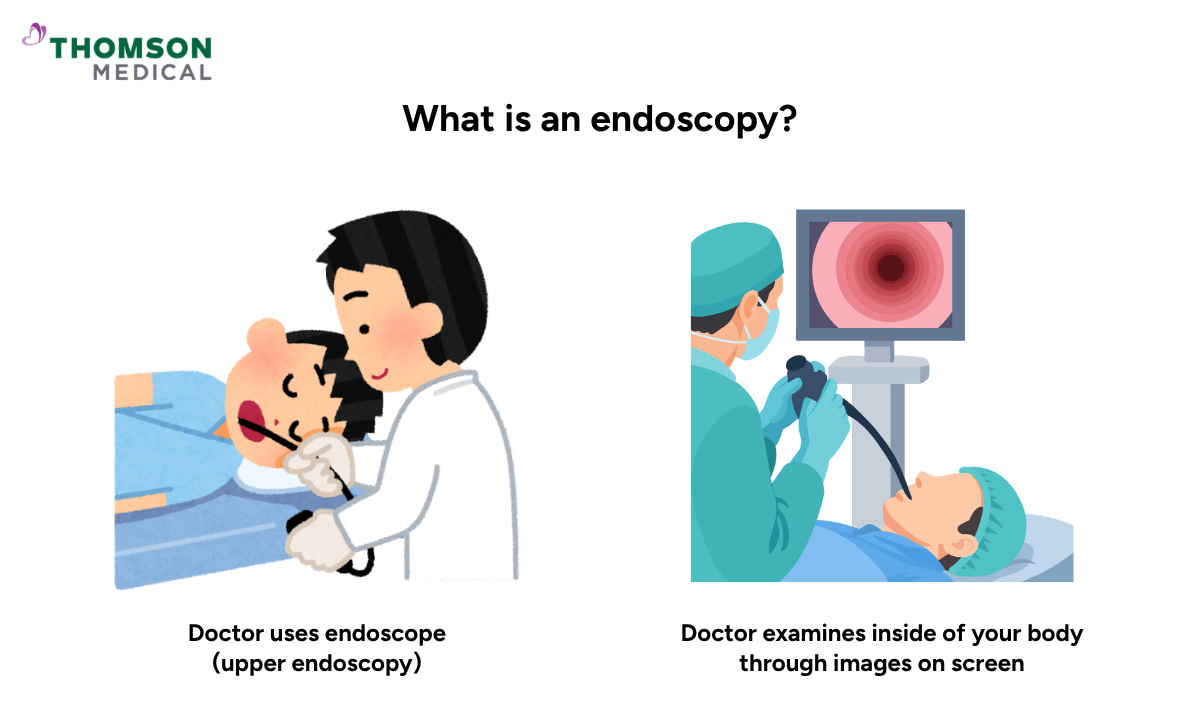
An endoscopy is a procedure where a doctor uses a thin, flexible tube with a camera, called an endoscope, to examine the inside of the body. They insert the tube through a natural opening or, for some procedures, through a small incision.
Most endoscopes have a light and a small camera at the tip. The camera sends images or video to a monitor, allowing your doctor to examine the area. During the procedure, your doctors may pass small instruments through some endoscopes to take tissue samples or carry out certain treatments.
There are several types of endoscopy, with differences in procedure and the type of scope used. When you experience persistent stomach pain or symptoms pertaining to your upper digestive tract, your doctor may recommend an upper endoscopy, also known as a gastroscopy.
During this procedure, the doctor passes the endoscope through your mouth to examine the upper digestive tract, which contains the oesophagus, stomach, and some part of the small intestine.
What is a colonoscopy?
When is each procedure performed?
Although both procedures examine the digestive tract, they assess different areas and may be recommended for different symptoms or conditions.
Upper endoscopy
Doctors may recommend an endoscopy to investigate symptoms, help diagnose or monitor a condition, collect tissue samples, or carry out certain treatments on your upper digestive system. This procedure allows them to:
Investigate symptoms that persist or do not improve with initial treatment.
Assess ongoing or recurring reflux symptoms, particularly when they do not improve with treatment.
Check for possible causes affecting the oesophagus related to difficulty or pain when swallowing.
Help identify a possible cause of persistent vomiting without a clear explanation.
Investigate possible internal bleeding in the upper digestive system that may cause vomiting blood, passing black stools, or unexplained iron-deficiency anaemia.
Investigate unexplained weight loss or loss of appetite.
Monitor certain conditions, such as Barrett’s oesophagus, coeliac disease, or previous ulcers.
Colonoscopy
Doctors may recommend a colonoscopy to help prevent, diagnose, or treat conditions affecting the large bowel. These include:
Assessing inflammatory bowel disease, such as ulcerative colitis or Crohn's disease.
Assessing suspected ischaemic colitis, where reduced blood supply causes inflammation in the colon.
Examining ulcers, inflammation, or a possible narrowing or blockage in the large bowel.
Screening, diagnosing, or monitoring colorectal cancer and polyps.
An upper endoscopy and colonoscopy examine different areas of your digestive system. If you are unsure which procedure is appropriate for your condition, a doctor can help you understand your options. Schedule a consultation with Thomson Medical.
Our specialists
Loading...
What to expect from both procedures?
Upper endoscopy and colonoscopy require different pre-procedure preparations because they examine different parts of the digestive tract. Your doctor will give you instructions based on your procedure, medical history, and medications.
Preparation for each procedure
Preparation differs between upper endoscopy and colonoscopy, particularly because colonoscopy requires bowel cleansing. The table below shows the preparation for the two procedures:
| Upper endoscopy | Colonoscopy |
|---|---|
Following fasting instructions: You may need to stop solid food several hours before the procedure and stop clear fluids closer to your appointment. An empty stomach helps the doctor see clearly and reduces the risk of vomiting or stomach contents entering the lungs during sedation. | Following your doctor’s diet instructions: You may be asked to avoid high-fibre foods for several days before the procedure. This helps reduce solid residue in the bowel. |
Telling your doctor about medicines and supplements: This includes blood thinners, diabetes medications, iron tablets, and weight-loss injections. These medications may affect the safety of the procedure or the quality of the examination. | Telling your doctor about medications and supplements you’re taking: Some medicines may affect bleeding risk, blood sugar levels, or the quality of bowel preparation. |
Informing the doctor about your health condition: Tell your doctor if you are pregnant, have allergies, or become unwell before the appointment. This may affect whether the procedure, sedation, or medicines are appropriate for you. | Taking the bowel-prep medicine as prescribed by the doctor: A thoroughly cleaned bowel allows the doctor to see the bowel lining more clearly and reduces the chance that the procedure needs to be repeated. |
Drinking permitted clear liquids: This helps you stay hydrated while keeping the bowel clear for the examination. |
What to expect during each procedure
Doctors usually perform upper endoscopic and colonoscopy procedures with the following steps:
| Upper endoscopy | Colonoscopy |
|---|---|
Preparing for the procedure: The doctor checks your medical history and may give you throat-numbing spray or sedation to help you relax. | Procedure preparation: You usually lie on your left side. Doctors may offer sedation or pain relief to help reduce anxiety or discomfort. |
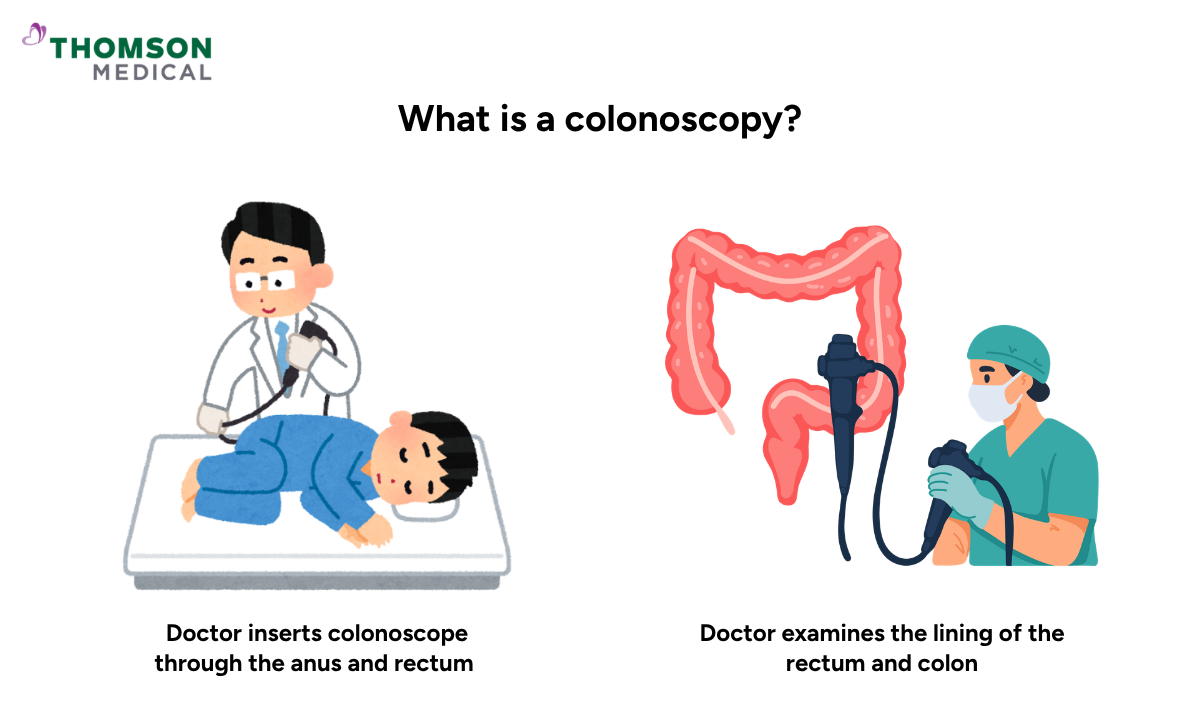
Passing the endoscope through your mouth: The doctor gently passes the endoscope through your mouth to examine the upper digestive tract. | Passing the colonoscope through the rectum: The doctor gently guides a thin, flexible tube called a colonoscope through the rectum and colon. |
Examining the digestive tract lining: The camera sends images to a monitor, allowing the doctor to look for changes in the digestive tract lining. During this step, they may use a small amount of air or carbon dioxide to open the area slightly for a clearer view. | Examining the lining of the large bowel: The camera sends images of the large bowel lining to a monitor. The doctor may pump a small amount of air or carbon dioxide to gently open up the bowel for a clearer view. |
Taking samples if needed: The doctor may perform a biopsy for laboratory testing.
| Taking samples or removing polyps if needed: The doctor may pass small instruments through the colonoscope to take a biopsy or remove a polyp for further testing. |
What to expect after the procedures
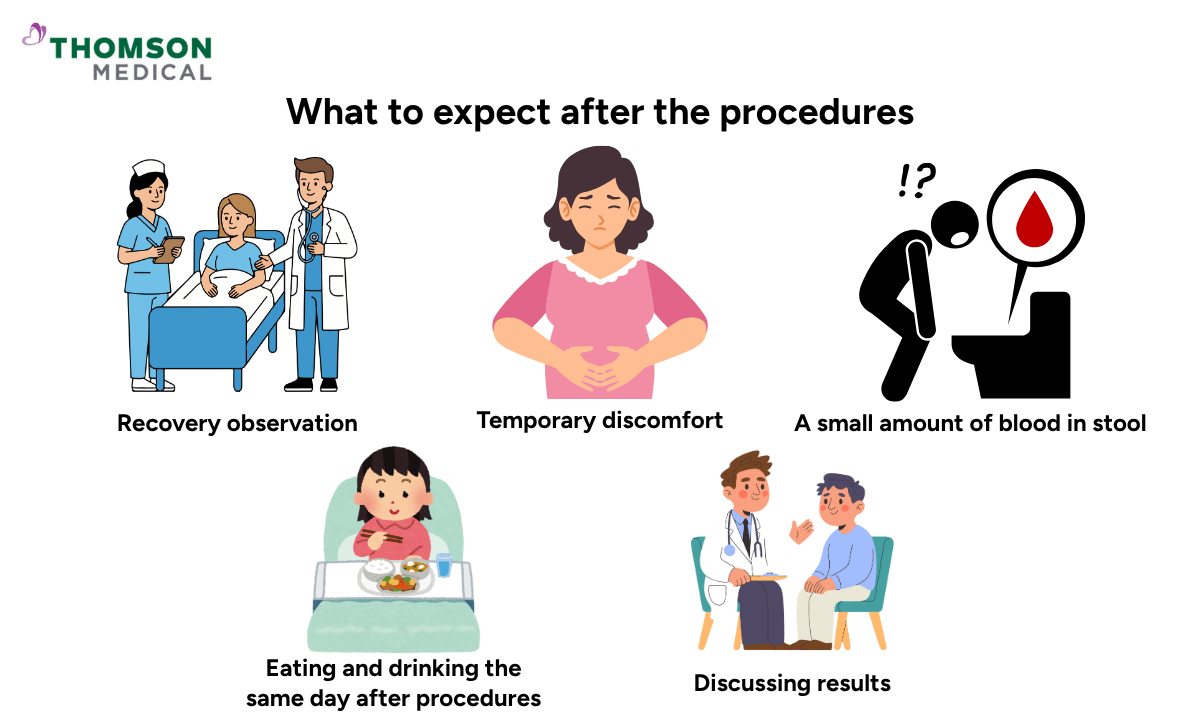
After an upper endoscopy or colonoscopy procedure, you will usually rest in a recovery area until the doctor confirms that you are ready to discharge. If you were sedated during the procedure, the medical team will monitor you while its effects wear off.
Other than that, you may also experience the following:
Temporary discomfort:
You may have mild bloating or cramps because your doctor may use air or carbon dioxide to improve visibility.
After an upper endoscopy, a mild sore throat may also occur, since the endoscope passes through the throat during the procedure.
These effects usually improve within a few hours or days.
A small amount of blood in stool:
If the doctor performed a biopsy or a polyp removal, you may notice a small amount of blood in your stool.
Eating and drinking the same day after procedures:
You may be able to eat and drink later that day unless your doctor gives different instructions.
Your doctor may discuss initial findings before you leave. However, if your doctor performs a biopsy, the laboratory will need time to process the findings, and your doctor will advise when and how you will receive the results.
Risks of endoscopy and colonoscopy
Though upper endoscopy and colonoscopy differ in their execution and procedure to examine your digestive issues, they carry similar risks. These risks include:
Bleeding: this is more likely if the procedure involves a biopsy or polyp removal.
A tear (perforation) in the wall of the digestive tract: a rare but serious complication that may require further treatment.
Sedation-related issues: such as problems with breathing, heart rate, or blood pressure.
Aspiration: a rare complication where food or liquid enters the lungs during sedation.
Incomplete colonoscopy: this occurs when the whole colon cannot be examined due to the bowel not being fully cleaned, the shape of the bowel making the examination difficult, or the procedure causing too much discomfort.
If you are considering getting an endoscopy or colonoscopy to examine your digestive system problems, a consultation with a specialist may help you to understand your options. Schedule a consultation with a specialist at Thomson Medical.
What can you do to aid the recovery process?
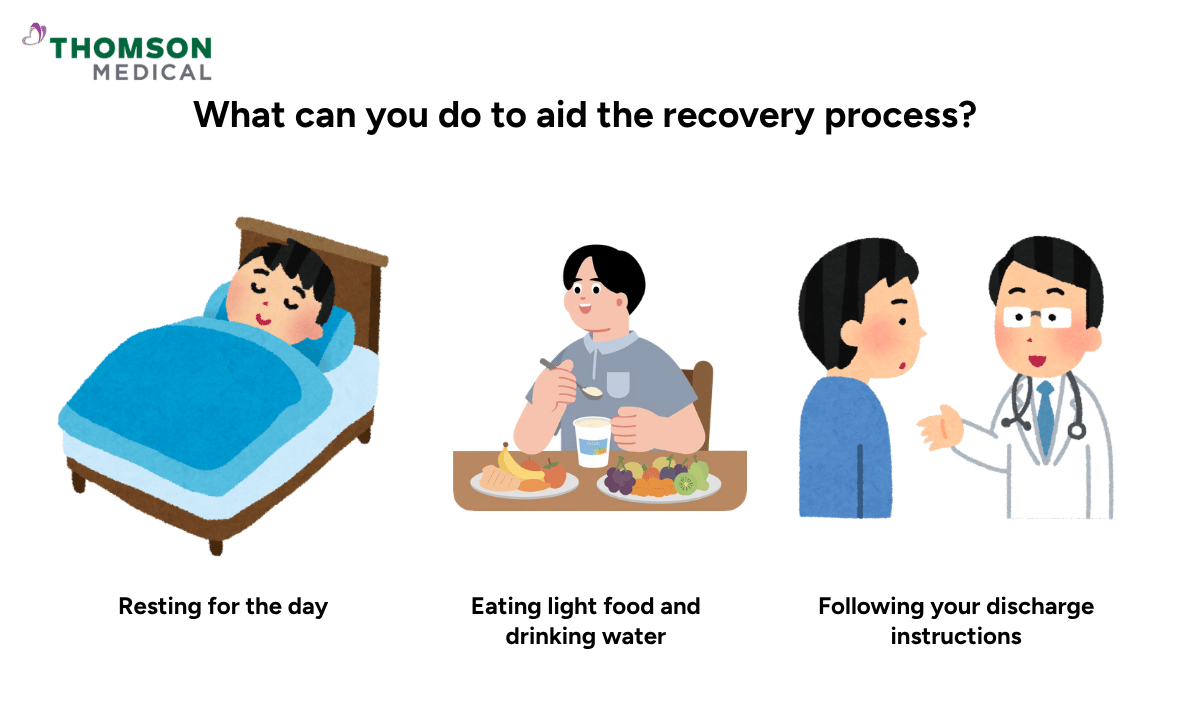
Although endoscopies and colonoscopies are minimally invasive procedures, you may need time to recover. Following these measures may help your recovery at home.
Resting for the day:
Sedation can cause drowsiness and affect judgement, so it is best to rest for the remaining day and have a friend or family member to accompany you if your doctor advises this.
Eating light food and drinking water:
If you received a throat spray (local anaesthesia) for an upper endoscopy, wait until your throat is no longer numb before eating or drinking.
After a colonoscopy, drink water and choose light meals if your stomach feels unsettled.
Following your discharge instructions:
This is especially important if you had a biopsy, polyp removal, or another treatment. Your doctor usually will give you specific instructions for your diet, medicines, and activity.
FAQ
Is endoscopy more painful than colonoscopy?
Both an endoscopy and a colonoscopy can cause discomfort, but these procedures are not necessarily more or less painful than each other.
A colonoscopy may cause temporary cramping, pressure, or bloating as the scope moves through the bowel. Meanwhile, an endoscopy may cause discomfort because it can trigger gagging or a sensation in the throat. However, your doctor will usually offer sedation to reduce discomfort from these procedures.
What happens if nothing is found during the procedures?
If your doctor does not find an abnormality during the procedure, this is usually described as a normal result. They will explain the initial findings and advise whether you need further tests or follow-up, particularly if symptoms continue.
Will you need bed rest after the procedures?
Most people do not need bed rest after an upper endoscopy or colonoscopy and can go home the same day. This is because the doctors insert the endoscope or colonoscope through a natural opening (mouth or anus), so there is typically no surgical wound that requires bed rest to heal.
Can a doctor recommend getting both an upper endoscopy and a colonoscopy?
Your doctor may recommend both procedures during one visit when they need to examine both the upper and lower digestive tracts. For example, this may be considered when investigating unexplained iron-deficiency anaemia or possible gastrointestinal bleeding.
The information provided is intended for general guidance only and should not be considered medical advice. For personalised advice based on your unique conditions, schedule an appointment with Thomson Medical.
For more information, contact us:
Thomson Medical Concierge
- 8.30am - 5.30pm
- WhatsApp: 9147 2051
Need help finding the right specialist or booking for a group?
Our Medical Concierge is here to help you. Simply fill in our form, and we'll check and connect you with the right specialist promptly.
Notice:
The range of services may vary between Thomson clinic locations. Please contact your preferred branch directly to enquire about the current availability.
Get In Touch