

Irregular periods, pelvic discomfort and bloating have plenty of plausible causes, and two of the more common are fibroids and polycystic ovary syndrome (PCOS), now formally renamed polyendocrine metabolic ovarian syndrome (PMOS).
They’re very different conditions, and they usually present differently too. Fibroids are benign growths of muscle tissue in the wall of the womb and tend to cause heavy or prolonged periods, along with signs such as acne, excess hair growth or difficulty conceiving. Here’s how fibroids and PMOS differ, which symptoms point towards each, and how they’re diagnosed and managed.
What are uterine fibroids?
Fibroids are growths made of muscle and fibrous tissue that develop in or around your uterus. They are very common, especially in women aged 30 to 50. Fibroids are usually non-cancerous growths, and even when they cause symptoms, they very rarely become cancerous.
What causes fibroids?
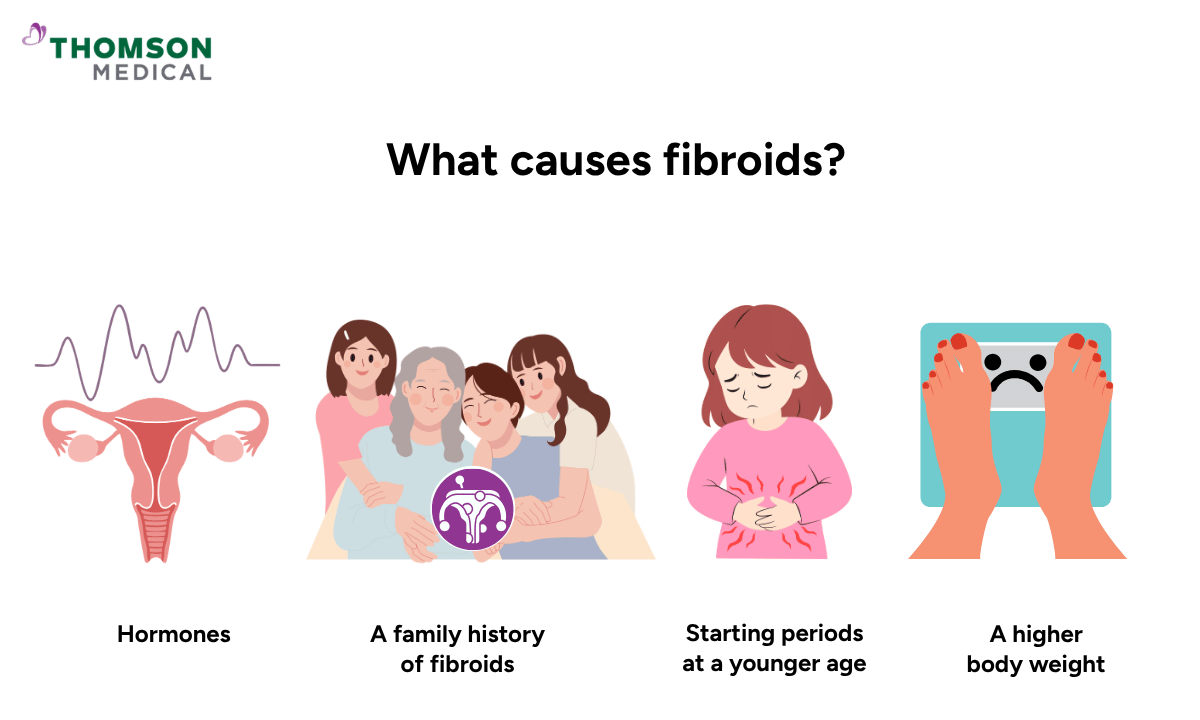
Hormones are central to how fibroids develop. While the exact cause is not fully understood, fibroids are closely linked to the oestrogen and progesterone hormones, which is why they are most common during the reproductive years.
Other contributing factors may include:
A family history of fibroids
Starting periods at a younger age
A higher body weight
Because hormones play a part, fibroids often shrink on their own after menopause, when oestrogen levels fall.
Symptoms of fibroids
You might have fibroids without knowing it, only discovering them during a routine scan. This is because sometimes fibroids have no symptoms at all, while some women find that these growths negatively affect daily life or even fertility.
If you have fibroids, you might notice:
Heavy or prolonged menstrual bleeding
A feeling of pressure or fullness in your pelvis
Needing to urinate more often
Constipation and bloating
Lower back or leg pain
Pain during sexual intercourse
These symptoms often develop gradually, so it is not always easy to connect them to a single cause.
Types of fibroids
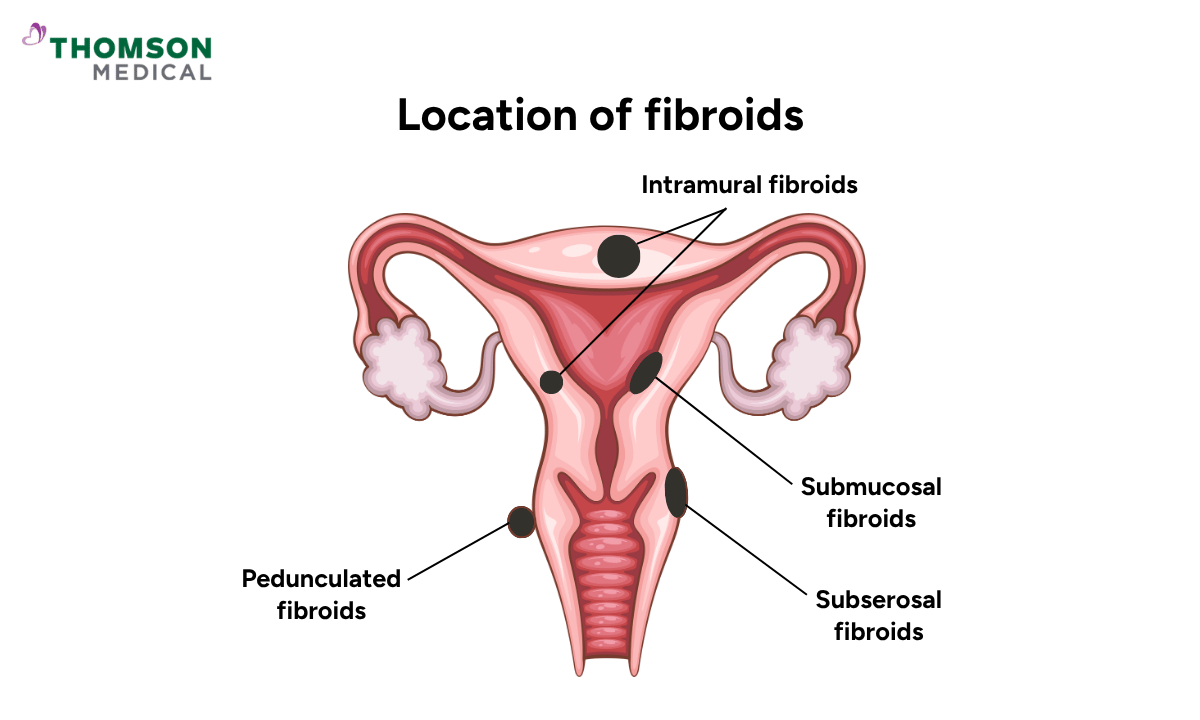
Knowing which type of fibroid you have may help your doctor to recommend the most suitable treatment. There are four main types of fibroids:
Intramural fibroids: which grow within the wall of your uterus and are the most common type.
Submucosal fibroids: these grow into the inner cavity of your uterus and tend to cause the heaviest bleeding.
Subserosal fibroids: which grow outwards from the outer surface of your uterus and may cause pressure or back pain.
Pedunculated fibroids: these are attached to the uterus by a stalk-like structure, either inside or outside.
Because fibroids could affect different parts of your uterus, two people with similar-sized fibroids may still experience very different symptoms.
Our O&G specialists
Loading...
What is PMOS?
PMOS, the new name for PCOS based on a recently published health policy paper, is a hormonal disorder that affects how your ovaries work. It could disrupt ovulation, which leads to irregular periods, fertility issues, and, in some cases, higher levels of androgens.
Androgens, sometimes called "male hormones”, are hormones that everyone produces, though women with PMOS often have more of them than usual.
The condition was renamed in 2026 because the old term was misleading. "Polycystic" suggested that the condition was defined by ovarian cysts, when in fact what appears on a scan are small undeveloped follicles, not from cysts in the usual sense. The new name better reflects the hormonal and metabolic nature of the condition.
What causes PMOS?
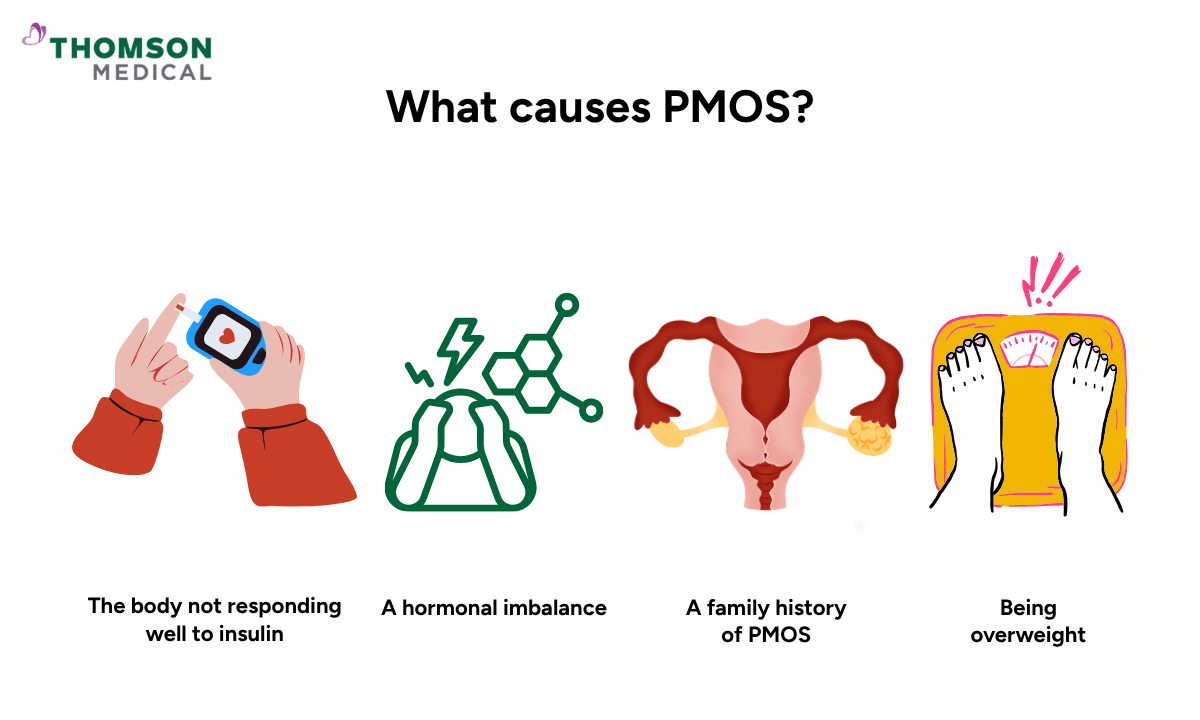
PMOS usually develops because several hormonal and metabolic factors interact with each other. It is not caused by anything you did wrong.
Contributing factors may include:
Your body not responding well to insulin, which may affect hormone levels
A hormonal imbalance, especially higher androgen levels
A family history of PMOS
Being overweight, which could make symptoms more noticeable
Insulin resistance is considered one of the key causes. When your body does not respond well to insulin, it triggers a hormonal shift that raises androgen levels and disrupts ovulation.
Symptoms of PMOS
Because PMOS affects hormones throughout your body, your symptoms may vary. Since symptoms often develop gradually, it may take time to spot a pattern.
You might notice:
Irregular periods, or periods that stop altogether
Excess hair on the face or body (hirsutism)
Acne that is difficult to manage
Thinning hair on the scalp
Weight gain or difficulty losing weight
Dark patches of skin in skin folds, which may be a sign of insulin resistance
Difficulty getting pregnant
Not every woman that has PMOS experiences all of these symptoms. You may only find out you have PMOS when you have difficulty conceiving and seek further tests.
Hormonal imbalances, irregular periods, and symptoms like excess hair or acne may indicate PMOS. Request an appointment with Thomson Medical to get a personalised assessment, explain the factors behind your symptoms, and guide you on treatment options tailored to your needs.
What’s the difference between fibroids and PMOS?
Although both conditions may affect your periods and fertility, they develop differently and affect your body in different ways. The table below shows a comparison between the two conditions:
| Fibroids | PMOS | |
|---|---|---|
Type of condition | Physical growths in your uterus | Hormonal condition |
Main issue | Non-cancerous growths | Ovulation and hormone imbalance |
Period pattern | Heavy and often painful | Irregular or absent |
Weight gain | Not a typical feature | Common |
Excess hair or acne | No | Yes |
Impact on fertility | May physically block or interfere | Affects ovulation |
Seen on ultrasound | Yes, in your uterus | Yes, on your ovaries |
While the conditions are different, both may benefit from early diagnosis. An earlier assessment may give you more options for managing symptoms and better support for your fertility goals.
Could you have both at the same time?
Yes, it is possible to have both fibroids and PMOS. Although they are separate conditions, having symptoms of one does not rule out the other.
That said, as fibroids and PMOS are separate conditions with different causes, a full assessment will look at both rather than focusing on just one.
Having one does not necessarily mean you are more likely to have the other. If both are present, your treatment will be tailored to each condition. In some cases, hormonal treatments may help improve symptoms of both.
How are fibroids and PMOS diagnosed?
As both conditions could affect your periods, your doctor may need to carry out some tests to determine the cause of your symptoms. Your doctor may:
Carry out a pelvic ultrasound scan to look for fibroids or changes to the ovaries
Order blood tests to check hormone and androgen levels
Carry out a physical examination
Ask about your menstrual history in detail
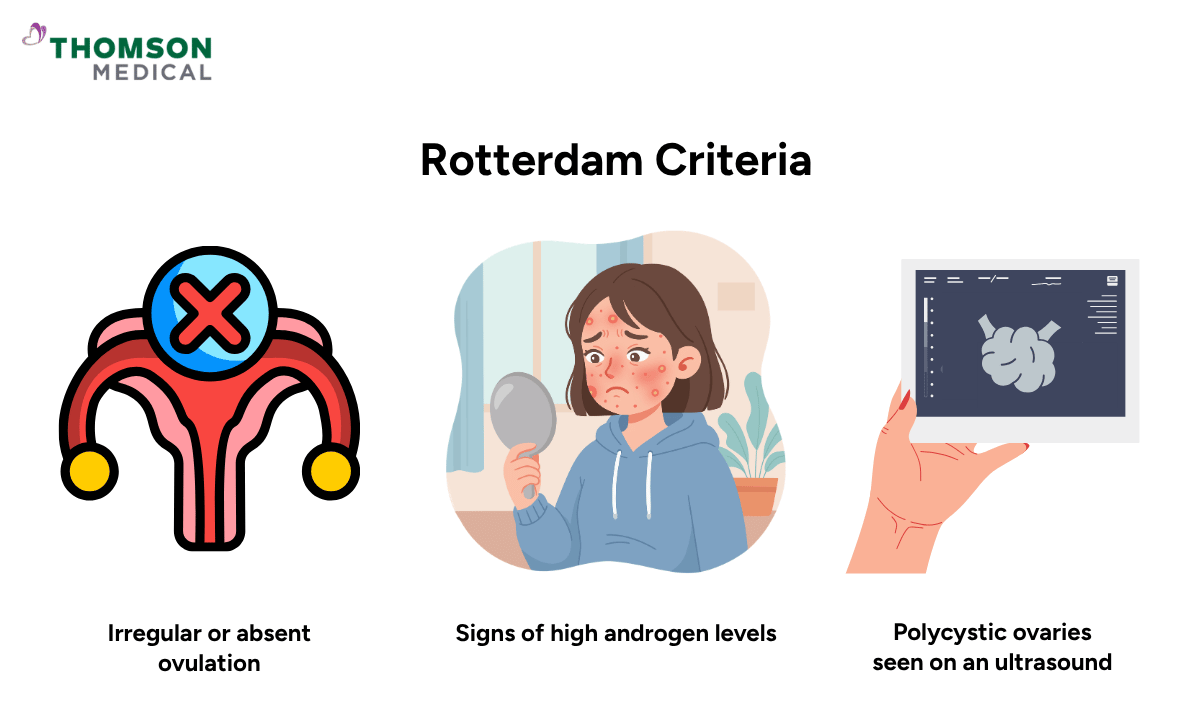
For PMOS, diagnosis follows internationally recognised guidelines known as the Rotterdam Criteria.
You usually need to meet at least 2 of these 3 criteria:
Irregular or absent ovulation
Signs of high androgen levels, either from symptoms or a blood test
Polycystic ovaries seen on an ultrasound
Tracking when your period starts and ends, how heavy it is, and any associated symptoms may provide your doctor a clearer picture to work from when determining the suitable treatments.
What treatments could help with fibroids and PMOS?
There is no single approach that works for everyone. The most suitable treatment for you will depend on your symptoms, age, future pregnancy plans and how much the condition is affecting your quality of life.
Treating fibroids
Treatment options range from medication to surgical procedures, and your doctor will consider the size and location of your fibroids alongside your fertility goals.
Medication options may include:
Hormone pills or a hormonal coil to manage bleeding
Hormone injections that temporarily shrink fibroids before a procedure
Tranexamic acid to reduce heavy bleeding during your period
Procedures or surgery may include:
Uterine artery embolisation: which cuts off the blood supply to fibroids to shrink them
Myomectomy: which removes fibroids surgically while keeping your uterus intact. This is an option to explore if you still want to get pregnant
MRI-guided focused ultrasound: which uses sound waves to break down fibroid tissue without surgery
Hysterectomy: which involves removing your uterus. This is usually considered when other options have not worked and you are not planning a future pregnancy
There is a chance fibroids may return after a myomectomy, particularly if you are still in your reproductive years. It is worth discussing this with your doctor, as it may mean more regular follow-up scans going forward.
Managing PMOS
PMOS is a long-term condition, but symptoms could often be managed through a combination of lifestyle changes and medication.
Lifestyle changes that may help include:
Regular physical activity may help to improve how your body responds to insulin and support overall well-being.
A balanced diet lower in refined sugars may ease a number of symptoms over time
Medications your doctor may consider include:
The contraceptive pill to regulate periods and reduce androgen levels
Metformin to help your body respond to insulin more effectively
Anti-androgens to manage excess hair and acne
Fertility medications such as letrozole or clomiphene if you are trying to conceive
Because PMOS affects everyone differently, your treatment plan may change over time. Symptoms often shift at different life stages, and what works well at one stage may need adjusting as your life changes.
Managing fibroids, or PMOS, often requires a tailored approach based on your needs. Request an appointment with Thomson Medical to explore treatment options and receive guidance aligned with your health and fertility goals.
FAQ
Can fibroids cause weight gain like PMOS?
Fibroids do not typically cause metabolic weight gain. However, large fibroids can increase abdominal size or cause a feeling of pressure or fullness. In contrast, PMOS more commonly leads to weight gain due to insulin resistance.
Do fibroids or PMOS affect fertility more?
PMOS is more likely to affect fertility because it can prevent regular ovulation. Fibroids may also affect fertility, particularly submucosal types, which can distort the uterine cavity and make implantation more difficult.
Can PMOS cause fibroids to develop?
There is no strong evidence that PMOS directly causes fibroids. The two conditions develop through different hormonal pathways; some women may have both conditions.
Can birth control help with both fibroids and PMOS?
Birth control pills can help regulate menstrual cycles in PMOS and reduce heavy bleeding caused by fibroids. They do not eliminate fibroids, but they can be a useful part of managing symptoms for both conditions.
Is surgery necessary for fibroids or PMOS?
Surgery may be recommended for fibroids if symptoms become severe or difficult to manage. For PMOS, surgery is rarely needed, although a procedure called ovarian drilling, where small punctures are made in the ovary to stimulate ovulation, may be considered in specific fertility cases.
Can diet and exercise help manage fibroids or PMOS?
Diet and exercise are recommended as initial management in treating PMOS, and research suggests that diet and exercise can help improve PMOS symptoms, particularly those linked to insulin resistance. For fibroids, lifestyle changes may help ease symptoms, but they will not eliminate existing fibroids.
The information provided is intended for general guidance only and should not be considered medical advice. For personalised recommendations and tailored advice based on your unique conditions, request a consultation with Thomson Medical.
Lim, S. S., Hutchison, S. K., Van Ryswyk, E., Norman, R. J., Teede, H. J., & Moran, L. J. (2019). Lifestyle changes in women with polycystic ovary syndrome. Cochrane Database of Systematic Reviews, 2019(3). https://doi.org/10.1002/14651858.CD007506.pub4
Teede, H. J., Bahri Khomami, M., Morman, R., Laven, J. S. E., Joham, A. E., Costello, M. F., Patil, M., Rees, D. A., Berry, L., Cree, M. G., Zhao, H., Norman, R. J., Dokras, A., & Piltonen, T. (2026). Polyendocrine metabolic ovarian syndrome, the new name for polycystic ovary syndrome: A multistep global consensus process. The Lancet, 407, 2329–2339. https://doi.org/10.1016/S0140-6736(26)00717-8
For more information, contact us:
Thomson Specialists (Women's Health)
Thomson Women's Clinic (TWC)
- Novena:
6592 6686 (Call), 8611 8986 (WA) - Bukit Batok:
6569 0668 (Call), 8686 3525 (WA) - Choa Chu Kang:
6893 1227 (Call), 8282 1796 (WA) Jurong:
6262 8588 (Call), 6262 8588 (WA)- Katong (female doctor):
6970 2272 (Call), 8611 9020 (WA) - Punggol:
6243 6843 (Call), 8811 0328 (WA) - Sembawang: 6753 5228
- Sengkang: 6388 8125
- Serangoon (female doctor): 6382 3313
- Tampines: 6857 6266
- Tiong Bahru: 6276 1525