

Search for ways to manage fibroids, and you’ll find no shortage of articles claiming that certain foods may shrink them. While it's tempting to believe that the right diet could solve the problem, food alone cannot shrink or remove fibroids.
Where diet earns its place is further down the list, in managing how you feel day-to-day. If heavy bleeding has left your iron low, addressing what makes a real difference to your energy. Eating in a way that keeps your digestion comfortable can help if pelvic pressure and bloating are part of the picture. Here's how a diet could help with fibroids, what it cannot do, and how it fits alongside medical treatment that actually addresses the fibroids.
Could diet help with fibroids?
Fibroids are non-cancerous growths that develop in or on the uterus (womb). While they are not dangerous, they may cause symptoms such as heavy periods, pelvic pressure, and pain, depending on where they sit.
They are sensitive to hormones, particularly oestrogen, which plays a key role in their growth. While food alone cannot eliminate fibroids, what you eat could influence several factors that affect how they grow and how symptoms feel.
Dietary changes may help by:
Reducing oestrogen levels that fibroids depend on to grow
Lowering inflammation, which can worsen pain and heavy bleeding
Supporting liver function, which is responsible for clearing excess oestrogen from the body
Stabilising blood sugar, since insulin resistance can raise oestrogen indirectly
Maintaining a healthy weight, as excess body fat produces additional oestrogen
While diet may support symptom management, fibroids are influenced by multiple factors. Request an appointment with Thomson Medical for a full assessment and personalised treatment based on your condition.
Which foods may help with fibroids?
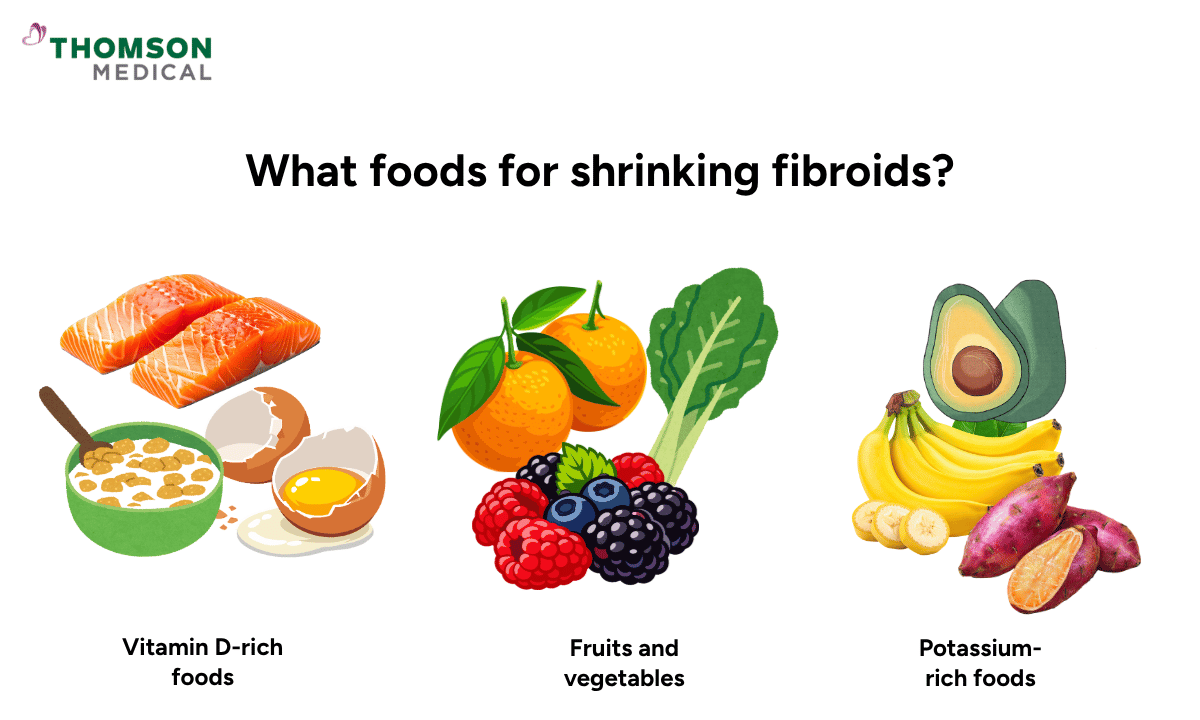
When it comes to fibroids, some foods stand out more than others. Here are some foods that could help to support hormonal balance, reduce inflammation, or ease fibroid-related symptoms.
Vitamin D-rich foods
Having low levels of vitamin D may increase your risk of developing fibroids. That's why it's essential to get enough vitamin D through your diet, especially if you spend a lot of time indoors.
Good food sources of vitamin D include:
Fatty fish such as salmon, sardines, and mackerel
Egg yolks
Fortified milk and cereals
Low-fat dairy
Low-fat dairy products such as milk, yoghurt, and kefir may offer some benefit when it comes to fibroids.
Calcium and vitamin D together may help support hormonal balance, and dairy is one of the more convenient ways to get both. If you are lactose intolerant or prefer plant-based options, fortified alternatives such as oat or soy milk could work just as well.
Fruits and vegetables
Fruits and vegetables are naturally high in fibre, which helps your body remove excess oestrogen, and antioxidants, which may help reduce inflammation that may worsen symptoms. A good starting point is to fill at least half your plate with fruit and vegetables at each meal.
Some helpful options to include are:
Leafy green veggies such as spinach and kale
Broccoli and cauliflower
Berries of all kinds
Citrus fruits such as oranges and grapefruit
You may include these fruits and vegetables across your meals. Different colours bring different antioxidants and types of fibre, so varying what you eat across the week gives your body broader support than sticking to the same few options.
Potassium-rich foods
Potassium plays an important role in keeping your blood pressure and fluid balance in check. This matters because high blood pressure has been associated with a greater fibroid risk over time.
Foods that are naturally rich in potassium include:
Bananas
Avocados
Sweet potatoes
Beans and lentils
Simple ways to increase your intake include adding half an avocado to a meal, swapping white rice for beans, or having a banana as a snack.
Our O&G specialists
Loading...
Lifestyle changes that may also help
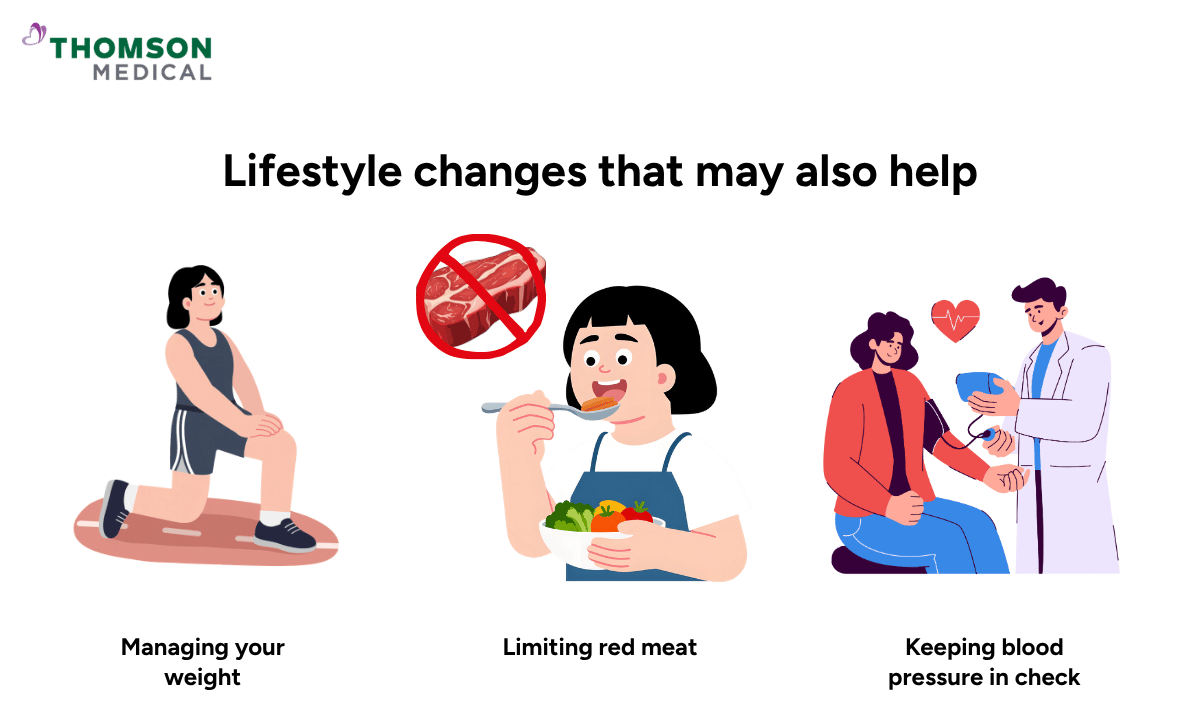
Food choices are only part of the story. A few broader lifestyle changes may also support your body in managing fibroids, and many of these overlap with general health advice you may already be familiar with.
Managing your weight
Fat tissue produces oestrogen, which means that maintaining a healthy weight may help keep your oestrogen levels in a more balanced range. Gradual, sustainable changes to your eating and activity levels are far more helpful than trying to lose weight quickly.
Reducing alcohol
Alcohol may raise oestrogen levels in the body, which may contribute to fibroid growth. Even modest reductions in how much you drink could make a difference to your hormonal environment.
Limiting red meat and processed foods
Eating a lot of red meat and processed foods may be linked to a higher fibroid risk, possibly because of how these foods influence hormone levels and inflammation. Simply reducing how often you have them and choosing whole foods in their place may be helpful.
Keeping blood pressure in check
Alongside a potassium-rich diet, there are several other ways you could support healthy blood pressure as part of your fibroid management.
These include:
Regular exercise, including gentle walking
Reducing your salt intake where possible
Finding ways to manage stress, whether through rest, hobbies, or time outdoors
Attending regular health checks with your doctor
Although diet and lifestyle alone will not eliminate fibroids, they may reduce the factors that allow them to grow. When combined with medical care, they may help your body manage symptoms more effectively.
When to see a doctor
Diet could be a supportive tool, but it is not a substitute for medical care. If your symptoms are affecting your quality of life, it is worth speaking with your doctor.
Seek advice if you notice:
Heavy menstrual bleeding that leaves you feeling fatigued or breathless
Severe pelvic pain or pressure
Your abdomen growing larger without explanation
Bleeding after the menopause
Difficulty getting pregnant
Your doctor may help identify the right options for you, whether that is monitoring, medication, or a procedure, depending on your situation.
When fibroid symptoms begin to affect your quality of life, a proper diagnosis could help you understand what you are dealing with. Request an appointment with Thomson Medical to explore your options.
FAQ
How can I shrink my fibroids naturally?
Natural approaches alone rarely eliminate larger fibroids. However, you may support fibroid shrinkage by maintaining a healthy weight, increasing fibre intake, improving vitamin D levels, reducing alcohol consumption, and exercising regularly.
How do I know if my fibroids are getting bigger?
Common signs include heavier menstrual bleeding, increased pelvic pressure, and needing to urinate more frequently. Imaging tests such as ultrasound or MRI are needed to confirm changes in fibroid size.
Do bananas shrink fibroids?
No single food, including bananas, can shrink fibroids. While bananas are nutritious and support overall health, they do not directly reduce fibroid size.
How can fibroids be treated without surgery?
Non-surgical treatment options include hormonal medications, GnRH agonists or antagonists, uterine artery embolisation, and MRI-guided focused ultrasound. Lifestyle changes may also help support symptom management but do not remove fibroids.
What foods should I eat to support fibroid management?
A diet rich in green vegetables and fruits, whole grains, and lean proteins may help support hormonal balance and inflammation reduction. Anti-inflammatory foods such as spinach, broccoli, berries, oats, fish, and chia seeds are commonly recommended.
The information provided is intended for general guidance only and should not be considered medical advice. For personalised recommendations and tailored advice based on your unique conditions, request a consultation with Thomson Medical.
For more information, contact us:
Thomson Specialists (Women's Health)
Thomson Women's Clinic (TWC)
- Novena:
6592 6686 (Call), 8611 8986 (WA) - Bukit Batok:
6569 0668 (Call), 8686 3525 (WA) - Choa Chu Kang:
6893 1227 (Call), 8282 1796 (WA) Jurong:
6262 8588 (Call), 6262 8588 (WA)- Katong (female doctor):
6970 2272 (Call), 8611 9020 (WA) - Punggol:
6243 6843 (Call), 8811 0328 (WA) - Sembawang: 6753 5228
- Sengkang: 6388 8125
- Serangoon (female doctor): 6382 3313
- Tampines: 6857 6266
- Tiong Bahru: 6276 1525