
.png%3Fbranch%3Dprod&w=3840&q=75)
You might naturally feel anxious when you're experiencing constant abdominal pain, or when pain in your back or shoulder blades keeps you up at night, these symptoms may be caused by gallbladder conditions.
Gallbladder conditions are among the most commonly treated digestive problems today, and many people recover well with the right care. Knowing which symptoms to watch out for and when to seek urgent care can help you get the right support sooner.
What does gallbladder pain feel like?
.png?branch=production)
Gallbladder pain usually comes on suddenly. You may feel a deep, steady ache in your upper right abdomen, just beneath your ribcage. It does not ease when you rest or change position and can last anywhere from 30 minutes to several hours.
The pain usually arises 30 to 60 minutes after a fatty or fried meal, when your gallbladder contracts to release bile. The pain often radiates to your upper back or right shoulder blade, which can easily be mistaken for a muscle strain.
Some people also confuse it with heartburn. However, gallbladder pain does not improve with antacids and can sometimes wake you from sleep at night.
Common causes of gallbladder pain
Most gallbladder pain comes down to one thing – something disrupting the normal flow of bile. Understanding what is behind your pain is the first step to feeling better.
Gallstones (cholelithiasis)
Gallstones are the leading cause of gallbladder pain. They form when bile hardens into small solid lumps inside your gallbladder, often made up of cholesterol. When a stone gets stuck and blocks the gallbladder's opening, it causes a build-up of pressure and pain.
Many people have gallstones without ever knowing, as they only cause trouble when they get in the way.
Gallbladder inflammation (cholecystitis)
When a gallstone blocks your gallbladder for too long, your gallbladder can become inflamed and swollen – this is called cholecystitis. The pain tends to be more constant than a typical gallstone attack and is often accompanied by a fever. If this sounds like what you are experiencing, it is worth getting checked by a doctor.
Biliary colic
Biliary colic is the term for the cramping pain that happens when a gallstone temporarily blocks your gallbladder, then shifts away on its own.
The pain comes on suddenly, peaks quickly, then fades – usually within a few hours. It often happens after a heavy or fatty meal and may leave you feeling sore and drained even after it passes. Think of it as your gallbladder sending you a warning sign that something is not quite right.
Other contributing factors
Gallstones are not the only cause of gallbladder pain. Less commonly, it can also result from:
Gallbladder polyps, which are small growths on the gallbladder wall
Bile duct problems when the ducts that carry bile become narrowed or blocked
Acalculous gallbladder disease, where the gallbladder does not empty properly, even without stones present
It is worth remembering that these conditions are very common and very treatable. If any of these causes sound familiar, speaking to your doctor sooner rather than later means you will have a clearer path forward.
If you are not sure what is causing your gallbladder pain, schedule an appointment with Thomson Medical. Our doctors can help identify the cause and explain what the findings mean for you.
Symptoms and red flags to watch for
Gallbladder pain is just one part of the picture. Knowing the full range of symptoms, and when they signal something more serious, can help you decide when to seek medical help.
Typical symptoms of a gallbladder problem
Beyond the pain itself, gallbladder problems can also cause:
Nausea or vomiting, especially after eating
Bloating and a feeling of fullness after meals
Indigestion that does not improve with antacids
Loss of appetite
Pale or greasy stools
Symptoms often come and go, which makes them easy to brush off. If you notice them happening repeatedly, particularly after meals, it is worth getting checked out.
When to seek urgent medical attention
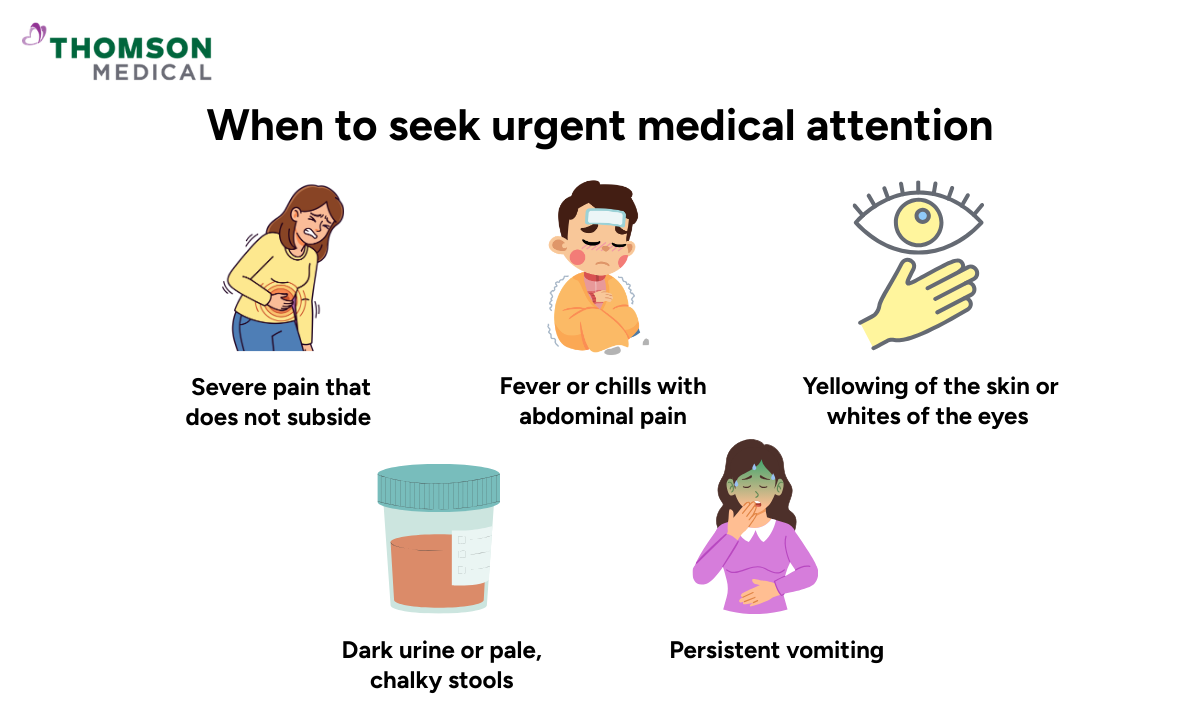
Not all gallbladder symptoms require attention. However, certain warning signs may indicate inflammation or a complication that needs prompt medical care.
Seek medical attention promptly if you experience:
Pain that is severe and does not subside after a few hours
Fever or chills alongside abdominal pain
Yellowing of the skin or whites of the eyes (jaundice)
Dark urine or pale, chalky stools
Persistent vomiting
These signs should not be waited out at home. If in doubt, head to your nearest A&E or Urgent Care Centre.
If your symptoms keep coming back, schedule an appointment with Thomson Medical. Our doctors can assess your symptoms and let you know whether further investigation is needed.
How is gallbladder pain diagnosed?
Getting a proper diagnosis is an important step, and the process is more straightforward than you might expect. Your doctor will piece things together gradually, starting with a conversation and building from there.
Physical examination and medical history
Your doctor will begin by asking about your symptoms – where the pain sits, how long it lasts, and whether meals seem to trigger it. They may gently press on your abdomen to check for tenderness, particularly in the upper right area. This initial conversation and examination already give your doctor useful information to work with.
Imaging and laboratory tests
An ultrasound scan is usually the first test your doctor will arrange. It is often quick and painless and is commonly used to check for gallstones and signs of inflammation.
Depending on what the ultrasound shows, your doctor may also recommend:
Blood tests to check for infection, inflammation, or any impact on the liver
CT scan or MRI scan for a more detailed view if further clarity is needed
HIDA scan to assess how well your gallbladder is functioning
Together, these tests help your doctor identify the cause of your pain and determine the most suitable treatment plan.
Treatment options for gallbladder pain
Treatment depends on what is causing your pain, how often it occurs, and how much it is affecting your daily life. Your doctor will walk you through the options that make the most sense based on your diagnosis.
Watchful waiting and dietary adjustments
If your symptoms are mild and infrequent, your doctor may recommend monitoring the situation before moving to further treatment. Reducing fatty, fried, and rich foods may help lessen the frequency of attacks in the meantime.
Your doctor will advise whether this approach is appropriate based on your specific symptoms and test results.
Medications
Medication may be used to relieve pain during an acute attack.
In some cases, a medicine called ursodeoxycholic acid may be prescribed to help dissolve small cholesterol-based gallstones. However, this can take several months and is only suitable for certain types of gallstones. Your doctor will confirm whether this is an appropriate option for you.
Surgical treatment
.png?branch=production)
For recurring or severe symptoms, your doctor may recommend a laparoscopic cholecystectomy, which is a keyhole procedure to remove the gallbladder. It is performed under general anaesthetic and usually requires a short hospital stay. Many people return to normal activities within a few weeks, although recovery times may vary.
In many cases, your liver continues to produce bile after the gallbladder is removed, and digestion is not significantly affected.
Gallbladder conditions are among the most common digestive problems treated today. And knowing that well-established options exist can make your path forward feel much less daunting.
Our specialists
Loading...
FAQ
Can gallbladder pain go away on its own?
A mild attack may settle on its own, but the underlying cause will not resolve without treatment. If symptoms keep returning, it is worth seeing a doctor.
What foods trigger gallbladder pain?
Fatty, fried, and rich foods are the most common triggers, as they stimulate the gallbladder to contract. Eating smaller, lower-fat meals may help reduce the frequency of attacks.
Do I need surgery straight away with gallbladder pain?
Not necessarily. Treatment depends on the severity and frequency of your symptoms. Your doctor will discuss all suitable options with you before any decision is made.
What happens if I have my gallbladder removed?
For many people, life after gallbladder removal is fairly straightforward. Your liver continues to produce bile as it normally would, so digestion is generally not significantly affected. And most people find they can return to their usual eating habits once they have recovered.
Are women more likely to develop gallstones?
Yes – hormonal factors, pregnancy, and certain body composition changes can increase the risk of gallstone formation in women.
Can gallbladder problems occur during pregnancy?
Yes, hormonal changes during pregnancy can affect bile composition and increase the risk of gallstones. If you experience upper abdominal pain during pregnancy, speak to your doctor promptly.
The information is intended for general guidance only and should not be considered medical advice. For personalised recommendations and advice based on your unique situation, please consult a specialist at Thomson Medical. Request an appointment with Thomson Medical today.
For more information, contact us:
Thomson Medical Concierge
- 8.30am - 5.30pm
- WhatsApp: 9147 2051
Need help finding the right specialist or booking for a group?
Our Medical Concierge is here to help you. Simply fill in our form, and we'll check and connect you with the right specialist promptly.
Notice:
The range of services may vary between Thomson clinic locations. Please contact your preferred branch directly to enquire about the current availability.
Get In Touch